




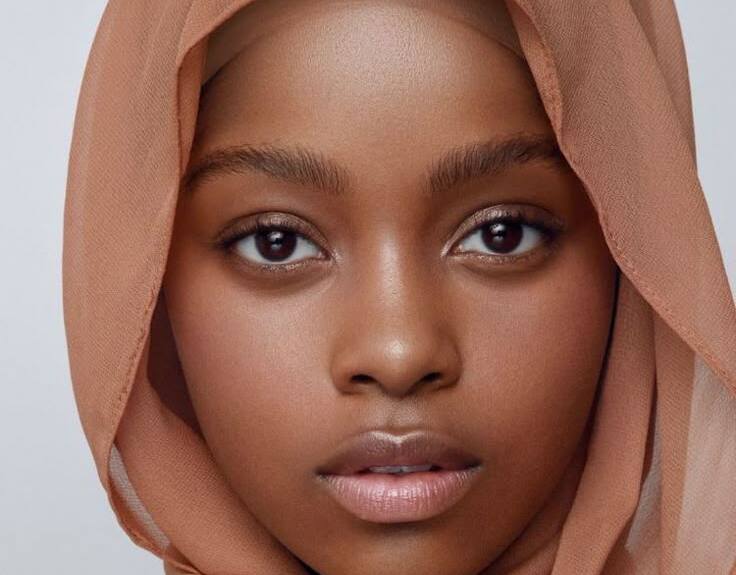

Why are Muslim women complaining to NIRA?
For 2 months, several Muslim women across Uganda have raised serious concerns regarding the procedures followed during National ID photo capture under the National Identification and Registration Authority (NIRA). The complaints mainly stem from the requirement to remove religious veils entirely, even in the presence of male officers or mixed crowds—leaving many feeling humiliated and stripped of their religious dignity. This issue also affects Nuns and Sisters from the Catholic faith, although they’re rarely handled with the general public, unlike average Muslim women.
These grievances come amid ongoing debates around the enforcement of international standards, specifically those set by the International Civil Aviation Organization (ICAO), which NIRA has cited as the basis for its photo requirements. But for many Muslim women, the implementation of these standards has created confusion, discomfort, and a growing sense of religious violation.
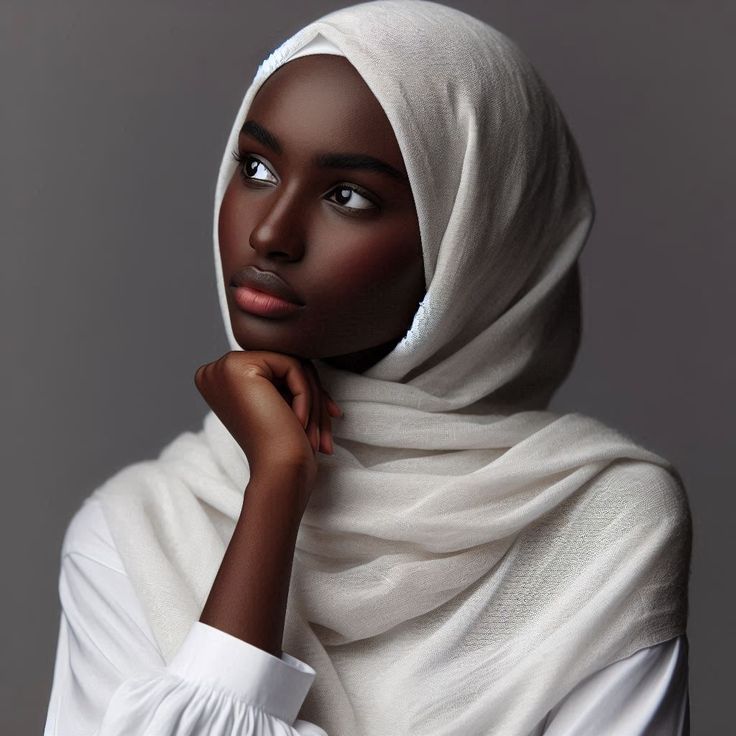
“I Was Told to Take It All Off” – The Lived Experience
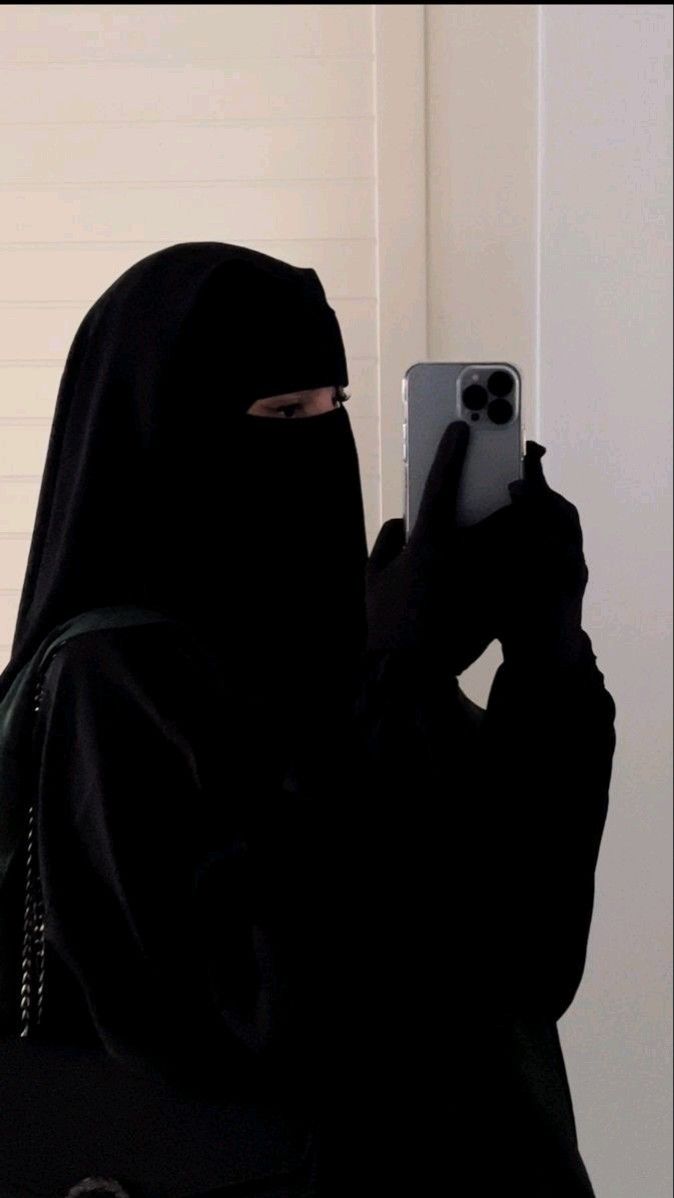
Several Registration Assistants have admitted that they’ve been instructing women to remove all forms of head covering before taking the ID photo. In many cases, women were told to uncover their heads, including the hijab or niqab, with little consideration for religious beliefs.

“I was told to take it all off, that my photo could not be taken with a veil. I asked if a female staff could do it privately, and they still refused,” one woman from Wakiso recalled.
This has raised serious questions among community leaders, religious institutions, and even some NIRA staff, about how to balance security guidelines with constitutional religious freedoms.
Registration Assistants Also Struggle With Clarity
Several NIRA field officers report that they have not received clear written instructions on how to handle such religious concerns. As a result, decisions often vary from one registration point to another, leading to inconsistent experiences and perceptions of discrimination.
“We were only told that the full face must be visible,” said one assistant. “But the guidelines didn’t say whether ears must be visible or not, or how to deal with religious veils. So we just told people to remove everything.”
This inconsistency has pushed some assistants to advocate for reasonable adjustments, including allowing veiled women to keep their coverings while revealing just their ears and face—a compromise seen as respectful and compliant.
Start of the Registration Exercise: Pilot Phase and National Rollout
The mass National ID registration exercise began with a pilot phase in early May 2025, focusing on internal testing and biometric trials. The full rollout officially started on May 27, 2025, across all districts in Uganda.
The exercise is still in its trial phase, and the new system is undergoing close monitoring to identify technical, logistical, and operational challenges before full implementation. Despite the pressure, registration assistants have been doing their very best—working long hours under often difficult conditions to ensure that every eligible Ugandan is captured into the system.
Although it was initially promised that IDs would be ready within one month, that timeline has now passed without distribution. Many believe that ID issuance may begin only after the President of Uganda receives his renewed ID, which will likely trigger the mass release of cards to the general public.
In general, the exercise has been moving smoothly, but not without challenges. There have been cases of extortion, delays, wrong information submitted by applicants, and complaints from rural communities still struggling to adapt to online pre-registration platforms.
Why Is NIRA Strict About Photos? Understanding ICAO Rules
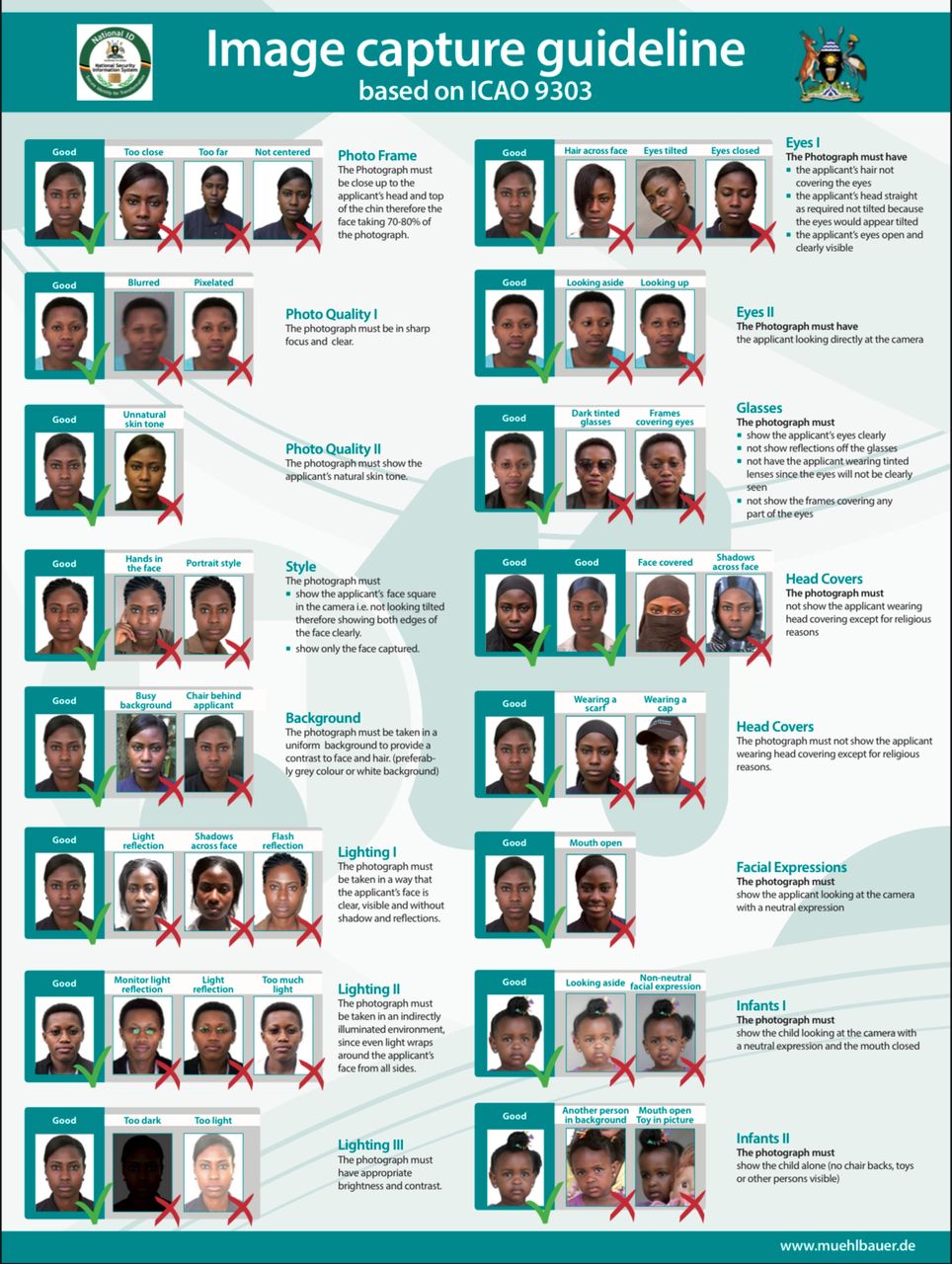
The ICAO (International Civil Aviation Organization) is a specialized agency under the United Nations, responsible for setting global standards for travel documents like passports and identity cards. Uganda aligns its national ID system with ICAO’s Document 9303, which defines photo standards for machine-readable documents.
According to ICAO rules:
- The face must be fully visible, from forehead to chin.
- Both ears should ideally be visible for biometric and security reasons.
- No shadows or headgear should block facial features.
- Head coverings are allowed for religious or medical reasons, but they must not cover or obscure the face.
NIRA has followed these requirements to ensure that Uganda’s National IDs are internationally recognized, especially for future digital ID and e-passport integration.
However, critics argue that NIRA’s interpretation of ICAO guidelines has sometimes been overly strict, especially concerning veiled women. ICAO itself allows religious headgear as long as facial visibility is maintained.
Moving Toward a Middle Ground: What May Change?
Following public complaints and field reports, several NIRA officers have received internal suggestions to:
- Allow veiled women to keep their scarves or hijabs on, as long as ears and the entire face are visible.
- Provide private photo capture spaces with female officers, especially in Muslim-majority communities.
While these measures are not yet part of official national policy, they reflect a growing willingness to balance international standards with cultural and religious respect.
Frequently Asked Questions About NIRA Photo Guidelines & Registration
1. Why do I need to take off my veil for the ID photo?
NIRA follows ICAO biometric standards. The face and ears must be visible to ensure the ID is accepted for international and security purposes.
2. Am I allowed to wear a religious veil in my ID photo?
Yes. You may wear a religious head covering, but your entire face must be visible. Some officers may request your ears to also be visible.
3. Can I be photographed by a female officer?
Yes, you can request a female officer for your photo. While not guaranteed at all centers, many field teams are trying to accommodate this.
4. Why must my ears be visible?
Showing ears helps with biometric analysis and facial recognition software. This is part of the ICAO-recommended guidelines.
5. Some women didn’t remove their veils. Why the inconsistency?
This is due to unclear or varying enforcement at different registration centers. There is no uniform practice currently.
6. What should I do if I was mistreated or felt my rights were violated?
File a complaint at your NIRA office or district headquarters, or contact human rights organizations.
Additional Frequently Asked Questions About Registration and Renewal
7. Who is eligible for this exercise?
Ugandans aged 16 and above. Those who received their IDs between 2014–2015 must renew. First-time applicants are also eligible.
8. How much does it cost?
- Renewal and first-time registration: Free
- Lost or damaged ID replacement: UGX 50,000
- Change of particulars: UGX 200,000
- Express processing: Paid separately
9. Does my NIN expire?
No. Your National Identification Number (NIN) does not expire and remains the same for life, even if your physical card expires.
10. What documents are required?
- Adults: LC letter, birth certificate or parent ID
- Children: One parent’s ID
- Dual nationals: Dual citizenship certificate + passport
- For lost IDs: Police report
11. Can I change my name, date of birth, or gender during this exercise?
No. This system does not allow corrections or changes to personal information during the renewal exercise.
To change any detail, you must first pay the official fee for change of particulars at the bank. After updating your details at the NIRA office with supporting documents, you can then return for renewal. If you try to renew with unmatched or incorrect details, your ID may not be processed or released.
12. Can I renew even if my ID hasn’t expired yet?
Yes. You’re allowed to renew early, especially if your ID was issued around 2014–2015.
13. Do I still have to go for biometric capture if I registered online?
Yes. Online pre-registration is only the first step. You must still appear physically for fingerprinting, photo, iris scan, and signature.
14. How long does it take to receive the new ID?
NIRA initially said one month, but delays have been reported. Issuance is expected to begin after the President’s ID is printed.
15. How do I check my ID status or retrieve my NIN?
Dial *216# on your phone to check status, retrieve NIN, or apply for replacements. You may also receive SMS notifications.
16. Can I renew or register from anywhere?
Yes. You can register or renew your ID from any part of Uganda. Your ID will still be processed and released regardless of where you applied.
You are also allowed to update your place of residence. This is encouraged so that your National ID reflects your current location, especially for people who have moved for work, school, or personal reasons.
Conclusion: Balancing Rules, Rights, and Respect
Uganda’s alignment with international standards like ICAO ensures the legitimacy of our National IDs across borders. But these standards must be implemented in ways that do not violate cultural values or religious beliefs.
As Uganda continues this mass renewal and registration exercise, the country has a chance to show that identity is more than a number—it is also about dignity, respect, and national unity.


2 Comments
THERE’S NEED TO STOP COLONIAL RELIGIOUS MINDSET IN A SETTING OF CRUCIAL ISSUES LIKE ID THAT HELP IN MANY THINGS BUT AMONG THEM SAFETY AND SECURITY.
The controversy surrounding Muslim women wearing veils or hijabs in identification photos for official documents, such as national IDs, raises important questions about the balance between religious freedom and security concerns. While it’s essential to respect individual rights and freedoms, it’s equally crucial to consider the potential implications of accommodating veils in identification documents.
One significant disadvantage of veils in identification is the potential difficulty in verifying a person’s identity. If a person commits a crime while veiled, it can be challenging for law enforcement to identify them if their ID photo doesn’t show their face. This raises concerns about public safety and the effectiveness of identification documents.
Moreover, the requirement to wear veils or hijabs can be seen as a form of religious colonization, where individuals are pressured to conform to certain dress codes or practices that may not align with their personal values or choices. In some cases, this can lead to the suppression of individuality and autonomy, particularly for women.
Interestingly, in some Arab countries like Iran, women are protesting against the mandatory use of hijabs, arguing that it restricts their freedom and dignity. These protests highlight the complex and often contentious nature of religious practices and their impact on individual rights.
The use of veils or hijabs can also be seen as a symbol of patriarchal control, where women’s bodies and choices are dictated by societal or religious norms. By denying women the freedom to choose how they present themselves, we risk undermining their dignity and autonomy.
Ultimately, the issue of veils in identification documents serves as a reminder of the need for nuanced discussions about religious freedom, individual rights, and public safety. By engaging in open and respectful dialogue, we can work towards finding solutions that balance competing interests and promote the dignity and autonomy of all individuals.
In the pursuit of freedom and self-expression, women in Iran and beyond are courageously challenging the status quo, seeking to reclaim their agency and individuality. Their struggles serve as a powerful reminder of the importance of promoting education, awareness, and critical thinking, empowering women to make informed choices about their lives and identities. As we navigate these complex issues, let us strive to create a world where every individual can thrive, free from oppression and constraint, and where beauty, dignity, and freedom are not mutually exclusive, but intertwined.
So we need to know what we are demanding , IDs ain’t religious staff let’s be serious
This is quite interesting