
When will the 2025 Solar Eclipse happen?
On September 21, 2025, a partial solar eclipse will grace the skies, offering a remarkable celestial event for observers in select regions of the world, including parts of Africa. For Ugandans and others across the continent, this eclipse provides an opportunity to witness the intricate dance of celestial bodies. This article explores where and when the eclipse will occur, why it happens, what it will look like, and its significance for Uganda and other African regions, ensuring a clear understanding of this awe-inspiring phenomenon.
When and Where It Will Happen
The partial solar eclipse of September 21, 2025, will occur when the Moon passes between the Earth and the Sun, casting a shadow that partially obscures the Sun’s disc. According to NASA, this eclipse will be visible over parts of Australia, Antarctica, the Pacific Ocean, and the Atlantic Ocean. In Africa, the eclipse will be observable in limited regions, primarily in the southern and western parts of the continent. Unfortunately, for those in Uganda, including major cities like Kampala, Gulu, and Entebbe, the eclipse will not be visible. The path of visibility in Africa includes countries such as Morocco, Senegal, Mauritania, and Algeria, with the greatest obscuration—up to 40% of the Sun covered—occurring in northern Morocco.
The eclipse will begin at approximately 1:29 PM UTC (4:29 PM East Africa Time, EAT) and reach its maximum at 3:24 PM UTC (6:24 PM EAT), concluding around 5:19 PM UTC (8:19 PM EAT). The exact timing and visibility depend on the observer’s location, with western African nations experiencing the event in the late afternoon. For Ugandans eager to experience a solar eclipse, the next opportunity will be a partial solar eclipse on August 2, 2027, which will be visible across much of the country, including Kampala, with up to 80% of the Sun obscured in some areas.

Why Solar Eclipses Happen
A solar eclipse occurs when the Moon aligns precisely between the Earth and the Sun, casting its shadow onto the Earth’s surface. This alignment can only happen during a new moon, when the Moon is positioned on the same side of the Earth as the Sun. However, solar eclipses are relatively rare because the Moon’s orbit is tilted approximately 5 degrees relative to the Earth’s orbit around the Sun, meaning perfect alignment is infrequent. When the Moon’s shadow intersects the Earth, it creates either a total, annular, or partial eclipse, depending on the Moon’s distance from Earth and the alignment’s precision.
In the case of the September 21, 2025, event, the eclipse is partial because the Moon’s shadow does not fully cover the Sun, and the alignment is not central enough to produce totality or annularity. The partial eclipse will appear as a “bite” taken out of the Sun, with the extent of coverage varying by location. In Africa, the low obscuration fraction in visible regions like Morocco and Senegal means only a small portion of the Sun will be obscured, making it less dramatic than a total or annular eclipse but still a fascinating sight.
What It Will Look Like
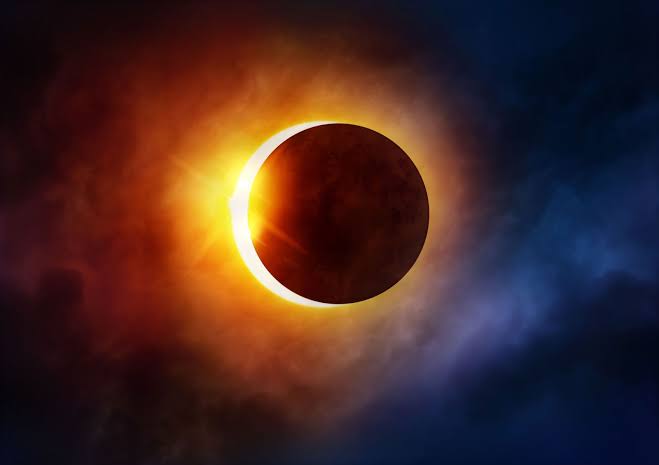
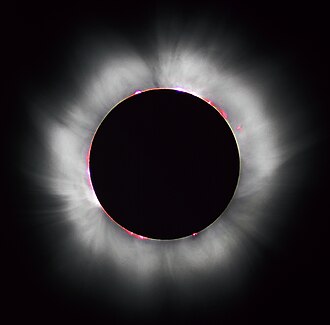
For those in the visibility path, the partial solar eclipse will transform the Sun into a crescent shape as the Moon covers a portion of its disc. In northern Morocco, where the eclipse reaches its maximum obscuration, approximately 40% of the Sun will be obscured, creating a noticeable but not overwhelming dimming of daylight. Observers may notice a slight cooling effect as sunlight diminishes, and the sky may take on a subtle, eerie quality. Unlike a total solar eclipse, where the Sun’s corona becomes visible and the sky darkens dramatically, this partial eclipse will not produce such striking effects.
To safely view the eclipse, special precautions are essential. Looking directly at the Sun, even during a partial eclipse, can cause severe eye damage. Certified solar eclipse glasses, compliant with ISO 12312-2 standards, are necessary to protect the eyes. Alternatively, indirect viewing methods, such as pinhole projectors or solar telescopes with proper filters, can be used. In Africa’s visible regions, the eclipse’s appearance will be most pronounced in the late afternoon, with the Sun low on the horizon, adding a dramatic backdrop to the event.
Significance for Africa and Uganda
While the September 21, 2025, partial solar eclipse will not be visible in Uganda, it holds significance for the continent’s western and northern regions. Countries like Morocco, Senegal, Mauritania, and Algeria will experience the event, with local astronomers and communities likely organizing viewing events to engage the public. For Uganda, the absence of visibility for this particular eclipse underscores the anticipation for future events. The next notable solar eclipse for Uganda is the total solar eclipse on August 2, 2027, which will see the path of totality cross northern Africa, including parts of Egypt, Sudan, and Somalia, while Uganda will experience a significant partial eclipse.
This upcoming 2027 eclipse will be a major event for Africa, with totality visible in countries like Morocco, Algeria, Tunisia, Libya, Egypt, Sudan, and Somalia. In Uganda, the partial eclipse will be a chance for citizens to engage with astronomy, fostering educational outreach and public interest in science. Local institutions, such as the Uganda Astronomical Society, may host events to prepare communities for safe viewing and to highlight the cultural and scientific importance of eclipses.
Understanding the Event
A solar eclipse is more than a visual spectacle; it is a reminder of our place in the cosmos. The alignment of the Sun, Moon, and Earth demonstrates the precision of celestial mechanics, with the Moon’s shadow traveling thousands of kilometers to create a fleeting but profound experience. In African cultures, eclipses have historically held spiritual significance. For instance, in some traditions, a solar eclipse is seen as a time of renewal or a celestial event requiring specific rituals. In Hinduism, practiced by some communities in Uganda, solar eclipses (Surya Grahan) are considered inauspicious, with activities like eating or sleeping avoided during the event.
For modern observers, eclipses offer a chance to connect with science and nature. Schools, universities, and community groups in Uganda can use the anticipation of future eclipses, like the 2027 event, to promote STEM education. Simple activities, such as creating pinhole projectors or discussing the physics of orbits, can make the phenomenon accessible to all.
Looking Ahead
While Ugandans will miss the September 21, 2025, partial solar eclipse, the event serves as a prelude to the more significant total solar eclipse on August 2, 2027. This future eclipse will be a landmark moment for Africa, with totality visible in several countries and a partial eclipse accessible to a broader region, including Uganda. For now, Ugandans can follow the 2025 eclipse through live streams provided by NASA or international observatories, ensuring they remain connected to this global event.
To prepare for future eclipses, residents can acquire certified solar eclipse glasses and learn safe viewing techniques. Engaging with local astronomy groups or online resources can deepen understanding and excitement for these celestial events. As the Moon’s shadow sweeps across the Earth, it reminds us of the universe’s grandeur—a spectacle that unites people across continents in shared wonder.
Sources:
- NASA Science: science.nasa.gov
- Time and Date: www.timeanddate.com,
- African Astronomical Society: www.africanastronomicalsociety.org
- Forbes: www.forbes.com
- Sky at Night Magazine: www.skyatnightmagazine.com