
Table of Contents
What has URSB introduced?
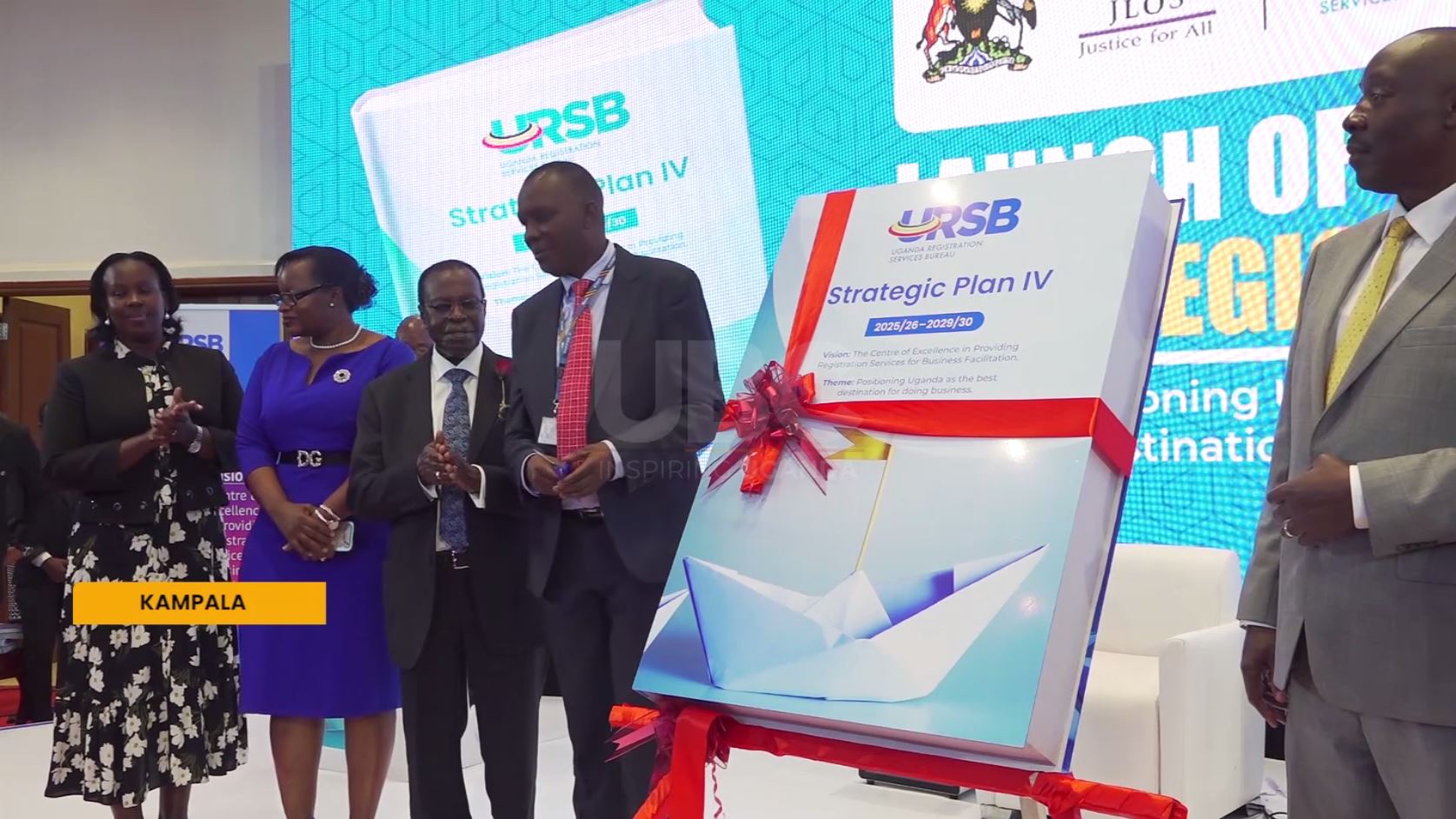
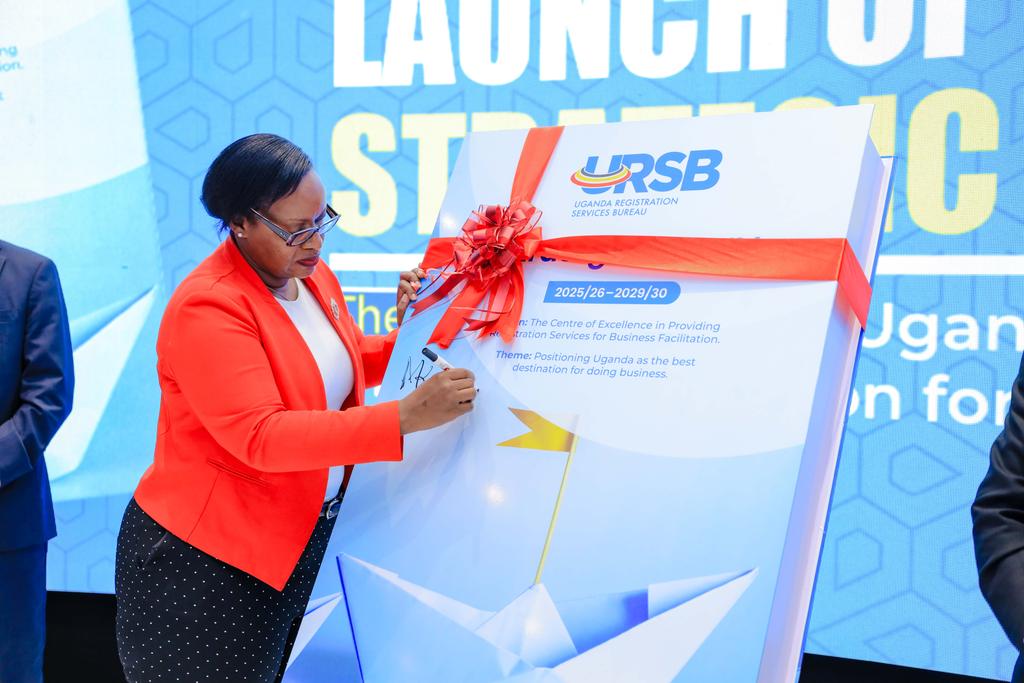
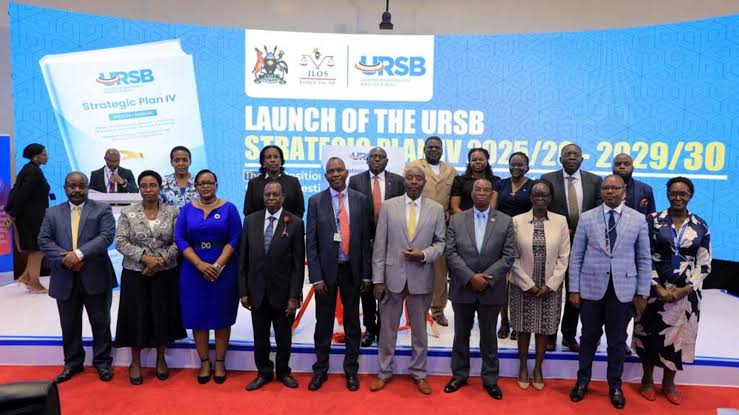
The Uganda Registration Services Bureau (URSB) has officially launched its new five-year strategic plan aimed at delivering inclusive, innovative, and efficient registration services across the country. The plan, known as Strategic Plan IV (SP IV), spans the financial years 2025/26 to 2029/30. The unveiling took place in Kampala on Thursday, September 25, 2025, under the auspices of senior government leaders and URSB officials.
At the launch, the Permanent Secretary of the Ministry of Finance, Ramathan Ggoobi, and his counterpart at the Ministry of Justice and Constitutional Affairs, Robert Kasande, jointly inaugurated the plan alongside Mercy Kainobwisho, URSB’s Registrar General. Ggoobi, represented in the ceremony by Moses Kaggwa, the Finance Ministry’s Director of Economic Affairs, described the occasion as a “national milestone” that will help strengthen the institutional foundations for private-sector growth.
“A vibrant registration system forms the backbone of private sector growth, job creation, and business formalisation, key pillars of Uganda’s transformation agenda,” he said.

Board members Jackie Kemigisha Kizza and Ann Ninkijuka, Chairperson of the Board Francis Butagira, Moses Kaggwa, and Registrar General Kainobwisho joined in a group photo at the URSB offices in Kololo to mark the event.
Aligning with National Priorities
Ggoobi emphasized that SP IV is closely aligned with the objectives of National Development Plan IV (NDP IV) and Uganda’s broader development agenda. In his remarks, Robert Kasande noted that business formalisation, protection of intellectual property, and use of assets to secure credit are vital expressions of citizen participation in economic life. “URSB’s progress reflects our broader mandate — strengthening the rule of law, enhancing access to justice, and supporting Uganda’s development agenda,” he said.

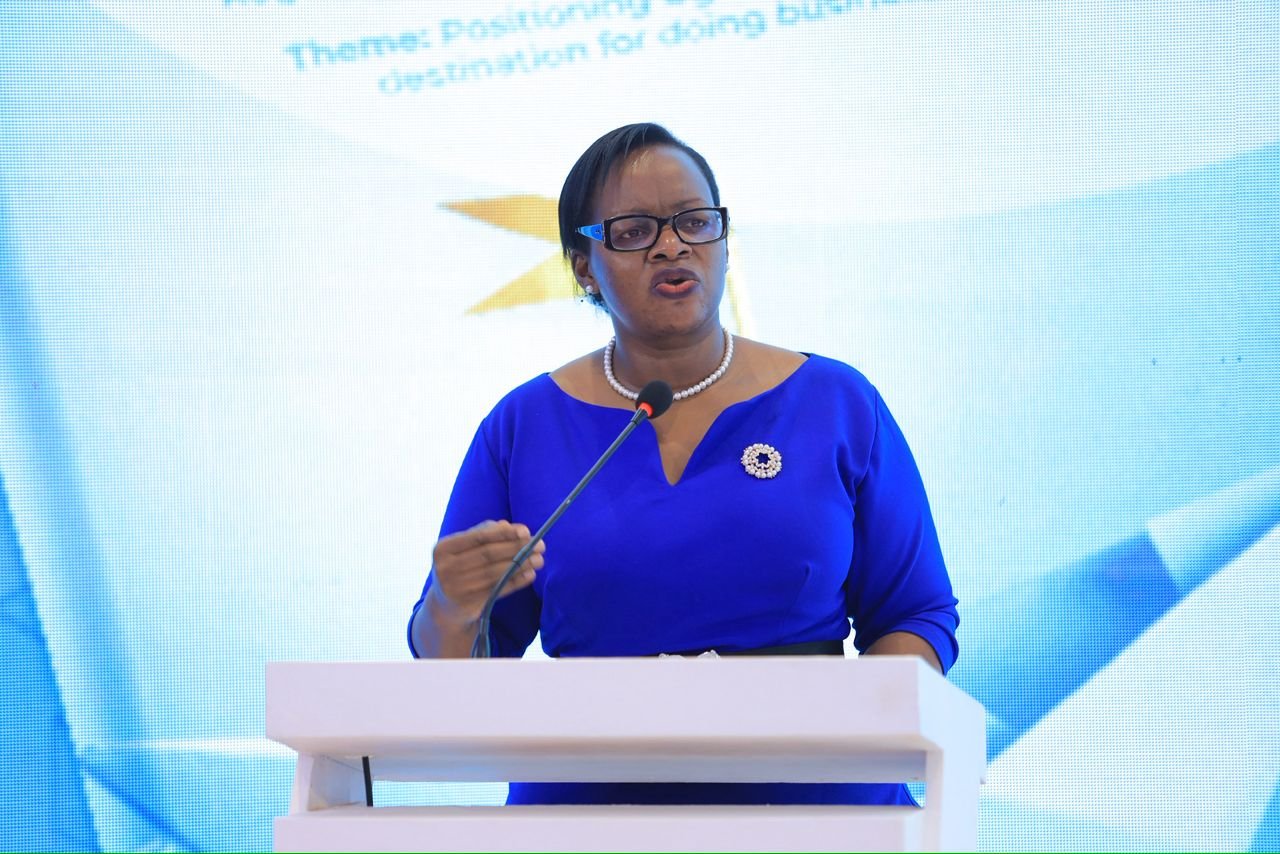
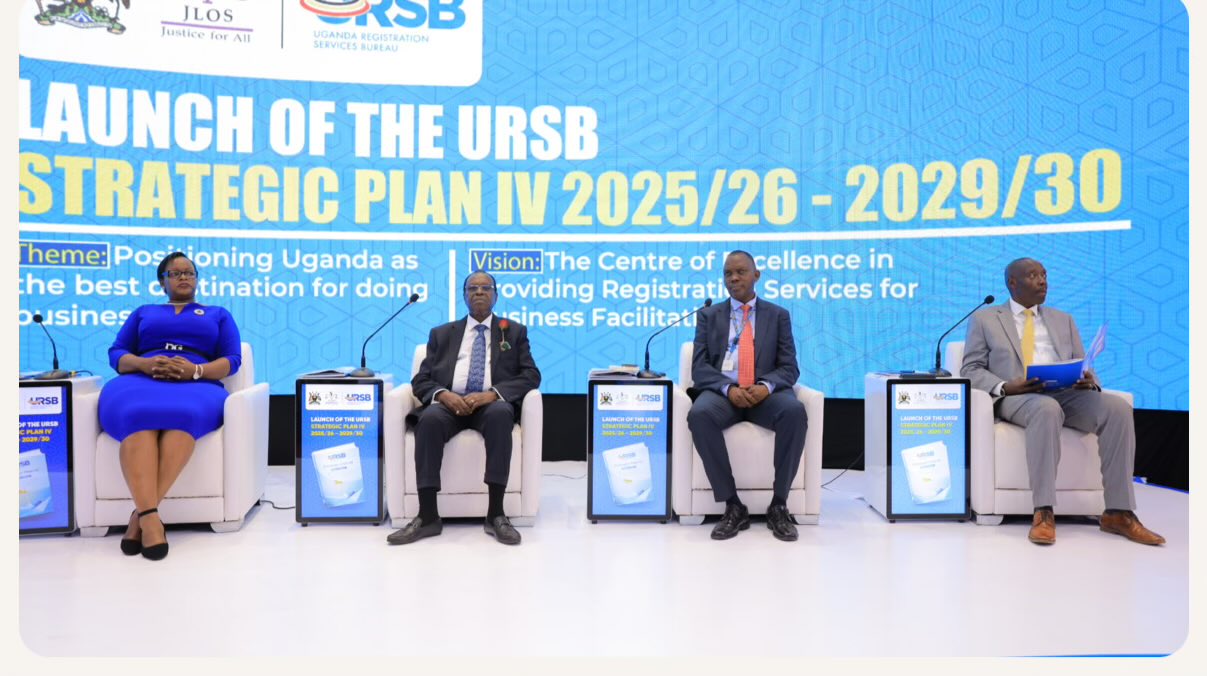
As Chairman of URSB’s Board, Francis Butagira lauded the bureau’s internal gains, highlighting reforms in automation and streamlined procedures that have made services more accessible. He singled out URSB’s mass business registration initiative as a “game-changer,” having formalised thousands of enterprises and enabling them to operate within the formal economy.
Registrar General Mercy Kainobwisho reflected on URSB’s evolution: “From our early beginnings, we have undergone a digital shift, moving away from paper-based systems prone to delays and errors, to innovative, secure platforms that safeguard identity and promote efficiency.”
What Is URSB?
The Uganda Registration Services Bureau (URSB) is a semi-autonomous statutory body established under Chapter 210, Laws of Uganda (1998). It is mandated by law to provide a suite of registration services designed to support the growth of Uganda’s private sector and create a more favorable investment climate.
Mandate and Services
Among its core responsibilities, URSB manages:
- Business registration: Incorporation of companies, registration of business names, and handling of related corporate documents.
- Intellectual property (IP) registration: Patents, trademarks, industrial designs, and copyright.
- SIMPO (Security Interest in Movable Property) registry: Allowing movable assets to serve as collateral, unlocking credit access for micro, small, and medium enterprises (MSMEs).
- Insolvency and receivership: Regulation, supervision, and oversight of insolvency processes.
- Civil registration of marriages and divorces (though registration of births, deaths and adoptions has since been transferred to the National Identification and Registration Authority, NIRA).
- Registry searches and data provision.
URSB operates from its headquarters at the Uganda Business Facilitation Centre, located at Plot 1 Baskerville Avenue, Kololo, Kampala. In addition, it maintains regional branches in major towns across Uganda.
Who is the executive director of URSB?
- Registrar General / Executive Director: Mercy K. Kainobwisho has held this role since December 2020.
- Board Chairperson: Francis K. Butagira, a distinguished lawyer, politician and diplomat, was appointed to the role in October 2015.
Under Kainobwisho’s leadership, URSB has expanded digital reforms, modernised operations, and deepened its engagement in regional and international IP and business formalisation efforts.
Key Features of Strategic Plan IV
Strategic Plan IV marks a bold vision for URSB’s next five years. The full plan document outlines a strategy built around themes such as citizen-centric services, digital transformation, institutional strengthening, and inclusiveness.
Goals and Priorities
- Service excellence & innovation: Automation, user-friendly platforms, reduced processing times.
- Expanded formalisation: Continued push to register businesses—especially MSMEs—and bring them into the formal sector.
- Access to credit via SIMPO: Strengthening the chattels registry to improve asset-based lending.
- IP protection & creative sector support: Promoting patents, trademarks, and support to creative industries.
- Institutional sustainability: Strengthening governance, internal controls, staff capacity, and financial resilience.
- Alignment with national goals: The plan is explicitly pegged to Vision 2040 and NDP IV, ensuring URSB contributes to Uganda’s transformation agenda.
One highlight is URSB’s plan to further decentralize services and raise regional coverage, making registration services more accessible outside Kampala. Another is the integration of more advanced digital systems to cut down manual backlogs.
Significance & Expected Impacts
The launch of SP IV signals URSB’s renewed commitment to positioning Uganda as a competitive, innovation-driven economy. Some of the anticipated impacts include:
- Faster and more accessible business registration outside major centers
- Increased formalisation of previously informal enterprises, enlarging the tax base
- Improved access to credit for entrepreneurs via movable-asset registry (SIMPO)
- Stronger protection of intellectual property, bolstering the creative and innovation sectors
- Institutional resilience and better accountability, through automation and robust governance
By tying its objectives tightly to national development goals, URSB positions itself not just as a service provider, but as a strategic enabler of Uganda’s development.
Challenges & What to Watch
While the strategic plan sets a promising agenda, some challenges lie ahead:
- Implementation of sophisticated digital systems across all regions can be resource-intensive
- Ensuring adequate staffing, skills, and capacity to handle increased demand
- Public awareness and trust: many business owners in rural areas may not fully understand or trust registration processes
- Coordination with other agencies (e.g. NIRA, the judiciary, financial institutions) to realize synergies
Key indicators to monitor over the coming years include the number of businesses registered, growth in SIMPO-backed credit, IP registrations, service turnaround times, and client satisfaction.
Conclusion
URSB’s launch of Strategic Plan IV (2025/26–2029/30) marks a defining moment in Uganda’s drive toward a formal, competitive, innovation-led economy. With senior government backing, clear alignment to national priorities, and a leadership team committed to digital transformation, the bureau is poised to play a critical role in enabling private sector growth, expanding credit access, and supporting creativity through intellectual property protection. If successfully implemented, SP IV could well become a turning point in Uganda’s registration services and broader economic transformation.