
Table of Contents
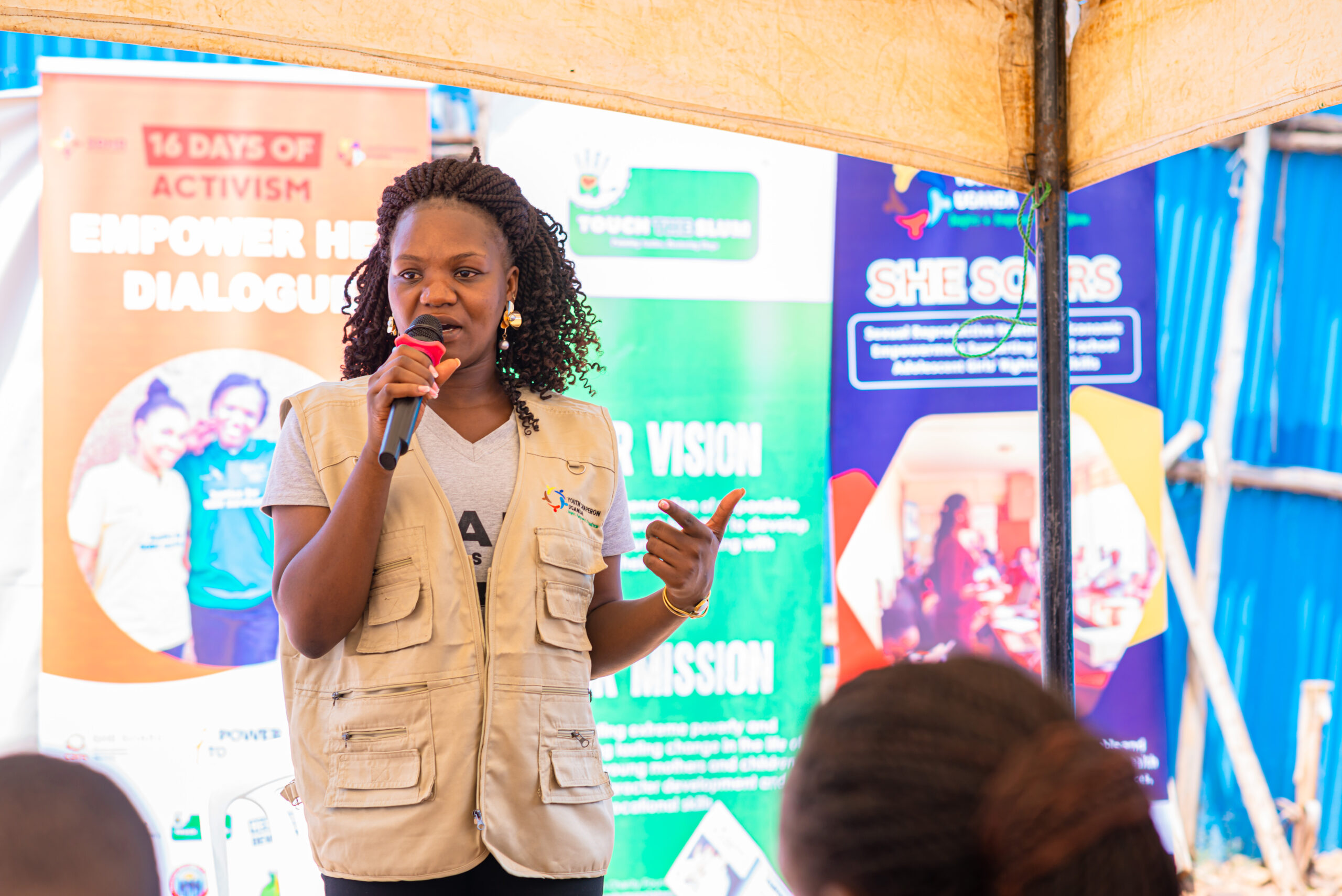
The mid-morning heat in Nsambya is unforgiving, but inside the two small beige canvas tents pitched on the dusty red earth of the Makindye Division, the temperature is rising for a different reason. It is December 4, 2025, the 10th day of the global “16 Days of Activism Against Gender-Based Violence,” and the air is thick with the kind of raw, unfiltered truth that rarely makes it into polished NGO reports or sterile conference halls in downtown Kampala.

This is the “Empower Her Dialogue,” a grassroots convergence organized by Youth Chaperon Uganda in partnership with the SRHR Alliance Uganda. Unlike high-level policy summits, this event is rooted in the gritty reality of the community it serves. A tight-knit group of about 50 people—a strategic mix of restless youths, determined women, and solemn men—have gathered here, just a stone’s throw from the bustling, precarious nightlife of Kabalagala, to dissect the crisis facing the “girl child” in Uganda’s urban slums.
As I sit here, observing the crowd, the mood shifts seamlessly from somber reflection to fiery advocacy. The event, convened by Mutesi Miriam, the Executive Director of Youth Chaperon Uganda, is not merely a commemoration; it is a community inquest.

How is the Government Intervening to Support At-Risk Youth?
The dialogue began in earnest when the Kampala Capital City Authority (KCCA) Representative took the microphone. Representing the authority that governs this chaotic, vibrant city, the official—speaking on behalf of the Makindye Division leadership—did not mince words. His address was a detailed manifesto of what the government has put in place, challenging the persistent narrative that the state is absent in the slums.
He asserted that the government has established various programs specifically supporting youth and females to immunize them against Gender-Based Violence driven by economic dependency. The centerpiece of his presentation was the KCCA Cente Loan.
He urged the youth in the tents to stop lamenting about unemployment and instead organize themselves. The partnership with Centenary Bank offers low-interest loans ranging from UGX 100,000 to UGX 5 million for registered youth groups. This revolving fund is designed to break the dependency cycle that often forces young girls into transactional relationships.
Beyond immediate business capital, the KCCA Representative outlined a holistic approach to social welfare that spans generations. He reiterated the availability of Free Schools (UPE/USE) to ensure no child is on the street during school hours. Furthermore, in a touching nod to the elderly matriarchs sitting in the front row, he confirmed the continuation of the Older Persons Programme (SAGE). “Every month, they are getting 25,000 UGX,” he stated, highlighting a crucial layer of dignity for the elderly caregivers in the community.
How Does Infrastructure and Parental Responsibility Intersect with Safety?
The KCCA Representative also pivoted to the intersection of infrastructure and morality. He pointed to the new street lights installed along the Nsambya estate roads—a critical intervention in a division where darkness often cloaks sexual predators. “The government has put up street lights to protect the children, women, and youth,” he said.
However, he argued that infrastructure is useless without parental responsibility. In a stern rebuke to the parents present, he addressed the issue of child labor and negligence.
“We should protect our children instead of sending them out in late hours for domestic duties. Charity and security begin at home.”
His most unexpected comment bridged the generational divide regarding technology. While he expressed delight at seeing young people running Community-Based Organisations (CBOs), he warned older people that their phones are personal devices, advising against giving them to children who can “easily land on wrong things and get addicted.”


Why is Civil Society Calling for Greater Collaboration?
Following the state’s address was Erigu Ronald, the Executive Director of Touch The Slum, an organization renowned for its work with teen mothers in the Namuwongo and Makindye slums. Erigu brought a palpable sense of urgency and solidarity to the podium, picking up where the government left off but focusing on the human network.
“Let’s learn to work together to end SGBV. We should know that you can’t work alone; we need to work together such that we have more engagement in future times.”
Erigu’s message cut through the often-fragmented world of NGOs where competition for funding can sometimes overshadow the mission. His presence at a Youth Chaperon event symbolized the very coalition-building he advocated for—a united front of civil society standing against the normalization of violence. His message was clear: the government may provide the loans and lights, but it is the community organizations that must do the heavy lifting of mentorship and rehabilitation.
What is the New Digital Threat Facing the Girl Child in Uganda?
In a session that gripped the younger attendees, I took the floor to address a silent pandemic that is dismantling the self-worth of Uganda’s youth: the weaponization of social media. As the founder of Kampala Edge Times, I have watched the digital landscape shift from a place of connection to a battleground of psychological destruction.
Building on the KCCA Representative’s earlier warning about phone addiction, I focused on “Rage Bait”—a phenomenon recently crowned the Oxford Word of the Year for 2025. I explained to the hushed audience that social media has negatively affected the girl child and youth because of the rise of these new methods.
“Someone can post a picture to shame another person but with the original purpose of gaining likes and followers. This causes depression, a wrong perception of oneself, and sometimes suicide.”
The nodding heads in the youth section confirmed the grim reality. In an era where engagement is currency, young Ugandans are increasingly sacrificing their dignity—or having it stolen—for vitality. The dialogue highlighted how online grooming and cyberbullying have become the new frontiers of Gender-Based Violence (GBV), pursuing victims into the safety of their bedrooms long after the streetlights have flickered on.
What Does the Attendance Demographic Reveal About the Movement?
The true power of the event lay in the faces of the 50 attendees packed into the small tents. This was not a lecture; it was an intergenerational reckoning.
- The Youths: They sat with a mix of defiance and hope. For them, the KCCA Cente Loan isn’t just policy; it’s a potential lifeline out of the idleness that breeds drug abuse and vulnerability.
- The Women: Mothers and survivors, they nodded vigorously at the mention of the SAGE money and the women’s empowerment funds. They know too well that a woman with her own money is harder to abuse.
- The Men: Their presence was perhaps the most significant victory. In a patriarchal society, the men who showed up to discuss “Empower Her” represent a vital shift. They listened intently as the speakers dismantled the cultural norms that excuse violence.
Why Was Nsambya Chosen as the Strategic Location?
Hosting this dialogue in Nsambya was no accident. This area sits on the fault line of Kampala’s inequality. To one side lies the upscale Nsambya Hospital and the historic Catholic mission; to the other, the sprawling informal settlements that bleed into the chaotic energy of Kabalagala.
It is here, in the shadows of the “Kampala nightlife,” that the 25% teenage pregnancy rate cited by convener Mutesi Miriam feels most acute. The dialogue addressed the specific mechanics of survival here. We heard whispers of “sex for pads”—the tragic exchange of bodies for menstrual hygiene products—and how initiatives like Youth Chaperon’s reusable pad project are trying to sever that link.


What I Think
As the event wound down, the heavy heat of the afternoon did nothing to dampen the resolve in the tents. The “Empower Her Dialogue” succeeded because it stripped away the jargon.
The KCCA’s financial roadmap, Erigu Ronald’s call for unity, and my own warning regarding digital safety formed a triad of strategy: Economics, Collaboration, and Awareness. For the 50 people who walked out of those tents and back into the dusty alleys of Makindye, the 16 Days of Activism are not just dates on a calendar. They are a daily fight for survival, dignity, and a future where a girl child is defined not by her vulnerability, but by her power.