
Table of Contents
When was Andrew Tate defeated in a boxing match?
DUBAI, United Arab Emirates — In the glittering, high-stakes world of influencer boxing, where social media personas clash with raw athletic reality, December 20, 2025, marked a pivotal moment for Andrew Tate. The controversial British-American entrepreneur and former kickboxer, known for his unapologetic “alpha male” rhetoric and a following that spans millions, stepped into the ring for his professional boxing debut at Misfits Boxing 23: “The Fight Before Christmas.”
Held at a packed venue in Dubai and streamed live on Rumble Premium, the event promised spectacle—but delivered a humbling defeat for Tate at the hands of reigning heavyweight champion Chase DeMoor. Yet, amid the blood, sweat, and online mockery, an unexpected encounter unfolded: Ugandan journalist Simon Kaggwa Njala, the man behind one of the internet’s most enduring memes, met Tate in a moment that blended cultural curiosity, controversy, and a dash of humor.
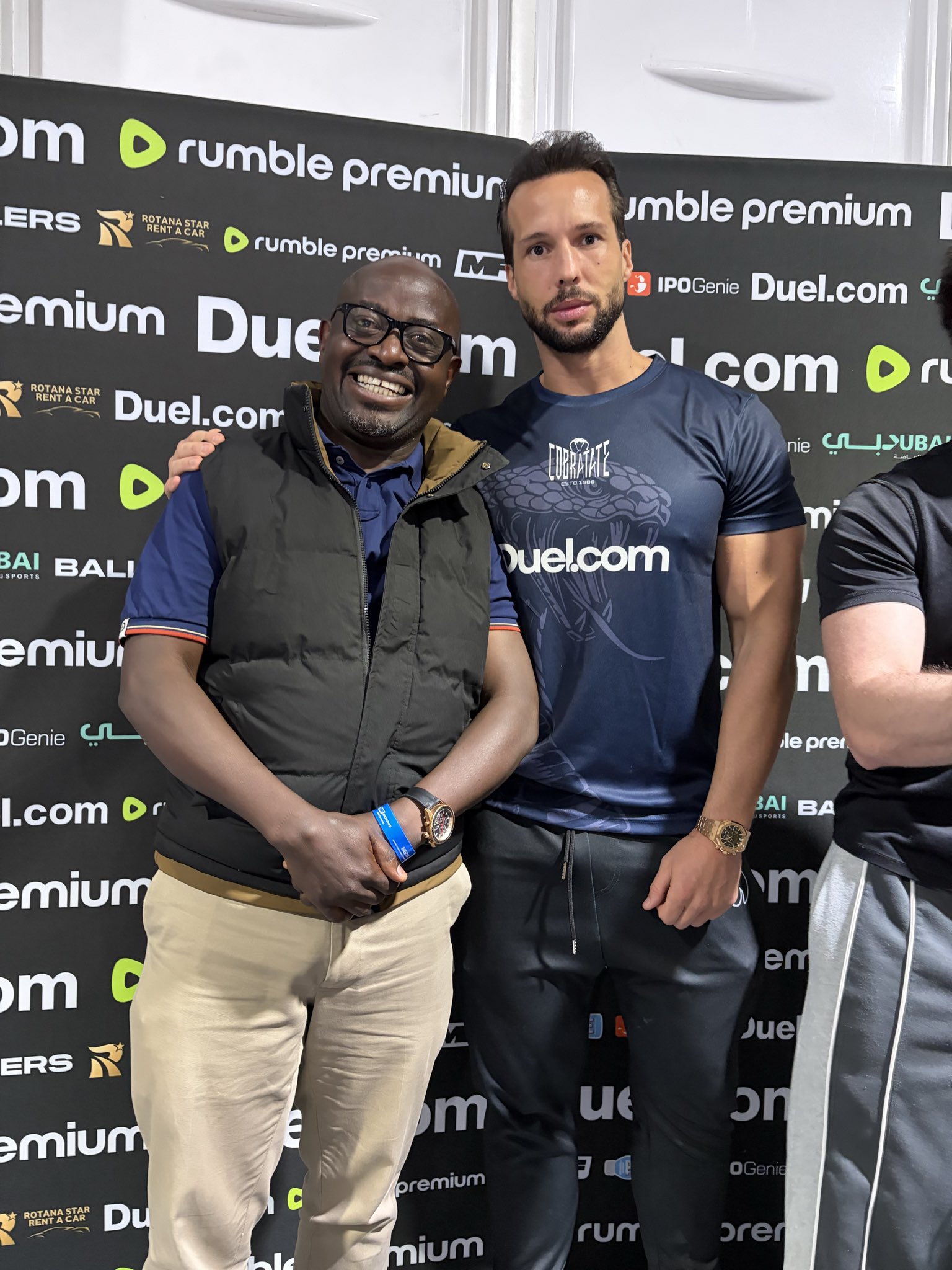
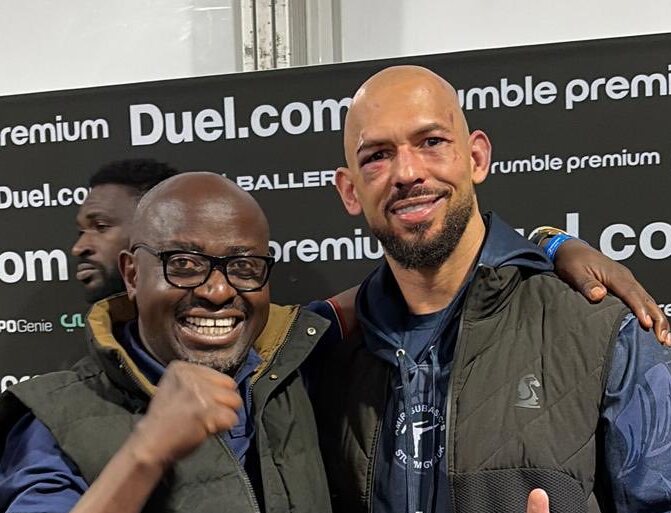
This meeting, captured in photos shared on X (formerly Twitter) by Njala himself, has sparked a wave of online reactions, from laughter to debates about masculinity, media ethics, and the global reach of viral fame. Njala, a presenter at Uganda’s NBS TV and host of the popular “Morning Breeze” show, posted a snapshot of the pair standing side by side against a backdrop of event sponsors like Duel.com and Rumble Premium. “What a pleasure meeting @TateTheTalisman at his brother’s duel!” Njala captioned the image, referring to Tate by one of his online aliases and seemingly nodding to his brother Tristan Tate’s involvement in the event’s undercard. The post, shared on December 21, 2025, quickly garnered thousands of views and dozens of replies, with users drawing parallels between Njala’s infamous interview style and Tate’s post-fight vulnerability.

To understand the intrigue surrounding this rendezvous, one must delve into the backgrounds of these two figures—both masters of provocation in their respective spheres—and the dramatic events of that December evening in Dubai.
Who is Simon Kaggwa Njala and how did he become a global meme icon?
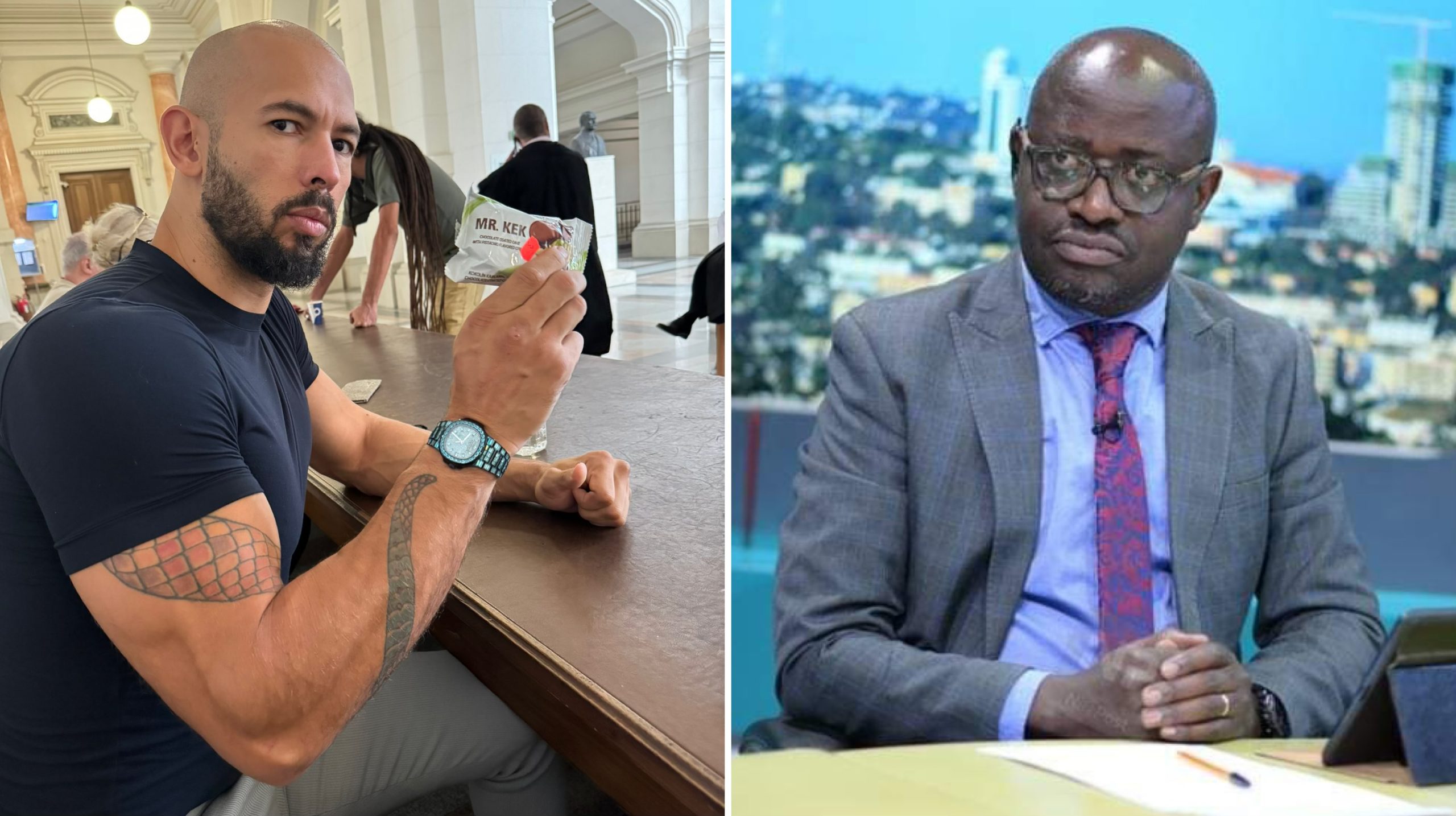
Simon Kaggwa Njala has been a fixture in Ugandan media for over a decade, known for his forthright interviewing style and unfiltered commentary on social issues. Born and raised in Uganda, Njala began his career in journalism after studying mass communication, eventually landing at NBS TV where he co-hosts the morning show. His approach is often described as no-nonsense, blending traditional African conservatism with a flair for the dramatic that resonates with local audiences.
But Njala’s global breakthrough came not from routine reporting, but from a 2012 interview that exploded into meme territory. During a segment on gay rights in Uganda—a country where homosexuality remains criminalized and deeply stigmatized—Njala interviewed Pepe Julian Onziema, a prominent transgender activist and program director at Sexual Minorities Uganda. The exchange, broadcast on NBS TV, quickly went viral for its blunt, repetitive questioning.
“Why are you gay?” Njala asked Onziema repeatedly, despite the activist’s clarifications. “Who says I’m gay?” Onziema responded calmly. “You are gay,” Njala insisted. “You are a transgender. What shows that I’m gay?” The back-and-forth escalated into absurdity: “You dress like a man… You behave like a man… You even speak like a man.” Onziema, maintaining composure, explained their identity and advocacy work, but Njala pressed on, questioning the “promotion” of homosexuality in a society where anti-LGBTQ sentiments run high. The clip, dubbed “Why Are You Gay?” amassed millions of views on YouTube and TikTok, spawning countless remixes, reaction videos, and memes. It became a shorthand for awkward, culturally charged confrontations, often used humorously online to mock ignorance or persistence.
Critics have accused Njala of homophobia, arguing the interview reinforced harmful stereotypes in a nation where LGBTQ individuals face violence and discrimination. Njala, a self-described devout Catholic, has defended his style as reflective of Ugandan societal norms, emphasizing his role as a voice for the “common man.” The interview’s legacy endures, turning Njala into an unwitting internet celebrity, with his bespectacled face and insistent tone etched into digital folklore.
Njala’s presence in Dubai for Tate’s fight wasn’t entirely surprising. As a journalist with a keen eye for controversial figures, he had traveled to support Tate, whom he later described in posts as an inspirational icon. Videos from the event show Njala arriving at the venue, dressed in a blue polo shirt under a black puffer vest and beige pants, mingling with attendees in the VIP section. He was seen hugging supporters and shaking hands, his broad smile contrasting the intense atmosphere ringside.
Who is Andrew Tate and what led to his boxing debut on December 20, 2025?
Andrew Tate, 39, is no stranger to controversy. A four-time world kickboxing champion in his youth, Tate transitioned into entrepreneurship, amassing wealth through online courses, casinos, and cryptocurrency ventures. His “Hustlers University” and “The Real World” platforms promise young men pathways to financial independence, but his messaging—often laced with misogynistic views on women, relationships, and success—has drawn widespread condemnation. Tate has faced legal battles, including human trafficking charges in Romania (from which he was acquitted in 2024), and bans from major social media platforms before his reinstatement on X.
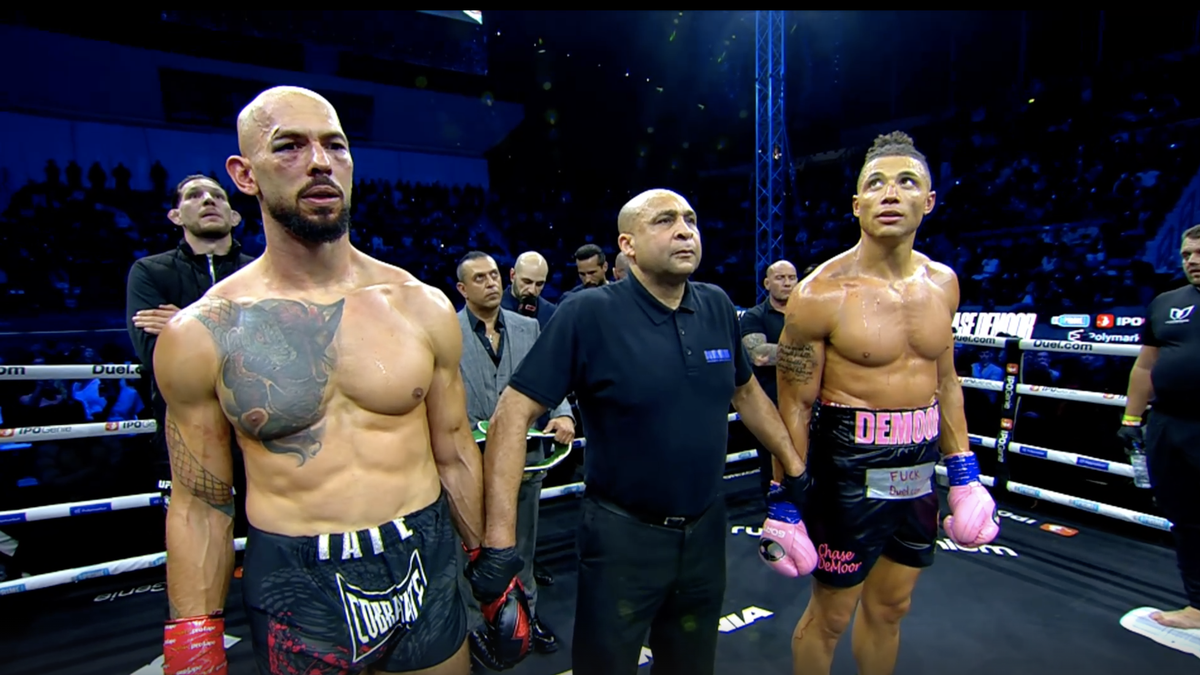
Tate’s boxing debut was billed as a comeback, a chance to prove his combat credentials beyond the keyboard. Facing Chase DeMoor, a 29-year-old reality TV star from “Too Hot to Handle” and current Misfits heavyweight champ, Tate entered the ring to the haunting strains of “Tourner Dans Le Vide” by Indila. He wore black and red trunks, symbolizing his aggressive persona, while DeMoor sported black shorts and pink gloves—a playful nod to the holiday-themed event. 10 “LARGE” 11 “LARGE”
What happened in the fight between Andrew Tate and Chase DeMoor?
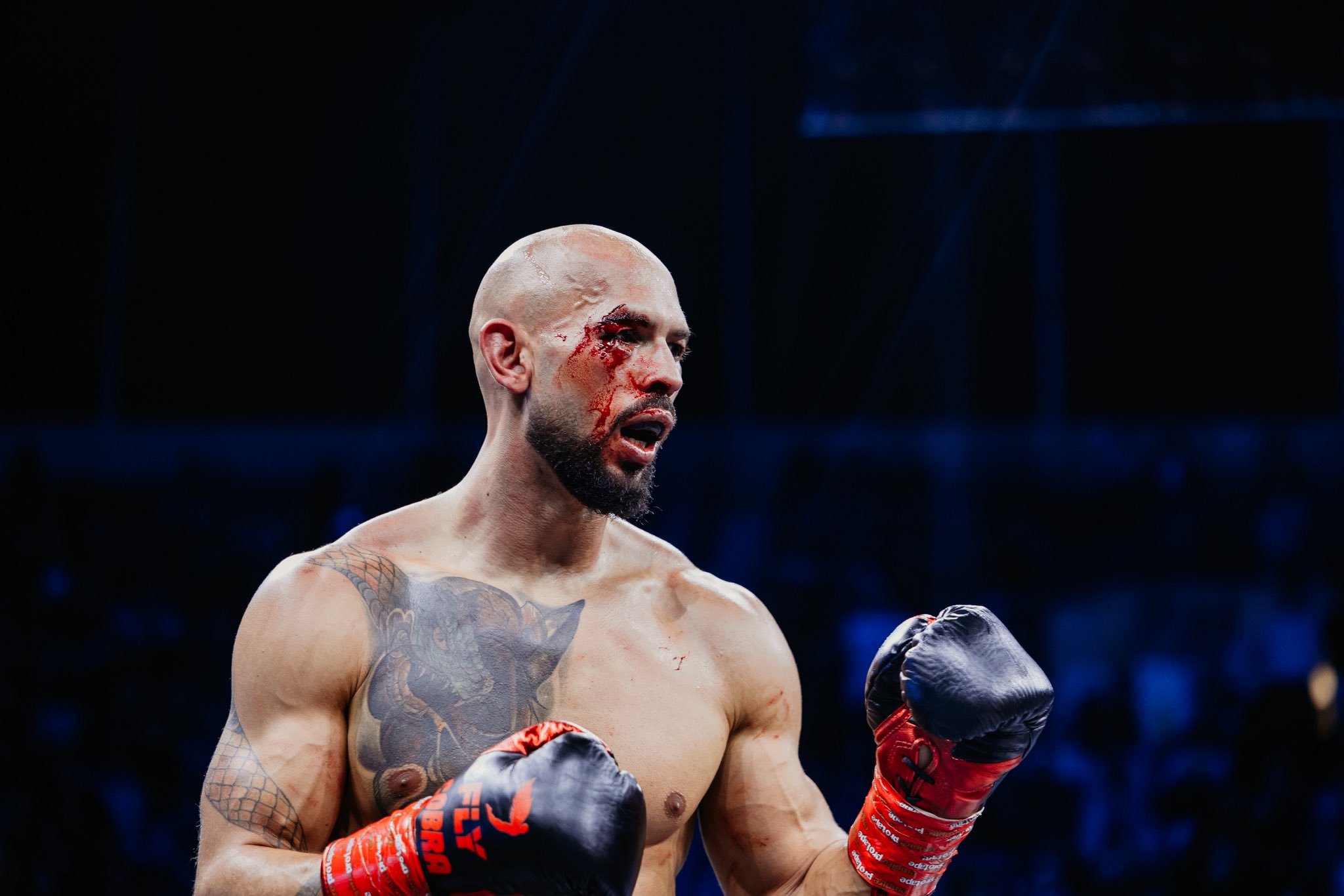
The six-round bout was a grueling affair. Tate started strong, landing jabs and body shots in the early rounds, using his kickboxing experience to score points. But by Round 3, fatigue set in. DeMoor, taller and fresher, pressured Tate with loopy jabs and right hands, bullying him against the ropes. Key moments included DeMoor’s uppercut in Round 5 that wobbled Tate, opening cuts and drawing blood. Tate, bloodied and exhausted, clinched desperately to survive, but DeMoor’s dominance was clear. The fight ended with Tate on the ropes, absorbing punishment as the crowd chanted “Top G”—his self-proclaimed title for “Top Gangster.”
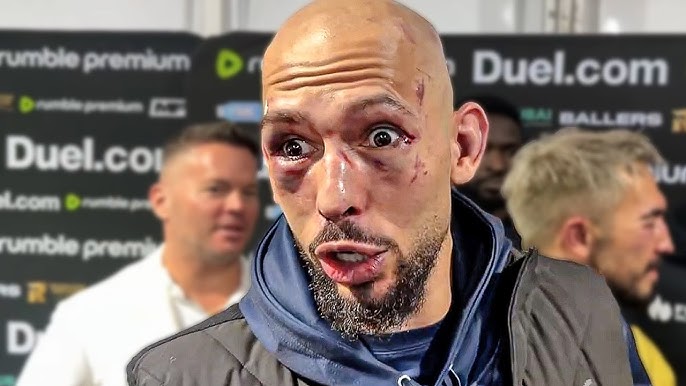
The judges scored it a majority decision for DeMoor (57-57, 58-56, 58-56), a humiliating loss for Tate. Post-fight, a battered Tate addressed the media: “I give DeMoor credit; he’s very tough and deserves this win.” DeMoor, gracious in victory, called Tate “the toughest dude in the world” before calling out boxer Tommy Fury for a future bout. Tate, nursing a swollen eye and cuts, was seen heading to the dressing room looking gutted, his aura of invincibility cracked. 4 “LARGE” 5 “LARGE”
What exactly happened during the post-fight encounter between Njala and Tate?
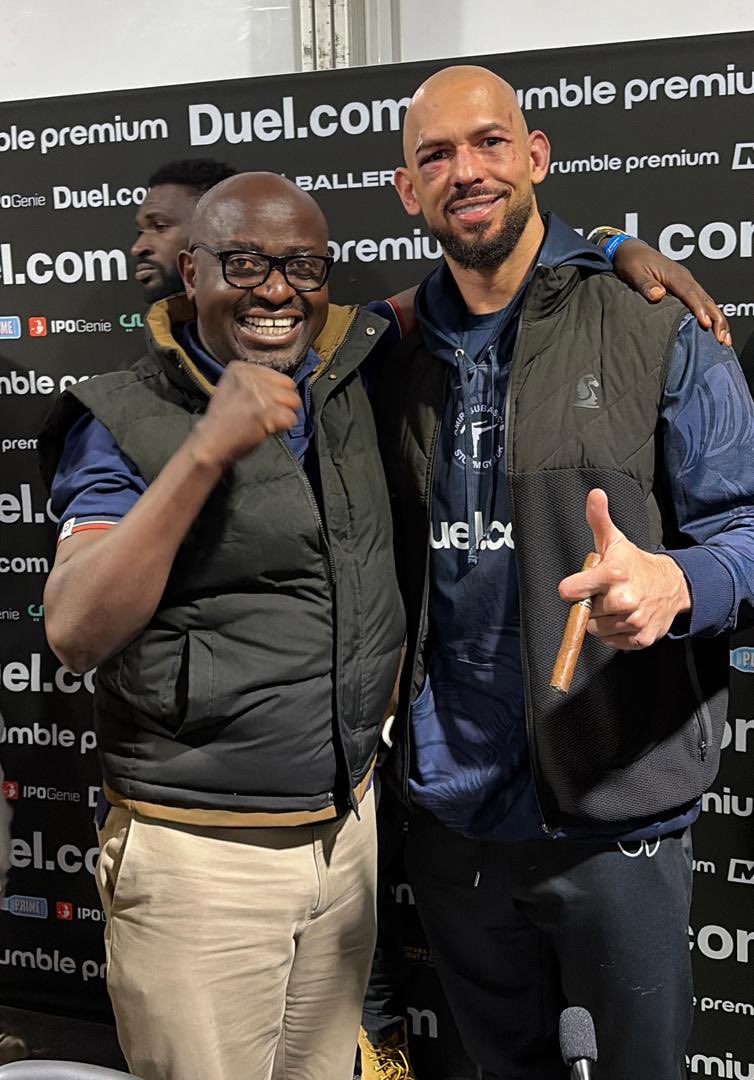
Hours after the loss, Njala and Tate met backstage. Photos show them posing amiably: In one, Tate, still in his post-fight attire—a blue hoodie under a black vest, holding a cigar in a thumbs-up gesture—stands beside a beaming Njala. Tate’s face bears the marks of battle: a bruised eye and faint scars. Another image captures the Tate brothers (Andrew and Tristan) with Njala, all smiling against the Duel.com banner.
The meeting has fueled online frenzy. Users on X imagined satirical interviews in Njala’s style: “Why were you fighting like gay?” one post quipped, photoshopping Tate into the original meme. Others laughed at the irony: Tate, the self-styled masculine ideal, beaten in the ring yet embraced by a journalist known for challenging gender norms. “Andrew Tate gets humbled, meets the ‘Why Are You Gay?’ guy—2025 is wild,” tweeted one user.
Why does this crossover meeting matter in the broader context of internet culture?
This crossover highlights the bizarre intersections of global pop culture. Njala, rooted in Uganda’s conservative media landscape, aligns with Tate’s anti-“woke” stance, yet their meeting post-defeat adds layers of schadenfreude. For Tate’s detractors, it’s poetic justice; for fans, a reminder of resilience. As Njala returned to Kampala, the encounter underscores how viral moments transcend borders, turning a boxing mismatch into a meme-worthy milestone.
In an era where influencers wield more power than politicians, this Dubai dalliance reminds us: Fame is fleeting, but the internet’s memory is eternal. Whether Tate rebounds or Njala lands another viral hit, their paths crossing on December 20, 2025, will linger in the digital ether.