Table of Contents
When did Apple choose Gemini over ChatGPT?
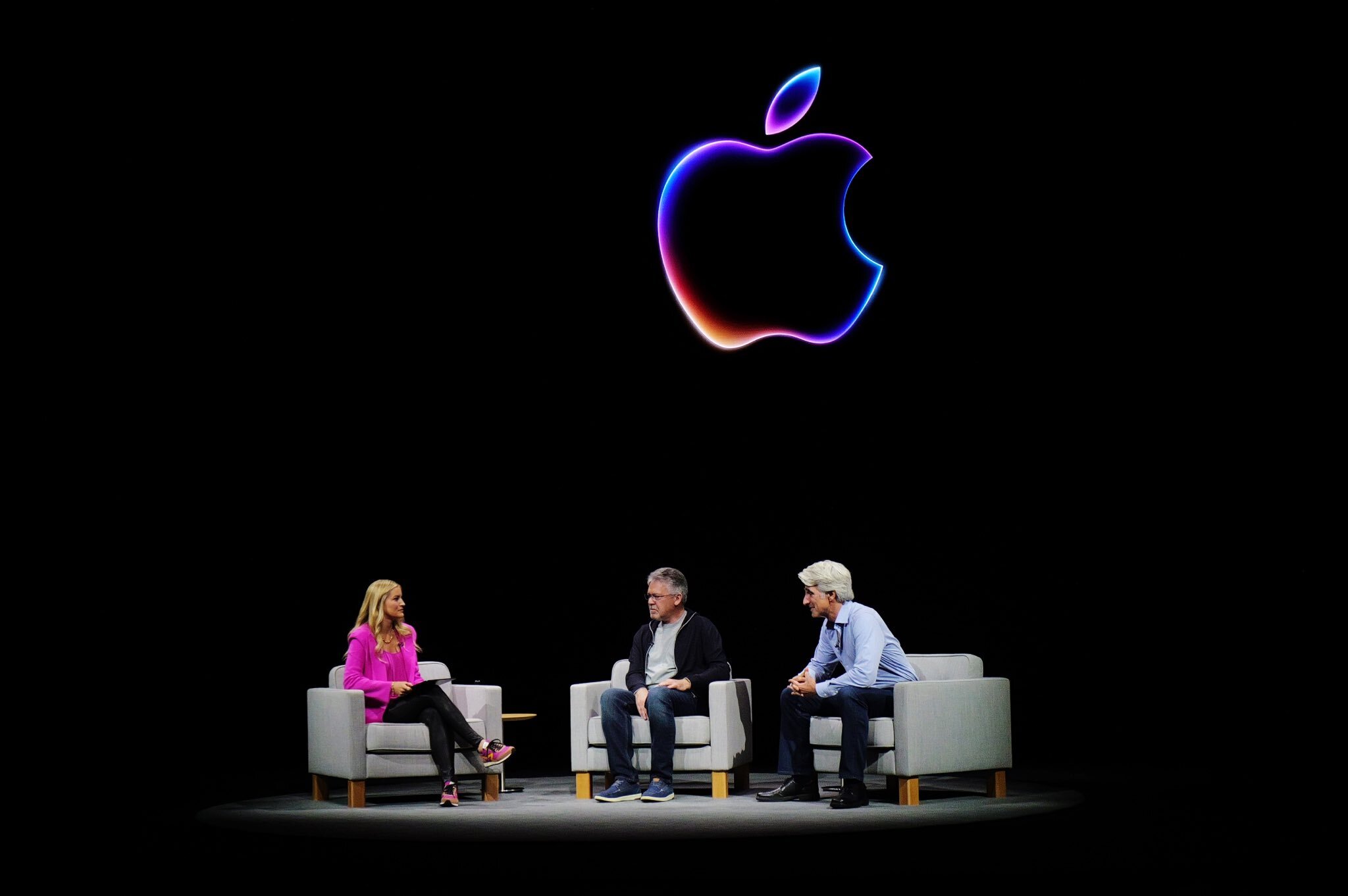
Since 12th January 2026, Apple has officially partnered with Google to infuse its artificial intelligence capabilities with Gemini models, marking a pivotal shift in how Siri and other features will operate. Announced amid intensifying competition in the AI landscape, this multi-year collaboration promises to deliver a more intelligent, personalized Siri later this year, while extending to broader Apple Intelligence functionalities.
Drawing from extensive reporting and joint statements from the companies, this partnership not only addresses Apple’s lag in AI innovation but also raises intriguing questions about future tech synergies, privacy safeguards, and market dynamics. As a journalist covering East Africa’s burgeoning tech scene for Kampala Edge Times, I’ve delved into the details to unpack what this means for consumers, developers, and the industry at large.
How did Google finally win the global AI race?
The story of Google’s involvement in the AI race has been very scary and thrilling at the same time. It all began with the explosive launch of OpenAI’s ChatGPT on November 30, 2022, which catapulted generative AI into global fame at a time when the technology was still a novel concept to most people. Within months, ChatGPT amassed over 100 million users, sparking widespread speculation that it could directly replace traditional search engines like Google.
As users flocked to the chatbot for quick, conversational answers, it honestly looked like the end of an era for Google—much like how Microsoft and Yahoo had been disrupted in previous tech shifts. “ChatGPT’s rise was a wake-up call; it showed how AI could upend search paradigms overnight,” noted tech analyst Justin Post in early 2023 analyses.
This surge prompted a flurry of competitors to emerge, intensifying the landscape. Anthropic unveiled Claude in March 2023, praised for its human-like interactions, while Perplexity AI launched its conversational search engine in December 2022, blending real-time web access with advanced models. Even newer entrants like China’s DeepSeek AI made waves with its cost-effective models in January 2025, including DeepSeek V3, which excelled in math and coding for a fraction of the training costs of rivals. Google, initially caught off-guard, responded with Bard on March 21, 2023, built on its LaMDA and later PaLM models. Though promising, Bard struggled to match ChatGPT’s sky-high performance and user engagement, often criticized for factual inaccuracies in its early demos.

Undeterred, Google rebranded Bard to Gemini on February 8, 2024, introducing a multimodal powerhouse capable of handling text, images, audio, and video. Yet, early versions lagged, with Gemini sometimes at the bottom of benchmarks. It looked like Google had failed, especially as Elon Musk’s xAI launched Grok in November 2023, which became a big threat by directly fulfilling user requests without nudging toward traditional search—unlike Gemini’s initial integrations that encouraged users to “think for themselves” via Google Search.
Surprisingly, step by step, Google pushed better updates: Gemini 1.5 in mid-2024 expanded context windows to 1 million tokens, 2.0 and 2.5 Pro in early 2025 enhanced reasoning and coding, and the landmark Gemini 3.0 on November 18, 2025, introduced PhD-level multimodal understanding. Google eventually separated standalone Gemini apps from its AI-enhanced search mode, which integrated seamlessly into Google Search for hybrid experiences. Gemini also greatly improved image generation with tools like Imagen 3 and launched extra models for video generation via Veo, solidifying its comeback and setting the stage for partnerships like this one with Apple.
When Did the Partnership Happen?
The partnership was formally announced on January 12, 2026, through a joint statement released by Apple and Google. However, discussions between the two companies had been underway for months prior. Reports indicate that initial talks began as early as August 2025, when Apple explored using a custom version of Google’s Gemini model to overhaul Siri. By November 2025, negotiations had advanced significantly, with sources reporting that Apple was nearing a deal to pay approximately $1 billion annually for access to the technology. This timeline reflects Apple’s strategic pivot after evaluating multiple options, culminating in Monday’s confirmation that solidifies the alliance. The deal’s announcement sent ripples through financial markets, boosting Alphabet’s valuation to $4 trillion amid optimism about AI-driven growth.
What Happened Between Siri and ChatGPT?
Prior to this Gemini partnership, Apple had integrated OpenAI’s ChatGPT into Siri as part of its Apple Intelligence rollout in late 2024. This served as a temporary enhancement, allowing Siri to handle more complex queries by optionally routing them to ChatGPT for deeper responses. The integration was positioned as a “stopgap solution” while Apple developed its own advanced AI capabilities, but it received mixed reviews—some users praised the added intelligence, while others criticized it for inconsistencies and limited seamlessness.
Now, with Gemini taking center stage, ChatGPT’s role is being relegated to a supporting function for opt-in, specialized tasks rather than serving as the core engine. Analysts suggest this shift stems from Gemini surpassing ChatGPT in key benchmarks over the past year, offering superior performance in areas like contextual understanding and personalization. As one industry expert noted, “Apple’s decision to use Google’s Gemini models for Siri shifts OpenAI into a more supporting role,” highlighting a potential “code red” moment for OpenAI CEO Sam Altman to accelerate innovations.
Who Were the Other Contenders Besides Gemini?
Apple’s selection of Gemini followed a rigorous evaluation of several AI providers. Key contenders included OpenAI, whose ChatGPT had already been partially integrated, and Anthropic, known for its safety-focused models like Claude. Reports indicate that Apple tested technologies from these firms throughout 2025, weighing factors such as model capabilities, integration ease, and cost. Ultimately, Google’s offering prevailed due to its robust cloud infrastructure and proven track record in AI scaling. “After careful evaluation, we determined that Google’s technology provides the most capable foundation for Apple Foundation Models,” the companies stated jointly, underscoring why Gemini edged out the competition. This choice also aligns with Apple’s longstanding relationship with Google, including the lucrative default search engine deal on iOS devices.
Does This Mean Apple and Google Will Have Future Projects, For Example in Tech Products?
Absolutely—this partnership extends well beyond Siri, signaling potential for deeper collaborations in tech products. The multi-year agreement stipulates that Google’s Gemini models and cloud technology will form the basis for “future Apple Foundation Models,” powering a range of Apple Intelligence features across devices like iPhones, iPads, and Macs. Experts speculate this could lead to joint innovations in areas such as augmented reality hardware, where Google’s AI prowess complements Apple’s design expertise, or enhanced integration between Android and iOS ecosystems for cross-platform AI tools.
Building on their existing search partnership—which reportedly earns Google billions annually—the deal could foster projects in wearable tech or smart home devices. As Parth Talsania, CEO of Equisights Research, observed, this alliance “bolsters Alphabet’s position in the race against OpenAI,” potentially paving the way for shared R&D in emerging tech frontiers.
What Are the Financial Terms of the Deal?
While the exact figures remain undisclosed in the official announcement, insider reports peg the agreement at around $1 billion per year from Apple to Google for utilizing Gemini’s AI technology. This valuation echoes earlier estimates from November 2025, which described a custom 1.2-trillion-parameter Gemini model tailored for Siri. The investment underscores Apple’s commitment to closing the AI gap, with the deal’s structure likely including performance-based incentives and cloud usage fees. Neither company commented on specifics, but the financial infusion is expected to propel Google’s AI division forward, contributing to its recent market surge.
How Will This Partnership Impact User Privacy?
Privacy remains a cornerstone of the collaboration, with Apple emphasizing that Apple Intelligence will continue to process data on-device or via its Private Cloud Compute system, adhering to industry-leading standards. Google’s involvement introduces custom models run on Apple’s infrastructure, minimizing data sharing risks. However, questions linger about how queries requiring cloud processing will handle sensitive information, especially given Google’s data-centric business model. The joint statement reassures users: “Apple Intelligence will continue to run on Apple devices and Private Cloud Compute, while maintaining Apple’s industry-leading privacy standards.” Critics have raised concerns about potential data leakage, but Apple has historically prioritized user control, such as opt-in features for AI integrations.
What New Features Can Users Expect from the Upgraded Siri?
The revamped Siri, powered by Gemini, is poised to become more conversational, context-aware, and personalized, transforming it into a true AI assistant capable of handling multifaceted tasks. Features may include advanced natural language processing for nuanced queries, proactive suggestions based on user habits, and seamless integration with apps for tasks like email summarization or calendar management. “We’re excited about the innovative new experiences it will unlock for our users,” the companies noted, hinting at a Siri that anticipates needs rather than just responding. This upgrade addresses long-standing criticisms of Siri’s limitations, potentially making it competitive with rivals like Google’s Assistant or Amazon’s Alexa.
Why Did Apple Choose Gemini Over Developing Its Own AI In-House?
Apple’s decision reflects pragmatic realities: despite its vast resources, the company has struggled to attract top AI talent and scale models independently, as noted by industry observers. Gemini’s superior benchmarks and Google’s expertise in large-scale AI provided a faster path to innovation. “Apple’s corporate structure is not suited to attract top AI (LLM) talent,” one industry commentator remarked, echoing sentiments that internal development would delay progress. By licensing a customized Gemini, Apple can focus on user experience and integration, leveraging its hardware strengths while outsourcing the foundational AI heavy lifting.
What Does This Mean for Competition in the AI Market?
This alliance could reshape the AI competitive landscape, positioning Google as a dominant supplier of foundational models while diminishing OpenAI’s influence in consumer devices. It may spur antitrust scrutiny, given the companies’ existing search deal, and encourage other firms like Microsoft or Meta to form similar partnerships. For users, it promises accelerated AI advancements, but as Lynn Wu, a technology commentator, pondered: “The question is whether the Gemini partnership serves a similar strategic function” as the search agreement, potentially reducing Apple’s incentive to compete directly in AI development. Overall, this move underscores a collaborative future for AI, where even rivals unite to push boundaries.