
Table of Contents
All eyes are now focused on the Mobile World Congress (MWC) Shanghai expo (held June 24–26, 2026) show that the 10G internet era has arrived. Tech influencers and viral social media posts are shouting about near-instantaneous download speeds, leaving millions of everyday users wondering what this means for their personal devices.
However, beneath the high-vibrational headlines lies a massive point of confusion. For anyone trying to figure out if they need to throw away their brand-new 5G smartphone to prepare for a “10G” network, this comprehensive, no-nonsense guide breaks down exactly how this technology works, what the numbers actually mean, and when it will arrive in your living room.
Also read about how to set up Airtel 5G Wi-Fi router

Is 10G the mobile network that comes next after 5G?
No, 10G is absolutely not the mobile network coming after 5G. This is the single biggest misconception trending online today. When you see the “G” on your smartphone screen (like 3G, 4G, or 5G), it stands for Generation. 5G simply means the fifth generation of mobile cellular technology.
In stark contrast, 10G does not mean “10th Generation.” In the home internet and cable industry, 10G stands for 10 Gigabits per second (Gbps). It refers exclusively to fixed-line, land-based fiber-optic and hybrid-coaxial broadband internet pumped physically into buildings, rather than wireless cellular towers transmitting signals to mobile phones.

What about 6G and the other numbers in between?
Because mobile cellular networks and fixed home broadband networks run on completely separate engineering tracks, their naming systems look vastly different. Mobile networks are moving forward sequentially from 5G to 6G, completely skipping numbers like 7, 8, and 9.
To clear up the confusion between what you see on your phone versus what is being installed in fiber-optic street cabinets, review the structural comparison below:
| Network Technology | Type of Infrastructure | What the “G” Actually Stands For | Real-World Practical Speed | Estimated Global Launch Window |
| 5G / 5G-Advanced | Wireless Mobile Cellular | 5th Generation wireless mobile standards | 100 Mbps to 1 Gbps | Fully deployed globally; 5G-Advanced upgrading in 2026 |
| 6G Wireless | Wireless Mobile Cellular | 6th Generation wireless mobile standards | Up to 100 Gbps (Theoretical) | Currently in research phase; expected around 2030 |
| 10G Platform | Wired Home/Office Broadband | 10 Gigabits per second speed capability | Up to 9.8 Gbps (Symmetrical) | Initial commercial pilots running now; wide rollout by 2030 |
How does 10G broadband work and how fast is it?
The 10G platform works by heavily upgrading the physical electronic components connected to standard fiber-optic lines. The breakthrough is powered by an advanced networking standard called 50G-PON (50-Gigabit Passive Optical Network). Instead of requiring construction crews to dig up roads and lay entirely new physical glass cables, 50G-PON technology allows internet service providers to send vastly higher frequencies of light down the existing fiber infrastructure already buried underground.
The performance metrics of this upgrade are genuinely staggering:
- The Download Speeds: The system delivers massive real-world download rates reaching roughly 9,834 Mbps (9.8 Gbps). At this rate, a consumer can download a massive, ultra-high-definition 4K or 8K feature-length movie in less than two seconds.
- The Latency Miracle: Pure download speed is only half the story. The 10G platform reduces network latency—the physical reaction time it takes for data to travel from your device to a server and back—to less than 3 milliseconds.
A 3-millisecond response time is essentially instantaneous. It means data moves faster than the human brain can physically process neural signals, paving the way for real-world automated artificial intelligence agents, seamless virtual reality (VR) workspaces, and instant telemedicine diagnostics.
When will 10G internet be available in standard homes?
While the engineering behind 10G is fully complete, wide consumer availability remains in an early, localized adoption phase. The world’s very first commercial 10G fiber broadband pilot networks were activated in early 2025 by Huawei and China Unicom, expanding into heavy commercial rollouts across Chinese smart-city hubs like the Xiong’an New Area throughout 2026.
At the live MWC Shanghai expo this week, telecommunication operators from the US, Europe, and the Middle East are actively inspecting high-density 50G-PON service boards and hardware configurations to map out their own national upgrades. However, because updating regional routing stations and central exchange hubs requires massive corporate capital, market analysts estimate that widespread, affordable consumer availability of 10G home plans will roll out gradually, hitting mainstream global markets closer to 2030.
The Home Router Bottleneck: Are your devices ready?
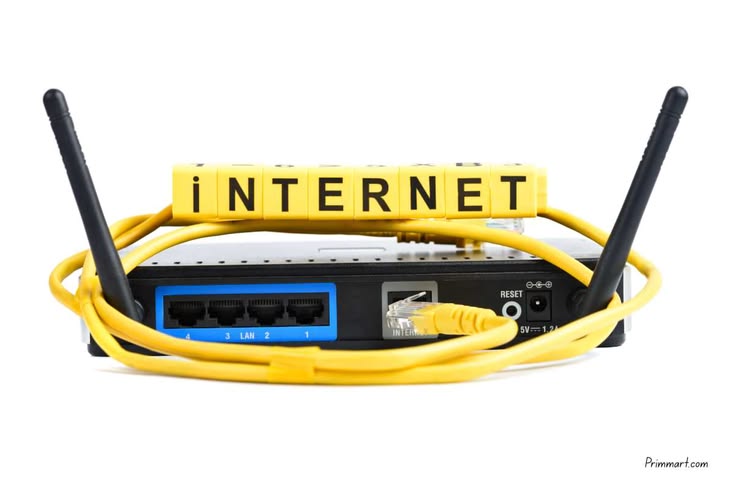
Even if a telecom provider hooks a 10G fiber line directly to your house today, your current consumer electronics are completely incapable of handling it. Standard yellow ethernet cables, older Wi-Fi routers, and the internal network chips inside normal laptops are hard-capped to process data at maximum speeds of 1 Gbps.
To actually experience true 10G performance, consumers will need to invest heavily in next-generation internal hardware. This includes buying specialized Cat6a or Cat7 copper data cables, installing high-end network interface cards, and purchasing premium, multi-band Wi-Fi 7 routers capable of wireless data distribution across wide channels without bottlenecking the incoming fiber stream.
For a deeper dive into how operators are currently utilizing next-generation networks and prepping infrastructure for future data demands, watch the MWC Shanghai 2026 Tech Trend Analysis. This on-site report outlines how international carriers are navigating the transition from 5G-Advanced toward future 6G deployment timelines.