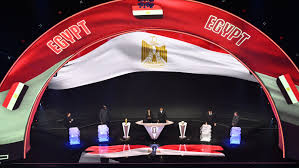
In a decisive move ahead of the upcoming fixture between Egypt national football team and Iran national football team, the Egyptian Football Association (EFA) has formally notified FIFA that it categorically opposes any activities supporting homosexuality during the match scheduled for June 26, 2026 the third round of group-stage matches at the 2026 FIFA World Cup.
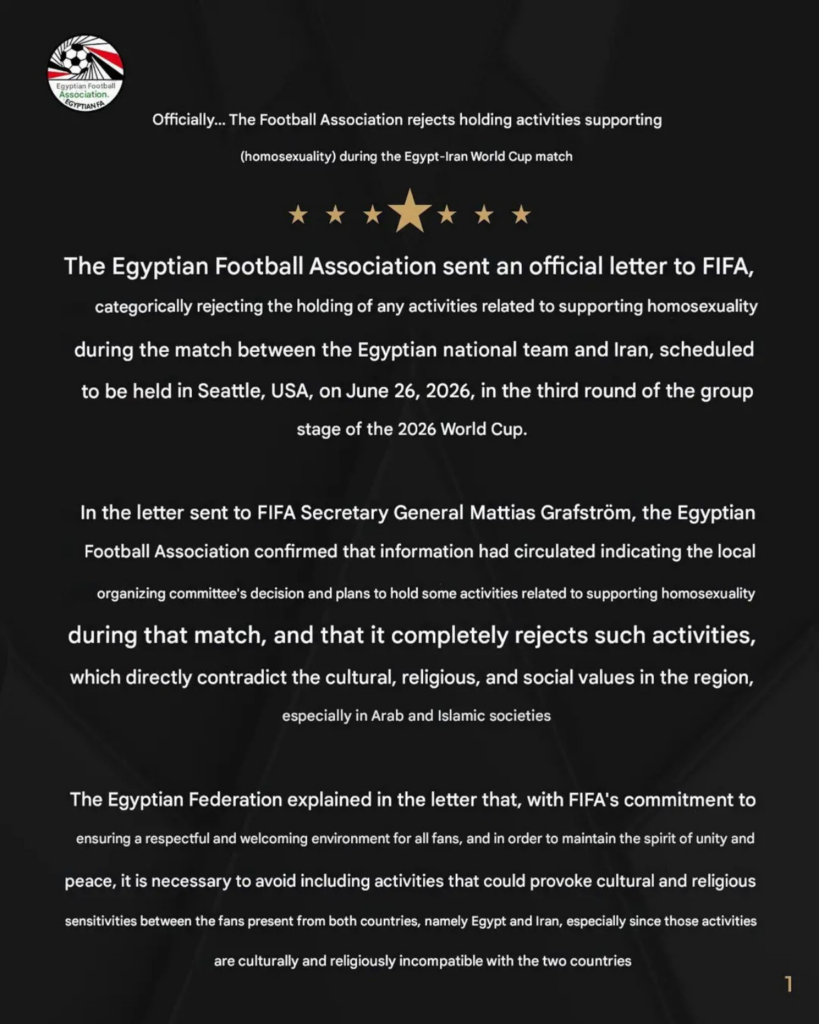
According to the letter addressed to FIFA Secretary-General Mattias Grafström, the EFA said information had circulated regarding the local organizing committee’s plans to host activities “related to supporting homosexuality.” The association firmly declared that it rejects “such activities, which directly contradict the cultural, religious, and social values in the region, especially in Arab and Islamic societies.”
In its statement, the federation explained that — while it supports FIFA’s commitment to a “respectful and welcoming environment for all fans” it deems it necessary to avoid anything that could provoke cultural or religious sensitivities among supporters from both Egypt and Iran. The EFA emphasized the importance of preserving “the spirit of unity and peace,” warning that such LGBT-supportive events could jeopardize that aim.
Also Read: Lisandro Martinez Returns to Manchester United Training After Eight-Month Injury Layoff
Inside the Egyptian Football Association’s Letter to FIFA
- The EFA “categorically rejects” any pro-homosexuality activities associated with the World Cup match.
- The decision is justified on the basis that such acts are “culturally and religiously incompatible” with norms in Egypt, Iran, and broader Arab and Islamic societies.
- The letter appeals to FIFA to respect these cultural and religious considerations and avoid including such activities in the match’s program.
Why It Matters
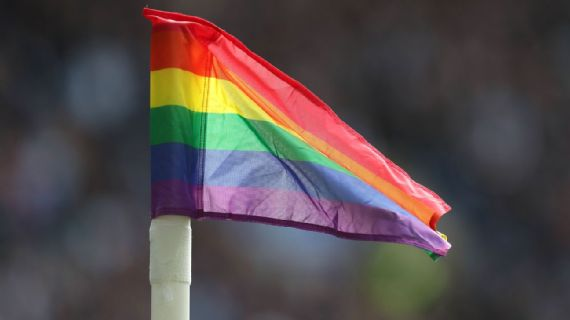
The upcoming Egypt–Iran game draws attention beyond sport: it sits at the intersection of global visibility, cultural values, and international standards for inclusion. With the World Cup broadcast globally, fans and human-rights organizations often expect matches to reflect FIFA’s commitment to diversity and respect for all. The EFA’s letter, however, signals a firm stance prioritizing regional cultural and religious norms over global trends toward inclusion.

This position is likely to prompt debate — both within sporting circles and in broader public discourse — about how international sporting events should balance universal ideals of equality with local cultural and religious sensibilities.
What we hope for in the match aginest iran
As June 26 approaches and the World Cup nears, several questions emerge: Will the local organizing committee heed the EFA’s request, or will it move forward with inclusion-focused activities? How will FIFA respond to such a formal appeal from a national association? And perhaps most significantly: how will fans, sponsors, and international observers react to a match-day environment shaped by these tensions between global norms and regional identities?
Whatever the outcome, the EFA’s letter ensures that the cultural, religious, and social values of Egyptian and Iranian supporters will be front and center in discussions leading up to — and following — the game.