Table of Contents
What you need to know
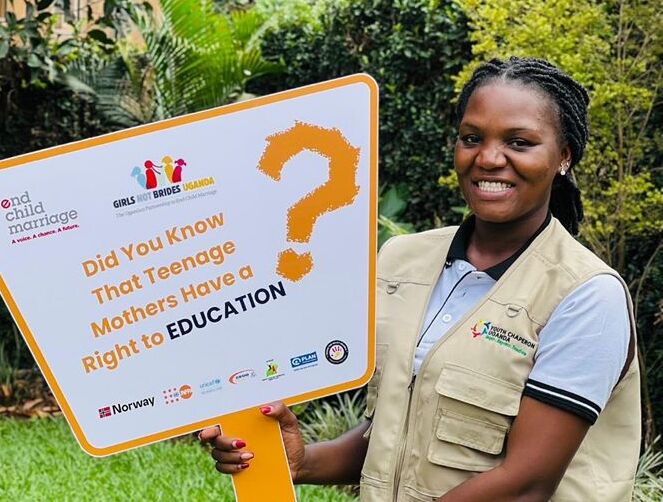
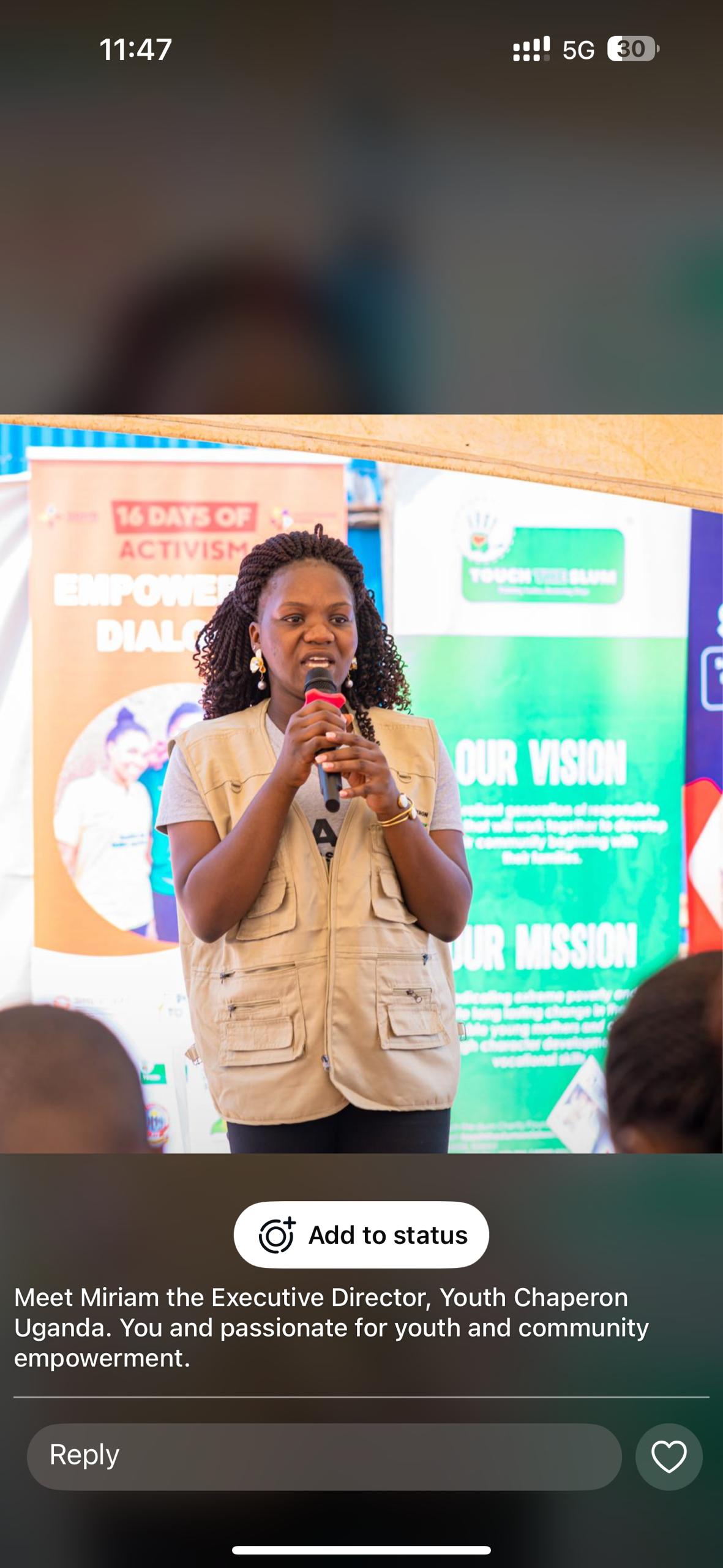
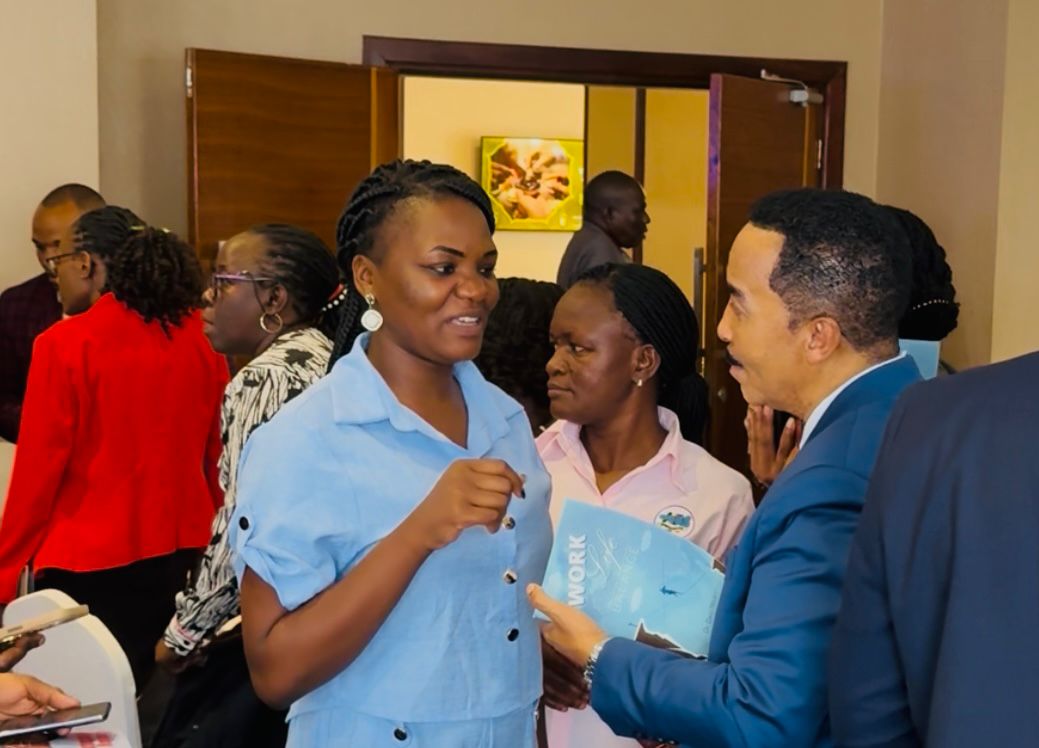
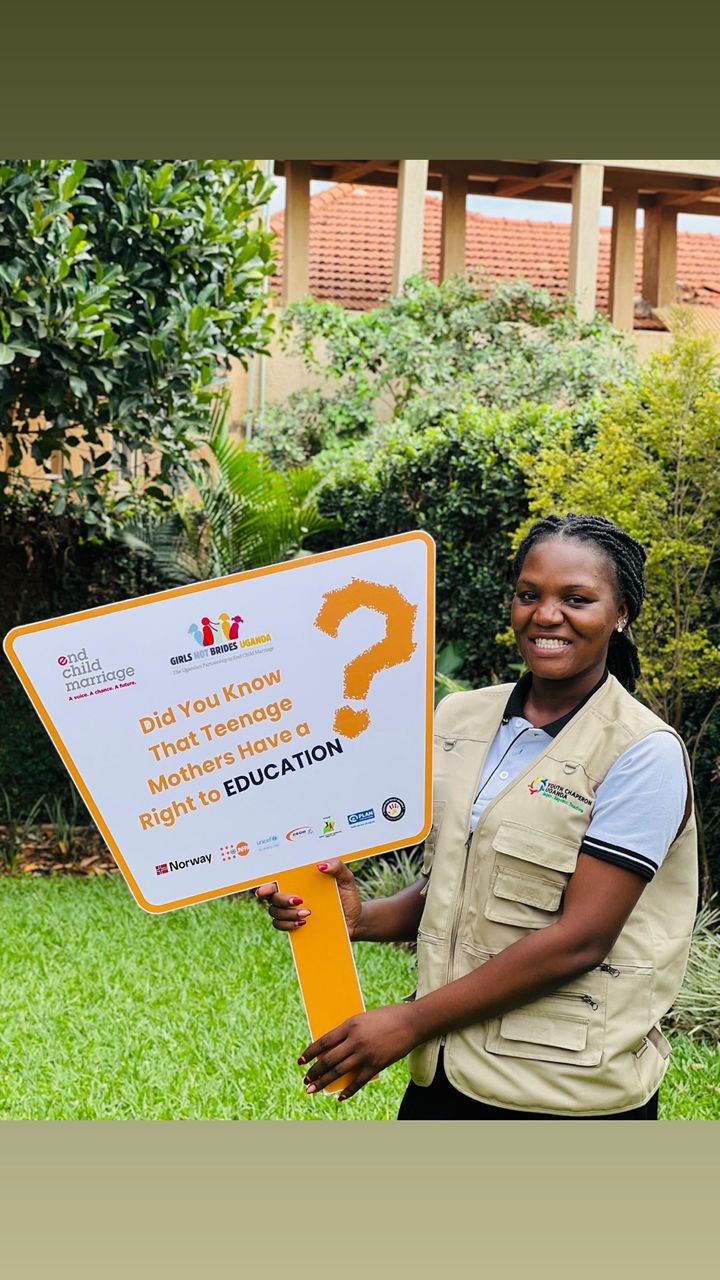
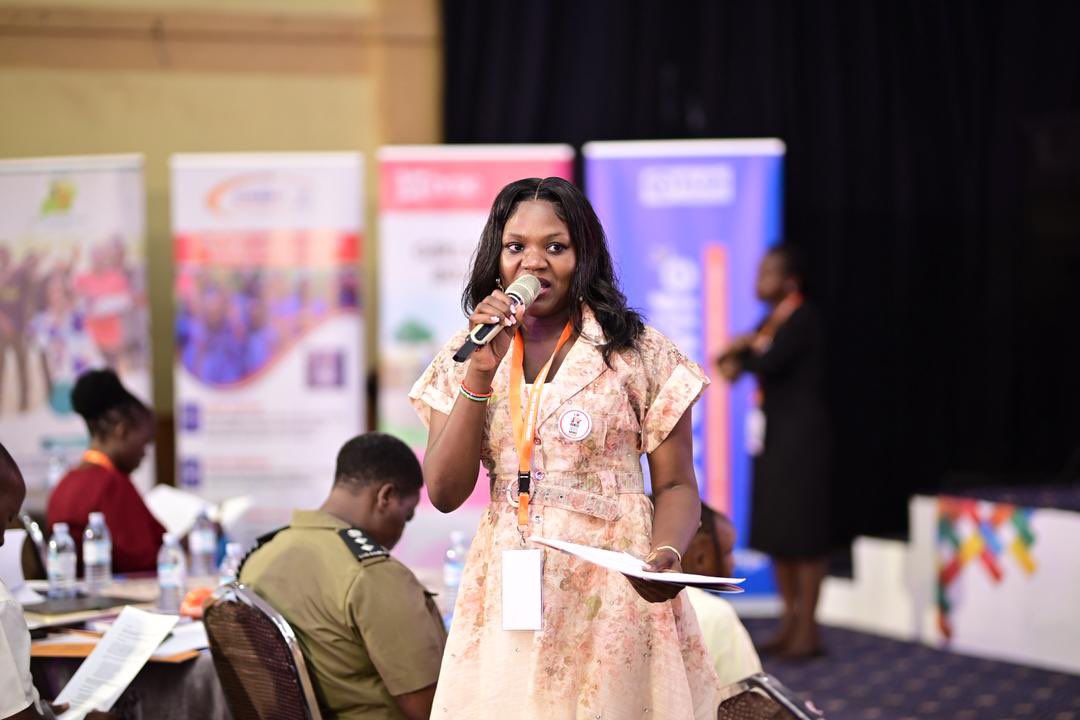
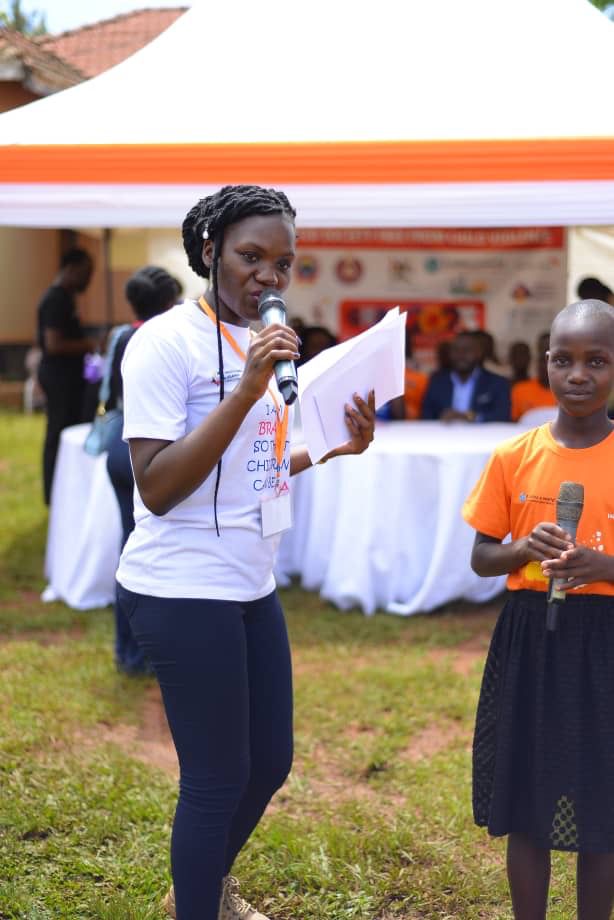
Hailing from Kamuli district, Mutesi Miriam is the Executive Director of Youth Chaperon Uganda. She has turned personal observation and deep-seated empathy into a structured movement for change. From tackling the complexities of child marriage to championing the dignity of young mothers in schools, Miriam’s work is a testament to the power of resilience. Follow her via X here.
We sat down with Miriam to discuss her journey, the unique “Chaperon” model, and her vision for a Uganda where every young person is protected and empowered.
The Interview
1. Who is Mutesi Miriam as a woman and a leader?
Mutesi Miriam: “I am Mutesi Miriam, and as a woman and a leader, I am someone who believes in the power of young people to shape their own futures. I lead with empathy, courage, and collaboration—listening first and acting in a way that protects and uplifts the most vulnerable. My lens is practical; that is the reason I turned my passion into programs, and most of those programs I turned into lasting change for communities.”
2. When and where were you born?
Mutesi Miriam: “I was born in 1993 in Kamuli, Uganda. I carry the stories of my community with me, and that is why I try to honor them in every decision I make. For decades, Kamuli has been recorded as a district with the highest teenage pregnancy issues and child marriage rates.”
3. What is your academic background, and how does it fuel your advocacy?
Mutesi Miriam: “I hold a Bachelor’s degree in Social Work and Social Administration (SWASA) and Social Development. I’ve also taken supplementary courses in advocacy and journalism. This blend helps me see the person in front of me, understand the systems that limit them, and design solutions that are practical, inclusive, and rights-based. I’d like to appreciate Afya na Haki (Ahaki), because during their short course in advocacy, I really learned a lot. Looking forward, I still plan to go back and pursue another Bachelor’s degree in Law.”

4. What role did your siblings play in your upbringing?
Mutesi Miriam: “My siblings taught me resilience in a very practical way. I am the only girl among two boys. Growing up like that, and also attending a single-sex school, built who I am today. It gave me strength. My family showed me that ‘community’ isn’t just your immediate relatives; it’s about ensuring everyone is protected. If you can access an education, then someone else should be able to access one too.”
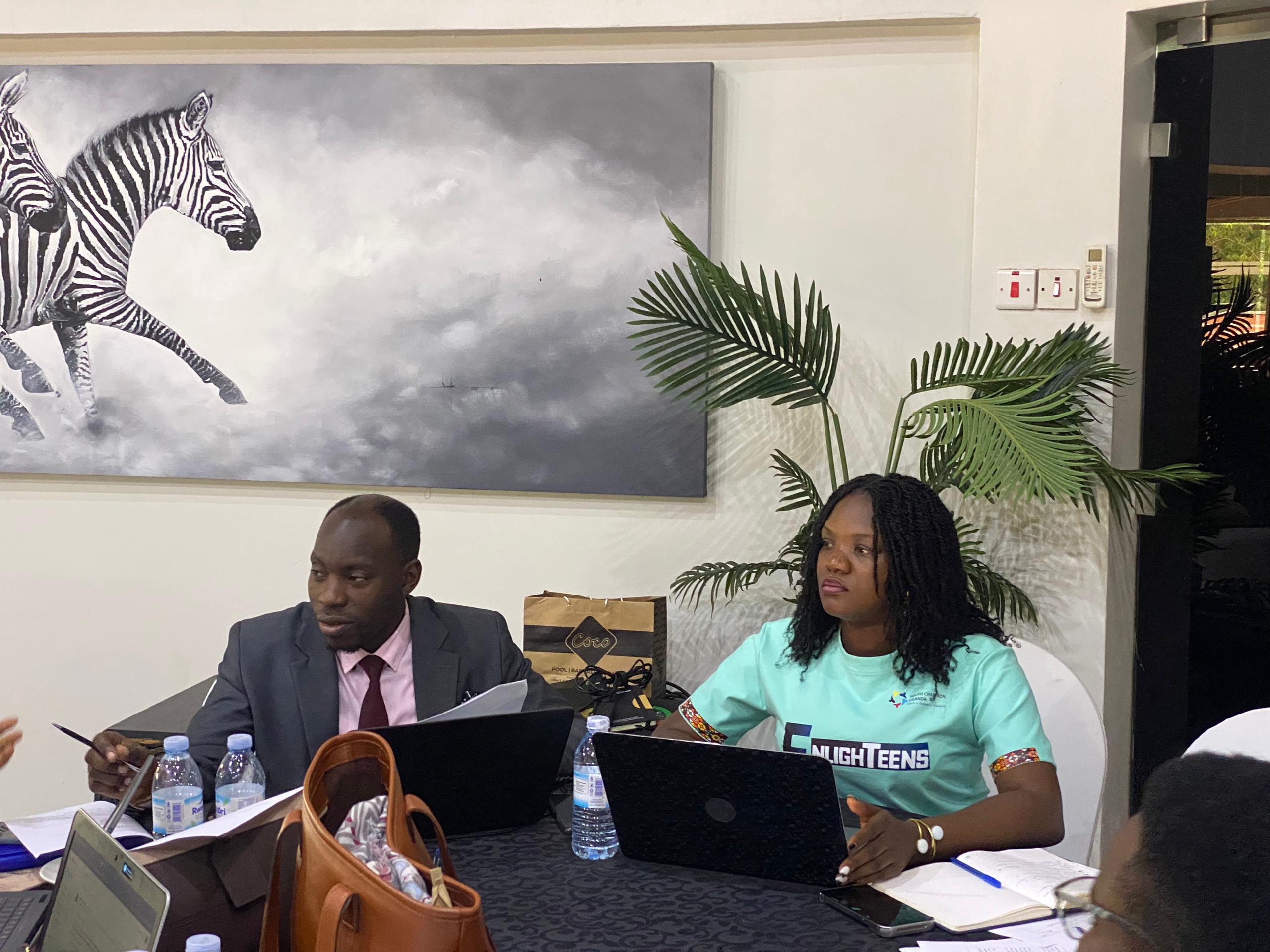
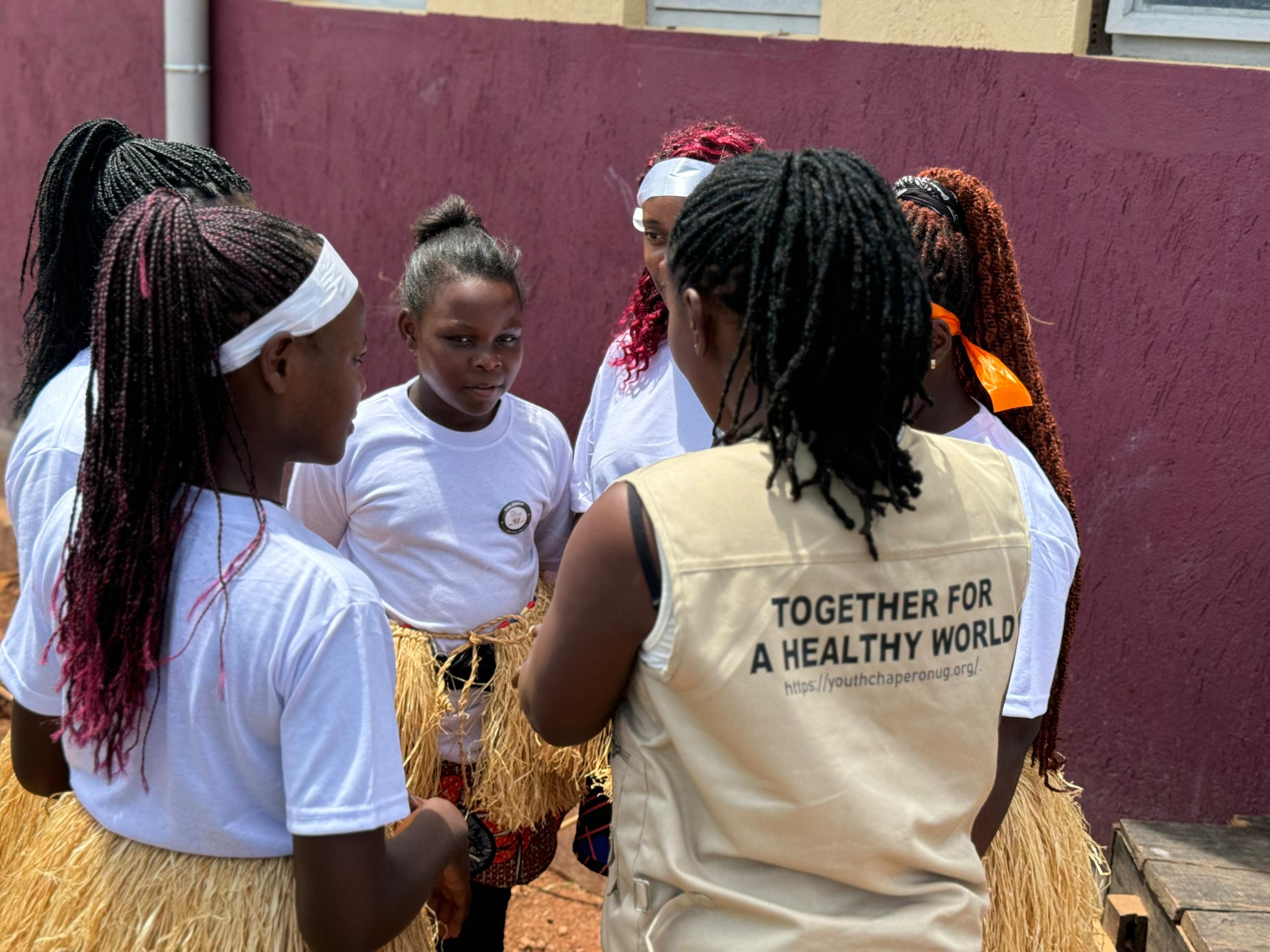
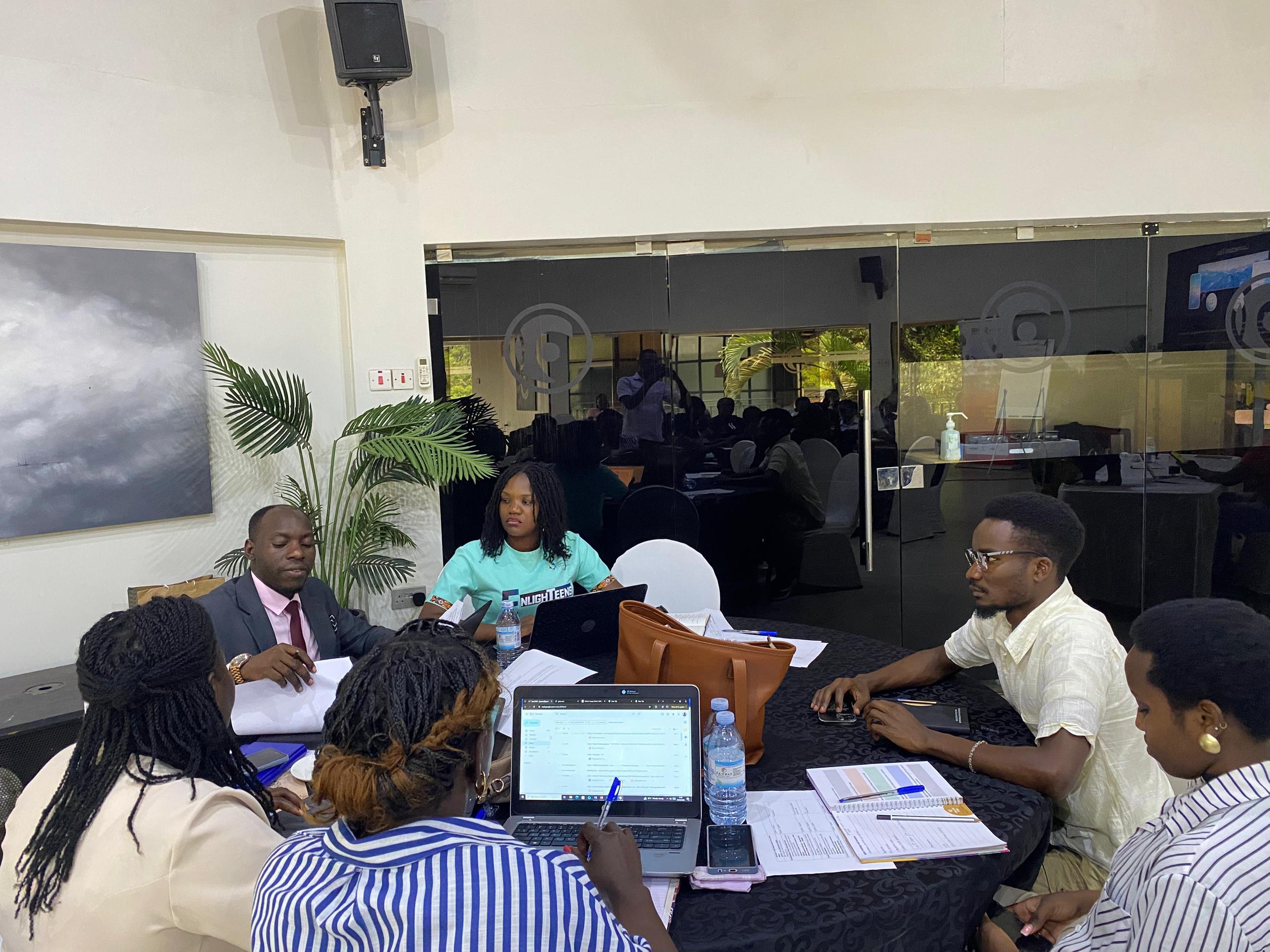
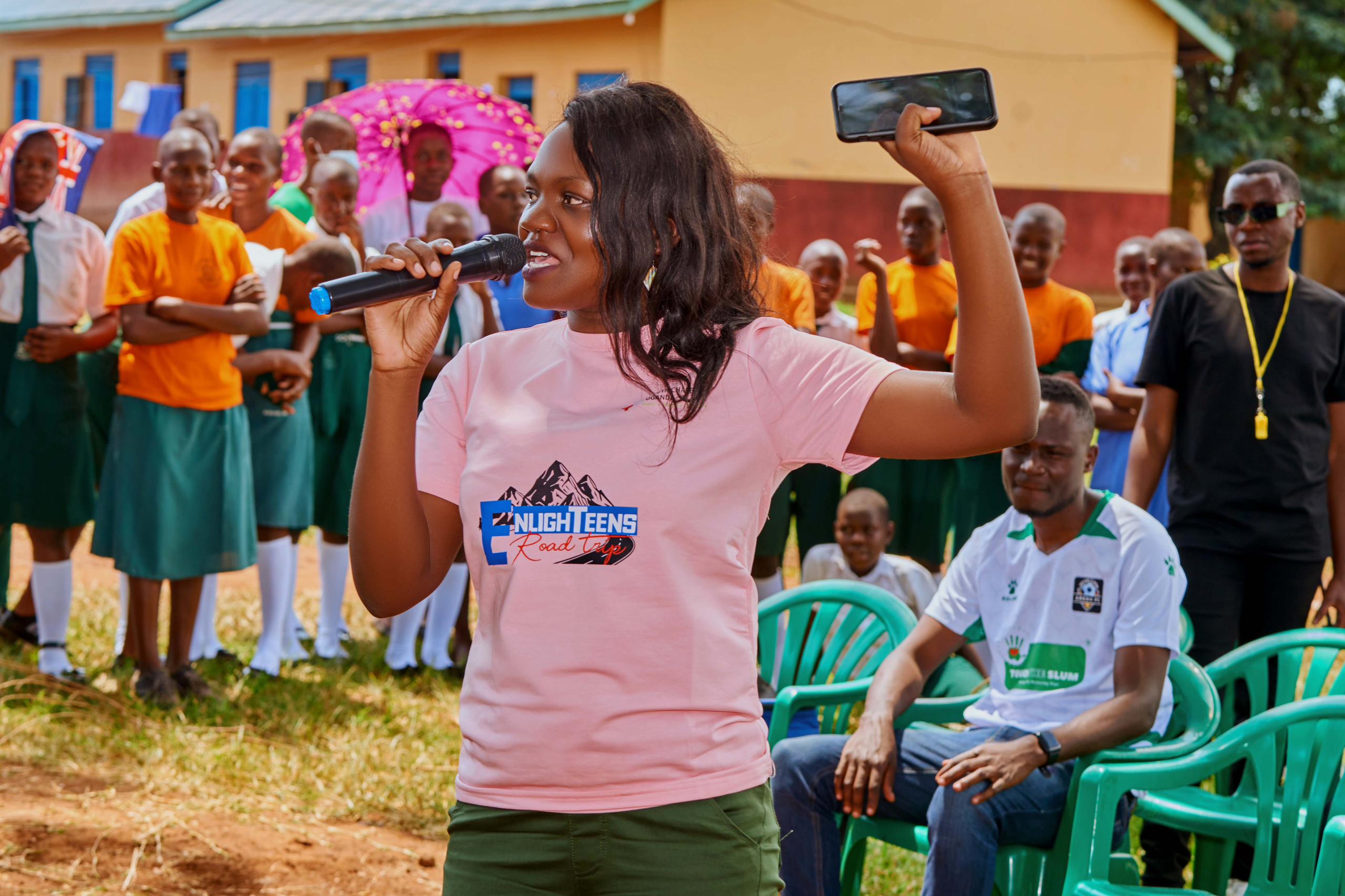
5. What story or event led to the founding of Youth Chaperon Uganda?
Mutesi Miriam: “Growing up in Kamuli and then moving to Kampala for studies, it heartedly broke me to see so many of my age-mates pregnant at such a tender age. That ‘breakage’ built my passion. Most girls were getting pregnant because they weren’t protected from rape or were operating out of ignorance.
Specifically, I saw a friend I really loved taken into marriage at a very young age.
By the time we saw her again, she had ‘outgrown’ us all—not in age, but in the burden she carried. I saw the ripple effects: she dropped out of school, had no health information, and her dreams were shattered. That spark created a commitment in me. I started by speaking to girls in Kamuli, and once I finished my education, I founded Youth Chaperon Uganda to shape the community I wanted to see.”
6. When did the organization officially start its operations?
Mutesi Miriam: “Officially, it started in 2023. That is when we were able to complete the registrations and get our systems up. However, in spirit, I would say Youth Chaperon started way back when I was still in high school.”
7. What does the “Chaperon” model do differently for young people?
Mutesi Miriam: “The Youth Chaperon model pairs young people with trusted, trained mentors. We advocate for safety and policy accountability. We emphasize ongoing practical life skills, SRHR (Sexual and Reproductive Health and Rights) information, and financial liberation. We believe in speaking up so that young people can fully and meaningfully participate in decision-making places. We don’t just advocate for rights; we add a ‘brick’ to the foundation by providing the actual resources and options they need.”
8. Who are the key pillars of your team at Youth Chaperon?
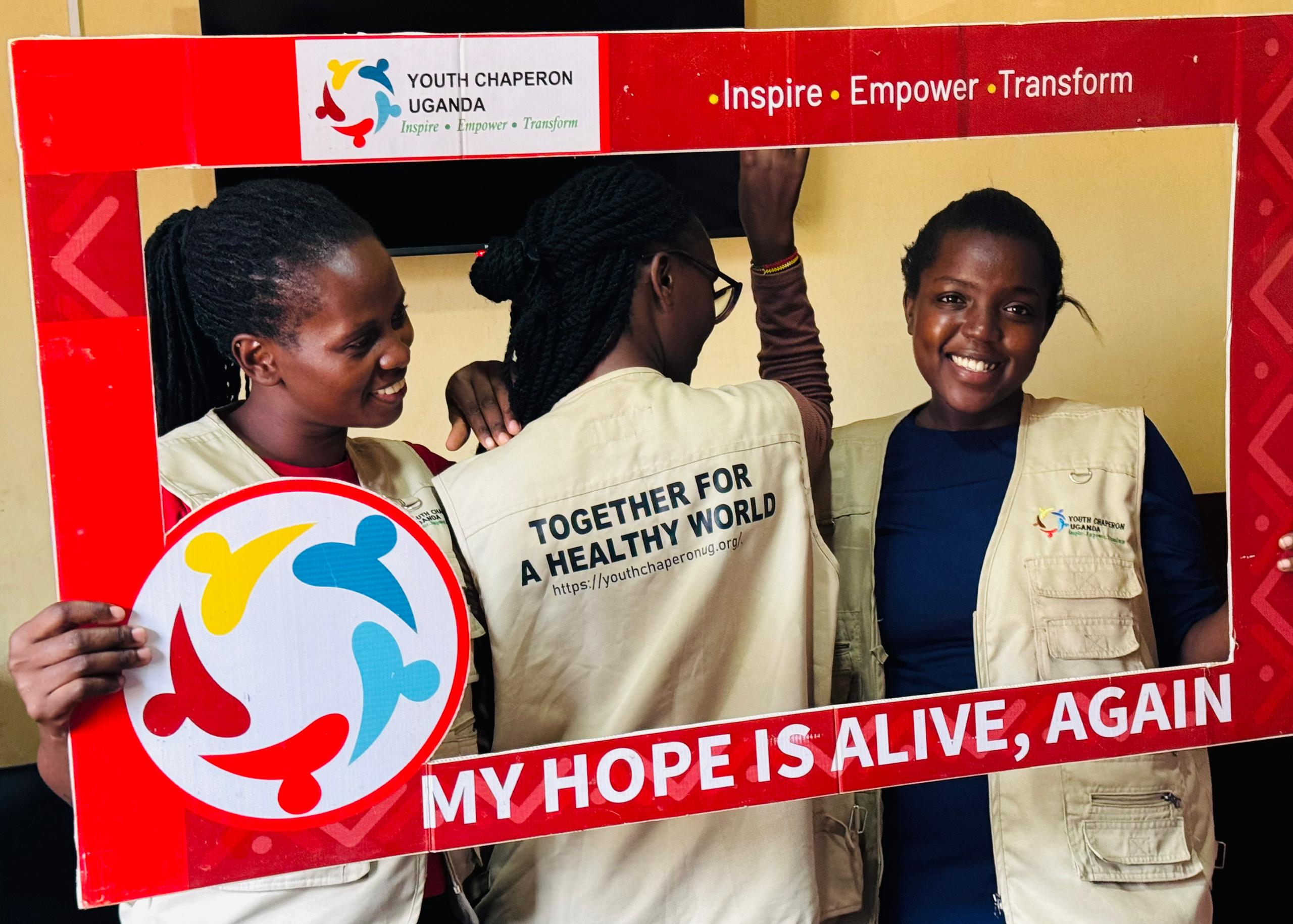
Mutesi Miriam: “Our team is built on a foundation of shared passion. The key pillars include our programs team, which handles the ground implementation, and our advocacy leads who engage with policy-makers. I work with a dedicated group of volunteers and staff who are often from the very communities we serve. We also have mentors—what we call ‘Chaperons’—who are the backbone of our ‘Enlighteens’ program. They are the ones who provide the day-to-day guidance and emotional support to the young people in our network.”
9. What are your core programs regarding SRHR and child marriage?
Mutesi Miriam: “Beyond the school re-entry advocacy, we focus heavily on Sexual and Reproductive Health and Rights (SRHR) through our ‘Talk to Me’ initiative. This is a safe-space program where young people can access accurate, non-judgmental information about their bodies and their rights. Currently, we are heavily advocating for girls’ school re-entry. Even if a girl has given birth, she deserves a chance to return to school.
For child marriage, we work on community-based surveillance—essentially training local leaders and parents to recognize the signs of a forced marriage and providing a pathway to report and intervene before the marriage actually takes place. We specifically call on the government to issue circulars regarding mandatory pregnancy testing; we want clinical methods used that protect a girl’s dignity and rights.”
10. What is the organization’s most significant achievement to date?
Mutesi Miriam: “Our most significant achievement is not just a single event, but the mindset shift we have seen in the schools we partner with. Seeing girls who had once dropped out due to pregnancy returning to the classroom and being welcomed by their peers and teachers is our greatest success. We’ve also successfully advocated for the inclusion of youth-friendly health services in local clinics, ensuring that a young person can walk in and get help without being shamed.”
11. Could you describe the toughest moment you’ve faced in this line of work?
Mutesi Miriam: “The toughest moments are always when we encounter deep-seated resistance from within a family. There was a case where we were trying to stop a child marriage, and the family saw us as ‘enemies of their culture’ or a threat to their financial survival because they were expecting a bride price. When you are standing between a girl and her own family’s expectations, it is emotionally draining and sometimes physically dangerous. Realizing that you cannot save everyone, despite your best efforts, is a very heavy burden to carry.”
12. What kept you motivated when things were at their lowest?
Mutesi Miriam: “What keeps me going is the ‘spark’ in the eyes of the girls who do make it through. When a girl tells me, ‘I didn’t think I could go back to school, but now I’m the top of my class,’ that fuels me for another year. Also, my own history—knowing where I came from in Kamuli and knowing that I was one of the lucky ones who had a support system—makes me feel a responsibility to be that support system for others.”
13. How do you approach the sensitive topics of child marriage in conservative communities?
Mutesi Miriam: “We don’t go in and tell them they are ‘wrong.’ Instead, we use a dialogue-based approach. We talk about the health risks of early pregnancy, the economic benefits of keeping a girl in school, and the long-term prosperity of the village. We involve the elders and the ‘gatekeepers’ first. If you win over the person the community respects, the community follows. It’s about translating human rights into local values.”
14. What has been the most surprising thing you’ve learned at the Impact Forge?
Mutesi Miriam: “The most surprising thing I’ve learned at the Impact Forge is the importance of ‘structure over sentiment.’ As a founder, I am very driven by my heart and my passion for the girls. But Impact Forge taught me that to scale that passion, I need systems, data, and sustainable financial models. I learned that being a good leader isn’t just about being brave; it’s about being organized and making sure the organization can survive and thrive even when I am not there.”
15. If you could change one law in Uganda regarding youth rights, what would it be?
Mutesi Miriam: “If I could change one thing, it wouldn’t just be a law, but the enforcement of the guidelines on pregnancy in schools. Currently, the way pregnancy testing is handled is often punitive. I would want a law that mandates dignified, clinical, and private testing. A positive test shouldn’t be the end of a girl’s education; it should be the start of a support plan. I also advocate for the full implementation of the National Strategy to End Child Marriage and Teenage Pregnancy.”
16. How do you manage self-care while dealing with heavy social issues?
Mutesi Miriam: “Managing self-care is a challenge when you carry the weight of these stories. I’ve learned that I cannot pour from an empty cup. To recharge, I prioritize digital detoxes where I step away from social media and the news. I find great peace in music—it’s my therapy. I also value spending quality time with my family and my loved ones. They remind me that I am Mutesi the person, not just Mutesi the advocate. I remind myself that while I am committed to the cause, I must also preserve my own mental health to stay in the fight for the long haul.”
17. What are the biggest achievements of the “Talk to Me” or “Enlighteens” programs?
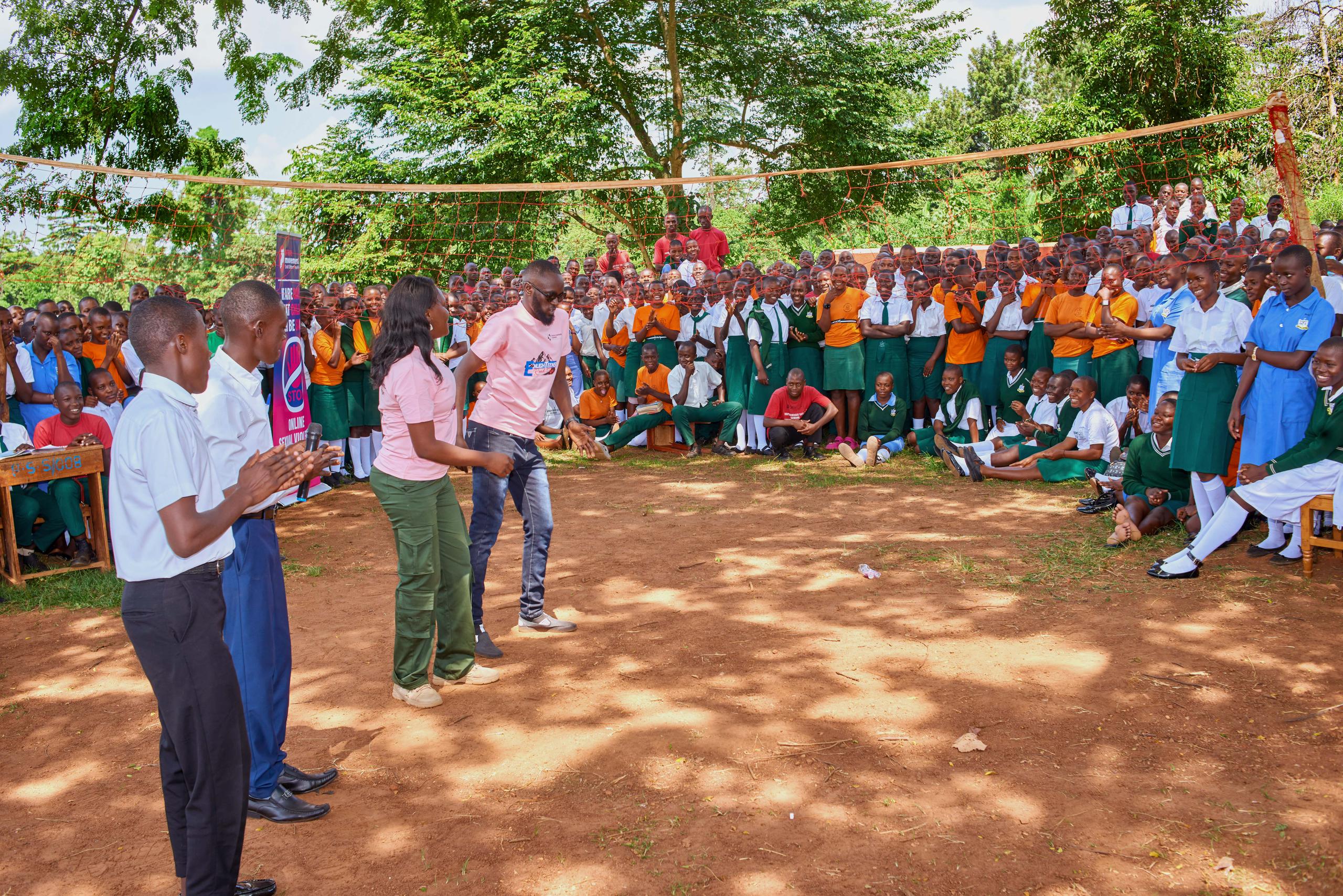
Mutesi Miriam: “The ‘Enlighteens’ program has been a game-changer. We have established clubs in five major schools in the Kamuli district, reaching over 1,000 students. These clubs have become ‘safe havens’ where students report cases of abuse that would have otherwise gone unnoticed. Through ‘Talk to Me,’ we have provided over 500 girls with critical SRHR information. Our biggest achievement is seeing a 15% reduction in dropout rates in our partner schools over the last year.”
18. What is the ultimate vision for Youth Chaperon Uganda?
Mutesi Miriam: “Our vision is a Uganda where every young person is a ‘chaperon’ to another. We want to see a society where child marriage is a thing of the past and where every youth—regardless of their background—has the agency to decide their own future. Ultimately, we plan to build a Physical Chaperon Center. This will be a hub for healing, vocational training, and advocacy, providing a 360-degree support system for survivors of early marriage and teenage pregnancy.”
19. What advice do you have for young girls looking up to you?
Mutesi Miriam: “My advice is simple: Your current situation is not your final destination. Do not let the limitations of your community or the mistakes of the past define what you can achieve. Your voice is your greatest tool—use it, even if it shakes at first. Start small, stay consistent, and surround yourself with people who believe in your dreams as much as you do. You are not a victim of your circumstances; you are the architect of your future.”
20. How can the community support your mission?
Mutesi Miriam: “The community is our greatest partner. You can support us by volunteering your time as a mentor in our schools. You can also donate to our ‘School Re-entry Kits’, which provide girls returning to school with the basics like books, sanitary pads, and tuition support. Finally, help us break the silence. When you see something wrong, speak up. Support our mission by following Youth Chaperon Uganda on social media and sharing our stories to help us reach a wider audience.”