
Table of Contents
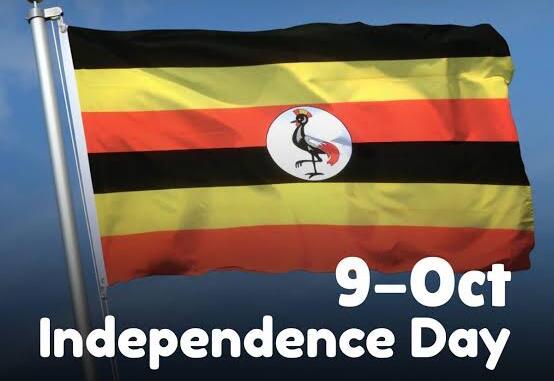
Independence Day leaders! — As national flags flutter and official speeches ring out across East Africa on Independence Day, sports administrator, engineer, and cultural commentator Joseph Mbazzi Muguluma (writing in his iconic persona as the Oracle of Kifuuta) has delivered a piercing philosophical reflection on power, mortality, and political arrogance.
Reflecting on decades of post-colonial history—from the dusty lecture halls of his student days to the battlefields of Southern Africa—Muguluma argues that the greatest tragedy of African liberation was not economic hardship, but the moral decay that occurs when leaders elevate themselves above their shared humanity.
“Listen, my children. You think independence was just dancing and new flags. No! For us, it was fire in the chest,” the Oracle of Kifuuta writes. “We were not just dancing; we were reading, we were choosing which bullet to follow… The day you start thinking you are Osagyefo, Sese Seko, Lion King, or Tembuzi, you have already started digging your culvert in Sirte, your hole in Tikrit, your standing grave in Morocco.”
What does Jonas Savimbi’s end in Moxico teach us about political hubris?
During his collegiate years, newspapers were a rare commodity. When a single copy of The Times arrived wrapped in brown paper—smelling of dust—students fought over every page, debating ideological lines as if global conflicts were taking place directly inside their compound in Kifuuta.
That ideological passion nearly led a young Muguluma to the frontlines of the Angolan Civil War to fight against Jonas Savimbi, the warlord leader of UNITA.
Journeying southward across East and Central Africa—passing through Mutukula, Bukoba, Mbeya, Dodoma, Tunduma, and crossing into Zambia at Nakonde—he reached the critical Kapiri Mposhi X-Junction, where the highway splits into four unassigned directions like the foot of a chicken. Confronted by the grim reality of active landmines, artillery fire, and lack of water, he retreated.
Yet, his obsession with the consequences of political hubris remained. Decades later, Muguluma traveled to Luena in Moxico Province, Angola, to stand on the very ground where Jonas Savimbi was killed in 2002.
“A man who thought he would never die, lying in Moxico dust like a dead lizard,” Muguluma observes. “No title. No radio. Just dust. And that is what I want to teach you: when leaders forget they are human, they end as dust in Moxico.”
What is the disease of “Okufuuka Tembuzi” and political arrivism in African leadership?
Following the wave of African independence in the 1960s, many pioneer leaders suffered a psychological metamorphosis. Political theorists refer to this phenomenon as arrivism—the delusion of a person who believes they have permanently arrived at absolute power.
In the dialect of Buddu, this condition is known as Okufuuka Tembuzi: when an ordinary individual secures a position of authority in Kampala and begins to believe they are Tembuzi—the mythical deity of the forest who never dies, never sleeps, and never suffers human infirmity.
Self-Proclaimed Imperial Titles vs. Historical Outcomes
| Leader | Self-Assumed Title / Epithet | Historical Outcome & Moral Lesson |
| Kwame Nkrumah | Osagyefo (“He Who Excels Above All Others”) | Deposed in a military coup while abroad; died in exile away from Ghana. |
| Mobutu Sese Seko | Sese Seko Nkuku Ngbendu wa Za Banga (“The All-Powerful Warrior”) | Fled Zaire in disgrace; died of cancer in Rabat, Morocco, buried standing. |
| Hastings Banda | His Excellency The Life President / “Lion King of Malawi” | Voted out of office during democratic reforms; died an frail ex-president. |
| Idi Amin Dada | Conqueror of the British Empire | Overthrown in 1979; spent his remaining years in Saudi Arabian exile. |
Why did Vladimir Lenin argue that anyone who can cook can lead a nation?
To illustrate true political discipline, Muguluma contrasts African messianic leadership with the pragmatism expressed during the 1917 Bolshevik Revolution in Russia.
When followers attempted to deify Vladimir Lenin, urging him to rule indefinitely as an untouchable icon, Lenin rejected the premise of superhuman leadership:
“Are you mad? I am not God. I am like you. I can cook my own food. That is why I can be president. Anybody who can cook his food can be president. It does not need a superhuman… The fact that I led you in war does not mean I am braver than you.”
Muguluma argues that while Western and Eastern revolutions maintained structural discipline, many post-colonial African movements made the fatal error of transforming flawed human commanders into untouchable deities—gods who refuse to listen, refuse to retire, and ultimately demand public sacrifice to sustain their thrones.
Which African and global revolutionaries managed to remain human in power?
Despite the prevalence of authoritarianism, several prominent statesmen resisted the urge to deify themselves, choosing instead to anchor their governance in humility, service, and peaceful transitions:
- Julius Nyerere (Mwalimu): Refused imperial titles, insisting on being called Mwalimu (Teacher). After acknowledging the economic struggles of his Ujamaa policy, he took the unprecedented step of resigning voluntarily in 1985, returning to his home village of Butiama to farm with a hand hoe.
- Kenneth Kaunda (KK): Led Zambia for 27 years with emotional transparency—crying publicly when his son Masuzyo died during the HIV/AIDS epidemic and using his platform to dismantle health stigma. When voters demanded change in 1991, he departed State House peacefully waving his signature white handkerchief.
- Samora Machel: The FRELIMO commander who eschewed gold-plated palaces, famously declaring that “the chief and the professor must sit on the same mat” to defeat tribalism before it destroyed Mozambique.
- Nelson Mandela (Madiba): Spent 27 years in prison, served only a single five-year presidential term, invited his former prison guard to sit in the front row at his inauguration, and wore the Springbok rugby jersey to unite a divided South Africa.
- Che Guevara & Fidel Castro: Che walked away from cabinet appointments in Havana to fight on the frontlines in Congo and Bolivia, dying in La Higuera with only asthma medication in his pockets and zero personal bank accounts.
Muguluma recalls a memorable lecture by his university Professor of Soil Mechanics, who put aside engineering equations one morning to deliver a vital life lesson:
“Some of you will get BSc, MSc, PhD and go mad. The paper will enter your head like jiggers… No matter how high you go, soil still needs water. And man still needs humility.”
How do totalitarian “gods” inevitably meet their end in drainage culverts and standing graves?
When leaders insulate themselves behind absolute power, cut off honest counsel, and destroy public trust, their end inevitably matches the severity of their delusion:
- Muammar Gaddafi (Libya): Ruled for 42 years with female bodyguards and golden tents; met his end inside a dusty drainage culvert in Sirte, entirely abandoned by the security apparatus he built.
- Saddam Hussein (Iraq): Declared himself the modern Nebuchadnezzar; was captured by forces inside an underground spider hole near Tikrit, disheveled and powerless.
- Mobutu Sese Seko (Zaire): The self-styled warrior who left fire in his wake; died in Rabat, Morocco, buried standing upright—unable to lie flat in the African soil he claimed to own.
What are the most searched questions about African leadership, humility, and political hubris?
What does the term “Okufuuka Tembuzi” mean in Luganda?
Okufuuka Tembuzi refers to a state of psychological delusion where an individual in authority acts as though they are Tembuzi—an immortal forest deity who is immune to human weakness, mistake, or mortality.
Why did Julius Nyerere step down voluntarily in 1985?
Julius Nyerere stepped down as President of Tanzania in 1985 to establish a culture of peaceful democratic transition, acknowledge the economic limitations of his Ujamaa policies, and allow a new generation of leaders to guide the nation.
What is the core message of the Oracle of Kifuuta’s Independence Day essay?
The core message is that true leadership requires permanent personal humility. Whether managing a government ministry, a school, a business, or a local council, leaders must remember that power is temporary and that staying human is the only title that never expires.
What does the writer advise leaaders?
Whether you become a Member of Parliament, an LC1 chairman, a school headmaster, a doctor, an engineer, or a hardware store manager in Lukaya or Kyanamukaka, remember that you are fundamentally human.
You still need to cook your own food. You still need the courage to admit when you are wrong. You still need to listen when told you are lying. You still need to wake up and face the vulnerabilities of life.
Stay human. That is the only title that never expires—and the only title that God Himself will respect.
Welcome to Kitelede, Kifuuta, Kyotera, Buddu.