
Table of Contents
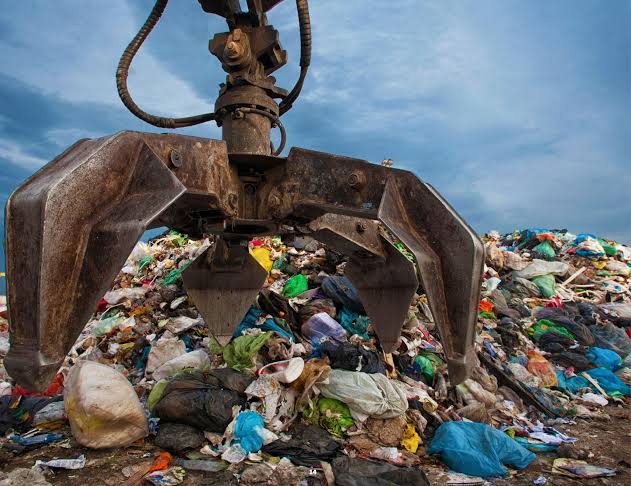
Kiteezi Garbage — Standing at the edge of Kiteezi—the towering, tragic mountain of waste that recently collapsed and claimed innocent lives—sports administrator, engineer, and public commentator Joseph Mbazzi Muguluma (writing under his celebrated literary persona as the Oracle of Kifuuta) has issued a urgent policy challenge to the Kampala Capital City Authority (KCCA) and national planners.
Muguluma argues that Uganda is committing double national suicide: allowing 1,500 tonnes of organic waste to rot and deadly hills to form in Kiteezi every single day, while simultaneously decimating the forests of Mityana, Mukono, Singo, and Buddu to fuel urban charcoal stoves.
The solution to both crises, he contends, is staring the capital directly in the face: converting Kampala’s daily municipal filth into high-efficiency, smokeless charcoal briquettes.
“Kiteezi! That hill that is not a hill! That mountain of shame that ate our brothers and sisters! That rotting empire that smells from Bwaise to Gayaza!” the Oracle of Kifuuta writes. “And on the other side of the same country, our forests in Mityana, Mukono, Buddu, and Singo are falling! Every day, chainsaw and axe! A sack of tree charcoal today is 120,000 shillings. We are cutting our own lungs to cook our own food!”
What is the Kiteezi landfill crisis and why is current waste management failing?
Kampala generates over 1,500 tonnes of solid waste every 24 hours. This massive volume flows continuously from the organic peels of Nakasero Market, plastic packaging from Owino, timber scraps from Bwaise carpentry hubs, industrial waste from Katwe, and household garbage from kitchens across the metropolitan area.
For decades, the city’s sole management strategy has been crude dumping at the Kiteezi landfill—a system that culminated in environmental toxicity, disease vector breeding, and a catastrophic deadly landslide.
At the same time, urban households face an escalating energy crisis. The price of a single sack of traditional tree charcoal has surged to UGX 120,000, forcing low-income mothers in Nansana, Kalerwe, and Kawempe to make agonizing choices between buying fuel to cook basic meals or paying school fees for their children.
The current system burns down thousands of acres of mature indigenous forests every month, accelerating soil erosion, disrupting rainfall cycles, and driving up food prices nationwide.
How can Kampala convert Kiteezi’s 1,500 tonnes of daily garbage into charcoal briquettes?
The core premise of the Oracle of Kifuuta’s proposal is turning municipal waste into compressed, carbonized fuel briquettes. Rather than treating market waste, sawdust, and agricultural residue as trash to be buried, these materials represent high-value raw biomass.
The conversion process involves a straightforward, scalable technical workflow:
- Raw Material Collection: Aggregating banana peels, waste paper, cardboard, sawdust from Bwaise workshops, cow dung, and discarded charcoal dust from urban markets.
- Sorting & Drying: Separating non-recyclable plastics and metals, then sun-drying or mechanically drying the organic biomass.
- Carbonization: Burning the biomass in low-oxygen kilns to produce clean char dust.
- Binding & Compression: Mixing the char dust with a natural binder—such as cassava starch porridge—and pressing the mixture through mechanical extruders to form dense, uniform briquettes.
The resulting product burns three times longer than traditional lump charcoal, produces zero toxic smoke, prevents infant respiratory illness, and leaves minimal ash.
How does garbage charcoal compare economically and environmentally to tree charcoal?
The environmental and economic contrast between traditional deforestation-based charcoal and garbage-derived briquettes represents a massive net positive for Uganda:
- Tree Preservation: Producing one sack of traditional tree charcoal requires felling a mature tree that took 10 to 15 years to grow. Conversely, producing one sack of garbage briquettes requires zero trees, converting urban waste into energy within two days.
- Direct Cost Reduction: While traditional charcoal retails at UGX 120,000 per sack, mass-produced KCCA briquettes could comfortably retail at UGX 60,000 per sack—cutting household cooking costs by 50 percent overnight.
- Capital Retention: Currently, millions of shillings leave Kampala daily to pay charcoal syndicates operating in upcountry districts. Producing fuel locally at Kiteezi, Mpererwe, and Nakawa keeps that capital circulating inside the city economy.
What is the KCCA pilot proposal for youth employment and carbon credits?
To execute this transition immediately, Muguluma presents an actionable industrial roadmap for KCCA and the Ministry of Kampala Capital City and Metropolitan Affairs:
- Three Regional Processing Hubs: Establish municipal briquette factories at Kiteezi, Mpererwe, and Nakawa to intercept waste before it accumulates into dangerous landfills.
- Mass Youth Employment: Employ over 5,000 urban youth in waste sorting, drying, machine operation, packaging, and neighborhood distribution networks.
- UGX 600 Million Daily Revenue: Generating 10,000 sacks of garbage charcoal daily at UGX 60,000 per sack creates a UGX 600 million daily municipal revenue stream, transforming waste management from a taxpayer drain into a profitable enterprise.
- International Carbon Credit Monetization: Under global climate frameworks, every tonne of tree charcoal replaced by recycled biomass qualifies for international carbon credits, allowing Uganda to earn between $20 and $30 per tonne from European climate funds.
A single commercial briquette extruder costs as little as UGX 15 million—a small fraction of the billions spent on traditional landfill maintenance and emergency disaster responses.
How are neighboring countries like Rwanda and Kenya turning municipal waste into fuel?
Converting waste into energy is not an unproven theory. Neighboring East African nations and global economies have already commercialized large-scale briquette processing:
- Kenya (Dandora Landfill): In Nairobi, youth cooperatives and private enterprises process municipal agricultural waste and charcoal dust into commercial briquettes, supplying informal settlements like Kibera and Mathare with affordable, smokeless fuel.
- Rwanda (Nduba Dump Site): Kigali’s municipal framework strictly regulates forest harvesting while incentivizing licensed waste-to-energy processing plants at the Nduba site, keeping natural reserves like Nyungwe intact.
- India: Processes over 10,000 tonnes of agricultural and municipal waste into industrial briquettes daily, powering commercial boilers and domestic kitchens nationwide.
What are the most searched questions about converting Kampala’s garbage into charcoal?
How much does a garbage briquette making machine cost in Uganda?
A entry-level commercial manual or motorized briquette extrusion machine in Kampala costs between UGX 5 million and UGX 15 million, making it highly accessible for small enterprise groups, youth SACCOs, and municipal divisions.
Why are charcoal briquettes better for health and cooking than traditional lump charcoal?
Garbage charcoal briquettes undergo complete carbonization and are compressed uniformly. As a result, they burn evenly, retain heat significantly longer, produce no dangerous carbon monoxide smoke, and do not cause soot buildup on cooking utensils or blacken indoor walls.
Who is Joseph Mbazzi Muguluma (The Oracle of Kifuuta)?
Joseph Mbazzi Muguluma—also known as MMJ Immanuel Ben Misagga—is a Ugandan sports leader, engineer, and public affairs commentator. A former president of SC Villa (2014–2018) and President Emeritus of Nyamityobora FC, he writes widely on municipal governance, national economics, sports administration, and cultural philosophy under his literary persona as the Oracle of Kifuuta.
By establishing pilot briquette processing centers at Kiteezi, Mpererwe, and Nakawa, KCCA can address urban unemployment, protect vanishing natural forests, reduce household living costs, and convert an environmental disaster into an economic triumph.