
Table of Contents
The Uganda National Bureau of Standards (UNBS), working in conjunction with the Uganda Police Force, has successfully disrupted a major distribution network specializing in substandard and counterfeit toilet paper products operating in central Kampala. The intelligence-led enforcement operation, executed on Wednesday, July 1, 2026, targeted deep supply chains inside Kampala’s busiest commercial hub along Kikuubo Lane, resulting in the immediate arrest of four suspects and the seizure of massive loads of illicit consumer goods.
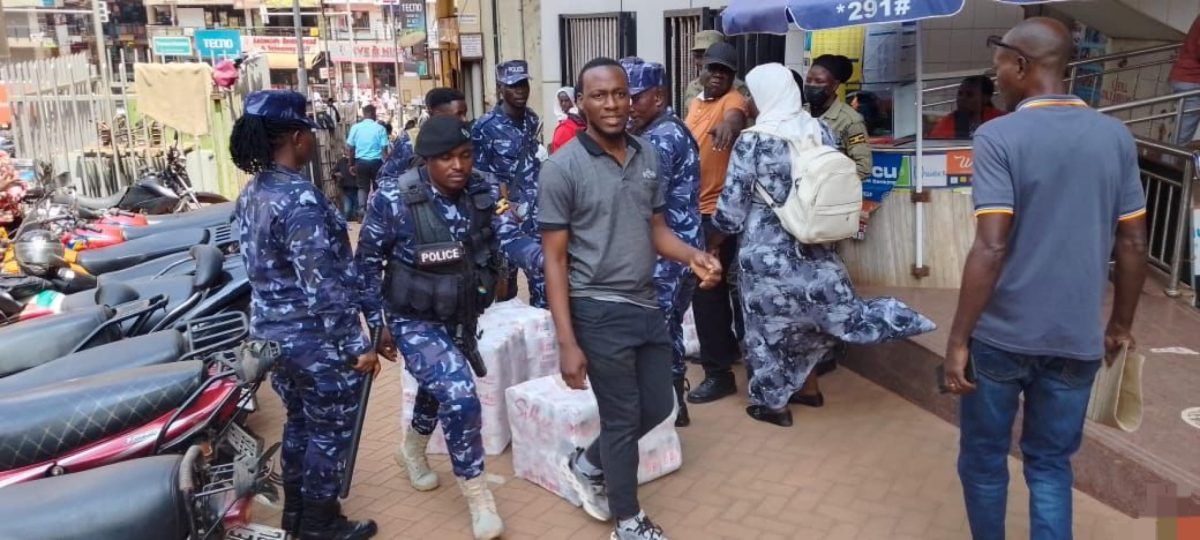
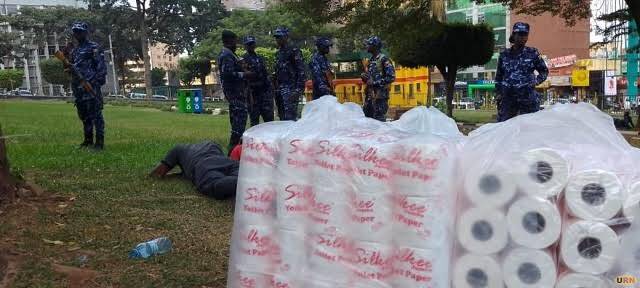
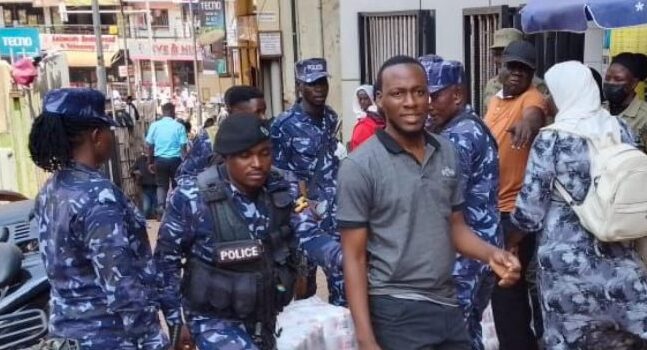
Enforcement teams impounded more than 400 cartons of substandard toilet tissue alongside thousands of counterfeit packaging wrappers and raw material containers. The extensive product sweep followed a pattern of growing complaints from genuine local tissue manufacturers whose registered trademarks were being systematically cloned by underground syndicates to deceive unsuspecting buyers and capitalize on high daily sales volumes.
What did UNBS find in the Kikuubo counterfeit toilet tissue raid?
During the enforcement operation on Kikuubo Lane, UNBS officers uncovered an illegal packaging setup and retail stores stocked with over 400 cartons of substandard toilet paper and thousands of duplicate branding wrappers. The targeted raid focused specifically on two highly frequented commercial facilities: Tesco Plastic Plaza and Justine Arcade.

Raiding teams caught workers mid-process taking completely unlabelled, raw jumbo tissue rolls obtained from unknown backyard manufacturers and manually wrapping them in counterfeit packaging that cloned established, certified local brands. The network operated as an organized, illicit assembly chain, intercepting raw pulp materials and disguising them to match the look of premium market options. Additionally, a distribution agent was intercepted on Kampala Road while transporting the final packaged stock to retail outlets at Kooki Plaza.
Who are the suspects arrested in the Kampala toilet paper crackdown?
The four suspects arrested during the Kampala retail sweep have been identified by law enforcement as Idi Waluwu, Bitwalo Christopher Kasujja, Robert Byaruhanga, and Wycliff Tumusiime. Each individual played a distinct operational role within the local distribution and illegal packaging chain before being intercepted by surveillance teams:
- Idi Waluwu: A suspected sales agent intercepted on Kampala Road while delivering a vehicle cargo of counterfeit tissue rolls to retail vendors at Kooki Plaza.
- Bitwalo Christopher Kasujja: The suspected manager of the packaging operation at Tesco Plastic Plaza, who denied manufacturing claims to investigators, arguing the materials were merely being held for transport to the industrial zone in Namanve.
- Robert Byaruhanga and Wycliff Tumusiime: Two logistical transporters intercepted mid-raid who told investigators they had only been casually hired to move the items between local retail shops.
Why is unlabelled and counterfeit toilet paper dangerous to human health?
Substandard and counterfeit toilet paper poses direct health hazards because it is manufactured and repackaged in highly unhygienic environments that expose the finished pulp to severe bacterial contamination. Sarah Natongo, a Surveillance Officer at UNBS, emphasized that these products completely bypass mandatory quality testing, which often leaves behind chemical impurities and abrasive particles.
Under the compulsory Uganda Standard US 126, all tissue products distributed in the country must meet strict specifications regarding composition, safety, and hygiene. Counterfeit alternatives routinely fail these pulp purity and tensile tests, resulting in products that leave tiny, dangerous residues on human skin or release micro-dust particles into the air. Over time, contact with these contaminated fibers can cause chronic skin irritations, severe allergic reactions, and bacterial infections for unsuspecting consumers.
What charges do the Kikuubo counterfeiters face in court?
The four suspects remain in police custody and will be formally arraigned before the specialized Standards, Utilities and Wildlife Court in Kampala. Legal officers from the bureau confirm that the state will pursue multiple criminal offenses under existing consumer protection laws.
The legal charges lined up against the network include:
- Counterfeiting established local trademarks: For cloning the intellectual property of certified local brands.
- Illegal use of false certification marks: For printing counterfeit UNBS quality stamps on unauthorized wrappers.
- Violating statutory standards regulations: For distributing consumer products that fail to meet the compulsory US 126 quality threshold.
Beyond severe judicial penalties, UNBS officials indicated their long-term intention to introduce mandatory training programs for minor logistical workers who may have acted out of economic ignorance rather than direct corporate malice.
How can consumers check if toilet paper is genuine or fake?
Consumers can instantly verify the authenticity of toilet paper by visually checking the outer packaging for the official, distinct UNBS Quality Mark (Q-Mark) and inspecting the text layout for clear manufacturer details. Sarah Natongo noted that counterfeiters often try to copy the design elements of premium brands but fail to include legitimate batch stamps or traceable corporate address information.
In addition to searching for the certification mark, shoppers should be suspicious of major tissue brands being sold at unusually deep discounts or by unverified, informal vendors in crowded bus parks and taxi layouts. Legitimate manufacturers comply strictly with US 126 formatting metrics, which dictate clear labelling, manufacturing dates, and transparent raw material origins. UNBS urges members of the public to remain highly vigilant and use official enforcement hotlines to report any suspicious or unlabelled products floating through local trade zones.