
Table of Contents
The Lion — In an empowering and uncompromising manifesto published on Sunday, October 25, 2026, sports administrator, engineer, and cultural commentator Joseph Mbazzi Muguluma (writing under his celebrated literary persona as the Oracle of Kifuuta) has issued a call to action for the youth of Uganda.
Addressing young men and women across Kampala, Katwe, Kikoni, Njeru, Bukomansimbi, and Kyotera, Muguluma compares the modern economic environment to a unforgiving jungle. In this environment, he contends, individuals face a fundamental choice: adopt the resilient, skilled, and principled mindset of a lion, or succumb to the reactive, dependent, and easily traded existence of a goat.
“This life is a jungle! And in this jungle, you have only two choices: You are either a LION or you are a GOAT! There is no in-between!” the Oracle of Kifuuta writes. “A lion may be hungry, its stomach growling like thunder, but a lion will NEVER bend its head to eat grass! Never! Shake your mane, stand, and chase. You were born for meat!”
What is the difference between being a lion and a goat in modern Uganda?
The core distinction between the lion mindset and the goat mindset lies in self-determination, standards, and control over one’s destiny.
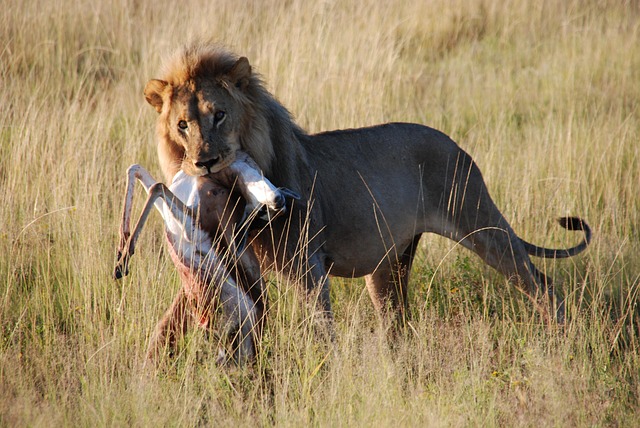
A goat eats whatever the wind blows into its path—scraps, discarded paper, polythene, or wilted weeds. Because it lacks specialized defense mechanisms and depends entirely on others for its feeding ground, the goat spends its entire life tied to a rope, constantly available for sale to the highest bidder.
By contrast, the lion maintains unyielding standards regardless of temporary hardship:
- Resistance to Compromise: Even when the sun burns its back and dust fills its eyes, a lion refuses to lower its nature to consume grass simply because it is readily available.
- Driven by Purpose: The lion understands its inherent design. It relies on internal discipline, strategic foresight, and hunting capability rather than waiting for handouts.
- Control of Destiny: While the goat remains tethered, the lion roams free, commanding respect across the landscape because it takes full responsibility for its survival.
Why is hard work without specialized skills just “sweating like a goat in the sun”?
A common misconception among young Ugandans is that physical strain alone guarantees economic success. Muguluma argues that unguided hard labor without a sharp, market-relevant skill—what he terms the lion’s “claw”—is merely aimless exertion.
To illustrate this principle, consider two young men starting with the exact same level of hunger in Katwe and Kikoni:
- The Unskilled Hustler: One wakes up late, sits on a boda boda, scrolls through social media feeds all day, and calls the activity a “hustle.” At the end of thirty days, he remains broke, hungry, and begging for mobile data bundles.
- The Skilled Lion: The second wakes up at 5:00 AM, utilizes available digital platforms to master specialized practical knowledge—such as processing maize bran into high-grade poultry feed—and launches a micro-enterprise. Within a month, he has twenty commercial farmers placing recurring orders.
Both individuals expended energy and time, but only the one who cultivated a specific, tangible skill built a sustainable livelihood.
“Don’t just tell me, ‘Mzee, I am hustling!’ What is your claw?” Muguluma asks. “Can you turn garbage into charcoal? Can you turn plastic into tiles? Can you turn maize bran into animal feed? Can you repair complex electronics? Can you write a clean business plan? THAT is your claw! THAT is your tooth!”
How does patience and strategic timing separate true entrepreneurs from quick-money hustlers?
Drawing upon classical African literature, Muguluma cites Chinua Achebe’s Things Fall Apart, pointing to how Okonkwo achieved greatness not through reckless impulse, but through calculated patience and study—watching his formidable opponent, Amalinze the Cat, until the precise moment arrived to execute a decisive throw.
A lion lying quietly in the tall grass for six hours observing a herd is not engaging in laziness; it is executing strategic patience. When the optimal moment arrives, it strikes with decisive speed.
In the contemporary business world, young entrepreneurs must distinguish between patient building and short-sighted desperation:
- Protecting Capital Assets: Selling off long-term productive assets—such as industrial machinery in Njeru or ancestral land in Kyotera—simply to resolve temporary cash flow pinches is the mark of a goat mindset.
- Resisting Compromise: Young women must refuse to compromise their physical integrity or personal dignity for fast financial gain, choosing instead to build enduring enterprises step by step.
- Focusing on the Long Game: Sustainable success requires remaining focused during the quiet preparation phase while building a production facility, refining a product, or securing major distribution contracts.
Why must women form collective partnerships instead of relying on handouts?
Addressing young women specifically, the Oracle of Kifuuta references Buchi Emecheta’s foundational novel The Joys of Motherhood, emphasizing that economic independence and security for women are achieved through collective unity rather than individual reliance on external benefactors.
Instead of waiting for financial assistance from men or seeking patrons, female entrepreneurs achieve transformative scale when they combine their individual micro-resources into formidable commercial syndicates.
Consider a group of five young women in Bukomansimbi seeking to enter the commercial fruit juice market:
By pooling their distinct assets—one supplying fresh mangoes from family farms, another contributing a commercial blender, a third providing packaging bottles, a fourth securing retail shelf space, and a fifth managing distribution logistics—they form an operational unit capable of securing major supermarket supply contracts.
What are the “easy shortcuts” young Ugandans must reject to maintain their standards?
Maintaining the lion mindset requires an absolute refusal to consume “grass”—the seductive, low-friction shortcuts that promise quick wealth while destroying long-term character and independence.
Young Ugandans must actively reject several modern economic traps:
- Sports Betting and Digital Gambling: Relying on platforms like Aviator or sports betting apps, which trade productive time and capital for statistical illusions.
- Transactional Relationships: Accepting financial sponsorship from older patrons in exchange for surrendering personal independence and business ambition.
- Illicit Financial Schemes: Engaging in theft, cyber fraud, or counterfeit currency operations that offer immediate cash at the cost of criminal exposure.
- Conspicuous Consumption: Liquidating ancestral assets or farm revenues to purchase luxury vehicles merely to project artificial status in Mukono or Buikwe.
A true lion prefers to endure temporary hunger while building genuine capability rather than forfeiting its independence for easy, deceptive sustenance.
Who is Joseph Mbazzi Muguluma (The Oracle of Kifuuta)?
Joseph Mbazzi Muguluma—popularly known in public affairs and sports administration as MMJ Immanuel Ben Misagga—is a Ugandan engineer, sports executive, and cultural essayist.
Having served as President of SC Villa from 2014 to 2018 and currently holding the title of President Emeritus of Nyamityobora FC, Muguluma is a prominent commentator on sports governance, economic policy, and youth development.
Writing under his literary persona as the Oracle of Kifuuta, he blends traditional proverbs, literary references, and practical economic principles to offer guidance to the next generation of Ugandan leaders and entrepreneurs.
What are the most searched questions about youth entrepreneurship and personal development in Uganda?
What does the “lion vs. goat” metaphor mean in youth empowerment?
The metaphor contrasts two mindsets: the goat mindset, which is dependent, reactive, eats whatever is available, and remains easily controlled; and the lion mindset, which is disciplined, skilled, patient, maintains high standards, and takes full ownership of its financial destiny.
How can young people in Uganda acquire practical skills for free or low cost?
Young people can leverage digital platforms like YouTube, vocational training hubs, community innovation centers, and sector-based SACCOs (such as Emyooga) to learn practical skills like bio-fuel production, agricultural processing, electronic repairs, and digital content creation.
Why is specialized skill more important than just “working hard”?
Hard work without specialized skill results in high physical exertion with minimal financial returns. Specialized skills create high-value products or services that solve specific market problems, commanding higher income and long-term business sustainability.
The forest of life does not honor or remember the goat that passively consumed grass to survive. It respects and remembers the lion that honed its skills, stood firm by its standards, braved the elements, and conquered its terrain.
Wake up early, sharpen your skills every week, save your earnings, and reject easy compromises. Be the lion. Be the lioness. Keep meat on your plate and leave the grass behind.