

Table of Contents
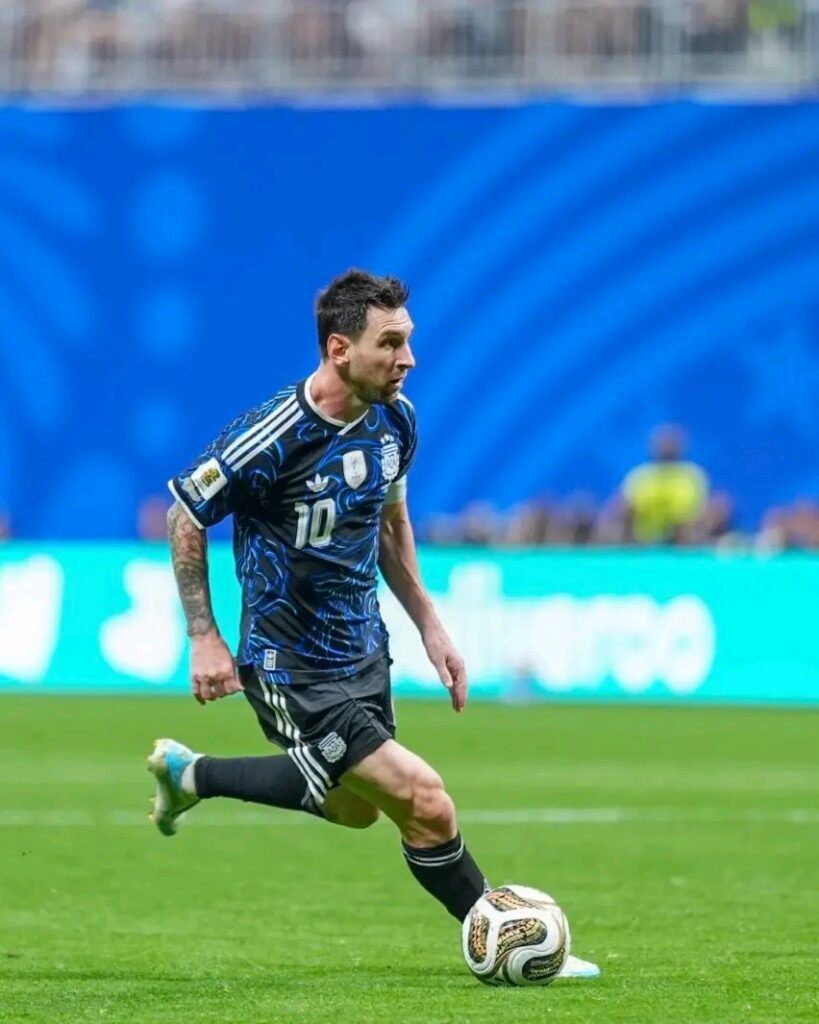
Lionel Messi has called time on his Argentina career at the age of 39, bringing an extraordinary international journey that began more than two decades ago to an end. The eight-time Ballon d’Or winner announced the decision on Monday in an emotional Instagram post, coming just weeks after Argentina’s defeat to Spain in the 2026 World Cup final and following the recent death of his father.
Messi acknowledged that the decision remains painful, but said he believes the time is right to step aside after giving everything to the famous blue-and-white shirt. His departure closes one of the most remarkable chapters in international football, with Messi leaving Argentina as its most-capped player, leading goalscorer and one of the most decorated players in the country’s history.

When did Lionel Messi start playing for Argentina?
Messi made his senior Argentina debut on 17 August 2005, coming off the bench during a friendly against Hungary in Budapest. The teenager’s first appearance ended in extraordinary fashion when he was sent off less than a minute after entering the pitch, but the disappointing debut did little to hint at what would follow. Messi quickly became a regular member of the national team and eventually took on the captaincy, remaining at the centre of Argentina’s biggest football moments for more than 20 years.
During that period, he represented the country in World Cup qualifiers, international friendlies, seven Copa América tournaments and a record six World Cups, becoming a constant presence for successive generations of Argentine players.
How many games did Lionel Messi play for Argentina?
Messi finished his international career with 207 appearances for Argentina, a figure that makes him the country’s most-capped player by a significant margin. His longevity allowed him to play through several different eras of Argentine football, from his early days as a young attacking talent to becoming the experienced captain who guided the national team to its greatest modern successes.
Across those 207 appearances, Messi was involved in virtually every major competition available to Argentina and established himself as much more than a prolific forward. His consistency, leadership and ability to influence matches over such a long period helped make his international career one of the most impressive in football history.
How many goals did Lionel Messi score for Argentina?
Messi scored 125 goals in 207 appearances, making him Argentina’s all-time leading goalscorer and putting significant distance between himself and the previous record holder, Gabriel Batistuta. His contribution extended beyond scoring, with Messi also providing around 65 assists during his international career. His 21 World Cup goals are another Argentine record, while his ability to score and create across World Cup qualifiers, Copa América tournaments and the World Cup itself made him one of the most influential international players of his generation.
The numbers underline a career in which Messi was consistently responsible for producing the decisive moments Argentina needed, whether through goals, assists or the creation of opportunities for his teammates.
Also Read: Morocco Crush Canada 3-0 to Reach World Cup Quarterfinals
How many trophies did Lionel Messi win with Argentina?
Messi’s international career became particularly special because of the transformation that took place during its final years. After suffering several painful defeats in major finals and facing heavy criticism for Argentina’s inability to win a senior international title, Messi eventually led the country to a historic run of success.
He won the 2021 Copa América, where Argentina defeated Brazil at the Maracanã, before adding the 2022 Finalissima against Italy and the 2022 FIFA World Cup in Qatar. He then helped Argentina win another Copa América title in 2024. His honours with Argentina also include the 2005 FIFA U-20 World Cup and the 2008 Olympic gold medal, giving him six official international honours across senior, youth and Olympic competition.
Why was winning the World Cup so important to Messi?
The 2022 FIFA World Cup remains the defining achievement of Messi’s Argentina career. After years of disappointment and criticism, the tournament in Qatar gave him the opportunity to finally win the one major prize that had remained missing from his collection. Messi played a central role throughout the tournament and scored twice in the final against France before Argentina eventually won on penalties after a thrilling 3-3 draw.
The victory not only delivered Argentina its first World Cup since 1986 but also transformed the conversation around Messi’s international legacy. For years, comparisons with Diego Maradona and questions over whether Messi could achieve the same success with Argentina followed him, but lifting the World Cup ensured that his name would forever be linked with one of the greatest triumphs in Argentine football history.
Why has Lionel Messi decided to leave Argentina?
Messi’s decision comes after more than two decades of international football and at a point when he believes it is time for the next generation to take responsibility for Argentina’s future. At 39, he has already achieved almost everything possible with the national team, including the Copa América, Finalissima and World Cup.
His decision also comes during a personally difficult period following the recent death of his father. Although Messi admitted that walking away from Argentina still hurts, he feels the moment is right to close the chapter rather than continue indefinitely. His retirement from international football therefore appears to be a decision made on his own terms, after reaching the highest possible level with his country.

What will Lionel Messi do after leaving Argentina?
Messi’s decision does not mean the end of his playing career. He will continue playing for Inter Miami, meaning football supporters will still have the opportunity to watch one of the greatest players of all time compete at club level.
For Argentina, however, his departure creates an enormous gap. Replacing a player who leaves with 207 appearances, 125 goals, around 65 assists and a collection of major trophies will be one of the biggest challenges facing the national team.
The responsibility will now shift to the younger generation of Argentine players, who will have to establish their own identities while carrying the expectations that come with representing a country that has enjoyed an extraordinary period of success.
What legacy does Messi leave with Argentina?
Messi leaves the Argentina national team with a legacy that goes far beyond statistics. He endured years of heartbreak, criticism and difficult defeats before eventually becoming the leader of a team that won the country’s biggest prizes. His record of 207 appearances and 125 goals, combined with his 21 World Cup goals and around 65 assists, places him firmly among the greatest international players ever.
More importantly, he leaves having helped Argentina win the Copa América in 2021 and 2024, the Finalissima in 2022 and the World Cup in Qatar, after years in which major international success had repeatedly escaped him.
The defeat to Spain in the 2026 World Cup final may be the final result attached to Messi’s Argentina career, but it does little to diminish what came before it. His story with the national team was one of persistence, disappointment, redemption and ultimately triumph. From a teenager who was sent off within moments of his senior debut to the captain who lifted the World Cup, Messi spent more than two decades carrying the hopes of Argentine football.
Now the blue-and-white chapter is closed, leaving behind numbers that may take generations to surpass and a legacy that will remain deeply embedded in Argentina’s football history.