
Table of Contents
What has Charles Onyango-Obbo published?
Charles Onyango-Obbo, who is the former Managing Editor and co-founder of The Monitor, has published an outstanding analysis on LinkedIn that dissects and makes sense out of the ongoing shocking events under the powers of the CDF, General Muhoozi Kainerugaba. Titled ‘Method to the Madness’; Muzzled Media, Shock-and-Awe Succession of House Museveni’s Uganda, the piece dropped on July 5, 2026, offering a chilling yet brilliantly clinical autopsy of the crisis that has paralyzed East Africa’s largest independent media house for over a week.
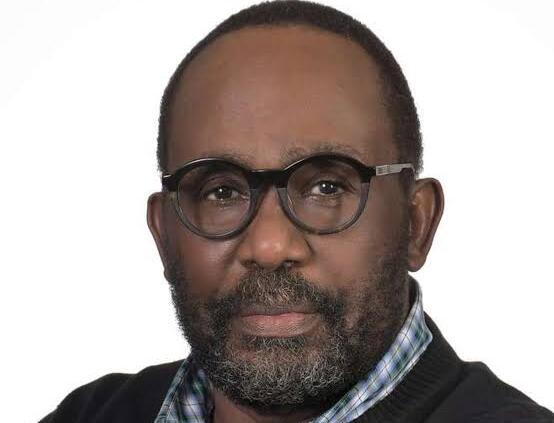
The abrupt closure of the Daily Monitor, NTV Uganda, and sister stations KFM and Dembe FM on the night of June 27, 2026, left the region reeling. For days, an eerie silence has hung over the corporate offices of Nation Media Group (NMG) and the halls of state power. In this media vacuum, Obbo steps forward not merely to condemn the heavy-handedness, but to chart the cold, calculated political architecture driving it.
Why did Gen. Muhoozi Kainerugaba order the closure of Daily Monitor and NTV Uganda?
To understand the sudden military raid on the Namuwongo headquarters and the Serena Conference Centre broadcast studios, one must look at the explicit online proclamations made by the Chief of Defence Forces himself. On the night of the clampdown, Gen. Muhoozi discarded all conventional public relations diplomacy, posting on X:
“In Uganda, I do not believe in a free press! The press should be guided by cadres of the revolution.”
This dramatic declaration coincided with a separate, midnight military operation where security forces abducted Kampala Lord Mayor Erias Lukwago—who serves as the chief legal counsel for opposition icon Dr. Kizza Besigye. Throughout Lukwago’s detention, the General maintained a mocking commentary on social media, treating the state’s monopoly on violence as a theatrical spectacle.
While everyday citizens and international press freedom advocates viewed these actions as erratic outbursts, Gen. Muhoozi countered the narrative directly on June 15, 2026, writing: “Ugandans are beginning to understand that there is a method to the madness.
The so-called ‘madness’ is the strategic clarity required to secure our future.” Obbo’s LinkedIn analysis validates this exact claim, arguing that dismissing these events as unhinged antics fundamentally misreads the long-term survival strategy of the ruling establishment.
What is the “method to the madness” in Museveni’s succession plan through Gen Muhoozi Kainerugaba?
The core thesis of Obbo’s essay focuses on how the regime is solving the classic authoritarian dilemma of succession. With President Yoweri Museveni facing the realities of an aging presidency at 82, the state’s traditional communication channels have faltered, allowing independent media platforms to command unprecedented narrative influence. Silencing them is not a temporary fit of anger; it is an act of structural clearing.
Charles Obbo goes ahead and clarifies that this systematic suppression that caused the media shutdown would most likely lead to a completely cowed public environment, clearing the runway for an uncontested transition of power. With Dr. Kizza Besigye tied up in endless state legal battles and National Unity Platform (NUP) leader Robert Kyagulanyi (Bobi Wine) forced into exile following the highly contested January 2026 polls, independent media remained the last unmonitored space in Uganda. By turning off the lights at NTV and the Monitor, the state ensures that the next phase of the transition happens entirely in the shadows, free from real-time scrutiny or public mobilization.
How is the Museveni family utilizing a “division of labor” to retain power?
One of the most profound analytical pivots in Obbo’s piece is how he reframes the public dynamics between President Museveni, Gen. Muhoozi, and Gen. Salim Saleh. In the past, commentators viewed Muhoozi’s loud online ambitions and aggressive posturing as an internal threat or an embarrassing complication to his father’s governance. The former editor of this paper has always criticized this regime behavior, but this time he seems to understand that from a different perspective—recognizing it as a highly sophisticated, deliberate division of labor within the first family.
Obbo introduces a striking local metaphor, noting that the grapevine frequently views this triumvirate running Uganda as a political “Trinity”: Museveni is the father, Muhoozi the son, and Salim Saleh the Holy Spirit.
Instead of an out-of-control general breaking ranks, Muhoozi functions as the ultimate, uncompromising enforcer. By taking the global and domestic flak for shutting down media houses and locking up opposition mayors, the son absorbs the political dirt, allowing his aging father to preserve his remaining statesman capital.
Meanwhile, the widely liked and low-key Gen. Salim Saleh supplies the institutional goodwill needed to neutralize the rising undercurrents of public anger. Under this setup, the population is driven into a psychological corner where, faced with the prospect of a volatile military enforcer, they view the continuation of the elder Museveni’s presidency as the “better devil.”
Why are Nation Media Group bosses and the government staying completely silent?
It has now been over a week since the physical premises of NMG Uganda were sealed, and a heavy, deeply unsettling silence has enveloped both sides. On July 1, 2026, a high-level, closed-door meeting took place at the Special Forces Command (SFC) headquarters in Entebbe. The meeting brought together Gen. Muhoozi, his communications lead Andrew Mwenda, and top-tier NMG executives, including Tanzanian billionaire and majority shareholder Rostam Aziz, alongside Nairobi-based executives Geoffrey Odundo and Joe Ageyo.
Despite reports of “progress,” no official reopening date has been announced, and the public has been treated to an absolute blackout. Immediately following that Entebbe meeting, NMG management ordered its editorial teams to immediately freeze all online publishing and digital news broadcasts to avoid “jeopardizing ongoing state engagements.”
This enforced silence has fueled intense rumors circulating through the Kampala grapevine. Inside sources suggest that behind closed doors, the state is demanding a sweeping, top-to-bottom overhaul of the entire editorial team as a non-negotiable prerequisite for turning the transmitters back on. Both the government and the NMG executive board—led by Rostam Aziz—remain totally tight-lipped on whether they will capitulate to these structural demands, leaving the public entirely in the dark.
What will happen to unpaid Daily Monitor and NTV Uganda employees?
While the corporate titans and military generals negotiate terms in Entebbe, the real crisis is unfolding on the ground for the ordinary workers. NMG Uganda employs more than 500 journalists, technicians, presenters, and support staff. With the physical gates locked and digital platforms ordered to go completely dark, operations have ground to a total halt.
The most pressing threat to the survival of independent journalism is financial starvation. As the days count down into the second week of the shutdown, employee salaries remain unpaid, and the financial pressure on individual households is reaching a breaking point. Obbo highlights that Uganda’s median age is a mere 17.1 years, meaning the workforce is overwhelmingly young, under-resourced, and highly vulnerable to prolonged economic shocks.
By stretching out the shutdown and forcing a prolonged state of limbo, the regime is effectively running a war of attrition against individual journalists. With rent, medical bills, and family obligations piling up, the chances are rapidly increasing that frustrated, broke media professionals will simply give up on independent journalism altogether or jump ship to state-aligned or less-targeted competing stations just to survive.
Can the NRM regime successfully absorb or buyout independent media?
In his concluding thoughts, Obbo reflects on the historical irony of the Daily Monitor’s existence. Born in July 1992 during the initial economic and political liberalization honeymoon of the National Resistance Movement (NRM), the publication is deeply intertwined with the evolution of the ruling party itself. Its growth over the decades was directly fed by internal splinters within the NRM between progressives and hardliners.
Because of this deep historical entanglement, Obbo dismisses the current whispers that “NRM-friendly forces” are mulling a partial corporate acquisition or buyout of the Monitor as a long-term condition for its survival. He writes:
“My own sense is that the Monitor and NRM are so deeply intertwined that the end of the NRM and Museveni would probably also spell its end, which is why the whispers that a partial acquisition of the Monitor by ‘NRM-friendly forces’ is being mulled as a long-term condition for its reopening suggest a remarkable ahistorical limited vision.”
Ultimately, Obbo warns that while the “method to the madness” is successfully using the weapon of fear to secure House Museveni and cow the mainstream press in the short term, relying on terror in a nation crowded with millions of young, jobless, and angry citizens remains an incredibly explosive gamble. The prince carrying out the king’s darkest tasks today will eventually inherit a nation pushed to its absolute financial and psychological limit.