
Table of Contents
Why is the prolonged NMG shutdown so shocking?
Let’s be completely honest with ourselves: nobody in this country actually thought it would go on for this long.
When the news broke in the early hours of Sunday, June 28, 2026, that military trucks had surrounded Serena Hotel and the Namuwongo headquarters of Nation Media Group (NMG) Uganda, most of us watched with a familiar sense of Kampala deja vu. We figured it was just another high-handed political muscle-flex is meant to scare the editors. We told ourselves, “Ah, they’ll probably talk, negotiate, and have NTV back on air by Tuesday or by the end of the week.”
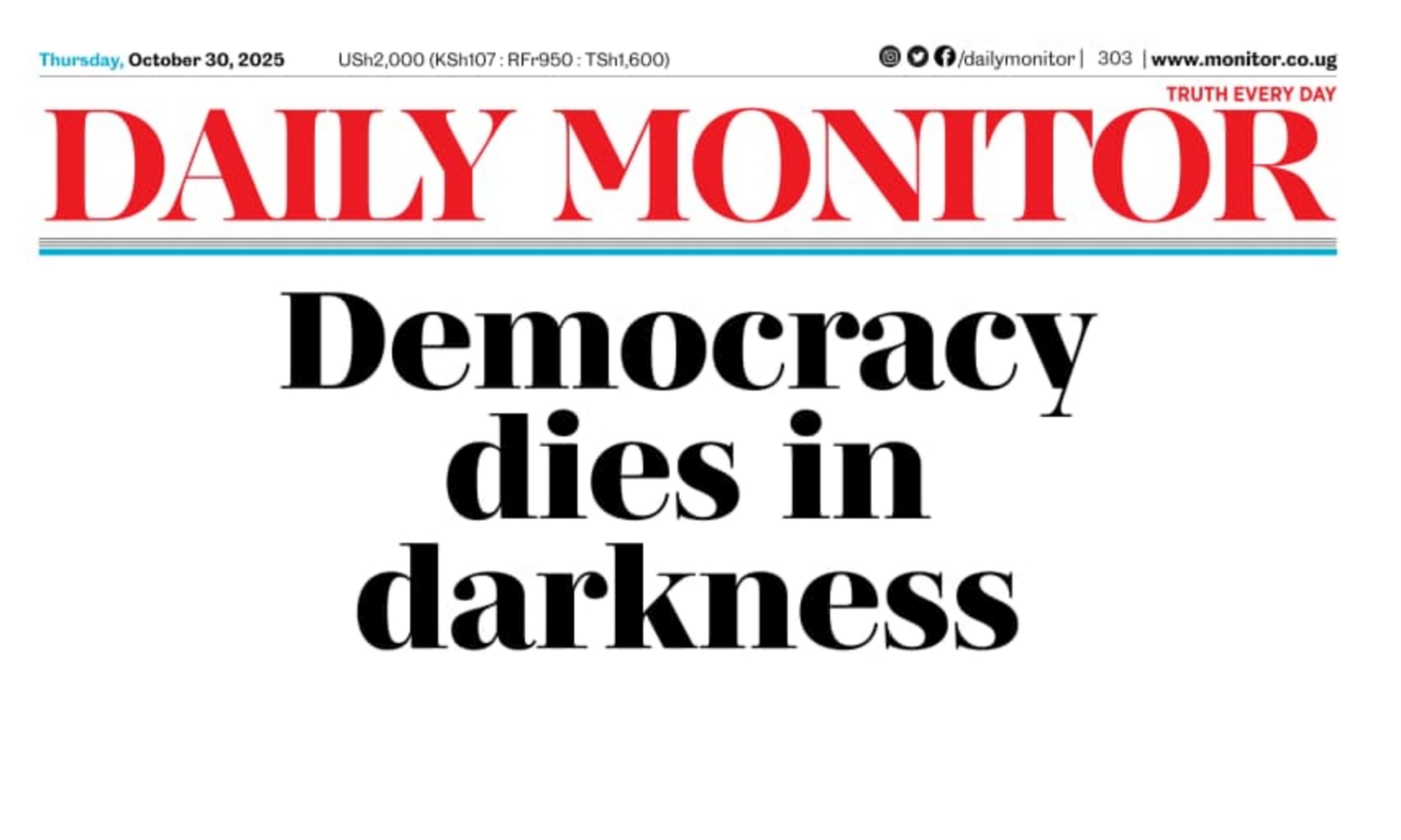
But here we are. Seventeen days have passed since that military raid. Seventeen days of a completely blank screen across every decoder in the country. For nearly three weeks, the majority of the English-speaking and Luganda-watching Ugandan community has been cut off from their most trusted source of independent daily news. The Daily Monitor isn’t printing, NTV Uganda and Spark TV are completely off the air, and the familiar voices on 93.3 KFM and Dembe FM have been replaced by dead static.
Nation Media Group—the biggest independent media engine in East Africa—has been virtually erased from the Ugandan physical space, leaving a massive, traumatizing void in our daily lives.
Why did Gen. Muhoozi Kainerugaba order the shutdown of NMG Uganda?
The shutdown was executed directly on the orders of the Chief of Defence Forces (CDF), Gen. Muhoozi Kainerugaba. In a series of highly volatile, late-night posts on X (formerly Twitter) on June 27, the General announced the move, declaring, “Mzee has approved my plan to close both NTV and Monitor. We are moving immediately!” In a subsequent, since-deleted post that sent shockwaves through the regional media landscape, he bluntly wrote: “In Uganda, I DO NOT believe in a free press! The press should be guided by cadres of the revolution.”
Also Read: NTV, KFM Offline | Military Cordon Popular Media House
The state’s official justification is that NMG Uganda has been conducting a “sustained blackmail and smear campaign” against the government and its top leadership, promoting opposition figures, and favoring foreign interests. Security forces locked down the Namuwongo printing presses and seized transmission facilities at the Kampala Serena Hotel before dawn, detaining technical staff for hours as they pulled the plugs on the country’s most-watched television stations.
While the state has every right to run its official propaganda machines—like New Vision, Bukedde, or even NBS, which has clearly aligned itself to keep the government happy—there is a huge difference between state-guided public relations and actual journalism. NTV and the Daily Monitor did not invent the bad news they reported; they simply put a magnifying glass over the daily pains of the ordinary Ugandan. But in a system where power is absolute, pointing out the cracks in the house is treated as treason.
How did NTV and Daily Monitor demystify complex jargons like the Protection of Sovereignty Bill, 2026?
To understand why people loved NTV and Daily Monitor so much, you only have to look at how the media group handled the highly contentious Protection of Sovereignty Bill, 2026. They broke it all down into smithereens for the local man to understand.
When the bill was introduced in Parliament, it was wrapped in heavy, intimidating legal jargon designed to fly completely over the heads of ordinary citizens. The state wanted it passed quietly. But NTV Uganda and the Daily Monitor did their job. They broke it down, translated the fine print, and put it into terms that the average boda-boda rider on the street could easily understand.
Because of NMG’s relentless coverage and simplified Luganda broadcasts on NTV Akawungezi and NTV Ku ssawa Emu, the common man finally understood that the “Sovereignty Bill” was actually a strategic legislative tool designed to cut off foreign funding for local NGOs, civil society groups, and independent community empowerment programs.
The media demystified the state’s agenda, making complex constitutional politics accessible to everyone. In a country where the government relies on public ignorance to pass restrictive laws, a media house that actually educates the masses is considered highly dangerous.
What is the human cost for the 700+ locked-out NMG Uganda employees?
While politicians play high-stakes power games on social media, the real, devastating human cost of this media blockade is being carried by ordinary Ugandan workers. ICT Minister Justine Kasule Lumumba recently acknowledged that over 700 NMG Uganda employees have been locked out of their offices and are completely unable to access their workplaces.
These aren’t just faceless numbers; these are journalists, news anchors, camera operators, editors, sales executives, print technicians, and administrative staff who have families, rent to pay, and children to feed. The timing of this raid was particularly cruel. Because NMG’s accounts and offices were frozen on June 28, the staff worked the entire month of June wholeheartedly, only to receive absolutely nothing. Now, we are halfway through July, and with the offices still sealed, there is zero guarantee they will see a single shilling for this month either.
The psychological toll is heartbreaking to watch. Look at popular public icons like Patrick Mukasa, the legendary anchor of NTV Kussawa Emu. Just last month, in June 2026, Patrick was celebrating one of the happiest milestones of his life after being introduced in a glamorous traditional ceremony by his partner, Dorothy Kaka. Weeks later, his career was abruptly put on ice.
Now, like many of his colleagues, he has had to publicly joke about joining forex trading or distracting himself by gossiping about sports on social media just to keep from drowning in the trauma of sudden unemployment. Seeing elite news editors and investigative journalists reduced to talking about the World Cup or Premier League transfers on Twitter just to maintain their sanity is a tragic, sobering reflection of what this shutdown has done to our country’s intellectual capital.
What was the outcome of Rostam Aziz’s emergency meeting with Gen. Muhoozi?
In a desperate bid to save NMG’s Ugandan investments, Tanzanian billionaire Rostam Aziz—who recently became the majority shareholder of the media group in early 2026—flew into Uganda on July 1 to hold emergency talks with Gen. Muhoozi Kainerugaba at the Special Forces Command (SFC) headquarters in Entebbe.
The meeting, which was also attended by veteran journalist and PLU ideologue Andrew Mwenda, resulted in a highly controversial compromise. According to official statements, Aziz reportedly committed NMG Uganda to adopting a “patriotic, balanced, and objective” approach to its journalism moving forward—a phrase that many industry insiders fear is a polite code word for total editorial surrender and self-censorship.
But even with these corporate concessions, the transition back to normalcy is incredibly messy. The commercial losses NMG Uganda has suffered over the last 17 days are catastrophic. Millions of shillings in daily advertising revenue, print sales, and digital sponsorships have vanished into thin air. Is the Ugandan state going to compensate NMG for these unconstitutional losses? Absolutely not.
Furthermore, NMG remains bound by strict employment laws. Most staff members at the Daily Monitor and NTV operate on annually renewed, legally binding contracts. If NMG is forced to scale down, lay off staff, or restructure its editorial board to appease Muhoozi’s “patriotic” guidelines, the company is legally liable for massive contract breach compensations.
If this prolonged blackout continues for even a few more weeks, the financial hemorrhage will force NMG to start letting go of its best talent, permanently crippling the quality of independent journalism in East Africa. Some of our finest journalists are already quietly looking to join rival regional networks or exit the media industry altogether out of sheer survival.
The physical blockades might eventually be removed from Namuwongo, but the trauma inflicted on Uganda’s media fraternity will take years to heal. By forcing our most credible watchdogs into silence, the state hasn’t just turned off our television screens—it has actively dimmed the light on our democracy.