
Table of Contents
NAIROBI EBOLA DEATH — Health authorities across East Africa have been placed on maximum alert after Kenya confirmed its first-ever case and fatality from Ebola Virus Disease (Bundibugyo species) on Tuesday, October 6, 2026.
The deceased, a Kenyan citizen who had lived in the Ituri and North Kivu provinces of the Democratic Republic of Congo (DRC) for the past seven years, transited by road through Uganda before flying from Entebbe/Kampala to Nairobi. He passed away late Monday night at the Nairobi Hospital’s East Wing Isolation Facility.
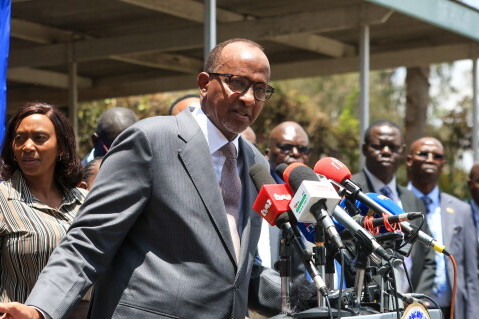
Announcing the development during an emergency media briefing in Nairobi, Kenya’s Health Cabinet Secretary Aden Duale urged the public to remain calm, confirming that multi-agency contact tracing, airport surveillance, and isolation protocols have been activated across Kenya and neighboring Uganda.
“I wish to reassure the public not to panic, as all systems are in place to mitigate the spread of the disease,” Cabinet Secretary Aden Duale stated. “Kenya has been on high alert since the outbreak began in May 2026. Only one test has turned positive out of hundreds screened across our border laboratories.”
What happened during Kenya’s first confirmed Ebola Bundibugyo case?
The patient fell ill approximately a month ago while residing in the DRC, seeking treatment at several local clinics before deciding to return to Kenya for specialized care.
According to official medical timelines released by the Kenyan Ministry of Health, the sequence of events unfolded rapidly over a 72-hour period:
- Saturday, October 3, 2026 (1:10 PM EAT): The patient arrived at Jomo Kenyatta International Airport (JKIA) in Nairobi aboard JamboJet flight 8523 from Entebbe/Kampala, passing through public health screening at the Port Health desk.
- Hospital Admission: A relative and a friend drove the patient from JKIA to the Nairobi Hospital in a private Toyota Fielder vehicle. Upon arrival at the Accident and Emergency department, attending physicians noted severe viral hemorrhagic fever symptoms and immediately moved him to the hospital’s dedicated East Wing Isolation Facility.
- Symptom Profile: Medical reports confirmed he exhibited high fever, chills, intense fatigue, muscle pain, painful swallowing, a sore throat, and subcutaneous bleeding (bleeding under the skin) at previous injection sites.
- Laboratory Confirmation: Blood samples tested positive for the Ebola Bundibugyo species at both the National Virology Reference Laboratory and the Kenya Medical Research Institute (KEMRI) laboratory in Nairobi.
- Monday, October 5, 2026 (11:30 PM EAT): Despite receiving intensive supportive therapy, the patient succumbed to the virus.
In accordance with World Health Organization (WHO) protocols under the International Health Regulations, his burial was scheduled for Tuesday under strict safe and dignified burial procedures.
How did the infected patient transit from the DRC through Uganda to Nairobi?
The epidemiological route taken by the patient highlights the interconnected nature of cross-border transportation networks in East Africa:
- Origin in Eastern DRC: The patient spent seven years living in Ituri Province and North Kivu—the primary epicenter of the current regional outbreak.
- Ground Transit Through Uganda: After falling ill, he traveled by road across the DRC-Uganda border, making his way to Kampala.
- Air Transit to Kenya: From Entebbe International Airport, he boarded JamboJet Flight 8523, landing at JKIA in Nairobi at 1:10 PM on Saturday, October 3, before being driven to Nairobi Hospital.
This cross-border itinerary has triggered immediate coordination between the Ministries of Health in Kenya, Uganda, and the DRC, alongside international disease control agencies.
What is the Bundibugyo species of Ebola and why is it difficult to contain?
Ebola Virus Disease is a severe, often fatal illness in humans transmitted through direct contact with the blood, secretions, organs, or other bodily fluids of infected people or animals.
The current epidemic in Eastern Congo is caused by the Bundibugyo species (Bundibugyo ebolavirus), a relatively rare strain first identified during a 2007 outbreak in western Uganda.
| Feature | Ebola Zaire Strain | Ebola Bundibugyo Strain |
| Fatality Rate | 60% – 90% | 25% – 40% |
| Approved Vaccines | Ervebo (rVSV-ZEBOV) approved globally | No approved vaccine (4 in development; human trials launched July 2026) |
| Approved Treatments | Inmazeb and Ebanga monoclonal antibodies | No approved targeted antiviral treatment (supportive care only) |
| Transmission Mode | Direct contact with infected bodily fluids | Direct contact with infected bodily fluids |
Because there are currently no licensed vaccines or targeted antiviral drugs for the Bundibugyo strain, clinical management relies entirely on early supportive care—such as rehydration, pain management, and treating secondary infections—making strict isolation and rapid contact tracing the primary tools for curbing spread.
What contact tracing and public health measures are currently underway?
Following the confirmation of the case, Kenyan health authorities initiated comprehensive contact tracing operations to prevent secondary community transmission:
1. Contact Tracing Breakdown
- Direct Contacts Identified: The Ministry of Health has listed 28 high-risk contacts, including family members who met the patient and healthcare staff at Nairobi Hospital who attended to him prior to full isolation.
- Flight Contact Tracing: Public health officers are actively pursuing 23 passengers and 4 crew members who were aboard JamboJet Flight 8523 on October 3. Arrangements to place these individuals under mandatory 21-day quarantine are ongoing.
2. National Surveillance and Preparedness
Cabinet Secretary Duale confirmed that since the outbreak was declared in the DRC in May 2026, Kenya’s health system has implemented rigorous screening measures:
- Border Screening: Over 652,584 travelers have been screened at land borders and international airports.
- Laboratory Testing: Five specialized laboratories—including National Virology Reference Lab, KEMRI Nairobi, KEMRI Kisumu, and mobile labs at the Busia and Lwakhakha border points—have tested 267 suspect samples, with only this single case testing positive.
- Health Worker Training: Approximately 4,971 health workers across national and county levels have undergone specialized infection prevention and control (IPC) training.
What is the broader regional context of the DRC outbreak?
The fatality in Nairobi occurs against the backdrop of one of the worst viral hemorrhagic fever crises in Central Africa’s history.
Since the outbreak began in May 2026 in the DRC’s Ituri Province, the WHO has recorded 8,463 cases and 4,082 deaths, making it the second deadliest Ebola outbreak on record.
Humanitarian medical agency Médecins Sans Frontières (MSF) warned on Monday that the virus is spreading “like a megafire” across North Kivu province due to active armed conflict, population displacement, and surveillance gaps. North Kivu now accounts for nearly 40% of all new nationwide confirmed cases in the DRC.
While Uganda briefly reported two Ebola deaths shortly after the DRC outbreak began in May, the WHO declared Uganda free of the disease in August 2026 following 42 days of zero new cases. However, the death in Nairobi underscores the continuous risk posed by cross-border movement across East Africa.
Answering Frequently Asked Questions About the Ebola Bundibugyo Outbreak
How does the Bundibugyo strain of Ebola spread?
The Bundibugyo Ebola virus spreads through direct contact (via broken skin or mucous membranes) with the blood, vomit, feces, urine, or other bodily fluids of an infected person or deceased body. It does not spread through the air like influenza or COVID-19.
What are the main symptoms of Ebola Bundibugyo?
Early symptoms include sudden onset of fever, severe fatigue, muscle pain, headache, and sore throat. As the disease progresses, patients experience vomiting, diarrhea, impaired kidney and liver function, and in severe cases, internal and external bleeding (such as bleeding from injection sites, gums, or blood in stool).
Is there an effective vaccine for the Bundibugyo Ebola species?
There are currently no approved vaccines for the Bundibugyo species. However, four candidate vaccines are in development, with human clinical trials launched in July 2026. Preventive measures rely strictly on hygiene, personal protective equipment (PPE), and isolation.
What precautions should the public take?
Health authorities advise the public to wash hands regularly with soap and water or use alcohol-based hand sanitizer, avoid direct contact with individuals showing fever or hemorrhagic symptoms, avoid touching bodies of deceased suspected cases, and immediately report any unwell travelers coming from active transmission zones by calling official health hotlines (such as toll-free 719 in Kenya).