
Table of Contents
When did Ugandan Arsenal fans celebrate the Arsenal win?
The social, economic, and cultural fabric of Uganda ground to a total standstill on Sunday, May 24, 2026. In an unprecedented explosion of collective euphoria that paralyzed major highways, trading centers, and urban hubs across the nation, hundreds of thousands of Arsenal fans and supporters flooded the streets to celebrate their formal coronation as the champions of England.
Ending a agonizing 22-year drought characterized by relentless rival mockery and psychological “starvation,” the Kampala Gooners and their regional counterparts converted the entire country into a massive, pulsing carnival of red and white.
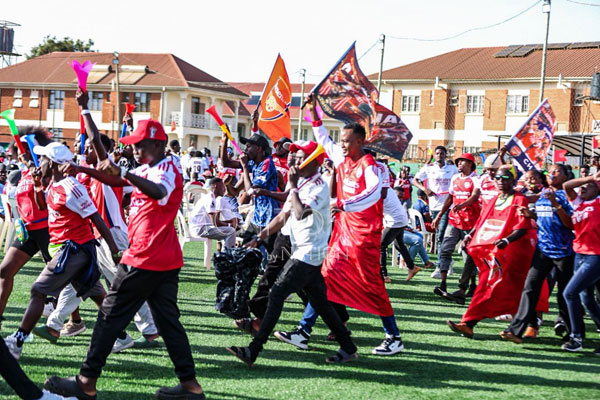
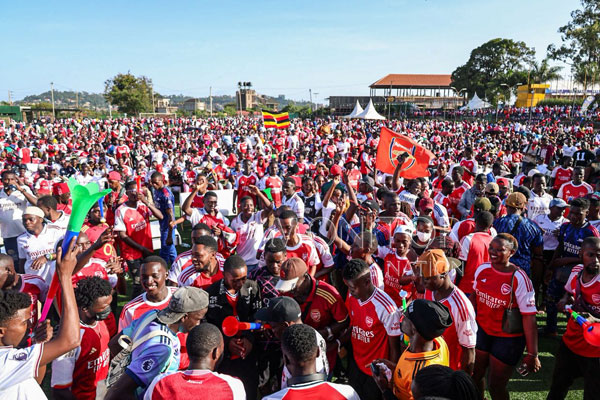
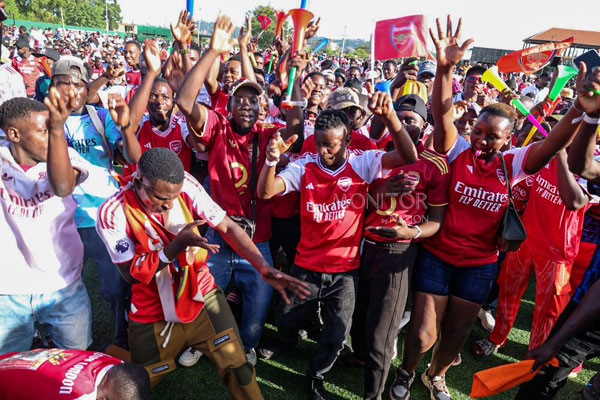
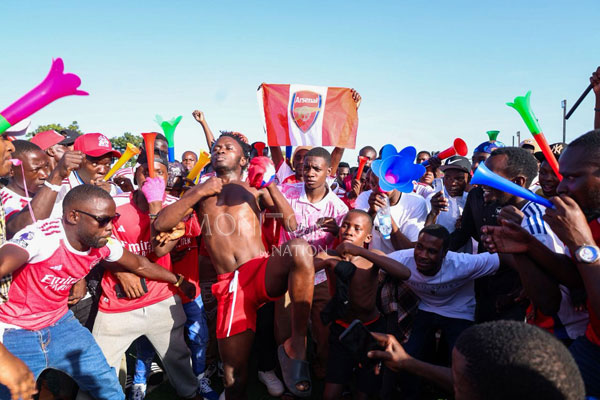
From the capital city to the furthest borders of the Kigezi and West Nile regions, business operations were completely suspended as ecstatic supporters declared an impromptu public holiday. The celebrations kicked off as early as 8:00 AM, with millions proudly donning official club sportswear. Market metrics from across the country confirmed that sports vendors and textile merchants completely sold out of Arsenal jerseys over the weekend, leaving desperate fans to drape everything from personal vehicles to livestock and dairy cows in the club’s iconic home colors.
How did the Nsambya YES Center and Kampala’s streets transform into an absolute carnival?
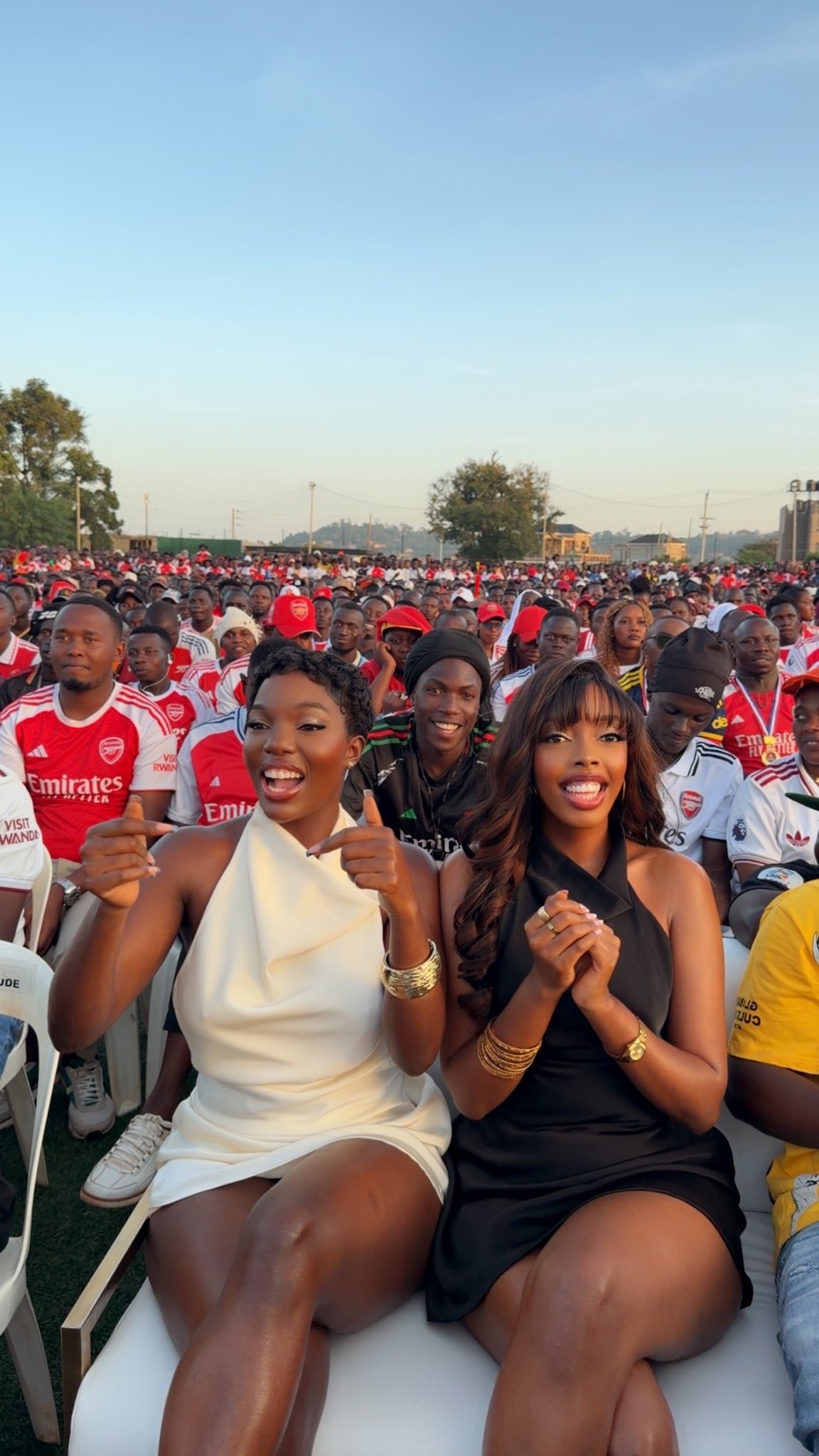
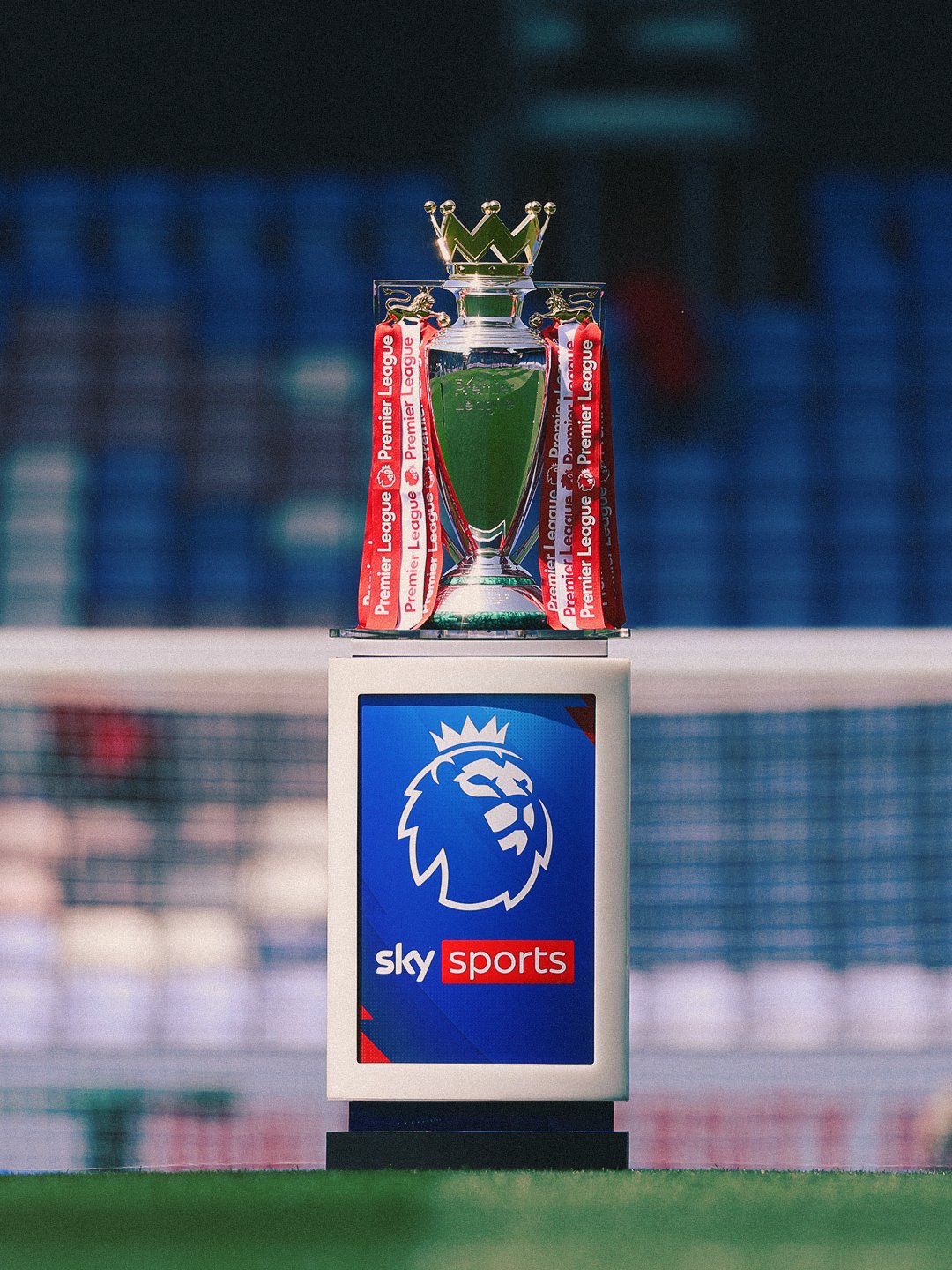
The structural epicenter of the capital’s festivities was the YES Center Sports Arena in Nsambya, Kampala. Hours before the final whistle of the Premier League season—where the actual league trophy was scheduled to be physically handed over regardless of the final match results—hundreds of passionate fans blockaded the arena. Under the visual documentation of photojournalist Ibrahim Kavuma, the venue transformed into an ocean of red and white processions.
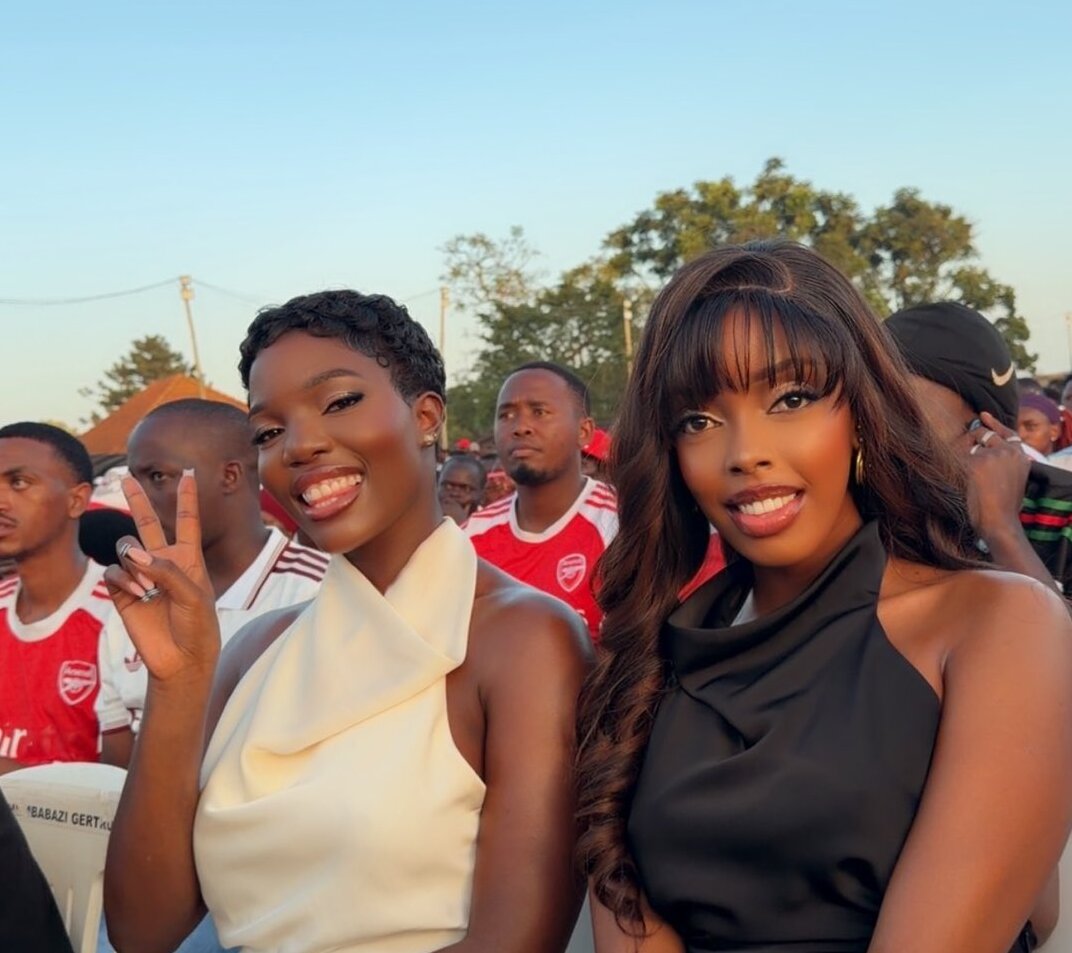
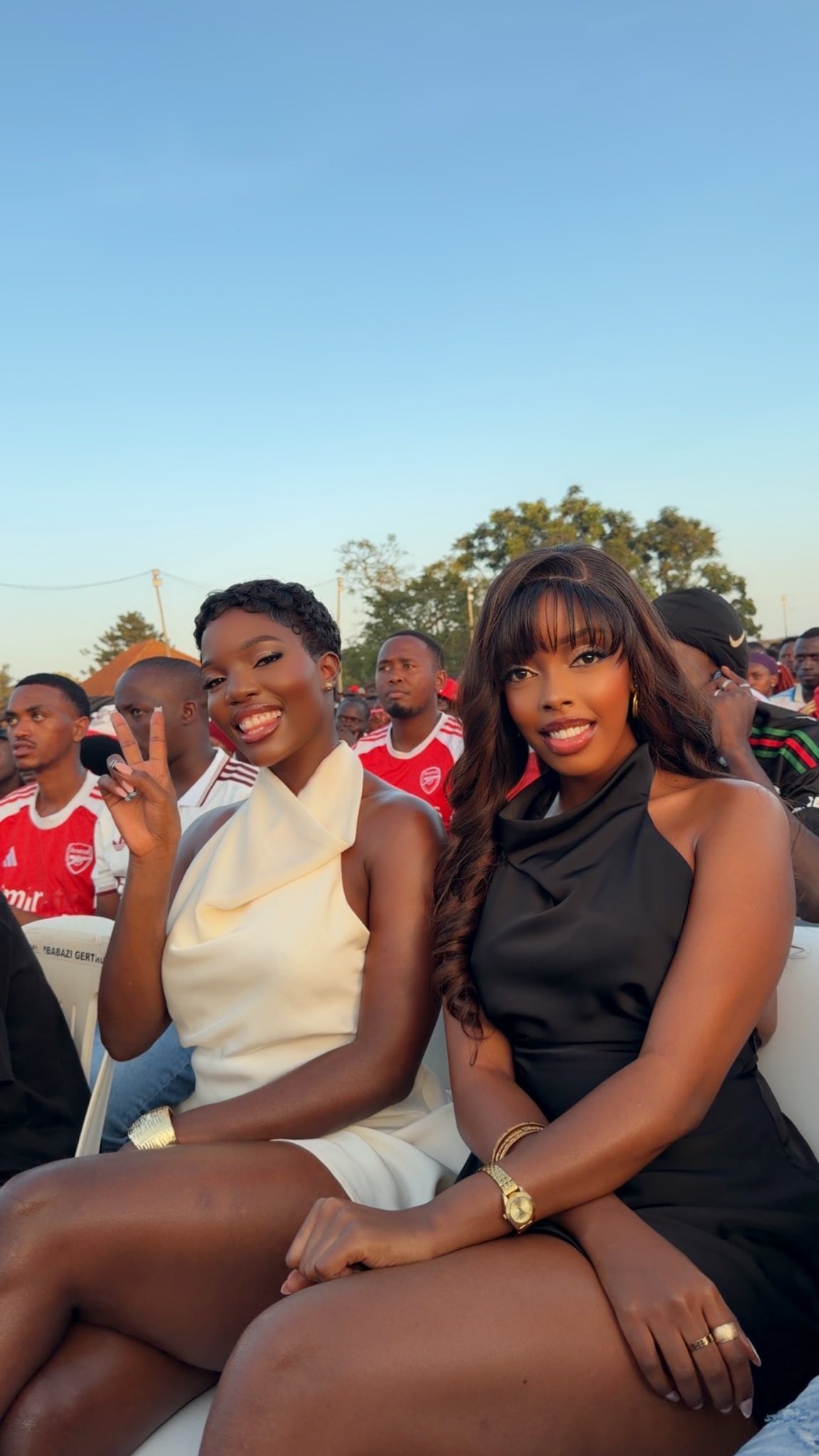
The atmosphere was dense with the deafening roar of vuvuzelas, whistles, and endless honking from convoys of boda bodas and personal vehicles navigating the city. Prominent public figures and artists, including secular musician Gloria Bugie, joined the massive crowds to celebrate the historic triumph.
The celebration extended deep into Kampala’s structural informal markets. In the commercial hub of Kisekka, hardcore supporters prepared several massive saucepans of meat on open fires to feed any passing fan dressed in club regalia. At the main gathering points, massive custom-designed victory cakes were displayed for ceremonial cutting.
As night fell over Kampala, the fans displayed an unshakeable confidence, vowing to consume crates of alcohol and remain awake in bars and entertainment joints until Monday morning.
What did prominent media figures say about the impact of the victory on national health narratives?
The sheer scale of the celebration triggered immediate commentary from the country’s leading media personalities, who observed that the football victory completely overshadowed ongoing domestic crises. Veteran journalist and prominent broadcaster Samson Kasumba delivered a viral statement, arguing that the massive, unbridled public gatherings had effectively shattered international panic narratives regarding regional health vulnerabilities.
“Just like that, Arsenal Uganda fans have killed this international Ebola in Uganda nonsense,” Kasumba stated boldly during the media coverage. “Tell anyone that in this country there is Ebola after this.”
However, the state apparatus maintained a highly defensive stance regarding public health administration. While addressing thousands of jubilant supporters packed inside the Kabale Municipal Stadium, the Kigezi Regional Police Commander, SSP Alex Wabwire, intervened to restore administrative order. While assuring the crowds of tight security and protection during the festivities, SSP Wabwire explicitly cautioned the revelers to strictly observe Standard Operating Procedures (SOPs) and remain highly vigilant, reminding them that Ebola prevention protocols must not be abandoned in the name of football euphoria.
How did the breaking of the 22-year curse turn into a spiritual thanksgiving across Uganda?
For a demographic that has endured more than two decades of psychological ridicule from rival Manchester United and Chelsea fans, the victory transcended sport, entering the realm of spiritual liberation. In Hoima City, hundreds of supporters organized formal processions that culminated in a dedicated church service at St. Cyprian Catholic Parish. Dressed in full kits, the faithful marched to the altar to offer money, agricultural goods, and thanksgiving items, declaring that the club had finally broken a generational curse.
A identical spiritual convergence occurred in Western Uganda, where fans in Kanungu District gathered for a special thanksgiving service at St. Andrew’s Church of Uganda, Kihihi. The service was presided over by Reverend Stephen Nuwabiine, the diocesan youth and children’s coordinator of the Diocese of Kinkizi, who commended the congregation for their long-term patience and resilience.
Reflecting on the psychological weight of the moment during regional celebrations in Mbale City, an emotional supporter named David Wambi summarized the collective sigh of relief.
“This is not just a trophy, this is freedom from years of suffering and endless banter from rival fans,” Wambi stated.
How did the regional towns of Mbale, Jinja, Kamuli, and Mpigi execute their local celebrations?
The decentralized nature of the Ugandan fan base ensured that every major municipality engineered its own unique, high-cost tribute to Mikel Arteta’s title-winning squad:
- The Kadodi Processions of Mbale: In Bugisu sub-region, fans launched intensive fundraising drives to finance massive public sound systems and hire traditional Kadodi cultural dance troupes. Led by passionate coordinator Joseph Obbo, fans danced the traditional Kadodi along Naboa Road and through the Nakaloke Trading Centre. Obbo revealed that his group slaughtered three cows and three goats for the Sunday feast alone, leaving several extra bulls reserved for the upcoming weekend.
- The Highway Gridlock of Jinja: Festivities kicked off at the Busoga Kingdom headquarters in Bugembe and spilled directly onto the main highway, completely paralyzing commercial transit into Jinja City. Hundreds of young men rode motorcycles bare-chested through the streets, accompanied by mobile bars. Jinja coordinator Hassan Balikowa noted that after twenty years of being branded with embarrassing nicknames by critics, the undeniable nature of this triumph had permanently silenced their detractors.
- The Trance and Local Brews of Kamuli: In Kamuli District, the municipality was saturated with wild noise as High Vibe Bar hosted an epic, trance-like night of music. At the Aspaz Motel in Butabala, management provided a live broadcast paired with a live band, 22 crates of commercial beer, seven entire jerry cans of local tonto and malwa brews, and three goats for open-source roasting. The Kamuli Arsenal Fans District Coordinator, Moses Byanguye, described the victory as “the trumpet of the elephant,” adding that they had successfully “shamed the naysayers and silenced Manchester United fans into hiding.”
- The Symbolic Derby of Mpigi: Across Buwama Town Council, Bujuuko Trading Centre, Kayabwe Town Council, and the Uganda Martyrs University Nkozi Campus, the Kampala-Masaka highway was consumed by vehicle convoys. At Tek Country Gardens in Buwama, hundreds were treated to a lavish buffet accompanied by local waragi, spirits, and wines, coordinated by fan leader Hassan Lyle, who declared the moment “long overdue.” To cement the celebration, fans organized a highly entertaining friendly football match at Archbishop Kasujja Stadium between local Arsenal fans and Tottenham Hotspur supporters, with the Spurs side captained by Sadat Mbogo. Despite the fierce underlying rivalry, the event concluded peacefully with both sides sharing meals and drinks.
Can Mikel Arteta’s squad complete a historic double against Paris Saint-Germain in Budapest?
With the domestic trophy successfully captured, the global Arsenal fan network has immediately pivoted its focus toward the absolute pinnacle of European football. The ongoing celebrations have completely supercharged the confidence of the Ugandan fans, who are openly projecting a historic continental double as they prepare for the UEFA Champions League final.
Scheduled for Saturday, May 30, 2026, at the iconic Puskás Aréna in Budapest, Hungary, the high-stakes match will see Arsenal confront French powerhouse and defending European champions Paris Saint-Germain (PSG). Marking Arsenal’s first appearance in a Champions League final in exactly 20 years, the fixture is being treated by the Ugandan fans as the final step in their ultimate football redemption. Backed by the immense tactical form of Arteta’s roster, fans across Mbale, Kampala, and Jinja are already organizing massive logistical pools to purchase more cattle, secure public venues, and prepare for a party that will dwarf the Premier League coronation.