
[aikit_audio_player]
Table of Contents
Kampala, Uganda – November 4, 2025 – In a significant step toward digital inclusion, the Sound of Silence Africa Initiative (SOSAI) has teamed up with Kakebe Technologies to unveil the Deaf Assist Mobile Application, a pioneering tool aimed at dismantling barriers between Deaf and hearing individuals.
A Game-Changing Launch on the Horizon
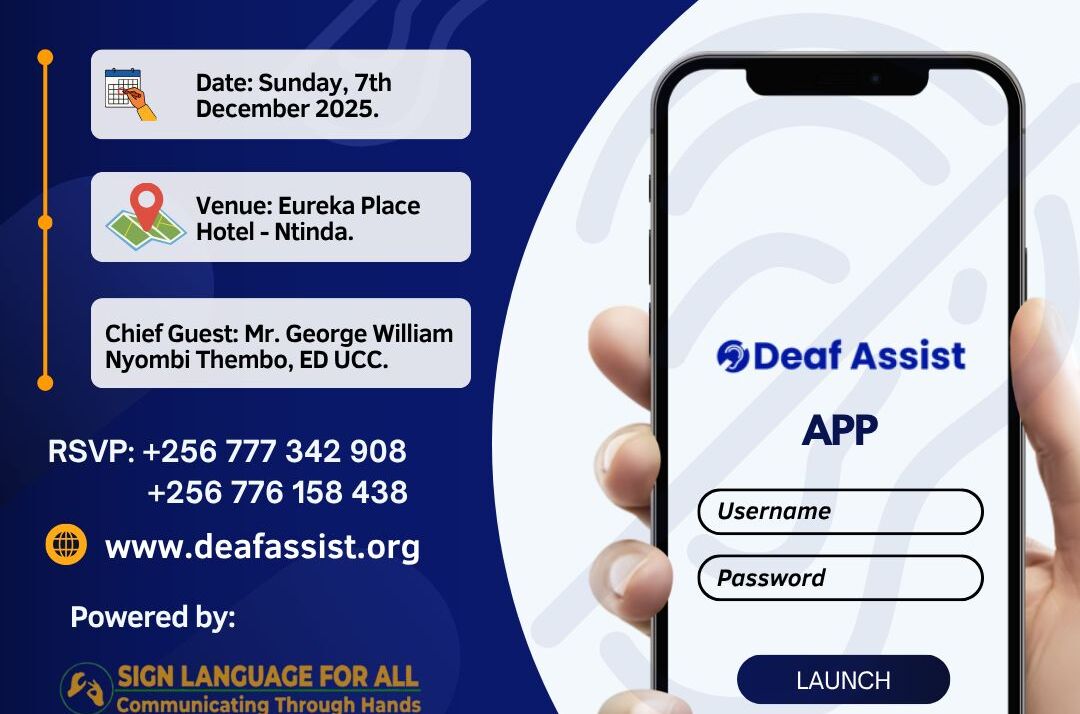
Slated for an imminent launch, the app promises to transform everyday interactions by offering real-time sign language interpretation services. Users can connect instantly with certified interpreters via their smartphones, ensuring seamless communication in critical moments—whether at a doctor’s appointment, a job interview, or a casual conversation. Beyond interpretation, Deaf Assist features a comprehensive digital resource center packed with Uganda Sign Language (USL) tutorials, instructional videos, and interactive learning materials, positioning it as an essential hub for both accessibility and education.
Empowering Voices Through Innovation
“This innovation isn’t just about technology; it’s about empowerment,” said representatives from SOSAI, a nonprofit dedicated to amplifying the voices of the Deaf community across Africa. “For too long, the Deaf have navigated a hearing world on unequal terms. Deaf Assist changes that by making conversations inclusive, services accessible, and connections effortless—all in real time.”
The Power of Partnership
Kakebe Technologies, a Ugandan tech firm specializing in user-centric solutions, brings its expertise in mobile development to the partnership. “We’re thrilled to collaborate with SOSAI on this project,” noted a Kakebe spokesperson. “By leveraging cutting-edge AI and cloud-based connectivity, we’ve created an app that’s intuitive, reliable, and scalable, ensuring it reaches those who need it most.”
Sedrick Otolo from Kakebe told Kampala ET, “Alex Ogwal (who has hearing impairment) is the team lead at SOSAI and we decided to partner with him. We’re truly grateful to him for accepting this project.”
Addressing Uganda’s Accessibility Challenges
The app’s design addresses longstanding challenges in Uganda, where an estimated 1.5 million people live with hearing impairments, according to local health data. Traditional interpretation services are often scarce and costly, leaving many isolated. Deaf Assist counters this by operating on a freemium model, with basic features available for free and premium interpreter access through affordable subscriptions.
Early Praise from Beta Testers
Early beta testers have praised the app’s user-friendly interface and cultural relevance. “It’s like having a bridge in my pocket,” shared one participant from Kampala. “No more misunderstandings or missed opportunities.”
Aligning with Global Goals for Inclusion
As Uganda pushes toward the United Nations’ Sustainable Development Goals on disability inclusion, initiatives like Deaf Assist underscore the power of local innovation. The launch event, details of which will be announced soon, is expected to draw advocates, tech leaders, and community members eager to experience this game-changer firsthand.
For more information on Deaf Assist and how to get involved, visit the SOSAI website or follow updates on social media with #DeafAssist, #SOSAI, #KakebeTechnologies, #SignLanguageForAll, #DigitalInclusion, #AccessibilityMatters, #InclusiveInnovation, and #BridgingTheGap.
This development marks a hopeful milestone in fostering a more equitable society, where silence no longer means isolation.