
Table of Contents
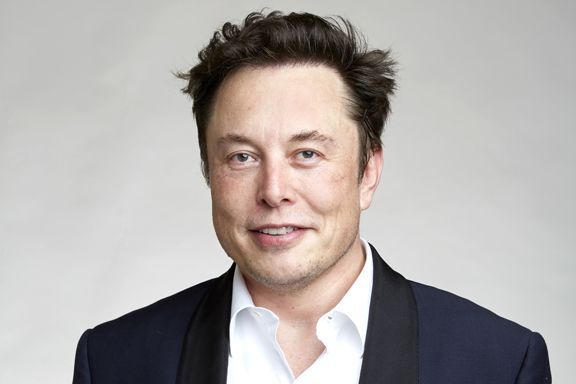
News reaching us today, Friday, June 12, 2026, is that Elon Musk has officially became the world’s first-ever trillionaire. The unprecedented milestone was triggered by the highly anticipated, record-breaking initial public offering (IPO) of his aerospace giant, SpaceX, on the Nasdaq stock exchange. The market debut instantly sent shockwaves through global capital networks, printing unprecedented wealth on paper and widening the gap between Musk and the rest of the world’s billionaire class by hundreds of billions of dollars.
While the milestone marks a defining moment in modern capitalism, a closer look at the numbers shows a complex mix of speculative market hype, massive infrastructure bets, and a geopolitical regulatory war over corporate governance. For readers trying to wrap their heads around this historic accumulation of wealth, here is the deep breakdown of how it happened, what the numbers actually mean, and the underlying controversies surrounding history’s biggest stock market debut.
Also read about how he changed Twitter to X
How did Elon Musk become a trillionaire?
Elon Musk became a trillionaire because the public stock market debut of SpaceX valued his personal 42% ownership stake in the rocket company at well over $700 billion, pushing his total combined net worth past $1.1 trillion. When trading officially opened on the Nasdaq exchange under the ticker symbol SPCX, institutional and retail investors immediately rushed to buy into the company, driving the stock price up 11% from its initial offering. This rapid surge in share value officially vaulted Musk’s net worth past the thirteen-figure mark, combining his massive aerospace equity with his roughly $280 billion stake in Tesla and his underlying holdings in xAI, Neuralink, and the X platform.
The public offering completely rewrote the record books for Wall Street launches. SpaceX successfully floated 555.6 million shares at an initial offering price of $135 apiece, instantly raising a staggering $75 billion in raw capital. This monumental haul easily shattered the previous global IPO record held by Saudi Arabian oil giant Saudi Aramco, which raised $26 billion during its 2019 public debut. By listing the stock, Musk provided a highly liquid gateway for index funds and retirement portfolios to buy into his space exploration ecosystem, creating an automated buying frenzy that pushed his personal fortune into uncharted financial territory.
How many zeros are in a trillion dollars?
There are exactly 12 zeros in a trillion dollars, written out numerically as $1,000,000,000,000. To put that into perspective, a trillion is equal to a million millions, or a thousand billions. If you write out Elon Musk’s new benchmark net worth of $1.1 trillion in raw figures, it stands as an incomprehensible string of numbers: $1,100,000,000,000.
How much is a trillion dollars in relatable terms?
To understand how big a trillion dollars is in relatable terms, consider that if you spent $1 million every single day, it would take you 2,739 years to burn through $1 trillion. The scale of this wealth becomes even more staggering when measured through the dimension of time:
- 1 million seconds is roughly 12 days.
- 1 billion seconds is approximately 31.7 years.
- 1 trillion seconds lasts for 31,700 years—a time span that stretches all the way back to the Stone Age when woolly mammoths still roamed the earth.
In macroeconomic terms, Elon Musk’s personal fortune is now large enough to completely double the entire annual gross domestic product (GDP) of his native country, South Africa. Furthermore, if Musk were to distribute his $1.1 trillion fortune evenly among every single citizen of the United States, every man, woman, and child would receive a cash check for roughly $3,300.
What is the ticker symbol and valuation of the SpaceX IPO?
The official ticker symbol for SpaceX is SPCX, and the company achieved a jaw-dropping total market valuation of $1.96 trillion on its very first day of public trading. While Wall Street bankers originally priced the initial offering at $135 per share, intense market demand caused the stock to open 11% higher at $150 a share. This massive valuation means the market now values SpaceX as being worth more than America’s six largest traditional defense contractors combined—companies that currently generate massive, steady cash reserves from government military projects.
To ensure the IPO’s immediate momentum, Nasdaq executed an unusual rule revision that allowed SPCX to gain entry into major index-tied funds within just 15 days of trading instead of the standard waiting period. This structural adjustment forced passive index funds and retirement managers to aggressively purchase millions of SpaceX shares almost immediately, guaranteeing a massive influx of continuous institutional capital that kept the stock price pinned at its historic highs.
Is Elon Musk’s trillion-dollar net worth real cash or paper wealth?
Elon Musk’s trillion-dollar net worth is overwhelmingly held in highly volatile “paper” equity rather than liquid liquid cash sitting inside a traditional bank account. His fortune consists almost entirely of his 4.8 billion shares of SpaceX stock and his massive blocks of Tesla equity options. Because this wealth is completely tied to the daily fluctuations of the stock market, Musk cannot easily liquidate these billions to spend on personal consumption without tanking the share prices of his own companies and triggering massive federal tax liabilities.
Furthermore, a significant portion of Musk’s wealth is anchored to conditional stock options and performance-based compensation packages. Many of these equity grants carry incredibly strict corporate operational milestones—including hitting specific revenue targets, scaling manufacturing capabilities, and even achieving long-term technical benchmarks like establishing functional outposts or human infrastructure on Mars. If his companies fail to maintain these metrics over the next decade, a substantial chunk of his paper billions could theoretically evaporate as fast as it appeared.
Why do critics say the SpaceX IPO is significantly overvalued?
Critics and financial analysts argue the SpaceX IPO is significantly overvalued because the company’s $1.96 trillion market capitalization is completely detached from its underlying corporate fundamentals and massive ongoing financial losses. Prominent independent research firm Morningstar issued a stark warning to investors, stating that the rocket maker is fundamentally worth only about $780 billion—less than half of its current Wall Street trading price. The firm highlighted that between the start of 2025 and March 31, 2026, SpaceX registered a massive net loss of $8.7 billion as it burned through capital to build out its infrastructure.
“The market is valuing SpaceX as a miracle-man operation, betting entirely on Elon Musk personally while completely ignoring standard balance sheet fundamentals,” Morningstar’s analysts noted.
The company’s commercial operations require an immense, continuous influx of billions of dollars to fund its astronomical capital expenditures. SpaceX is currently attempting to launch football-field-sized data centers into orbit, expand its global Starlink satellite internet array, outpace elite artificial intelligence rivals like OpenAI and Anthropic, and build heavy infrastructure for deep-space transit. Because the current commercial revenues from satellite internet and standard rocket launches do not come close to covering these operational costs, investors are essentially placing an aggressive, speculative bet on unproven future technologies.
What are the corporate controversies surrounding the SpaceX IPO?
The primary corporate controversies surrounding the SpaceX IPO involve extreme centralized power dynamics, mandatory legal arbitration clauses for investors, and severe criticism from international religious and civil institutions. Prior to the public launch, managers representing major public pension funds for firefighters, teachers, and municipal workers in California and New York penned a formal letter expressing deep alarm over the structural rules written into the SpaceX stock framework.
The core governance disputes dividing Wall Street include:
- Super-Voting Shares: Musk retains absolute personal control over the company through a multi-class share structure that grants his personal stock vastly superior voting power over ordinary retail and institutional buyers.
- Mandatory Arbitration: The IPO guidelines explicitly bar shareholders from launching standard class-action lawsuits against corporate executives in open court, forcing all financial disputes into private, mandatory arbitration.
- Divided Executive Attention: Large institutional backers have raised concerns regarding Musk’s highly fractured focus, as he divides his daily attention between Tesla, SpaceX, xAI, Neuralink, and his active administrative role within the United States government.
Compounding these structural disputes, Musk’s massive wealth generation and complex performance bonuses have drawn sharp public rebukes from global cultural centers, including a highly publicized critique from the Vatican regarding the social ethics of concentrated billionaire wealth. Nevertheless, historic performance data continues to shield Musk from total investor mutiny; since its initial public offering in 2010, Tesla has returned an astonishing 20,000% for its early backers, printing more than $1.2 trillion in investor wealth and proving that for many on Wall Street, the rewards of betting on Musk consistently outweigh the governance risks.