
Table of Contents
For many women, period pain has become something they simply learn to live with. The cramps start, painkillers are taken, a hot water bottle is placed on the stomach, and life continues as usual. But what happens when that pain becomes so severe that simply making it through the day feels like an achievement?
That is where the difference between ordinary menstrual cramps and endometriosis becomes important.
While period pain is common, pain that keeps returning, becomes increasingly severe or starts interfering with everyday activities should not always be dismissed as “just a bad period.” In some cases, it may be a sign of endometriosis, a chronic condition that can cause severe pain and affect a person’s daily life, relationships, work and overall wellbeing.
For years, many people living with endometriosis have struggled to get the right answers because their pain was often dismissed as a normal part of menstruation. Recognising the warning signs is therefore an important step towards understanding the condition and getting the right medical attention.
So, what causes ordinary period cramps
Menstrual cramps, medically known as primary dysmenorrhea, are a common part of the menstrual cycle. They occur when the uterus contracts to help shed its lining during a period.
These contractions are triggered by natural chemicals in the body called prostaglandins. When prostaglandin levels rise, the uterus contracts, causing the cramping sensation many people feel in the lower abdomen. For some, the pain may also extend to the lower back or thighs.
In most cases, menstrual cramps are temporary. They usually begin around the start of a period, become more noticeable during the first few days and gradually ease as the period progresses.
For many people, simple measures such as getting enough rest, applying a warm water bottle or heating pad to the lower abdomen, and using appropriate over-the-counter anti-inflammatory medication can help relieve the discomfort.
What sets typical menstrual cramps apart is their impact on everyday life. Although the pain can be uncomfortable, it usually does not completely disrupt a person’s routine. Most people are still able to go to work or school, handle household responsibilities and maintain their normal social activities.
Endometriosis, however, can be a very different experience.
What exactly is endometriosis?
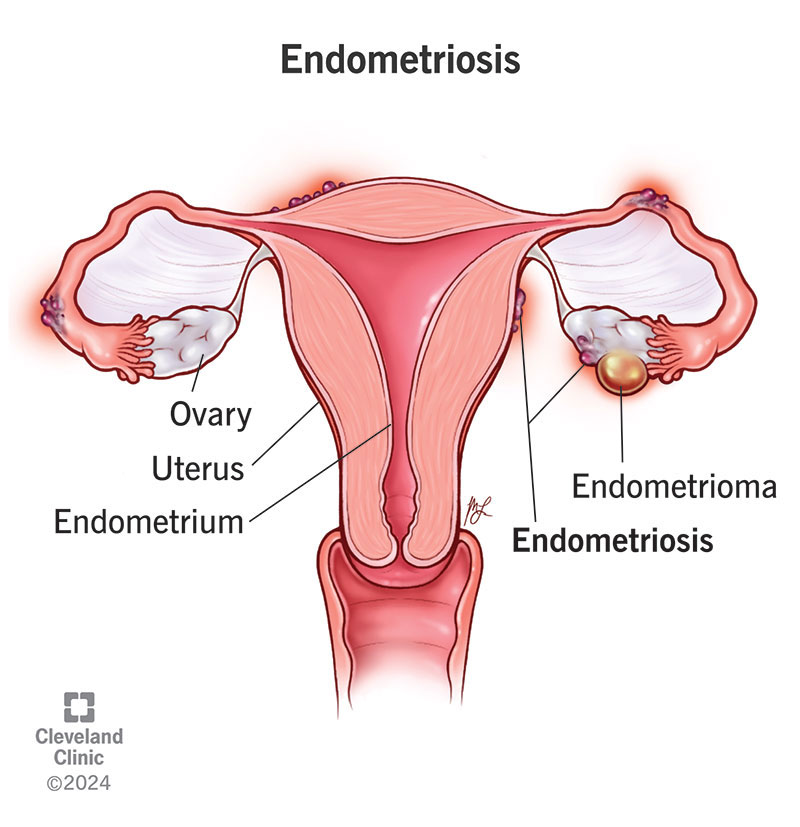
Endometriosis is a chronic condition in which tissue similar to the lining of the uterus grows outside the uterus. It can develop in different parts of the pelvis, including the ovaries, fallopian tubes and the tissue surrounding the reproductive organs.
Like the normal uterine lining, this tissue responds to hormonal changes throughout the menstrual cycle. However, because it is growing outside the uterus, it cannot leave the body in the usual way when menstruation occurs.
This can lead to irritation, inflammation and pain. Over time, repeated inflammation may cause scar tissue and adhesions to form. In some cases, these adhesions can cause organs within the pelvis to stick together, making the pain more persistent and potentially leading to other complications.
Simply put, endometriosis is not just a case of having “stronger period cramps.” It is a chronic condition that can cause symptoms throughout the menstrual cycle and significantly affect a person’s everyday life.
How can you tell the difference?
The difference often comes down to three things: how severe the pain is, how long it lasts and how much it interferes with everyday life.
Normal menstrual cramps tend to follow a familiar pattern. They usually begin around the start of a period, become more intense during the first few days and gradually ease as menstruation comes to an end.
Pain linked to endometriosis, however, can be far less predictable. It may begin before or during a period, occur around ovulation or continue at other times of the month. Some people may also experience pain during physical activity, while using the toilet or even at night when they are trying to sleep.
The pain can also be intense enough to disrupt normal routines. For someone living with endometriosis, going to work or school, taking care of daily responsibilities or even getting out of bed can sometimes feel like a struggle.
That level of disruption is an important warning sign. Persistent or severe menstrual and pelvic pain should not simply be accepted as “normal” without seeking medical advice.
What other symptoms can endometriosis cause?
Endometriosis does not affect everyone in exactly the same way. Some people experience severe pain, while others may have relatively mild symptoms.
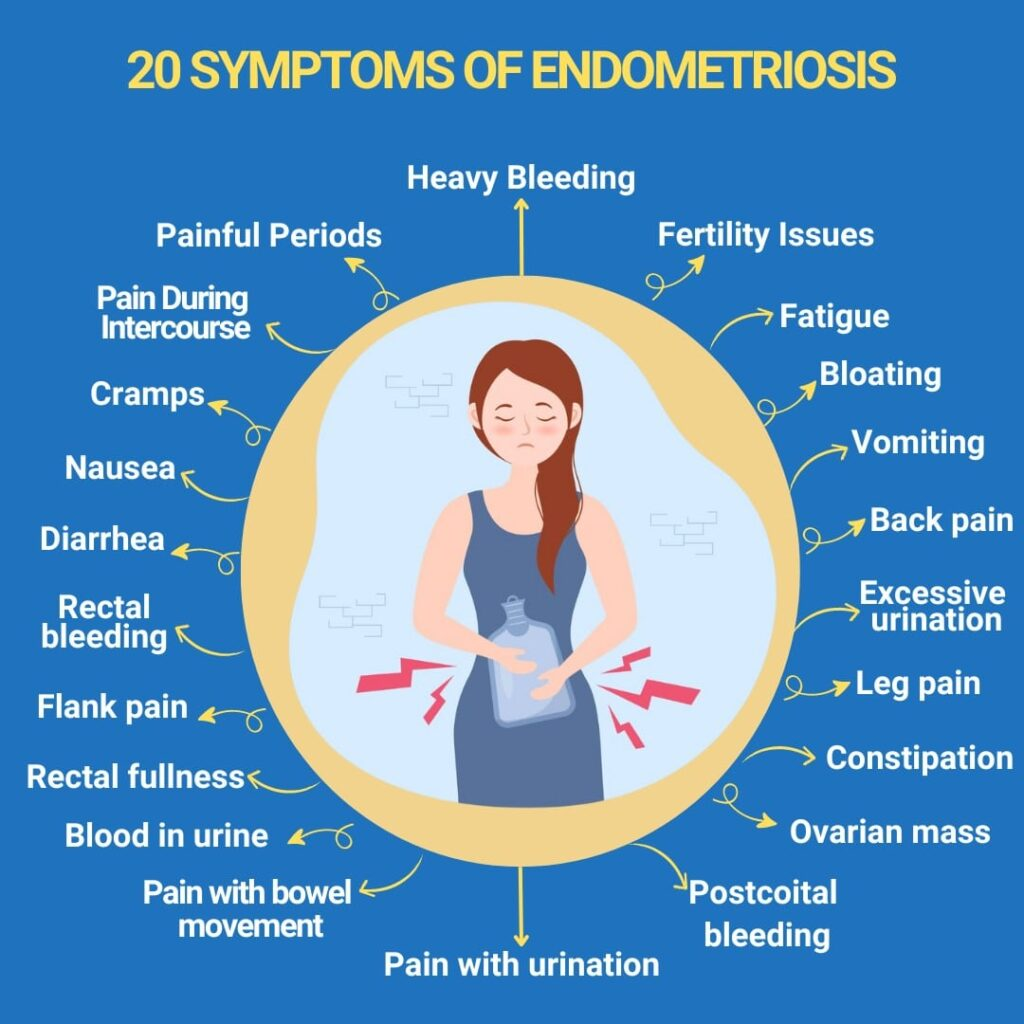
Possible symptoms include:
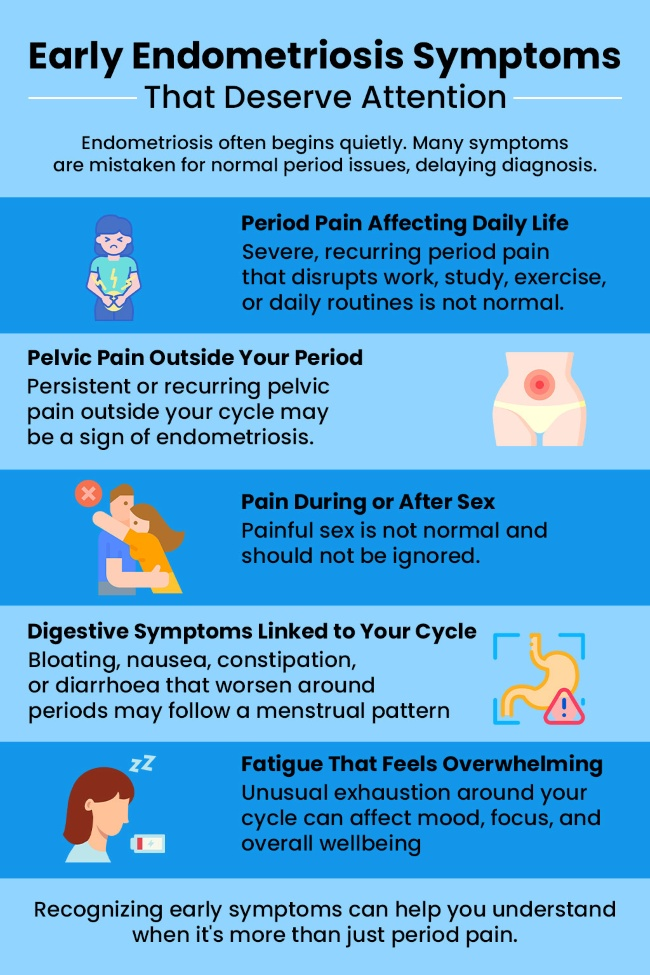
- Very painful periods
- Pelvic pain that continues beyond menstruation
- Pain during or after sexual intercourse
- Extreme tiredness or fatigue
- Pain when passing stool, particularly during a period
- Pain when urinating, especially during menstruation
- Bloating and other digestive problems
- Heavy menstrual bleeding
- Difficulty becoming pregnant in some cases
Some people may experience several of these symptoms, while others may only have one or two. That is why it is not always easy to identify endometriosis based on symptoms alone.
Why do so many people suffer for years without answers?
One of the biggest challenges in recognising endometriosis is the way menstrual pain has been viewed for generations. Many people grow up being told that periods are supposed to hurt and that severe cramps are simply something they have to endure.
When someone complains about intense period pain, the usual advice may be to take a painkiller, get some rest and wait for the period to pass. While that may help with ordinary menstrual cramps, it can be very different for someone living with endometriosis.
Being repeatedly told that severe pain is “normal” can cause people to overlook their symptoms and delay seeking medical help. Over time, they may even begin to question themselves, wondering whether they are simply less able to cope with pain that others seem to manage.
As a result, some people continue missing work or school, cancelling plans or struggling through their daily routines without knowing that an underlying condition could be responsible.
This is why open conversations about menstrual health are so important. Pain should not be ignored simply because it happens every month. When menstrual pain is severe, persistent or begins interfering with everyday life, it deserves to be taken seriously.
Also Read; My Mother Died 25 Years Ago: Bahati Breaks Silence After Woman Claims to Be His Biological Mother
When should you see a doctor?
Not every painful period is a sign of endometriosis. Menstrual pain can have different causes, and the only way to understand what may be behind persistent or severe symptoms is to speak with a qualified healthcare professional.
However, it is important to seek medical advice when period or pelvic pain starts interfering with your normal life. If you regularly miss work or school because of your period, struggle to sleep because of the pain, experience pain during or after sex, have ongoing pelvic pain or notice that your symptoms are becoming more severe over time, it is worth getting checked.
Keeping track of your symptoms can also be helpful. Note when the pain starts, how long it lasts, how severe it becomes and whether it occurs alongside other symptoms such as heavy bleeding, digestive problems or unusual fatigue.
Sharing this information with a healthcare professional can provide a clearer picture of your symptoms and help guide the next steps in finding the right diagnosis and treatment.
Endometriosis is not simply a ‘bad period’
Perhaps the most important thing to remember is that severe menstrual pain should not automatically be treated as something a person simply has to endure.
For many people, period cramps are an uncomfortable but manageable part of menstruation. But when the pain becomes severe, persistent or starts interfering with everyday life, it may point to an underlying condition such as endometriosis.
The impact can go far beyond physical pain. Endometriosis can affect a person’s relationships, work, education, emotional wellbeing and, in some cases, fertility. Yet the condition can remain undiagnosed for years when severe symptoms are repeatedly dismissed as nothing more than “bad periods.”
Breaking that cycle starts with listening to the body and taking persistent symptoms seriously.
If period pain is regularly preventing you from going to work or school, getting enough sleep, maintaining relationships or carrying out your normal activities, it is worth speaking to a qualified healthcare professional. It does not necessarily mean you have endometriosis, but persistent or debilitating pain deserves proper attention.