
Table of Contents
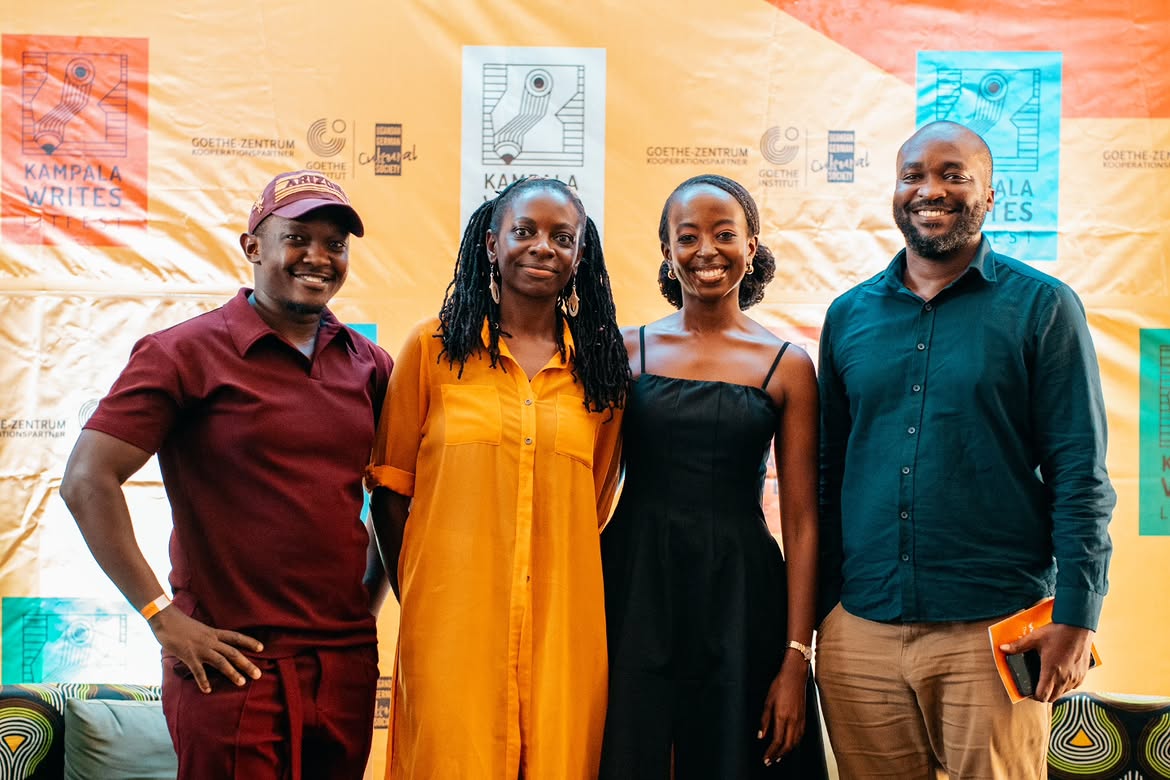
KAMPALA, UGANDA — For three days, from Friday 28 to Sunday 30 August 2026, Kampala Writes LitFest turned the National Theatre into a working room for African literature: 52 speakers, 11 of them from outside Uganda, 12 panels, a children’s session, a book market, a Saturday night of women on the DOADOA Live stage, and a Sunday close that belonged to the poets.
Kampala Edge Times was in the house on the final day. The rest of the weekend is reconstructed here from the official programme, the festival’s own recaps, and the public record — because a festival this dense cannot be told from one afternoon only, and because Sunday only makes sense if you know what Friday and Saturday had already put on the table.
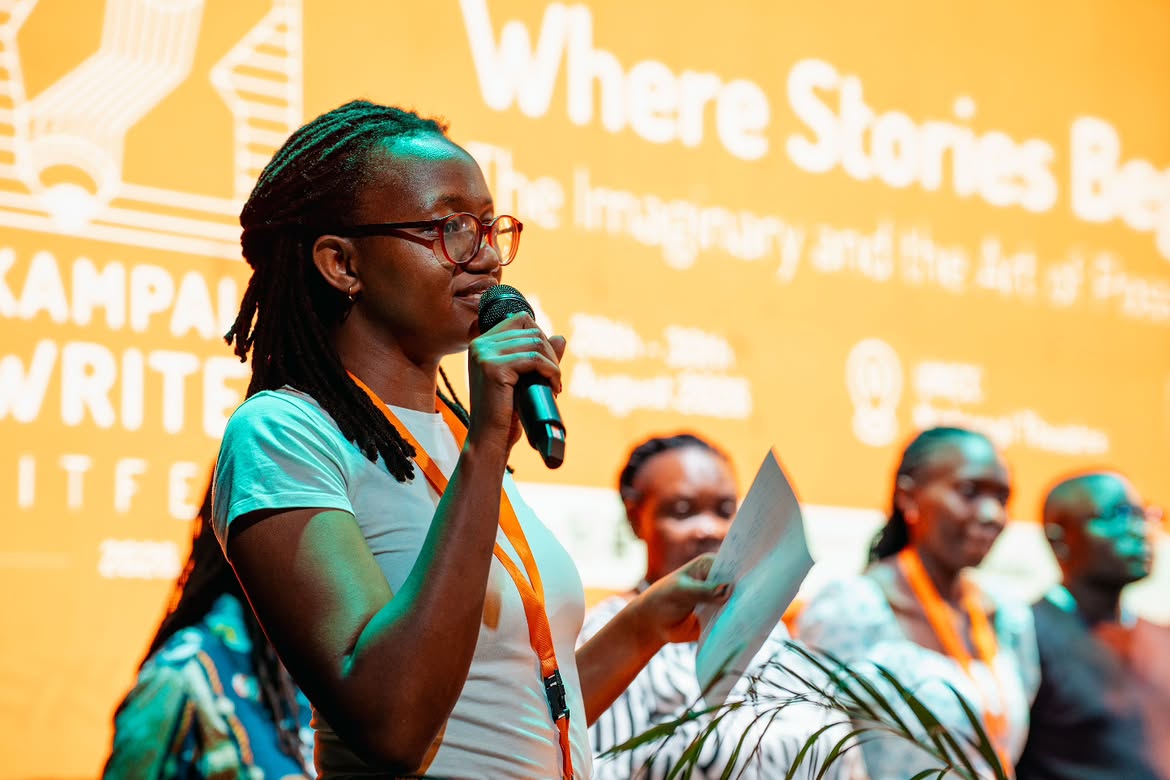
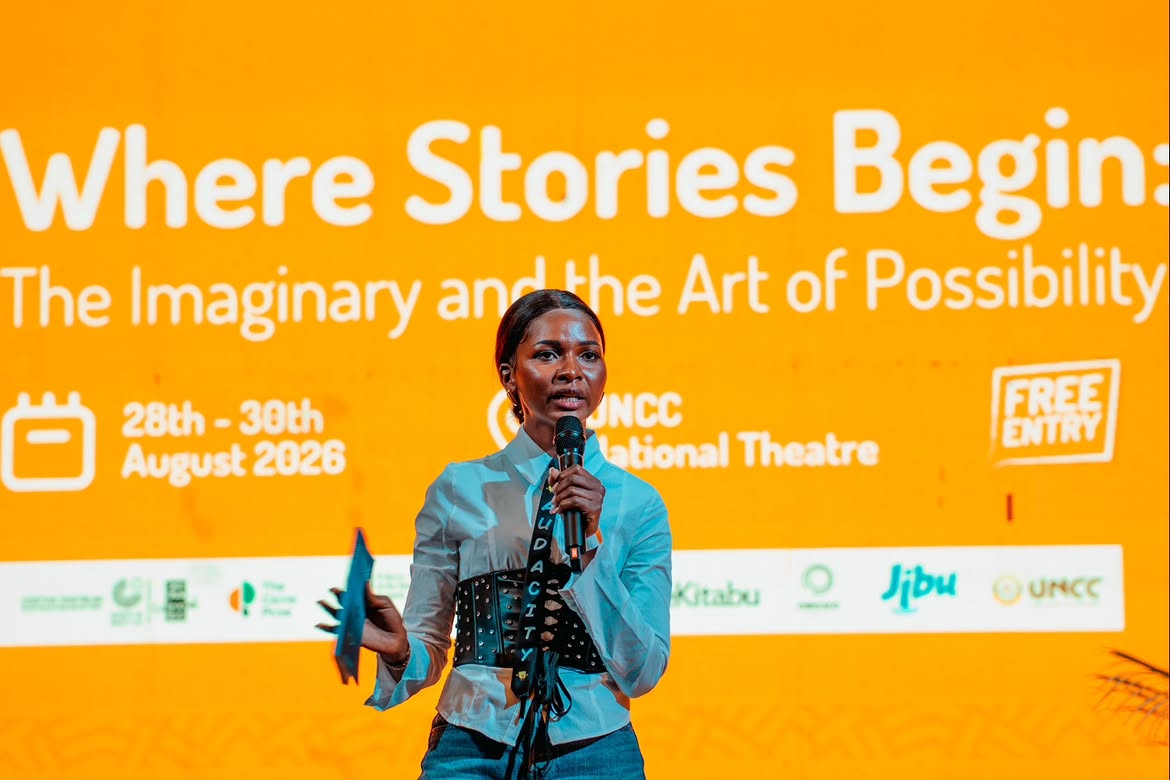
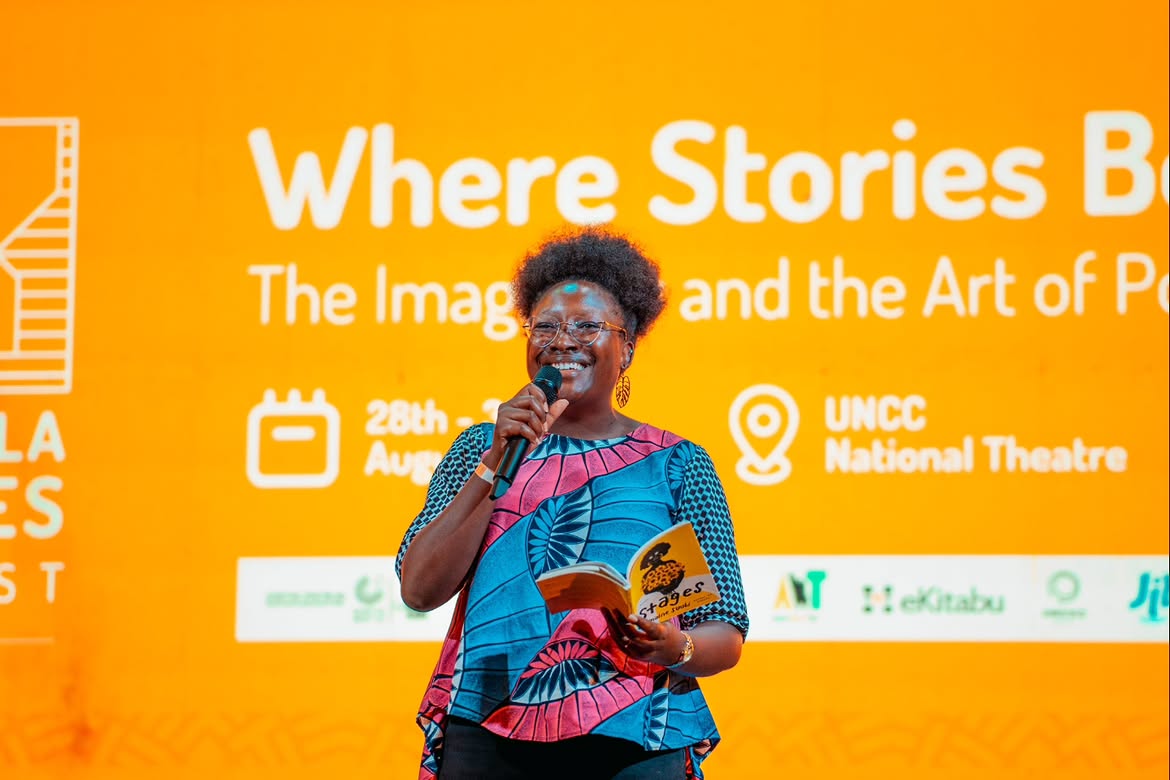
The theme was “Where Stories Begin: The Imaginary and the Art of Possibility.” By Sunday evening the theme had stopped being a poster. It was Mitch Isabirye standing without a book, talking about the childhood wish to grow up and the adult shock of arriving in a country that still demands patriotism from a broken house.
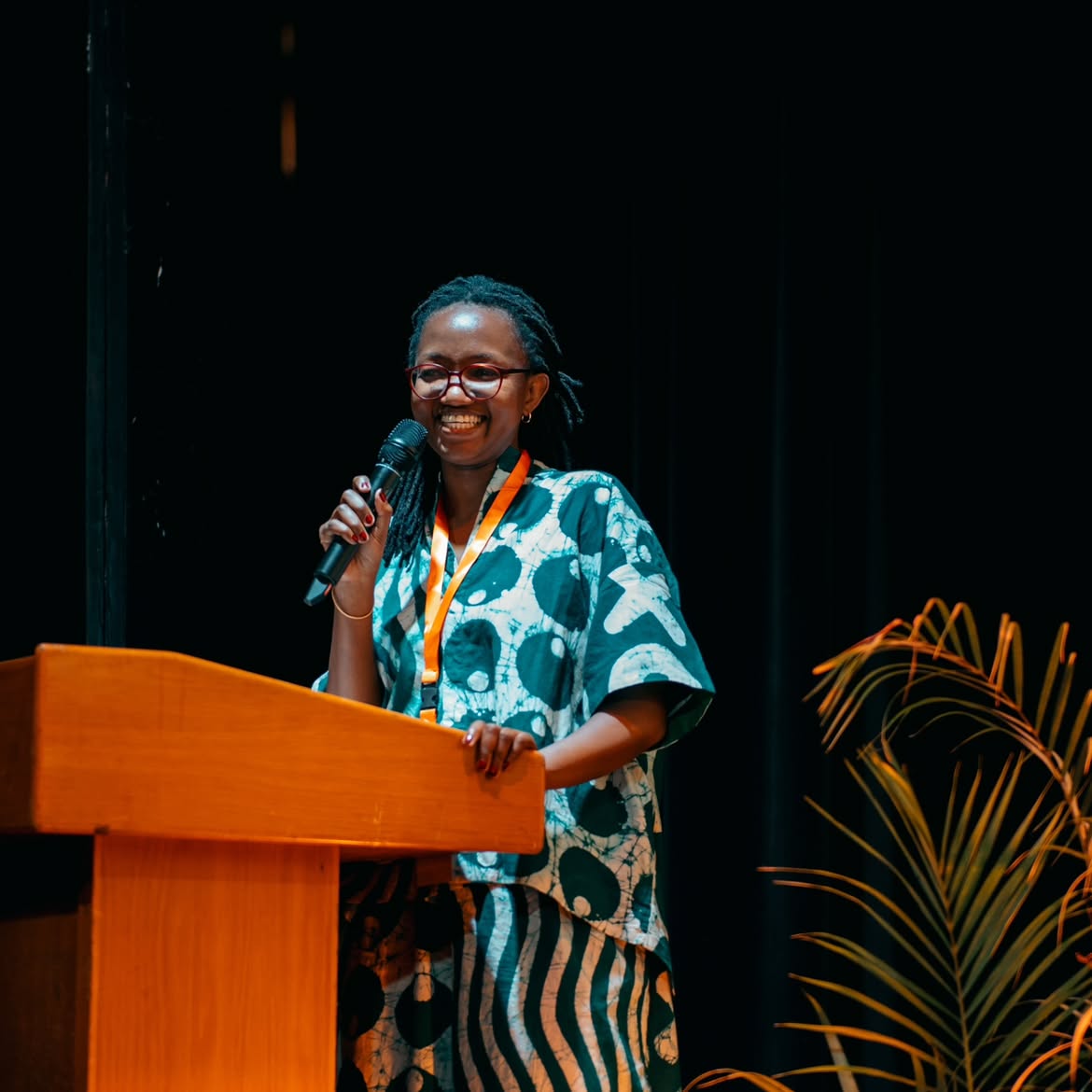
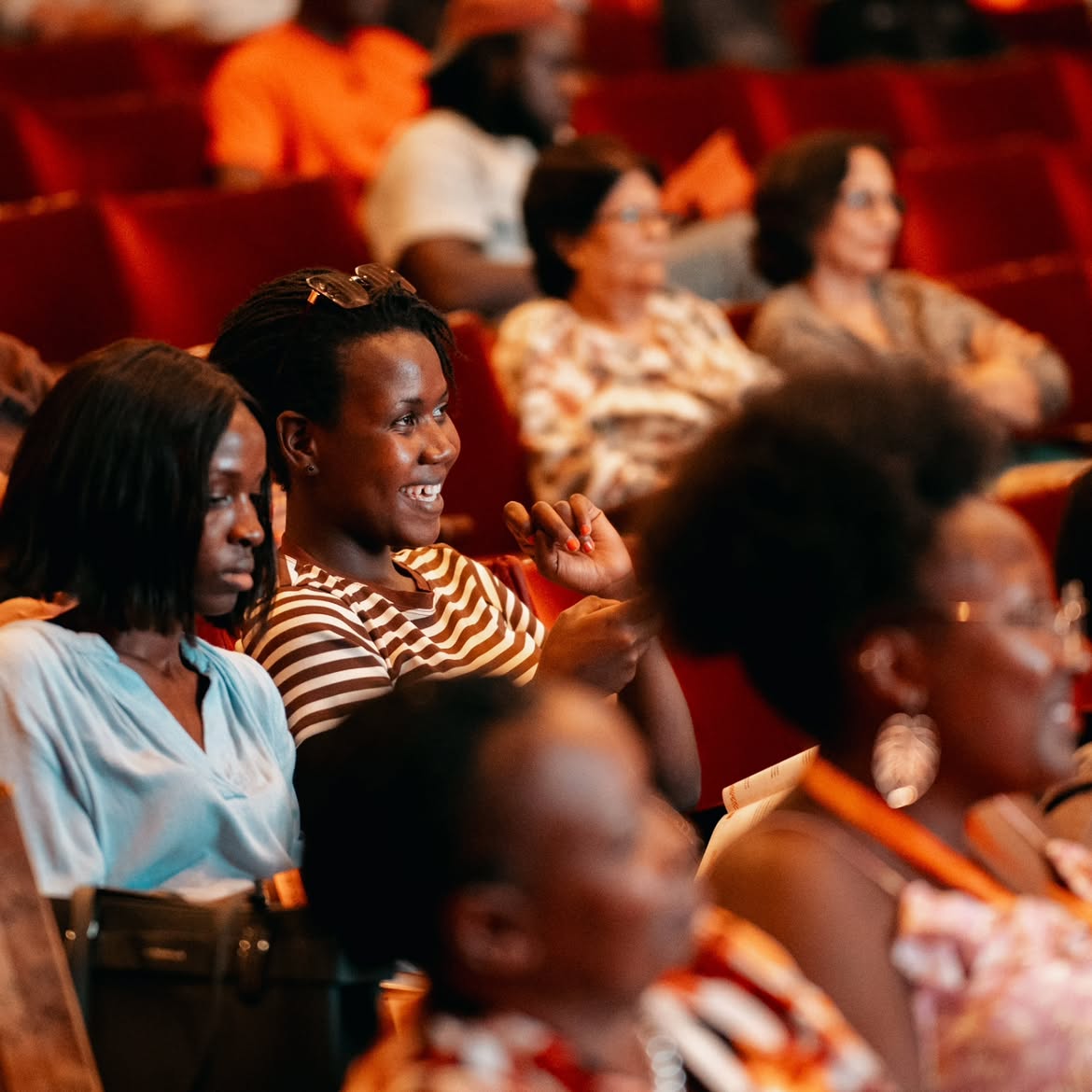
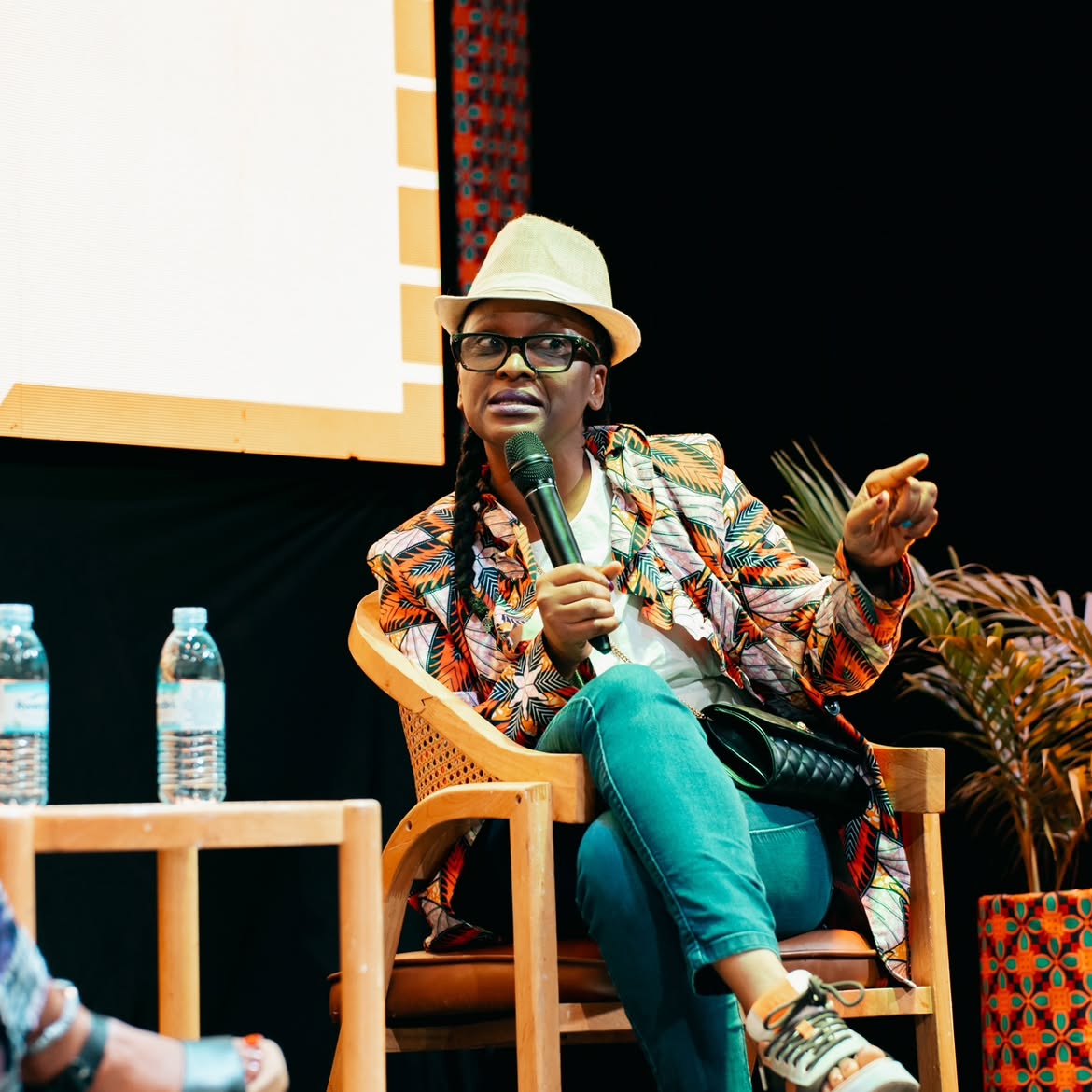
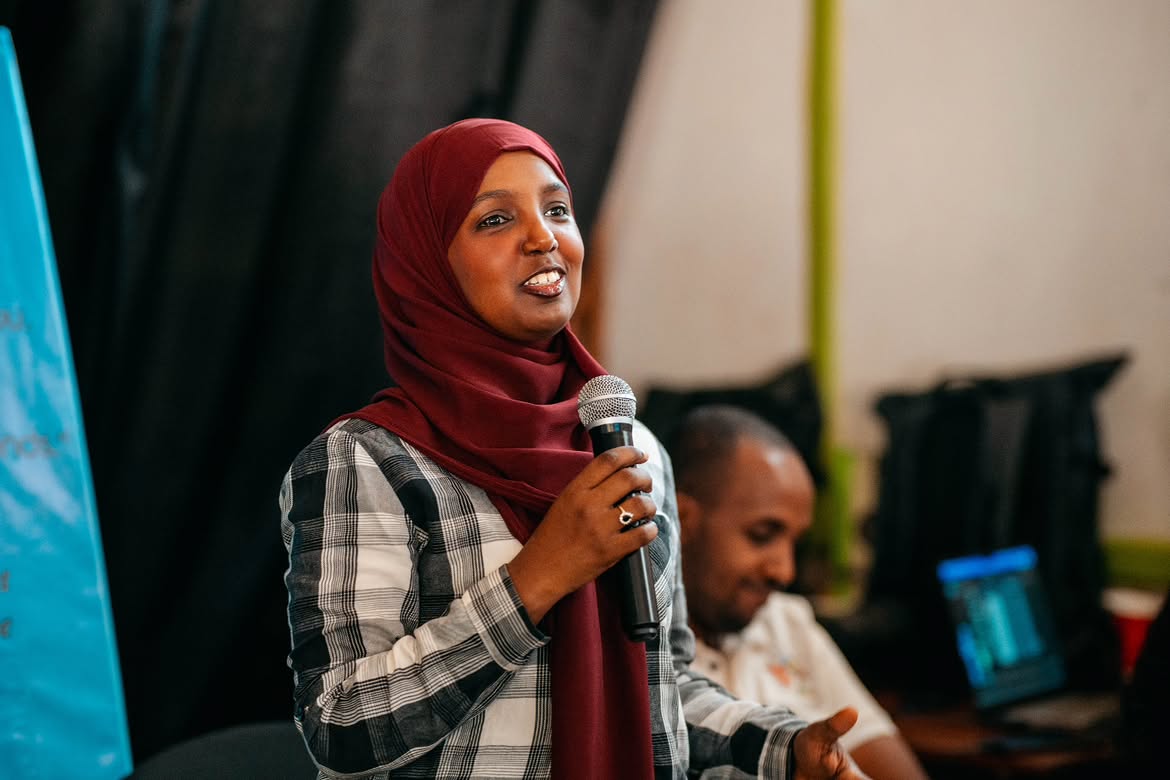
What is Kampala Writes LitFest and why did it move to the National Theatre?
This was the third edition. The first, in 2024, opened at Onomo Hotel on Nakasero Hill. The second filled Makerere’s Yusuf Lule Auditorium in 2025 with Jennifer Nansubuga Makumbi as headliner. 2026 came home to the Theatre — UNCC, the building Ugandans already associate with rehearsal, argument and applause.
The festival is organised by Goethe-Zentrum Kampala / the Uganda German Cultural Society, curated again by Goretti Kyomuhendo, and backed this year by the German Embassy, the Caine Prize for African Writing, African Writers Trust, Jibu Water, eKitabu, Onomo and a book-market bench that included Qweshunga Book Bar, TrustAwt and Mahiri Books. Entry was free. The days ran roughly 8:00am to 6:00pm. Sandra Suubi installed work that re-imagined Uganda’s independence ceremony as a wedding. That detail matters. This festival does not treat literature as a sealed genre. It treats it as the language other arts already speak.
Sheila Akwany, director of Goethe-Zentrum Kampala, has said the quiet reason the festival exists at all: after Writivism wound down, Uganda lost a regular industry room. Kampala Writes is the attempt to put that room back.
How did Friday 28 August open the Kampala Writes LitFest ?
Day one began with craft, not celebrity. Ama Dadson, the Ghanaian publisher who has become one of the continent’s most useful voices on audio, ran a masterclass on audiobook production and the particular work of making an African listening experience that does not sound like a London studio wearing kente.
Then the speculative-fiction panel — “Speculative Futures: Science Fiction as Fantasy and Political Imagination” — set the tone the rest of the weekend would keep returning to. South African writer Philisiwe Twijnstra, whose Jacana collection Flying Cows and Other Traumas moves through township magical realism, said she was tired of the South African page that only knows women as victims:
“Literature in South Africa is written in a way where women are constantly victims. I wanted to do something different. I wanted to break how women survive.”
Cameroonian-German writer Mirrianne Mahn cut the other way:
“We love telling stories about oppression but not stories about resistance.”
Ugandan filmmaker and novelist Dilman Dila reached backward past the colonial state:
“We are told we can’t live without a central government but when we look at Uganda before colonialism, kingdoms were scattered and people governed themselves.”
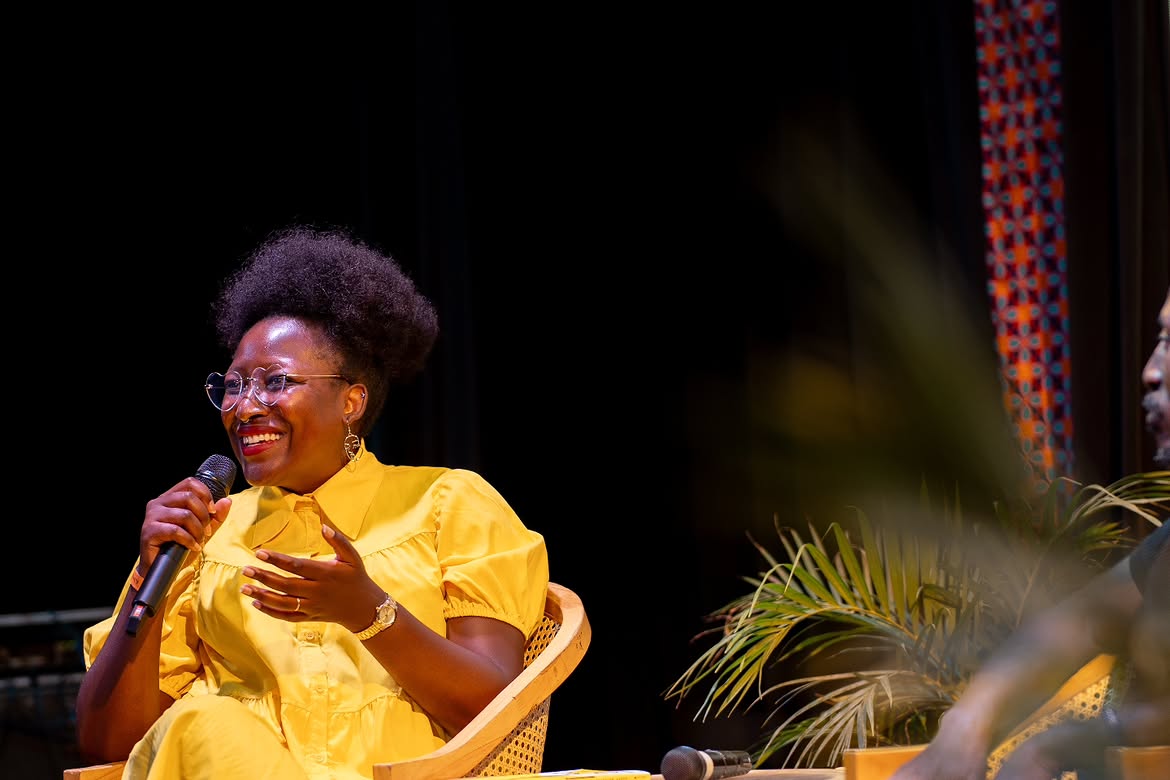
The cross-genre conversation that followed — “Where Stories Begin” — put multimedia artist Sandra Suubi, poet Tramaine Suubi and Atwine Lyn on the same table. Sandra Suubi refused the finished object as the only art:
“The process is the artwork and not the thing you see at the end.”
Tramaine Suubi, whose two Amistad / HarperCollins collections phases and stages have made her one of the most closely watched Ugandan poets of her generation, refused the myth of the lone genius:
“I am not self made, I am community made.”
Atwine Lyn offered the sentence every overworked Kampala creative needed:
“I truly believe that creatives need some time to be bored.”
Friday night belonged to the opening ritual. Lloyd Lutara’s dance work and an impressionist turn from Dr Anna Grace Awilli warmed the house. Then Chika Unigwe, the Nigerian novelist who won the Nigeria Prize for Literature for On Black Sisters’ Street, sat with Anna Adima for the keynote conversation. Unigwe would not separate the writer from the air she breathes:
“You can’t not be shaped by the narratives around you. There is nothing that we do in life which we do in a vacuum.”
On why family sits at the centre of her fiction:
“Family is the first place where stories begin and the first place where you learn to think of yourself.”
An audience member asked about rejection. Unigwe split the wound from the work:
“They are not rejecting me, they are rejecting my work. Myself and my work are two different things.”
“There are works I read and don’t enjoy, so don’t expect everyone to read and enjoy my work.”
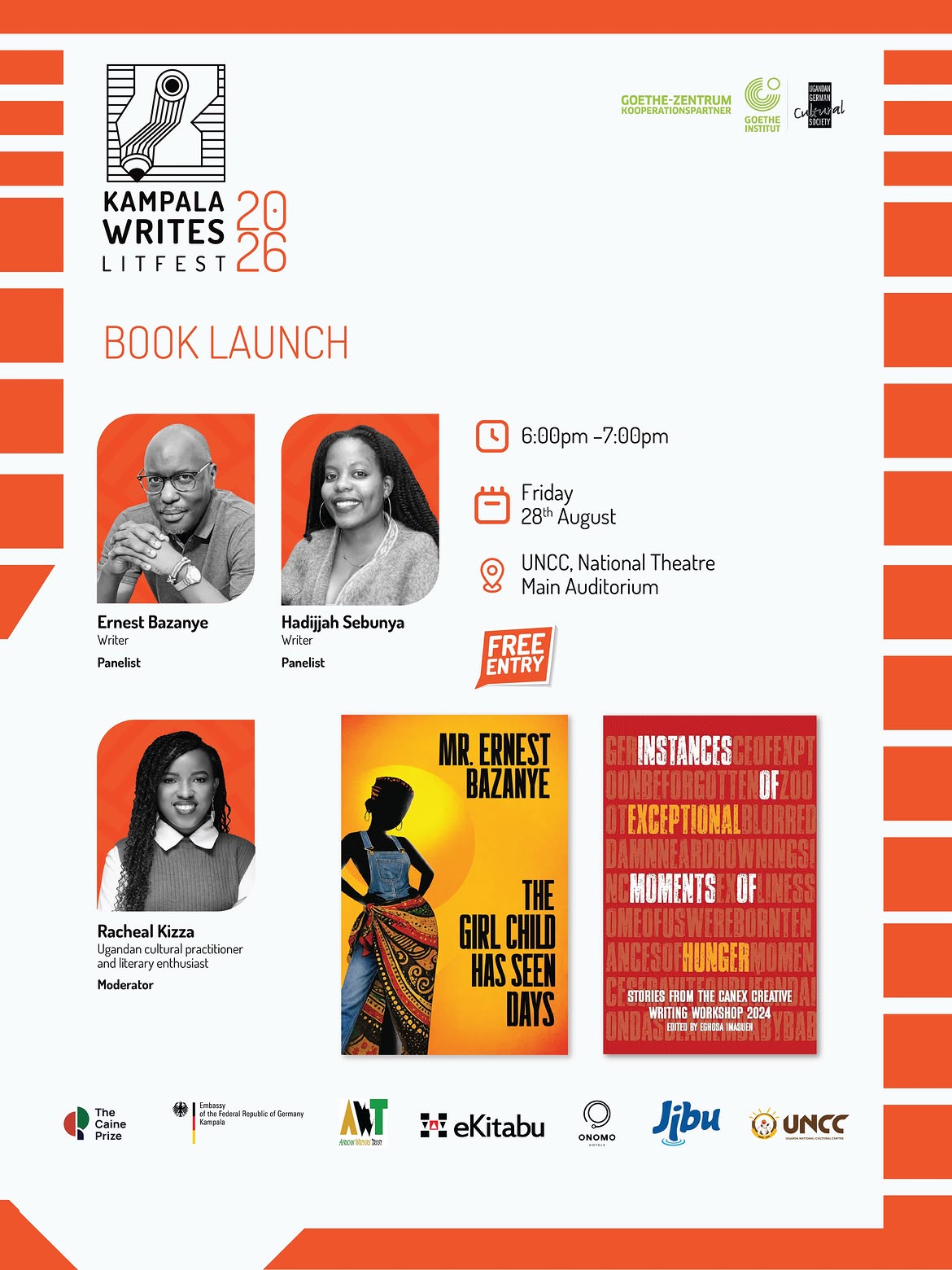
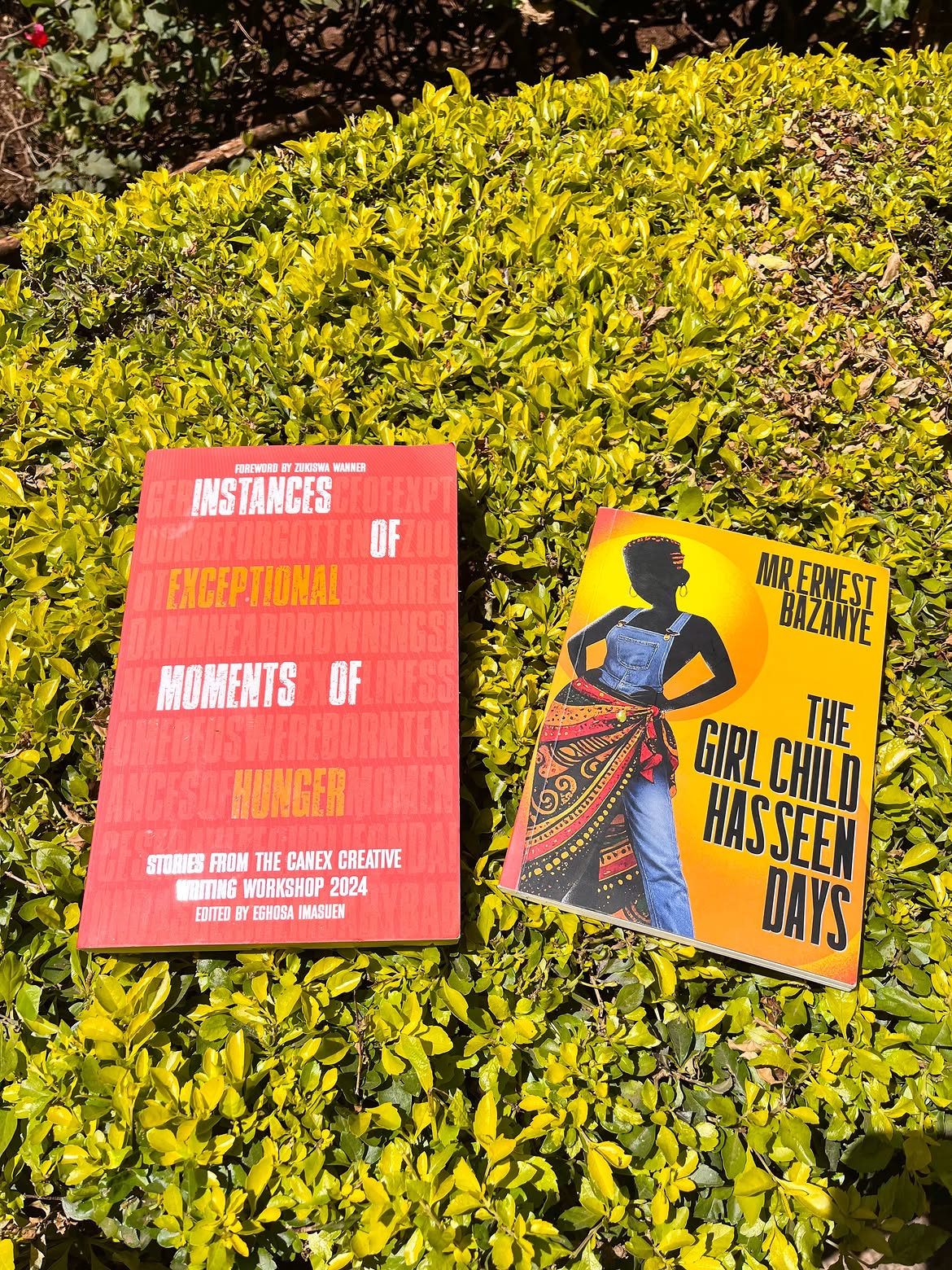
The same evening launched two Ugandan books: Ernest Bazanye’s The Girl Child Has Seen Days and Hadijjah Nabunya Ssebunya’s contribution to Instances of Exceptional Moments of Hunger, moderated by Racheal Kizza. Bazanye, the long-time humour columnist, was asked why he self-published.
“I care about what Ugandans think of my work, but there are people in between me and my reader and those are the ones I don’t care about.”
Ssebunya, asked why swimming runs through her story, answered as a Black woman who knows what the pool does to a body:
“I am a swimmer and I thought that swimming would be a great way to challenge a Black woman because it’s about weight and appearance. You don’t see a lot of Black women participating in that sport.”
What did Saturday 29 August put on the National Theatre stage?
Saturday was the heavy day. New Vision called it fiery. The morning opened on prizes. Zabu Wamara (joint winner, Island Prize 2025), Yvonne Kusiima (Caine Prize finalist) and Joshua Lubwama (Commonwealth Short Story Prize, Africa region) sat with Juliet Kushaba to talk about the thing every young writer wants until it arrives: recognition.
Kusiima on why she writes:
“When I’m writing I’m hoping to vent because there’s a lot that happens in this world that makes you angry and I hope the readers are able to vent with me.”
Lubwama on what a prize does to a sentence:
“There’s a tendency for recognition to influence your writing and compromise the integrity of your writing. The recognition I’ve received hasn’t influenced my writing but it has driven my writing career.”
Wamara on staying herself:
“I read a lot. I read all the time and I read what I love. The stories I read excite me and I allow them to guide my writing, not what other people think my writing should look like.”
Then the room changed temperature. Beatrice Lamwaka sat with Evelyn Amony, author of I Am Evelyn Amony: Reclaiming My Life from the Lord’s Resistance Army. Amony was abducted at eleven. She spent eleven years as one of Joseph Kony’s so-called wives. She gave birth at fourteen. She has not seen her third child in twenty years. Formal school stopped at Primary Four. An interpreter sat with her. The English was not the point. The survival was.
“Previously if you asked me about my experience, I could cry for 3 hours. But that changed after writing this book.”
On ordinary joy, after a life that had almost none:
“I like being around other women. I like going to the salon and hearing other women tell their stories. Because sometimes I think I am alone but I am not.”
Dr Gladys Kalema-Zikusoka, Uganda’s first wildlife veterinarian and author of Walking with Gorillas, sat with Deborah Tendo Auko (Rough Silk) on “Reimagining the Planet.” Kalema-Zikusoka described the donor math that conservation still has to fight:
“In general there is more money for humans than animals and more money for development than conservation. And we wanted to combine animal health and human health which made it even more difficult. So we found that we had to educate the donors.”
Tendo, asked how a first-in-the-room woman refuses to be the last:
“I mentor women to get into the logistics world and for writing I have a free book club with people who want to write their own books.”
The Imagination Gap panel — Chika Unigwe, Edna Ninsiima, Ama Dadson, Mirrianne Mahn, moderated by Wanjiru Koinange — produced the weekend’s most circulated lines.
Unigwe:
“Your imagination is as high as what you know.”
Ninsiima:
“We are not thinking about land as a preservation of heritage but about something that we sell for money.”
Dadson:
“Technology isn’t automatic access and discovery.”
Mahn:
“There’s no social justice without climate justice.”
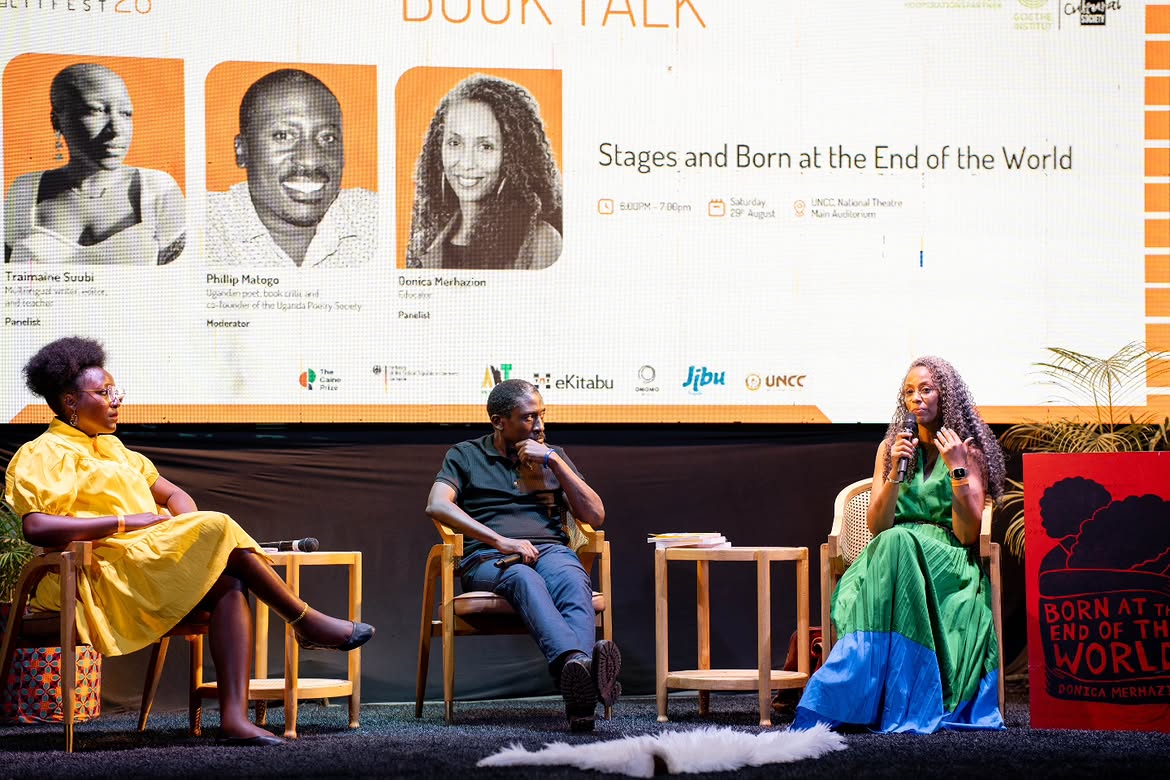
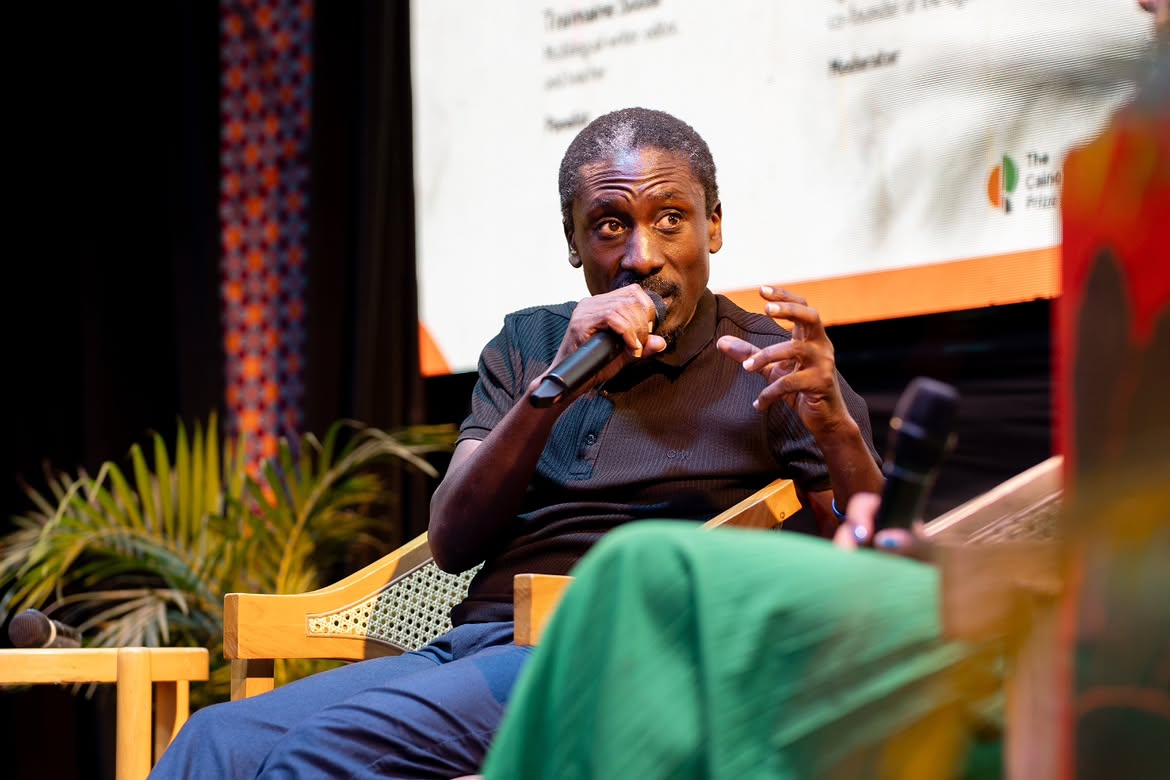
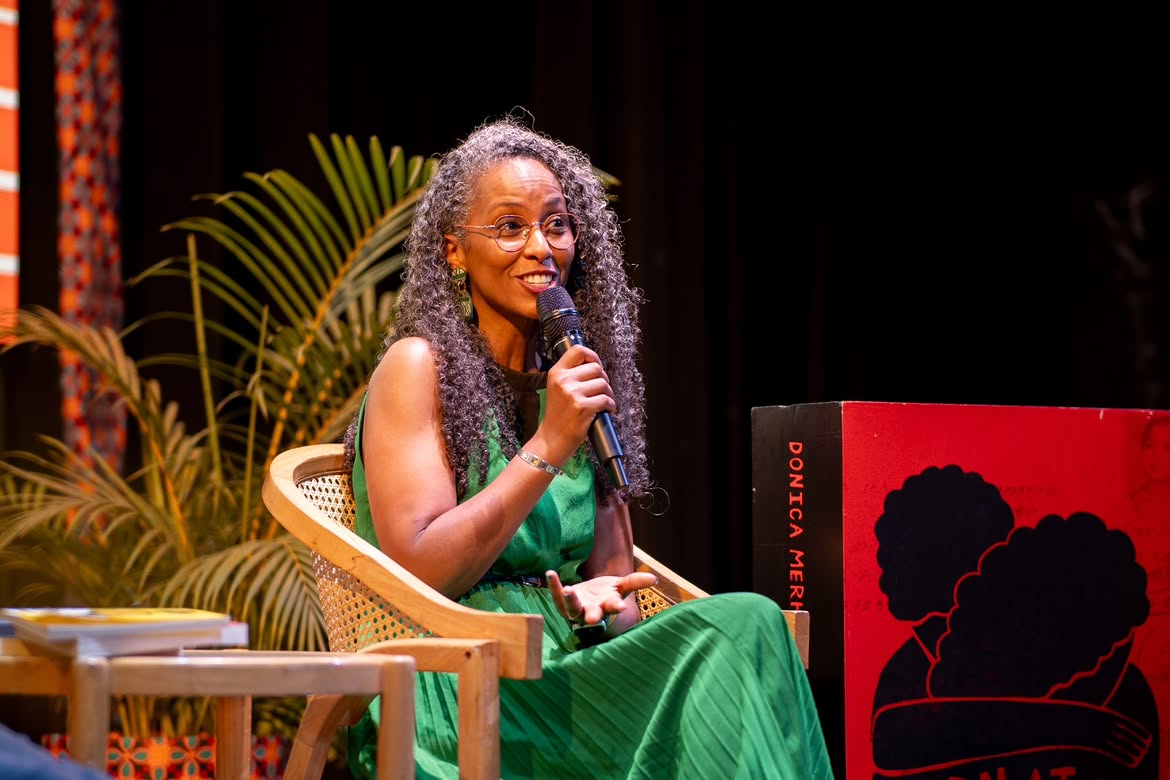
Late afternoon, Phillip Matogo moderated the BookTalk that had already been previewed on the eKitabu stand: Tramaine Suubi’s stages against Donica Merhazion’s Born at the End of the World. Merhazion, whose novel carries her family’s Red Terror history out of Alem Bekagn prison and onto the Mvua Press / Catalyst Press list, talked about the danger of writing alone:
“It took me 8 years to write my book and for 4 of those years I wrote 5 drafts by myself and I got stuck in a silo. Then I joined a writing group and my work really took off. It gave me support and harsh feedback that moved me forward.”
Suubi on the writer’s first tool:
“Our words inevitably shape our reality. As writers it’s our duty to be precise with our words because the words we use matter. Words are so crucial to how we feel.”
Saturday evening left literature for music. DOADOA Live, from 5:00pm, put Vini Mercy, Rahma Naigaga, Patricia Nyitiria Mitirikpwe, Lamu and Midnight Tsunami on the Theatre stage — a women-led showcase that treated song as another way a story begins. After that, a smaller circle of the same weekend moved up Nakasero to Onomo Hotel for eKitabu’s private cocktail. The public programme and the industry dinner were two rooms of the same argument.
What happened on Sunday 30 August, the day Kampala Edge Times was in the room?
Sunday is the day this newspaper can speak as a witness.
The children’s session came first, and it refused to be cute. Murungi Esther Mugisa, Alinaitwe Orianah and Damalie Kisakye sat with Penelope Nankunda under the heading “Children, Stories and Imagination.” Mugisa, frustrated by the COVID lockdown and desperate to return to class, wrote a letter to the President and turned it into a book. Kisakye watched corruption and wrote a poem about it because a friend told her the truth deserves to be heard. Orianah noticed that mental-health talk in this country is aimed at adults, and wrote for the child who is already drowning.
That is not a side programme. That is the festival teaching its own theme at the age when a story still has time to save someone.
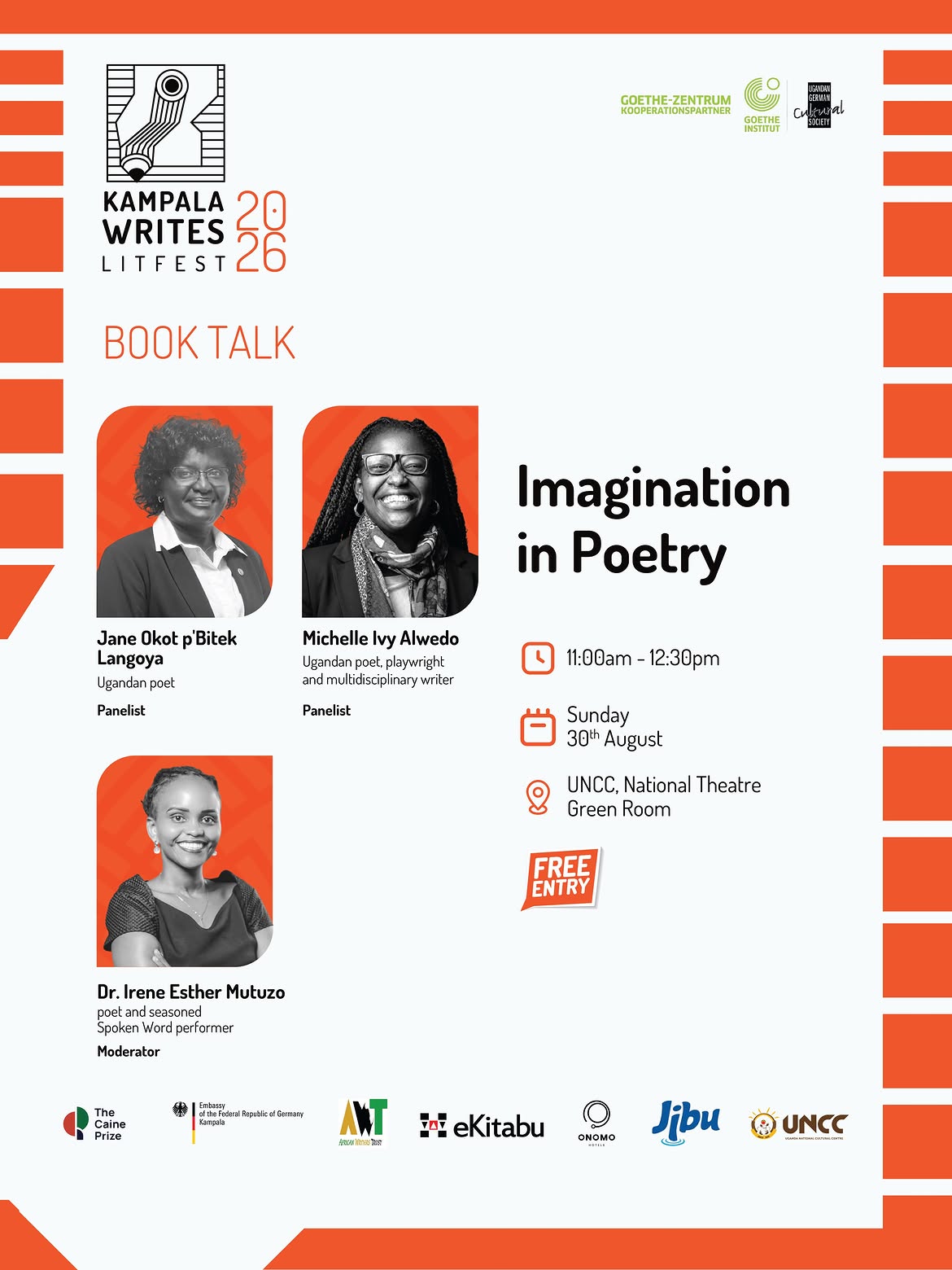
“The Imagination in Poetry” put Jane Okot p’Bitek Langoya — daughter of Okot p’Bitek, author of this year’s Song of Lacica — beside Michelle Ivy Alwedo, author of Perfectly Imperfect Portraits, with Irene Mutuzo moderating. Langoya, working in the song-school line her father made world-famous with Song of Lawino, described her method in one clean sentence:
“I interpret usual things in an unusual manner.”
Alwedo, asked about machines writing poems, drew a copyright line the AI panel would sharpen later:
“If you write using AI, you have to accept that the work is not yours. It’s for the company.”
Florence Baingana, whose Tropical Fish still sits on the shelf of anyone who takes Ugandan short fiction seriously, sat with Maureen Andinda for “Books That Stayed With Me,” moderated by David Kangye.
Baingana:
“I believe in each stage of life there is a book that may stay with us.”
Andinda:
“Reading is being in communion. Communion with an idea. Communion with the character. Communion with the author.”
Then the temperature rose again. “Decoloniality and the Stories That Make Us” put Kenyan novelist Wanjiru Koinange with Ugandan scholar Yusuf Serunkuma, moderated by Bernard Tabaire.
Koinange:
“We would not need donor funding if government were doing its job.”
Serunkuma:
“This economy is not ours. We need to have our economy in our hands.”
Those two sentences will travel farther than most of the poetry. They also explain why a literature festival in Kampala cannot pretend that imagination is an indoor sport.
What did the AI panel and the last conversation say about who owns the African story?
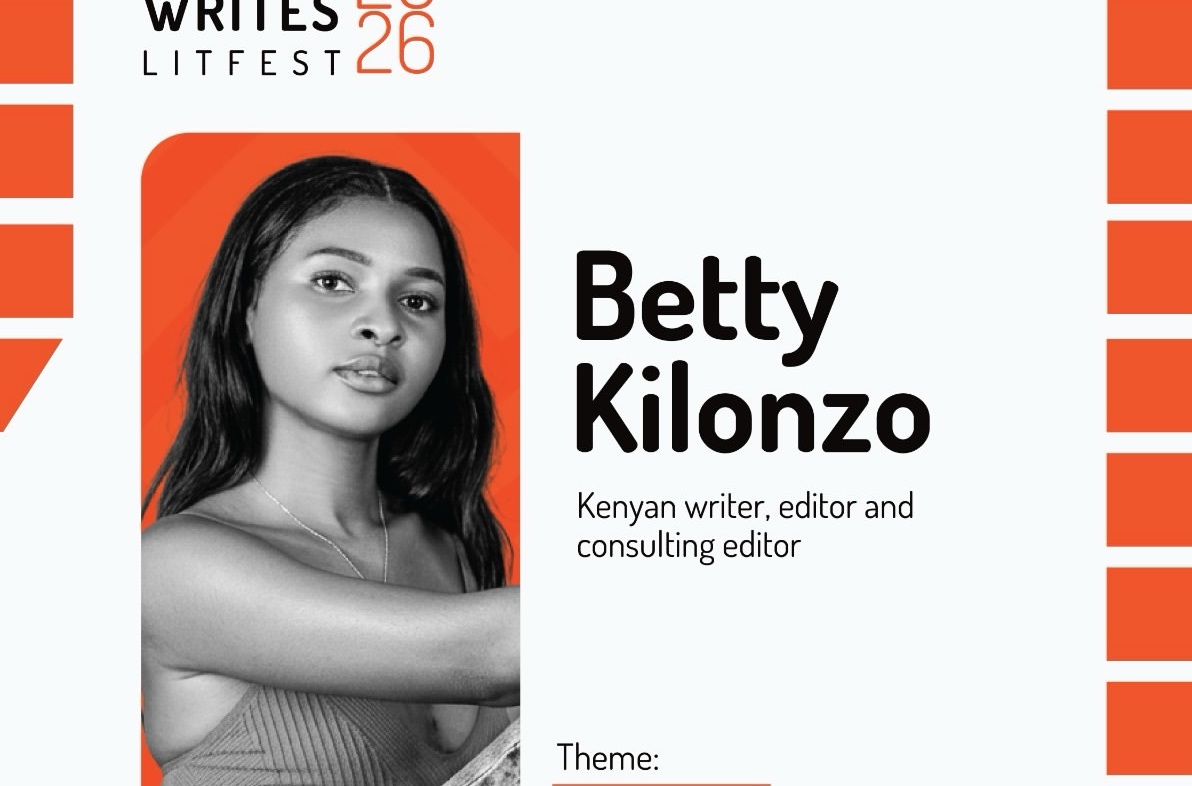
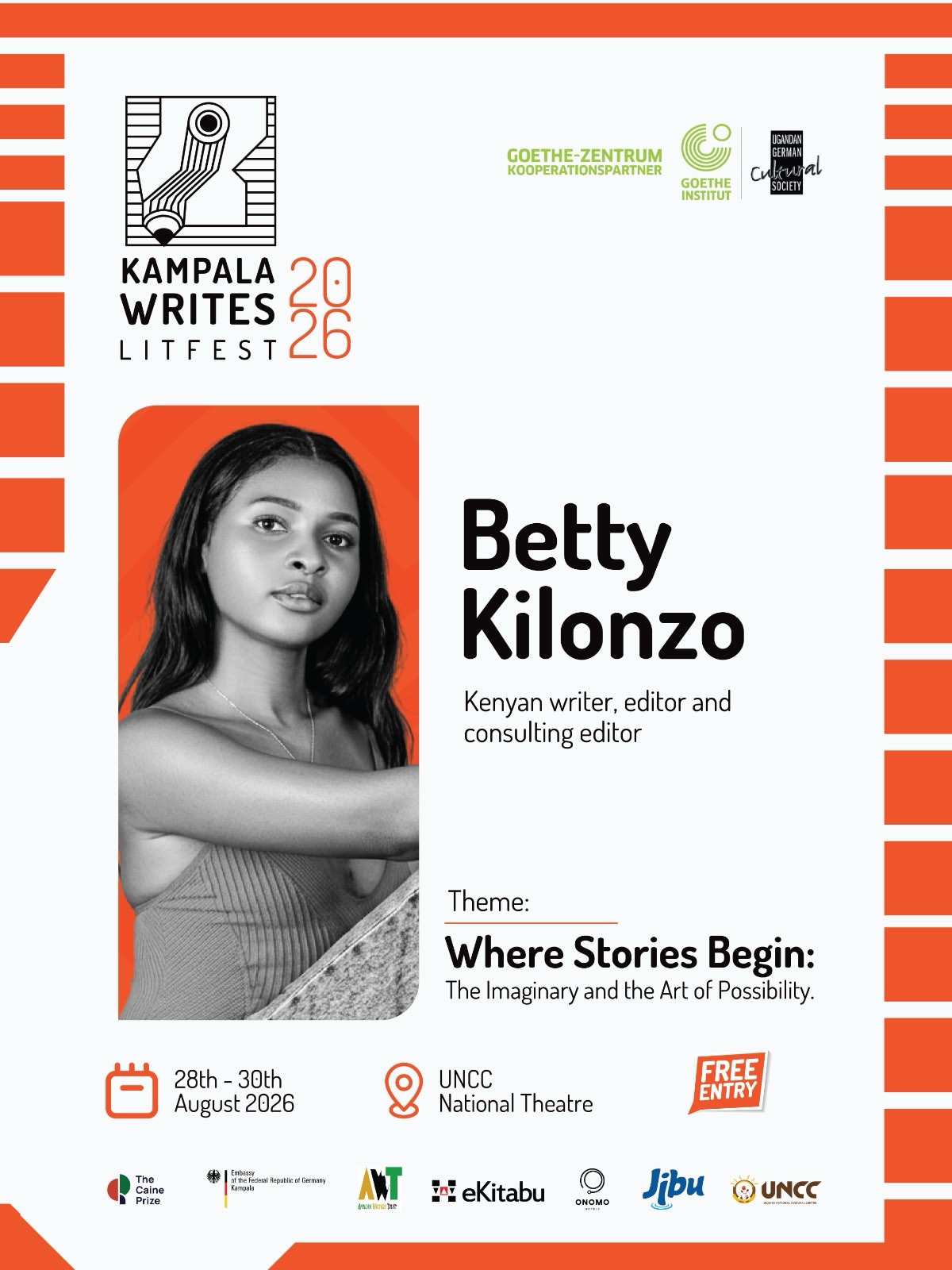
“Can Machines Imagine? Creativity in the Era of Artificial Intelligence” was the panel many people had come to hear. Felix Kitaka, Bernard Nakireza and Betty Kilonzo sat with Edna Ninsiima. Kilonzo — the Kenyan writer-editor from the eKitabu list, author of Househelp Manual, Closure and Jerusalem — had already been on the publisher’s stand all weekend. On Sunday she was not selling a book. She was warning the room.
“AI is what it is because of what we are giving it. And we keep giving it then complaining about it.”
Kitaka split the timeline:
“There’s two different ways to think of AI. You can think of AI now and AI 10 years from now.”
Nakireza on the fantasy of a quick law:
“If we were to come up with a law for AI right now, by tomorrow it would be obsolete with the rate at which AI technology moves.”
The last panel of the festival was the one the title had been aiming at all weekend: “Who Defines African Stories?” Philisiwe Twijnstra, Bazil Onen and Lena Mirembe Pira, moderated by Goretti Kyomuhendo herself.
Twijnstra on the eight years and the timid houses:
“I took 8 years to write my book and all publishers found it risky. It took one bold publisher who could think outside the box to say let’s do it.”
Pira, founder of Leap Publishers and the platform AfricanBooks.com, on demand that does not need a billboard:
“I track analytics and we have between 2,000 to 7,000 site visits at Africanbooks.com and yet we don’t advertise. This is all from interest.”
Onen went older than the ISBN:
“The real African story did not start with ISBN. The real African story survived because no one owns it. It has no copyright.”
That last line is a fight waiting to happen. Publishers in the room live on copyright. Oral tradition does not. A festival that can hold both sentences in one hour is doing its job.
How did Kampala Writes LitFest end?
The official recap says the festival closed with electric poetry from Mitch Isabirye, Betty Kilonzo and Tramaine Suubi, then closing words from Sheila Akwany and the organising team.
That is accurate. It is also too tidy.
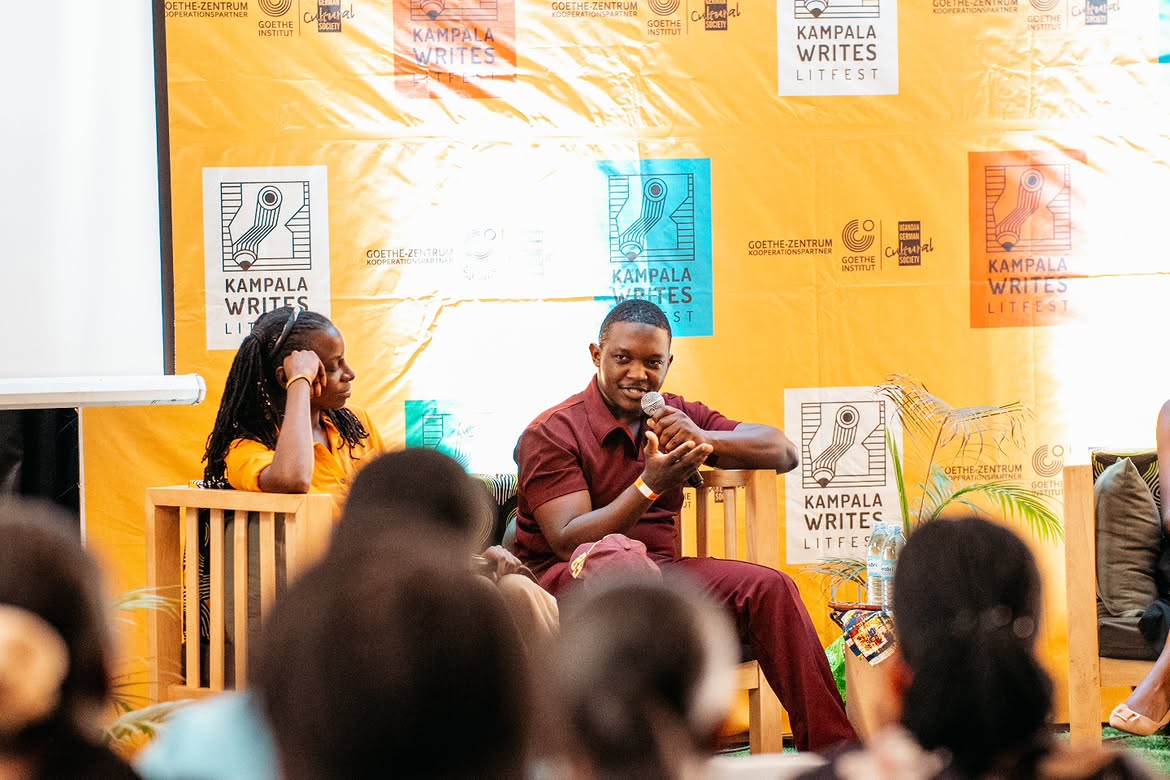
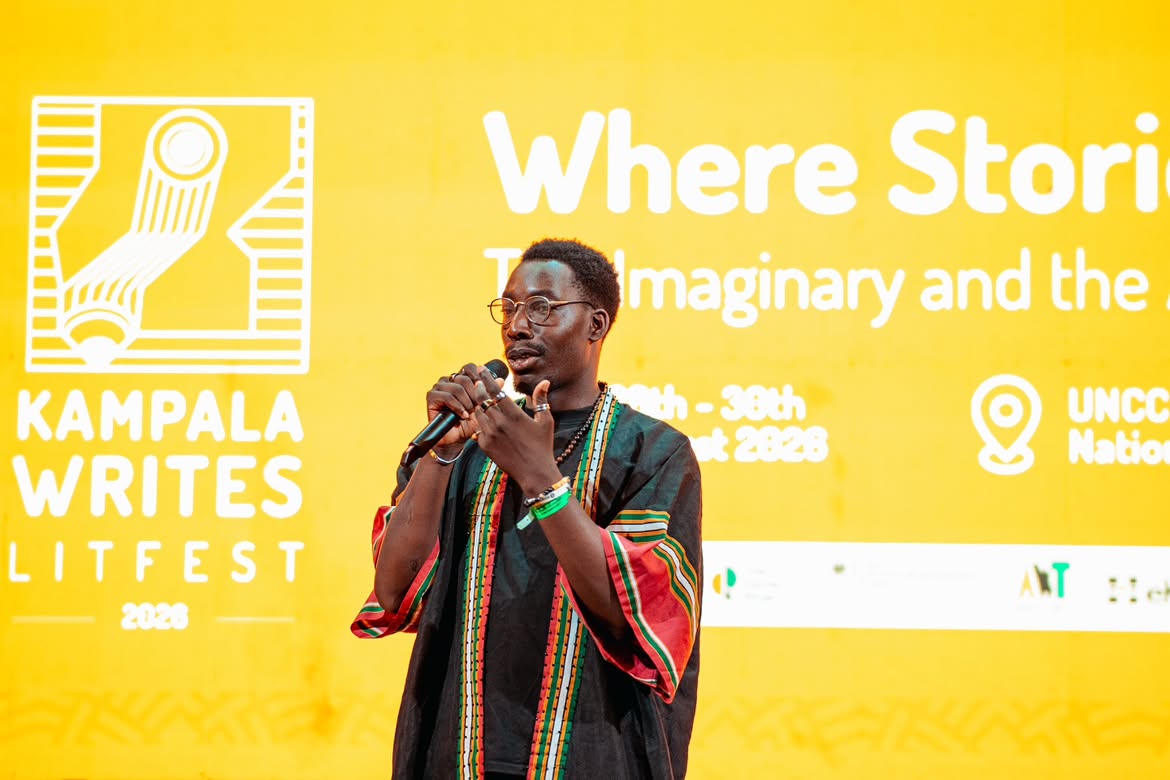
Different writers had been invited to read pages from their books. The room settled into that familiar literary-festival hush — the rustle of a spine, the author finding the marked paragraph. Then Mitch walked up without a book.
Godfrey Mitchy Isabirye, Kasokoso’s finest, Kitara Nation poet, host of the silent-headset series Mitchz Manifest, the man Daily Monitor has spent four years watching turn spoken word from a niche into a paying night at this same National Theatre, did not need a page. He narrated. Two poems. The first was about growth: how we spent childhood begging time to hurry, and how the adult who finally arrived is standing in the middle of the life he thought he wanted, counting the costs. Failed relationships. The particular loneliness of young people in this city. A society that is broken in the joints and still expects the young to stand up straight and call it patriotism.
He brought it so cleanly that the room stopped being a festival and became a congregation that had not planned to pray. People who had sat through three days of ISBN talk and donor sentences recognised themselves in a man who had not opened a cover.
Betty Kilonzo followed with a poem from her own work. Anyone who has only met her as the practical voice on an AI panel or the consulting editor at eKitabu discovered the other register: the woman who writes Jerusalem and Closure, who has said she wants readers to see the mess, the mistakes and the urgency. The poem was beautiful in the way a well-made thing is beautiful — not soft, not ornamental, just true enough that you felt the weekend’s arguments leave the microphone and enter a body.
Tramaine Suubi read last among the three, and the read was adult. Not a scandal. A choice. phases and stages have never pretended that the body is a footnote to the nation. On a Sunday afternoon in the National Theatre, after children had talked about lockdown letters and a woman who survived Kony had talked about the salon, Suubi reminded the room that African literature also includes desire, and that precision with words applies there too.
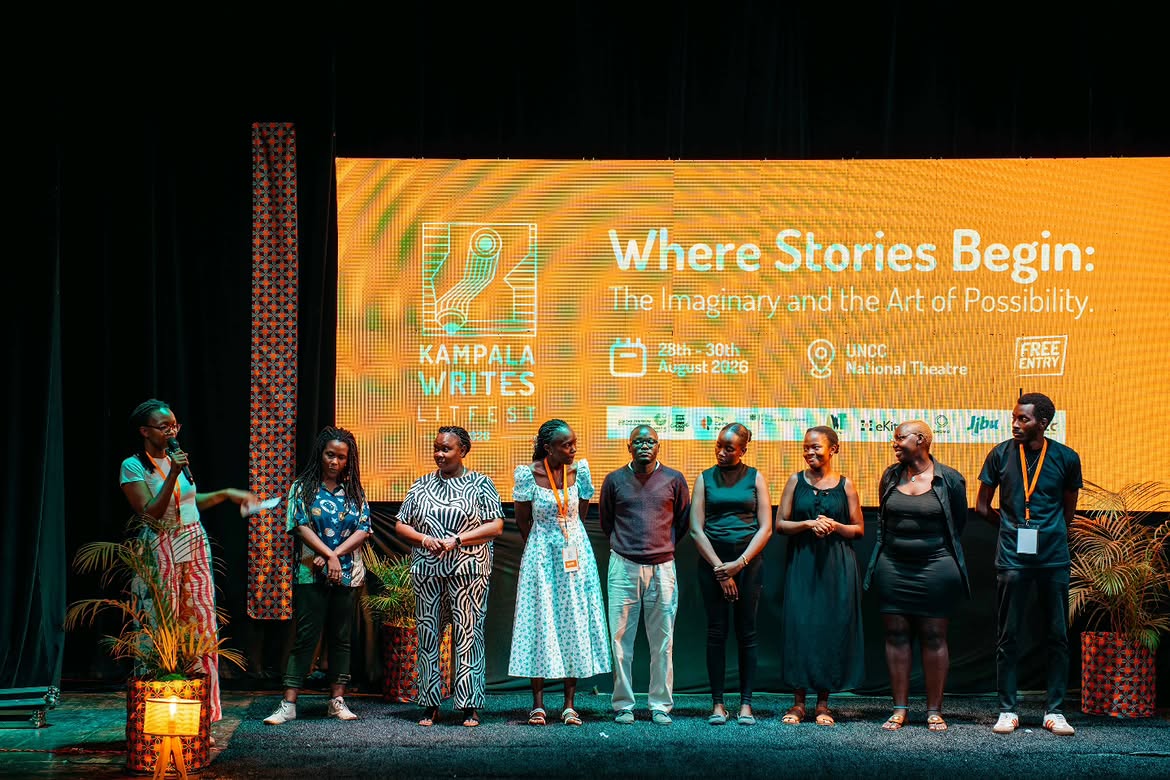
Sheila Akwany closed the house. Three years ago this festival did not exist. This weekend it had Unigwe in the keynote chair, Amony in the interview chair, children on the first panel of Sunday, a Kenyan imprint selling books in the foyer, and a Kampala poet finishing the programme without a book in his hand.
That is not a miracle. It is infrastructure. Akwany and Kyomuhendo built a room. The writers filled it. On Sunday, Mitch Isabirye proved that the room still works when the page is left in the bag — as long as the voice knows what this country has done to the people who grew up inside it.