
Table of Contents
KAMPALA, UGANDA — Across prime residential houses and estates in Kampala and Wakiso—from Naalya, Kira, and Bweyogerere to Muyenga, Naguru, and Akright—property owners who recently invested hundreds of millions of shillings are watching their new homes deteriorate within months of completion.
Walk along any street of newly built homes, and the pattern is identical: exactly 0.5 meters above the floor slab, the wall plaster is blistering, paint is swelling, and chunks of mortar are falling off like scabs on an unhealed wound.
Homeowners call back painters to scrape, seal, and repaint, only for the same peeling to reoccur three months later. While site masons (fundis) and degree-holding site engineers routinely blame “rising dampness” or “cheap paint,” the root cause is a fundamental failure in modern Ugandan construction practices: the total abandonment of hydrated lime in wall plastering.
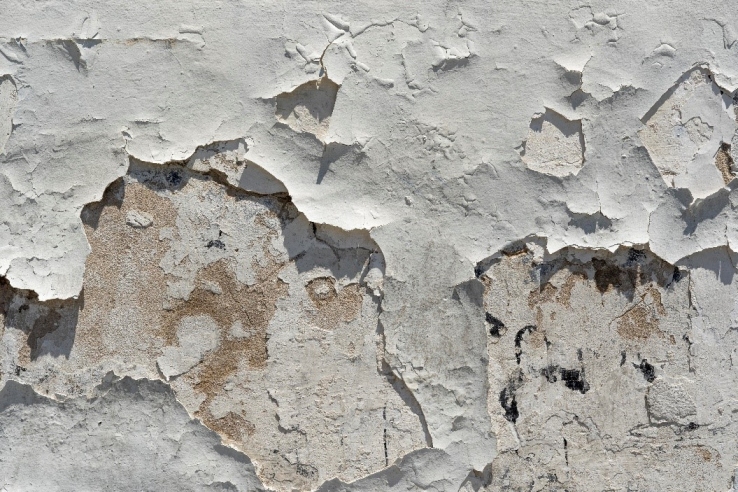
By replacing traditional lime-cement mortar with harsh, fast-drying pure cement-and-sand mixes, modern builders are creating rigid, non-breathable structures destined to trap moisture and destroy life savings.
Why does wall plaster peel 0.5 meters above the floor in new Kampala houses and homes?
The pervasive peeling observed half a meter above the floor slab is caused by a combination of rapid thermal shrinkage and the lack of vapor permeability in pure cement-sand mortar.
Uganda operates under a hot, tropical climate where temperature fluctuations during the day force wet plaster to cure rapidly. When site masons mix pure cement with sand without adding lime, the mortar shrinks at an extreme rate during drying, creating thousands of invisible micro-cracks across the surface of the wall.
During rainy seasons or periods of high atmospheric humidity, moisture penetrates these micro-fissures. Because pure cement forms a dense, non-porous skin, the trapped water cannot evaporate outward through the wall face.
Unable to breathe, the trapped moisture migrates downward toward the plinth wall, accumulating exactly 0.5 meters above the floor slab. The resulting hydrostatic pressure pushes the impermeable plaster skin off the brickwork, causing paint to bubble, plaster to hollow out, and mortar to flake off.
In contrast, historic structures across Uganda built nearly a century ago remain entirely intact:
- Jjaajja Muguluma Estate (Built 1927 in Kifuuta, Kyotera, Buddu): Approaching 100 years of exposure, the original wall plaster remains as rock-hard as the day it was applied, displaying zero bottom-level peeling or surface map-cracking.
- Jjaajja Livingston Naidoo Residence (Built 1949 in Njeru, Nyenga): Over 77 years old, displaying solid structural plaster without hollow “pop-pop” sounds or moisture blisters.
- Kiterede Ekerezia (Built 1908): Features 118-year-old plaster that remains firm, weather-resistant, and structural.
- Green Park Infrastructure (Built 2008 on Kafue Road, Lusaka, Zambia): Plastered using mandatory hydrated lime specifications, showing zero plaster degradation or peeling after nearly two decades in high-heat environments.
During the grand finale of the Buganda Royal Regatta (Amaato Ga Kabaka), this engineering reality was underscored to prominent property developers: building with pure cement without lime is setting a house up for future failure.
Why do fundis and site engineers claim lime is outdated in modern construction?
The widespread claim by site masons and contractors that lime is an “outdated colonial method” is a dangerous myth driven by short-sighted cost-cutting and a desire for rapid, low-effort application.
To save approximately UGX 50,000 on a bag of hydrated lime during the initial build, fundis convince unsuspecting clients to skip lime entirely. However, this minor initial saving triggers massive long-term financial losses for the property owner.
Within 8 to 12 months of completion, the client is forced to spend upwards of UGX 3,000,000 to hack off peeling wall sections, apply temporary chemical waterproofing agents, and repaint—only for the moisture to breach the wall again during the next heavy rains.
Furthermore, claims that modern engineering has abandoned lime are completely contradicted by major institutional specifications:
- Institutional Engineering Standards: High-spec national projects—including State House Entebbe, the Bank of Uganda headquarters, and the Kampala Serena Hotel—mandate the inclusion of hydrated lime in all masonry and rendering mortar specifications.
- European Restoration Trends: In the United Kingdom and across Europe, heritage conservation boards are actively stripping away 20th-century pure cement renders and returning to traditional hydrated lime mortars because pure cement accelerates structural rot in masonry.
How does adding hydrated lime transform cement mortar performance?
While cement provides structural compressive strength and sand provides bulk volume, hydrated lime provides elasticity, breathability, workability, and longevity to wall plaster.
Hydrated lime acts as a microscopic lubricant and flexible binder within the mortar matrix, altering how the wall responds to heat, moisture, and ground movement.
| Mortar Performance Metric | Pure Cement + Sand Mortar (Modern Shortcut) | Hydrated Lime + Cement + Sand Mortar (Engineered Standard) |
| Workability & Handling | Harsh, gritty, difficult to spread evenly; pulls away from bricks. | Buttery, smooth, spreads effortlessly like margarine. |
| Shrinkage & Cracking | Shrinks rapidly in tropical heat; forms microscopic hair cracks. | Cures slowly with zero shrinkage; eliminates map-cracking. |
| Vapor Permeability | Non-breathable; traps moisture behind paint skin. | High breathability; allows trapped moisture to evaporate harmlessly. |
| Autogenous Healing | Permanent cracks expand over time under weather stress. | Self-healing: Free lime reacts with atmospheric CO2 to seal tiny cracks. |
| Acoustic / Adhesion | Hollow “pop-pop” sound when knocked; poor mechanical keying. | Solid acoustic resonance; bonds deeply into brick and block pores. |
| Expected Service Life | 3 to 5 years before severe peeling and repainting is required. | 50 to 100+ Years without structural plaster failure. |
What is the correct hydrated lime and cement mix ratio for plastering in Uganda?
To eliminate peeling walls and guarantee century-long plaster durability, site engineers and fundis must follow precise batching ratios using hydrated lime (lime prepared specifically for construction, not raw agricultural lime).
1. Internal Wall Plastering Ratio
For interior rooms, living areas, and hallways requiring smooth, breathable surfaces:
- 1 Part Cement : 1 Part Hydrated Lime : 6 Parts Clean Sand
2. External Wall Plastering Ratio
For exterior walls exposed to direct rainfall, tropical sunlight, and external moisture:
- 1 Part Cement : 0.5 Part Hydrated Lime : 4 Parts Clean Sand
Essential Site Execution Rules for Masons
- Lime Soaking (Lime Putty Preparation): Hydrated lime should ideally be soaked in water overnight (minimum 12 hours) prior to mixing to form a smooth lime putty. This maximizes plasticity and ensures complete hydration before cement is added.
- Proper Curing Protocols: Avoid rapid forced drying under intense direct sunlight. Wet the brickwork thoroughly before applying plaster, and damp-cure the finished plaster with water for 3 to 5 days.
- Never Substitute Agricultural Lime: Masons must strictly use commercially bagged Hydrated Building Lime (Calcium Hydroxide). Agricultural lime contains impurities and coarse particles that disrupt cement bonding.
Site engineers and property developers across Kampala must move away from lazy, pure-cement plastering shortcuts. Cutting out hydrated lime to save UGX 50,000 on a bag of materials destroys multi-hundred-million-shilling investments.
Building to last requires returning to proven engineering wisdom: mix cement for strength, sand for body, and lime for life.