
Table of Contents
Moroto Marble — In 1927—exactly 99 years ago—Jjajja Muguluma set off from the village of Kifuuta on an extraordinary one-year journey to Europe. Traveling without air travel or digital visas, he navigated by road, railway, and steamship from Kifuuta to Mombasa, across the Suez Canal, through Marseille, and into London, spending six months going and six months returning simply to observe how global civilizations built their world.
Following in those ancestral footsteps, cultural thinker Joseph Mbazzi Muguluma (the Oracle of Kifuuta) has spent decades traveling solo across 56 nations—from attending the 1988 European Cup Final in Munich to examining the urban design of Rome, Moscow, Beijing, Istanbul, Rabat, and Windhoek.
His verdict on modern Ugandan urban planning is unsparing: while historic and modern cities worldwide embed their cultural soul and geological wealth into their skylines, Kampala has surrendered its identity to characterless, glass-and-iron “boxes stacked on boxes” (kukekereza).
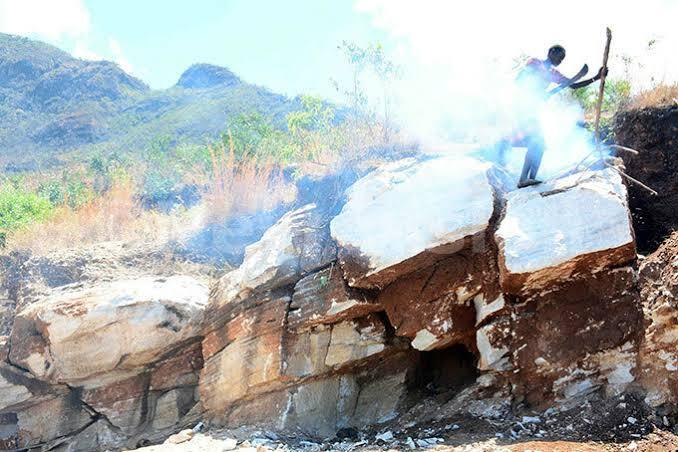
“A city without architecture is a man without a face,” the Oracle of Kifuuta warns. “You can dress him in expensive clothes, but no one will remember him. Rome built St. Peter’s Basilica with Italian marble. China built skyscrapers shaped like dragons. Windhoek paved Eros Airport with Namibian Karibib stone. Yet Uganda imports third-grade Asian tiles for Entebbe Airport and the Parliament extension while pure Moroto marble rots in Karamoja and volcanic stone sits unused in Kisoro. This is not poverty—this is self-colonization.”
What did the author observe about architectural identity across 56 countries?
Great global cities speak to visitors through structural form, local material selection, and cultural iconography before a single word is spoken:
1. Rome and the Vatican — Geological Integrity and Circular Geometry
In Rome, urban design follows historical memory. Ring roads expand like the growth rings of an ancient tree, centered around iconic monuments such as the Colosseum (commissioned in 80 AD as the Flavian Amphitheater). At St. Peter’s Basilica, every slab of brilliant white and red marble was quarried directly from Italian soil, demonstrating that enduring beauty is dug from a nation’s own earth rather than imported.
2. Moscow and Eastern Europe — Ideology in Concrete
From Moscow to Warsaw and Riga, Soviet-era architecture utilized heavy, bold, and monumental concrete structures that communicated imperial collective ideology. Iconic landmarks like Saint Basil’s Cathedral on Red Square, with its vibrant onion domes, provide an unmistakable visual symbol of Russian history.
3. The Desert Cities — Sacred Modernism
Across Istanbul, Dubai, Abu Dhabi, Doha, and Yemen, futuristic glass skyscrapers maintain a clear cultural root. Modern towers bow to traditional Islamic design, incorporating minaret forms, domes, and crescent alignments into desert-modern skylines.
4. The Far East — The Dragon Motif
Across Beijing, Shanghai, Tokyo, and Seoul, modern architecture obeys ancient cultural symbols. From traditional commercial structures around the Yu Garden Bazaar in Shanghai to high-rise commercial towers, rooflines curl upward like a dragon’s tail, retaining cultural protection in concrete and steel.
5. Historical Colonial Adaptation — Rabat, Rio, and Regional East Africa
- Morocco (Rabat): Spanish arches blend seamlessly with traditional Moorish courtyard tiles, preserving architectural beauty long after colonial departure.
- Tanzania (Dar es Salaam): The Kariakoo district retains its Sultan and Swahili coastal identity through whitewashed walls, flat roofs, and intricate carved wooden doors.
- Uganda (Historic Jinja): Along Magwa Crescent and Nizam Road, early urban planners utilized Arabic arcades, shaded verandas, and wide balconies suited to the equatorial climate.
Why is ignoring Moroto marble and Kisoro volcanic stone an economic tragedy?
Uganda possesses vast, unexploited geological reserves that international architects travel global distances to source, yet local infrastructure projects systematically pass over native minerals in favor of cheap foreign imports.
1. The Moroto Marble Disconnect
Karamoja holds Mount Moroto, a massive geological deposit of black, white, green, and multi-colored marble. Despite possessing world-class stone, major national gateways—including the expansion of Entebbe International Airport and the Parliament of Uganda extension—rely on imported synthetic tiles.
By contrast, Namibia’s capital, Windhoek, paved Eros Airport (Otjomuise) using marble quarried directly from Karibib in the Namib Desert, ensuring every international visitor lands directly on Namibian soil.
2. Kisoro Volcanic Stone
In global architectural centers such as Bali and Japan, architects pay premium rates for fire-born volcanic basalt. Uganda’s Kisoro region contains abundant volcanic stone that could provide striking, textured building facades across Kampala when paired with Moroto marble lines, Kasese limestone, Busoga clay, and Mbale bamboo.
What is the “Ankole Long-Horn” architectural ideology for Uganda?
To break away from generic, featureless box structures, the Oracles of Kifuuta advocate for a national architectural philosophy centered on the Ankole Long-Horn cattle (Enganda)—the Ugandan equivalent of China’s dragon motif.
The graceful, upward-sweeping curve of the Ankole horn provides an authentic design template for civic buildings, museum roofs, stadium structures, and public arches.
A rare positive exception in Kampala is located along the Northern Bypass over the Naalya flyover, where a single developer incorporated organic curves and thoughtful geometry—demonstrating the visual impact that custom architectural design can bring to the capital.
What is the 4-point directive from the Oracles of Kifuuta?
To establish a permanent visual identity and protect Ugandan heritage, the Oracle of Kifuuta issues specific directives for industry regulators, designers, and state institutions:
1. Directives for Architects: Establish a National Architectural Code
- The 40% Local Material Mandate: Enact statutory guidelines requiring all new commercial and public developments along major thoroughfares to utilize at least 40% native materials—such as Moroto marble, Kisoro volcanic rock, Kasese limestone, or local clay brick.
- Adopt Native Motifs: Incorporate structural curves inspired by the Ankole long-horn, traditional Buganda courtyards, or Acholi hut designs into modern high-rise blueprints.
2. Directives for Engineers: Shift From Box Grids to Circular Rings
- Ring Roads and Radial Planning: Address Kampala’s traffic congestion by constructing true ring roads and radials modeled after historic European capitals rather than continually widening narrow box streets.
- Local Material Engineering: Develop structural engineering frameworks that utilize local bamboo, hardwoods, and native stone over imported structural elements.
3. Directives for Real Estate Developers: Sell Heritage Over Warehousing
- Replace generic “3-bedroom box” sales pitches with heritage-driven architectural narratives, such as Ankole Long-Horn Style (curved roofs), Kisoro Volcano Clad (fire-born stone facades), or Buganda Courtyard Style (central open-air living spaces).
4. Directives for KCCA, Parliament, and Central Government
- Declare Heritage Zones: Protect historical districts in Jinja—such as Magwa Crescent and Nizam Road—from demolition or box-style re-development.
- Establish Signature Boulevards: Designate Kampala Road, Jinja Road, and Entebbe Road as “Signature Boulevards” subject to mandatory aesthetic and cultural design reviews.
- Pass the Native Public Building Law: Mandate by law that no public infrastructure—including parliamentary extensions, airports, ministries, or regional hospitals—may import foreign tiles when domestic Moroto marble and local stone reserves remain available.
By honoring local geology and adopting an authentic cultural signature, Uganda can transform its capital from a collection of nameless concrete boxes into a memorable, world-class African destination.