
Table of Contents
When did National ID issuance for renewed and new registrants start in Uganda?
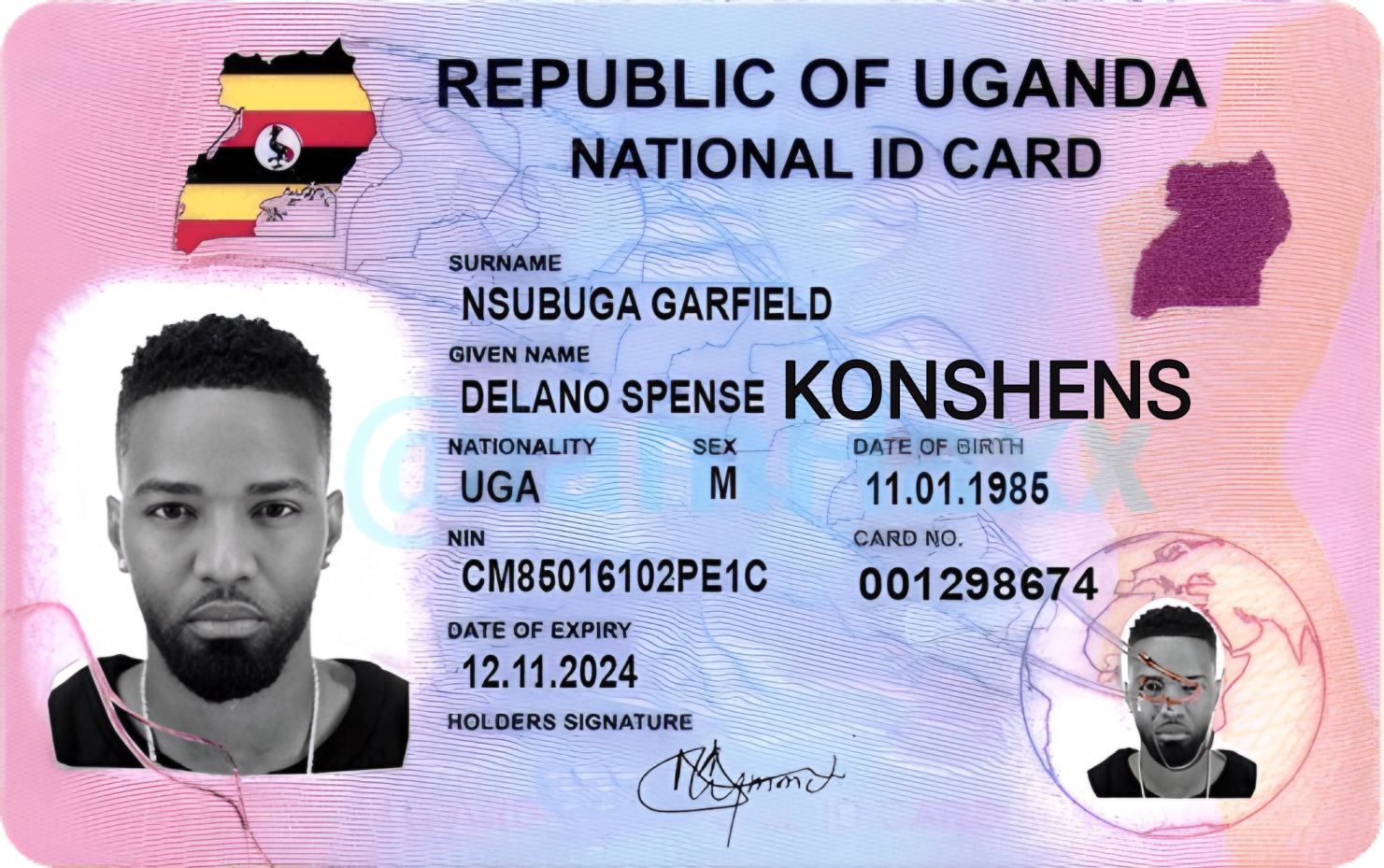
The long-awaited development for millions of Ugandans grappling with expired identification documents is finally here! The National Identification and Registration Authority (NIRA) has begun issuing renewed and new-generation National Identity Cards (IDs) across the country. The rollout was highlighted via NTV Uganda in Nakawa where Member of Parliament Joel Senyonyi collected his renewed identity card. On Friday, 23rd October 2025 his immediately started trending on Google signalinf the culmination of a massive six-month enrollment and renewal drive.

The initiative comes at a critical juncture, just months after a government-mandated one-year extension on expired identity cards took effect, averting widespread disruptions in access to services like banking, travel, and voting. As NIRA ramps up production to meet its ambitious December deadline, citizens are urged to stay vigilant for SMS notifications signaling their cards are ready for collection. This phase not only addresses the backlog of over 15 million expired cards but also paves the way for full inclusion of unregistered populations, including vulnerable groups like children and rural dwellers. If you haven’t renewed your card or registered for the first time, read our indepth tutorial on how to do so.
When did this exercise start?
The journey in Uganda toward a comprehensive national identification system has been marked by ambition and logistical hurdles. The current mass enrollment and renewal exercise officially launched on May 27, 2025, across all 146 districts, following a three-week pilot phase that ran from May 2 to May 26. This pilot targeted NIRA’s board members, senior leadership, and select government officials, allowing the authority to iron out kinks in the biometric capture process before scaling up.
In response to the impending expiry of the first batch of national IDs issued a decade ago, the government issued Statutory Instrument No. 45 of 2024 on August 12, 2024, extending the validity of these cards by one year—from their original 10-year term to 11 years total. This measure, gazetted to prevent chaos ahead of the 2026 general elections, bought precious time for NIRA to mobilize resources. Without it, millions risked being sidelined from essential services, underscoring the role of the ID as the cornerstone of Uganda’s digital economy and security framework.
New registrations for first-time applicants, including adults previously unregistered, were integrated into the May 27 launch. This component targets an estimated 17.2 million citizens who have yet to obtain a National Identification Number (NIN), a prerequisite for the physical ID card. For young children, the process builds on pre-registration efforts that began in October 2024, focusing on assigning NINs to minors under 18 without prior documentation. These early interventions, rolled out in schools and health centers, aimed to capture birth data instantly and combat under-registration rates, which hover around 40% for children in rural areas.
By June 10, 2025—International Identity Day—NIRA had already celebrated milestones like instant birth registrations in select districts, integrating child enrollment into the broader campaign. The authority’s strategy emphasizes inclusivity: mobile enrollment teams have fanned out to remote villages, while diaspora Ugandans can now renew online from abroad, a feature introduced in July 2025. Overall, the exercise is projected to last six to ten months, with a focus on achieving 100% coverage by mid-2026.
Behind the Scenes: Scaling Production to Meet Demand
At the heart of the issuance phase, printing operations at NIRA have surged to keep pace with the deluge of applications. During a recent visit to the Nakawa NIRA offices, MP Senyonyi, who spearheaded inquiries into the delay, received his card amid fanfare from officials and media.
“I’m glad that finally it is out,” Senyonyi said, holding up the sleek, redesigned card featuring enhanced security features. “This is important so that we don’t have challenges. I know that the exact statutory instrument that was issued by the Permanent Secretary for the expired cards is to be used for a period of a year. We don’t need to wait for the statutory order to expire; just start picking your IDs as soon as you get the SMS.”
NIRA officials echoed his optimism, revealing production rates of 40,000 cards per day, with plans to ramp up to 100,000 by November. “They are working as hard as they possibly can to out these cards,” Senyonyi relayed. The target: Delivering cards to all 15 million renewal applicants by December 2025.
A NIRA spokesperson, speaking at the event captured in an NTV Uganda video, provided further reassurance: “I want to assure the general public that we are currently at the end of the mass-renewal exercise, and we are currently issuing out the national cards for Ugandans that were able to register or renew at the beginning. And I would like to inform you that by the end of December, we expect to have reached out to almost all of you.”
This acceleration addresses earlier bottlenecks, including supply chain issues for secure printing materials and the sheer volume of biometric verifications. With over 33 million Ugandans in scope—15.8 million renewals and 17.2 million new entries—the pressure is immense, but early data shows high compliance rates, buoyed by free renewals for those presenting old cards.
How to check if my national identity card is ready online
If you are wondering how to track your card processing status without visiting an outreach hub, NIRA provides a digital lookup option. You do not need a computer to check if your card has cleared the mass-printing press at Nakawa.
To track your status via your mobile phone, follow this quick procedure:
- Step 1: Open your mobile phone’s dial pad interface and dial the official USSD shortcode *216# on any network (MTN or Airtel Uganda).
- Step 2: Select Option 3 from the interactive menu interface for ID Application Status.
- Step 3: Enter your unique 14-character National Identification Number (NIN) or your transaction tracking Application ID when prompted.
- Step 4: Press send. The system will instantly output a live system confirmation status showing whether your card is printed, in queue, or ready at your district hub.
How can I check my national id details online
For security, NIRA doesn’t display your full raw demographic record on an open web portal. However, you can safely confirm your registered biodata details through the official integrated national database system if you need to double-check spelling, family lineages, or registration status.
You can verify your personal details online by visiting the official NIRA Pre-registration Portal system layout. By using your phone or email to log back into your active application account shell, you can pull up your digital Form 3 draft. This lets you view exactly what spelling and card attributes have been pushed to the permanent government register before the physical plastic card leaves the production facility.
Is my national id out now?
The short answer is: If you registered or renewed during the primary 2025 mass campaign windows, your card is highly likely out or in the final staging queue. NIRA’s active print operations are outputting up to 40,000 completed cards per day.
If you are asking “is my national id out now” because you haven’t received an automatic confirmation alert, don’t panic. Text notifications often drop due to network latency or outdated contact logs. If your registration cluster happened over six months ago, your plastic document is likely sitting inside your district’s physical inventory vaults waiting for manual verification.
NIRA WhatsApp number and customer support info
If the mobile USSD system fails to resolve or you hit an authentication block, you can bypass the standard office queues by escalating your inquiry directly to NIRA’s digital customer support teams.
Official NIRA Emergency Contact Directory:
- Toll-Free Hotline Number: 0800 211 000 (Free to call from all local networks)
- Official NIRA WhatsApp Number: +256 708 211 000 (Best for dropping screenshots of your Application ID or tracking errors directly to verified agents)
- Primary Email Support: info@nira.go.ug
Step-by-Step: How to Claim Your Renewed or New National ID
For the estimated 15 million Ugandans who completed renewals during the initial waves, the wait is nearly over. NIRA has streamlined collection to minimize queues and ensure safety. Here’s a comprehensive guide to navigating the process:
- Await Your Notification: Do not visit a NIRA office unannounced. Every successful applicant will receive an SMS alert on the phone number provided during registration. The message will include your reference number, collection date, and nearest branch. “We shall be able to send you messages to assure you that your national identity card is out for you,” the NIRA official emphasized. If you haven’t received it by December, contact NIRA’s toll-free hotline at 0800 211 000 or check status using your NIN through official channels.
- Prepare Your Documents: Bring your old card (if renewing), the SMS notification, and a passport-sized photo if required for first-timers. For children under 18, a parent or guardian must accompany them with proof of relationship, such as a birth certificate.
- Visit the Designated Branch: Head to your assigned NIRA office—now operational in all districts, with pop-up centers in high-demand areas like Kampala and Gulu. Collection is by appointment to avoid crowds; processing typically takes 15-30 minutes. Fees apply only for corrections (UGX 200,000) or lost cards (UGX 50,000); standard renewals and new issues remain free.
- Post-Collection Tips: Activate your card’s digital features via the NIRA app for seamless integration with services like mobile money and e-government portals. Report any discrepancies immediately to prevent future issues.
Challenges persist: Rural access remains uneven, with some reports of delayed SMS in network-poor areas, and diaspora collections require embassy coordination. Yet, Prime Minister Robinah Nabbanja has rallied public support, urging participation for “national planning, security, and development.”
Broader Implications: Building a More Inclusive Uganda
Beyond logistics, this rollout is a litmus test for Uganda’s digital ambitions. The new cards, compliant with international standards, enable better service delivery—from targeted social welfare to fraud-resistant voting. For children, early registration fosters lifelong inclusion, reducing barriers to education and healthcare.
Critics, including civil society groups, have flagged privacy concerns around biometric data, calling for stronger safeguards. NIRA counters that all data adheres to the Data Protection and Privacy Act, 2019, with audits underway.
As December looms, NIRA’s promise of “almost all” cards delivered hangs in the balance. For now, events like Senyonyi’s collection serve as beacons of progress, reminding Ugandans that their identities—long in limbo—are finally coming home. For updates, follow NIRA’s official channels or dial the hotline. Your card awaits; the nation depends on it.