
Table of Contents
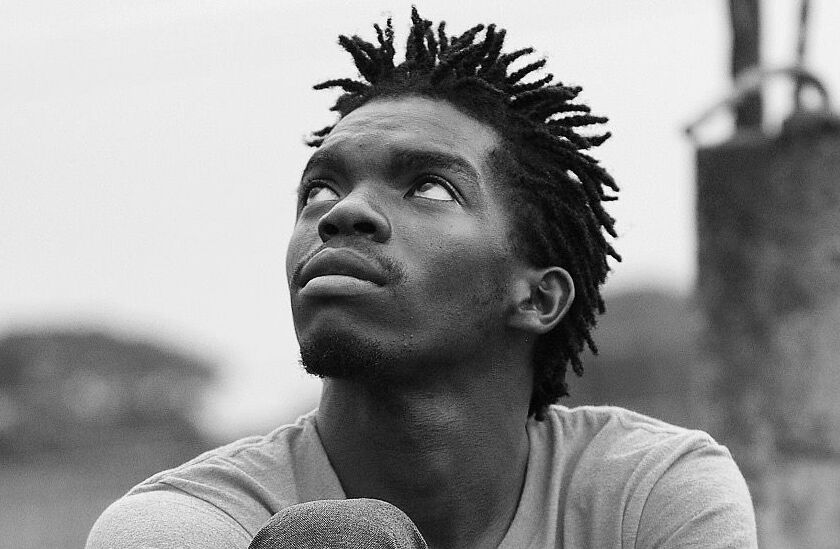
Solitude —Joseph Mbazzi Muguluma delivers an urgent warning against the growing culture of prolonged, self-imposed isolation.
Addressing men and women across Kampala, Lusaka, and his ancestral grounds in Buddu, Muguluma argues that many educated individuals mistake hyper-independence for discipline, focus, or spiritual purity. In doing so, he contends, they quietly accumulate years like dust gathering on a forgotten shelf—only to realize too late that total solitude slowly erodes the capacity to feel, love, and connect with humanity.
“You wake up, you do the same holy things, you think you are disciplined, you think you are focused, you think you are spiritual, but slowly, unknowingly, you are accumulating years like dust on a shelf,” the Oracle of Kifuuta writes. “Life is not easy if you carry a solitary life. It makes you idle—not busy-idle, but SOUL-IDLE. God did not make man a solitary animal!”
How does prolonged solitude damage emotional health and personal ambition?
The illusion of a solitary life lies in its quiet predictability. When a person chooses isolation, there are no domestic arguments, no interpersonal risks, and no emotional demands from a partner or community. On the surface, this appears to be the ultimate form of self-control and peace.
However, prolonged isolation creates a profound state of emotional paralysis:
- Soul-Idleness: While the mind remains occupied with daily work, routines, and errands, the deeper emotional self becomes stagnant. The calendar moves forward, age-mates build families and raise children, while the solitary individual remains trapped in an unchanging inner room.
- The Inner Voice as an Enemy: In a healthy social life, the internal voice offers guidance and reflection. In total isolation, that same voice transforms into a relentless warden that questions every impulse toward confidence, courtship, and social connection.
- Loss of Emotional Range: Over time, the capacity for spontaneity, affection, and shared joy diminishes. The mind forgets how to fly in tandem with another human being, reducing emotional life to a solitary flight inside a closed bottle.
Who is Mwanyinaze Nantongo and why does hyper-independence lead to regret?
To illustrate how the trap of self-reliance unfolds across a lifetime, Muguluma points to the life story of Mwanyinaze Nantongo—a woman who once commanded immense beauty, intelligence, and social admiration across Buddu and Kampala.
During her youth at Magwa Secondary School, her presence was like a raised flag. Vehicles lined up at the school gate to offer rides, and classmates competed to carry her books. When she joined Makerere University and resided at Mary Stuart Hall, her academic and personal future seemed limitless.
Plaintext
Yet at every stage of her life, she chose to withdraw into complete isolation:
- Burying Beauty in Isolation: At St. Augustine Chapel on campus, she converted her personal beauty into strict, solitary devotion—choosing to remain completely alone.
- Corporate Success Without Company: Upon securing a lucrative position at Bauman and acquiring a Range Rover, she embraced total independence under the banner of needing no man, no noise, and no emotional risk.
- The Loudness of an Empty House: Today, at age 55, the quiet independence she once cherished in Mutundwe has transformed into a heavy punishment. The walls of her solitary mansion shout back at her, driving her back to the clan house in search of basic human presence.
Mwanyinaze Nantongo retains her physical grace, yet the shared history, company, and children that should have grown alongside her were sacrificed on the altar of hyper-independence.
What did the Oracle of Kifuuta learn from 12 years of solitary life in Lusaka?
The warning against isolation is not mere academic speculation; it is rooted in Muguluma’s own personal experience living abroad in Zambia.
For years, Muguluma lived alone in Green Park Houses along Kafue Road in Lusaka. His daily routine mirrored that of a devout monk: attending morning Mass every single day at the Jesuit Chapel, working with discipline, spending hours at the gym, and returning home to absolute silence. He consumed no excess, entertained no partners, and maintained strict focus.
Plaintext
Yet after three years, he noticed a gradual numbness taking root. By the fifth year, he found himself eating meals in total silence, drinking Rémy Martin XO cognac alone, and speaking to room walls where only his own echo answered.
Upon returning to Uganda after 12 years, the psychological toll became undeniable:
- Social Dislocation: He had forgotten basic social gestures—how to hug naturally, how to laugh freely in a group, and how to navigate normal social dynamics within his own clan.
- Erosion of Personal Standards: Prolonged loneliness breaks down even the highest personal standards. Across urban society, highly educated professionals who remain isolated for decades frequently end up forming desperate relationships with drivers, domestic staff, or casual acquaintances—not out of genuine compatibility, but because unyielding loneliness eventually shatters all criteria.
Why is isolation different for ordained priests compared to everyday people?
When confronted with the dangers of a solitary existence, many individuals point to ordained religious leaders and celibate monastics as evidence that human beings can thrive entirely alone.
Muguluma addresses this comparison directly, noting that secular isolation bears no resemblance to clerical celibacy:
- A Specific Spiritual Vocation: For a priest or monk, celibacy is an explicit spiritual calling rather than a personal defense mechanism against emotional risk.
- Three Decades of Structural Support: Ordained religious figures undergo up to 30 years of rigorous formation, community integration, supervision, and spiritual oversight.
- The Presence of Community: Monks and priests do not live in unanchored isolation; they live within a monastery, a parish community, or a brotherhood. Even in quiet prayer, they are surrounded by a structured collective life.
Everyday men and women attempting to copy monastic isolation without a monastic calling or community structure are simply running against human nature.
What do ancestral traditions and scripture teach about the necessity of human partnership?
Both ancient cultural heritage and foundational religious texts agree on a universal truth: human life is engineered to function in pairs.
In the cultural tradition of Kifuuta, Katooke, Kyotera, Buddu, the ancestral guardians sent by the forebears are never depicted as solitary entities. They exist and govern in pairs—Kalanzi and Nalubula, Kibuuka and Nanziri Sita. There is no ancestral deity that sits in complete isolation.
This principle is mirrored across global spiritual traditions:
- The Imperfection of Eden: In biblical accounts, Adam possessed complete material wealth in the Garden of Eden—rivers, gold, abundant fruit, and absolute peace. Yet the Creator declared that it was not good for man to be alone, creating a companion to complete the design.
- The Law of the Flood: When Noah built the Ark to preserve life on Earth, living creatures did not enter as isolated individuals. They entered two by two—male and female, lion and lioness, cock and hen—establishing that life survives and reproduces only through partnership.
Attempting to live as a completely solitary island is a direct rejection of creation’s design. When an individual insists on running against this fundamental law, life eventually isolates them from the warmth of human society.
What are the most searched questions about the effects of prolonged solitude and hyper-independence?
What is the psychological difference between healthy solitude and harmful isolation?
Healthy solitude is a temporary, intentional period of rest, reflection, or creative work that rejuvenates an individual before they return to active social life. Harmful isolation is a permanent withdrawal from emotional risks, courtship, and community, which slowly deadens emotional capacity and social skills over time.
How does hyper-independence impact relationships in modern Uganda?
Hyper-independence often leads individuals to view normal relationship compromises as threats to their personal autonomy. As a result, people abandon relationships at the first sign of friction, leading to long-term loneliness and regret later in life.
Who is Joseph Mbazzi Muguluma (The Oracle of Kifuuta)?
Joseph Mbazzi Muguluma—popularly known as MMJ Immanuel Ben Misagga—is a Ugandan engineer, sports executive, and cultural commentator. A former president of SC Villa (2014–2018) and President Emeritus of Nyamityobora FC, he writes extensively on national leadership, economics, sports governance, and social philosophy under his persona as the Oracle of Kifuuta.
Do not let the years gather like dust on an untouched shelf while hiding behind the shield of hyper-independence. Step out into the world, embrace the risks and joys of human connection, build a shared life with a partner, and honor the fundamental law that life was made to be lived together.