
Table of Contents
When did State House deny changing the Ugandan shilling look?
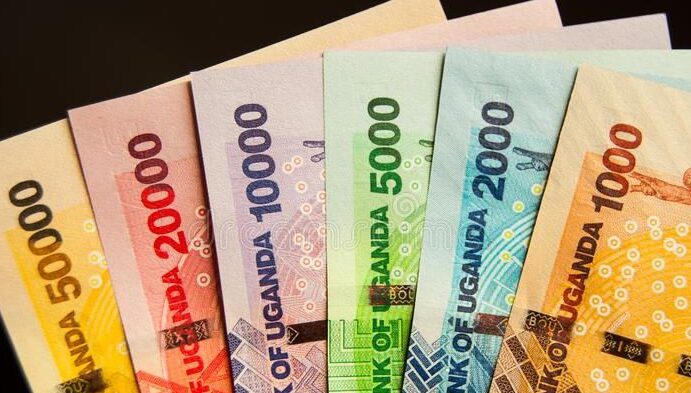
The intense political fallout from the sudden resignation and multi-property security raids targeting former Speaker of Parliament Anita Among has officially spilled into Uganda’s macroeconomic space. At midday today, May 19, 2026, the Presidential Press Unit (PPU) issued an emergency circular forcefully refuting widespread social media reports that President Yoweri Kaguta Museveni had issued a secret executive directive to alter the physical appearance and design of the Ugandan Shilling.
The false reports, which went viral across X (formerly Twitter) and WhatsApp groups over the last 24 hours, claimed that the executive branch was planning an emergency “demonetization” exercise. The rumor suggested the state would invalidate current high-denomination bank notes to force corrupt officials holding massive stashes of physical cash to surrender them to commercial banks. However, the state has moved quickly to neutralize the speculation, warning that unauthorized currency statements threaten to cause artificial inflation and panic within the financial sector.
Also read about how Speaker Among exited the speakership race
What is the official State House clarification regarding the rumored currency change?
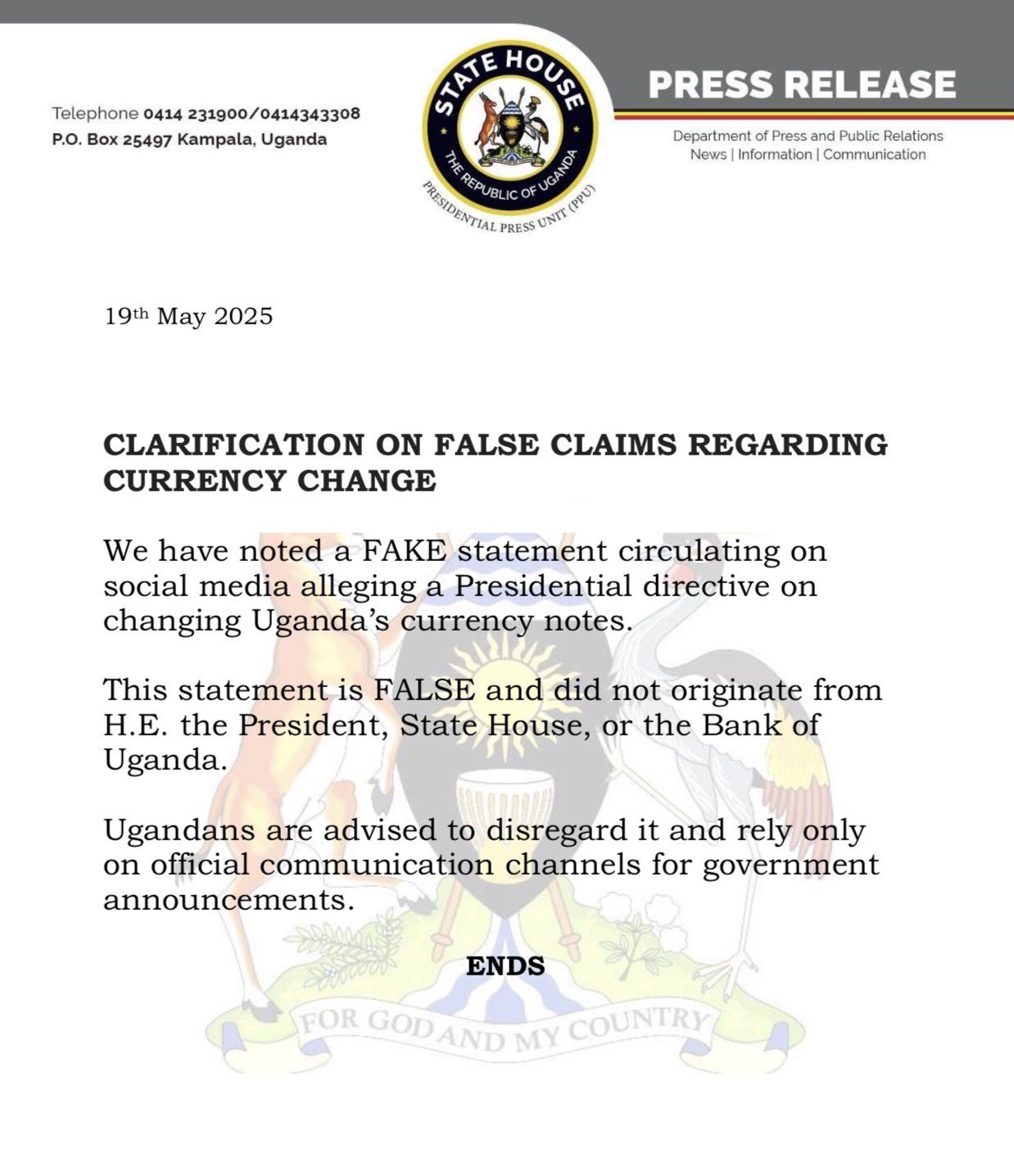
The official statement, dispatched by the Department of Press and Public Relations at State House, completely separates the presidency and the central bank from the viral documents. The PPU statement addressed to the public reads:
“We have noted a FAKE statement circulating on social media alleging a Presidential directive on changing Uganda’s currency notes. This statement is FALSE and did not originate from H.E. the President, State House, or the Bank of Uganda. Ugandans are advised to disregard it and rely only on official communication channels for government announcements.”
The presidency’s rapid intervention underscores the sensitivity of national monetary policy during a high-profile political crisis. Financial analysts in Kampala note that while the executive branch is actively executing a anti-corruption purge within the legislature, it cannot allow public panic to compromise the stability of the Ugandan Shilling or disrupt commercial banking liquidity.
How did the Anita Among wealth investigations trigger the national currency rumor?
The genesis of this viral rumor is directly linked to the dramatic events surrounding the former Speaker’s estate. Following her midnight withdrawal from the 12th Parliament Speakership race on May 18, joint security organs expanded their presence at her luxury residences in Kampala and upcountry. Word quickly spread within political circles that search teams had uncovered hidden subterranean vaults and secure rooms allegedly packed with unpredictable volumes of physical cash in both local and foreign denominations—a direct consequence of her accused accumulation of wealth through institutional manipulation and bloated parliamentary oversight budgets.
As images of the multi-billion-shilling custom Rolls-Royce and heavily guarded estates continued to dominate national headlines, the public began discussing tactical economic counter-measures. The rumor of an impending currency redesign gained immediate traction because it perfectly mirrored global anti-corruption strategies. Speculators argued that the only way for the state to flush out “infinite amounts of black money” stashed outside the formal banking system by high-profile politicians was to change the physical look of the currency, rendering hidden cash hoards instantly worthless unless brought into the daylight for formal banking verification.
Why are Ugandans on X actively advocating for an emergency demonetization exercise?
Despite the government’s official denial, the discourse on X demonstrates a profound public appetite for radical financial accountability. Thousands of Ugandans have openly expressed disappointment that the currency change directive is fake, with many actively lobbying the Ministry of Finance and the Bank of Uganda to turn the rumor into actual policy.
Prominent digital commentators and anti-corruption activists argue that a physical design swap on the Shs 20,000 and Shs 50,000 notes would be the ultimate companion piece to the newly assented Protection of Sovereignty Act, 2026. If corrupt individuals were forced to move physical billions into commercial banking halls to exchange them for a newly designed currency, they would automatically trip the Financial Intelligence Authority (FIA) thresholds. Under current anti-money laundering frameworks, any individual depositing massive, unexplained cash volumes would face immediate asset freezing and a mandatory requirement to prove the legitimate source of the funds, effectively trapping illicit wealth in a legal bottleneck.
What is the Bank of Uganda’s structural framework for currency alterations?
From a purely economic perspective, changing a nation’s currency notes cannot be executed as a reactive political move. Under the Bank of Uganda Act, any alteration to the national currency requires extensive coordination between the Central Bank’s Board of Directors, international security printing firms (such as Germany’s Giesecke+Devrient or the UK’s De La Rue), and regional monetary unions.
Uganda’s currency history shows that changes are driven by security and economic management rather than ad-hoc political scandals:
| Year of Revision | Core Curricular Revision Type | Primary Technical Motivation |
| 1966 | Introduction of National Currency | Replacement of the East African Currency Board notes post-independence. |
| 1987 | Major Currency Redenomination | Structural economic stabilization package to curb historic hyperinflation. |
| 2010 | Comprehensive Visual Redesign | Introduction of advanced optical security features (SPARK) and cultural heritage motifs. |
| 2022-2025 | Micro-Security Security Updates | Implementation of enhanced polymer elements and revised signatures of central bank governors. |
The central bank has routinely noted that printing new paper currency costs the taxpayer billions of shillings annually due to the high price of advanced security threads, watermark integration, and specialized tactile elements for the visually impaired. Rushing an unscheduled redesign to target a specific ring of political actors would introduce massive administrative costs that could destabilize the central bank’s ongoing efforts to transition toward clean, digital public financing systems.
The Battle for Public Perception
The emergency press release from State House has temporarily calmed the commercial markets, but it has done little to stop the intense public debate over how to handle illicit political wealth. By explicitly commanding citizens to “disregard” the fake directive, the government is trying to draw a clear line between organized, rule-of-law investigations and chaotic fiscal policies that could harm innocent business owners.
As joint security teams continue their methodical tracking of the former Speaker’s assets and accounts, the public’s fascination with a currency overhaul reveals a deeper truth: Ugandans are no longer content with standard administrative probes. The population is looking for systemic, unescapable legal mechanisms that ensure public funds are permanently protected from institutional greed. State House may have killed the rumor of a new banknote tonight, but the pressure to deliver absolute accountability remains higher than ever before.