
Table of Contents
FORT PORTAL / KAMPALA, UGANDA — Public debate surrounding traditional royal throne succession in Uganda often treats the transition of power as though it were an ordinary family funeral.
Many observers assume that when a monarch passes away, the institution must enter a period of quiet mourning before discussions regarding a successor can begin.
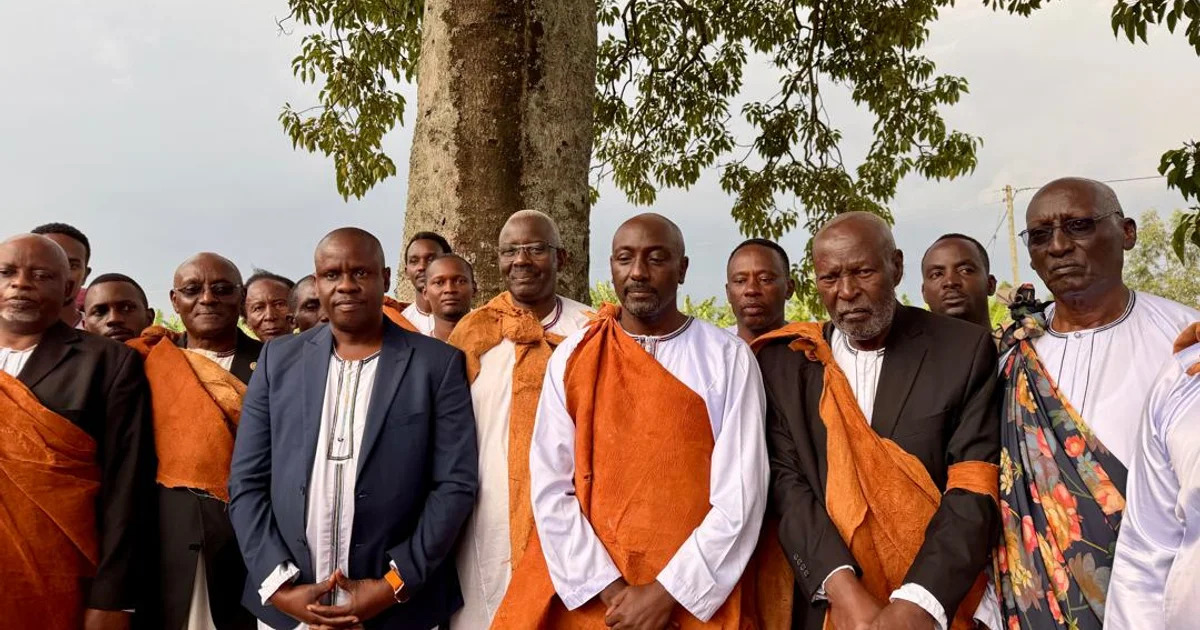
However, in the history of traditional monarchies, succession is not a funeral—it is an immediate, silent war for political survival. While the body of a fallen king remains warm, the drums of the next monarch are already beating inside the palace.
In a sweeping commentary on kingdom governance, the cultural thinker known as the Oracle of Kifuuta—Joseph Mbazzi Muguluma—has issued a bold defense of journalist Andrew Mwenda, explaining why rapid succession efforts in Tooro Kingdom follow established historical, cultural, and global precedents.
“In kingdoms, grief is entertainment for the peasants. For the palace, grief is a luxury they cannot afford,” the Oracle of Kifuuta observes. “Succession is fighting even before the king is buried. Why? Because a kingdom cannot exist without a head for one single second. A body can stay without burial, but a kingdom cannot stay without a king. When the heart of the king stops, the heart of the kingdom must continue beating.”
Why does royal succession happen before the burial of a King?
The foundational principle governing traditional monarchies across Africa, Europe, and Asia is simple: the throne is never empty.
In ordinary households, grief allows relatives to pause daily life, share meals, cry, and return home after burial. In contrast, an unanchored kingdom invites immediate institutional instability, foreign interference, internal clan rebellions, and asset expropriation.
The ancient wisdom of Katooke, Kifuuta, Kyotera, and Buddu dictates that steel must be shaped while it remains hot. Waiting for steel to cool causes it to fracture.
Furthermore, traditional burial customs themselves strictly require an active, reigning monarch to authorize and oversee the final rites:
- Authorization of Rites: The burial of a monarch cannot be legally or culturally completed without a sitting king present to perform handover rituals, such as presenting the royal spear or dropping sacred coffee beans into the grave crypt.
- Preservation of Authority: A living king must sit on the throne to ensure that state and kingdom administration continues without administrative paralysis.
- Protection of Assets: Instant transition prevents competing royal factions or external political actors from seizing kingdom land, sacred regalia, and administrative infrastructure during a power vacuum.
Why is Andrew Mwenda right about Tooro Kingdom succession?
Critics have accused Andrew Mwenda of disrespecting royal protocol by publicizing succession votes before the final send-off of the late Omukama.
However, historical analysis reveals that early succession management is neither disrespectful nor premature—it represents the ultimate protection of kingdom continuity.
“Andrew Mwenda is not being disrespectful; he is being historical,” the commentary emphasizes. “He knows what every kingdom knows. His fight is not against grief; his fight is for the kingdom to survive grief. Because if you entertain grief for too long, by the time you finish crying, you will find the kingdom has been sold.”
By pushing for the immediate identification and ritual protection of the successor, the Babiito clan elders and royal advisors ensure that the institution of the Omukama remains intact during a period of national mourning.
How did Buganda, Rome, Saudi Arabia, and Britain handle royal succession?
Throughout global history, the world’s most enduring monarchies have operated under strict mechanisms to prevent a power vacuum following the death of a sovereign.
[Death of Monarch] ➡️ [Instant Transmission of Power] ➡️ [New King Enthroned / Hidden] ➡️ [New King Presides Over Burial]
What is the Buganda royal tradition of Omukama Atase?
In the Kingdom of Buganda, custom dictates that a Kabaka never dies; he simply disappears (Omukama Atase).
Before any public announcement regarding the disappearance of a Kabaka is made, clan leaders and prime ministers must already finalize the identity of the successor.
- The Passing of Kabaka Mutesa I: When Kabaka Mutesa I passed away, chiefs did not wait seven days to mourn. They gathered inside the Lubiri at night to finalize the succession to prevent competing clans from launching armed bids for the throne.
- The Deposition of Kabaka Mwanga: During the political upheavals involving Kabaka Mwanga, opposing religious factions immediately elevated Kiweewa and subsequent princes while the throne was still warm to preserve governance.
Under Buganda custom, a kingdom buries its king with a living king present. The dead cannot bury the dead; only a reigning monarch holds the traditional authority to authorize the burial of his predecessor.
How did the Ottoman Empire and ancient Rome enforce instant succession?
In the Ottoman Empire, Sultan Mehmed II codified a severe law known as the Law of Fratricide to prevent multi-year civil wars that had historically weakened the state.
The moment a Sultan passed away, fast messengers were dispatched across all provinces. The first prince to arrive in Istanbul was immediately proclaimed Sultan, eliminating rival claims to ensure the empire survived intact for over 600 years.
Similarly, when Julius Caesar was assassinated on the Senate floor in ancient Rome, Mark Antony immediately seized his written will, while 18-year-old Octavian marched straight to Rome to secure the legions before rivals could consolidate power.
Why do modern monarchies in Saudi Arabia and Britain crown kings instantly?
Modern constitutional and absolute monarchies continue to practice instantaneous succession:
- Saudi Arabia (2015): When King Abdullah passed away at 1:00 AM in 2015, the royal court announced his death at 1:10 AM—and within the exact same ten-minute window, announced Salman as the new King. The burial took place later that day, presided over by King Salman.
- United Kingdom (2022): Upon the passing of Queen Elizabeth II in Scotland, official broadcasting networks immediately declared: “The Queen is dead. Long live the King.” Prince Charles instantly became King Charles III at that precise second, months before his formal coronation ceremony.
Why are government legal minds missing the cultural history of traditional kingdoms?
A major point of friction during royal transitions occurs when government legal officers—such as the Attorney General or Cabinet Ministers like Justice Minister Norbert Mao—attempt to evaluate traditional royal succession solely through Western legal textbooks and civil court procedures.
Civil law frameworks prioritize lengthy administrative processes, court filings, and delayed public notices. However, traditional kingdom governance operates on ancestral cosmology and immediate customary succession.
“Look at the Attorney General and Minister Mao, lost in textbooks, as the history they read at school escapes,” the reflection notes. “You cannot perform the norms for the gone king if there is no sitting king to authorize them. When the king goes to meet the ancestors, the drums must not go silent. One drum stops; another drum starts immediately.”
Whoever opposes the immediate stabilization of the throne risks plunging traditional institutions into prolonged legal battles, division, and structural decay.
The throne is never empty, the fire must never go out, and the steel of royal succession must always be shaped while it remains hot.
Plaintext
Tooro royal succession Andrew Mwenda, The throne is never empty Kifuuta, why king succession happens before burial, Buganda royal succession customs, Tooro Kingdom royal standoff, Omukama Atase royal tradition, Joseph Mbazzi Muguluma commentary, Kampala Edge Times opinion report