
Table of Contents
KAMPALA, UGANDA — The East African Crude Oil Pipeline (EACOP) Ltd., in partnership with its Tier-One Electrical, Instrumentation, Telecommunications, and Security Systems (EITS) contractor, officially launched a university scholarship program on Friday, September 4, 2026, to support 16 gifted but financially disadvantaged Ugandan students. Apply Here
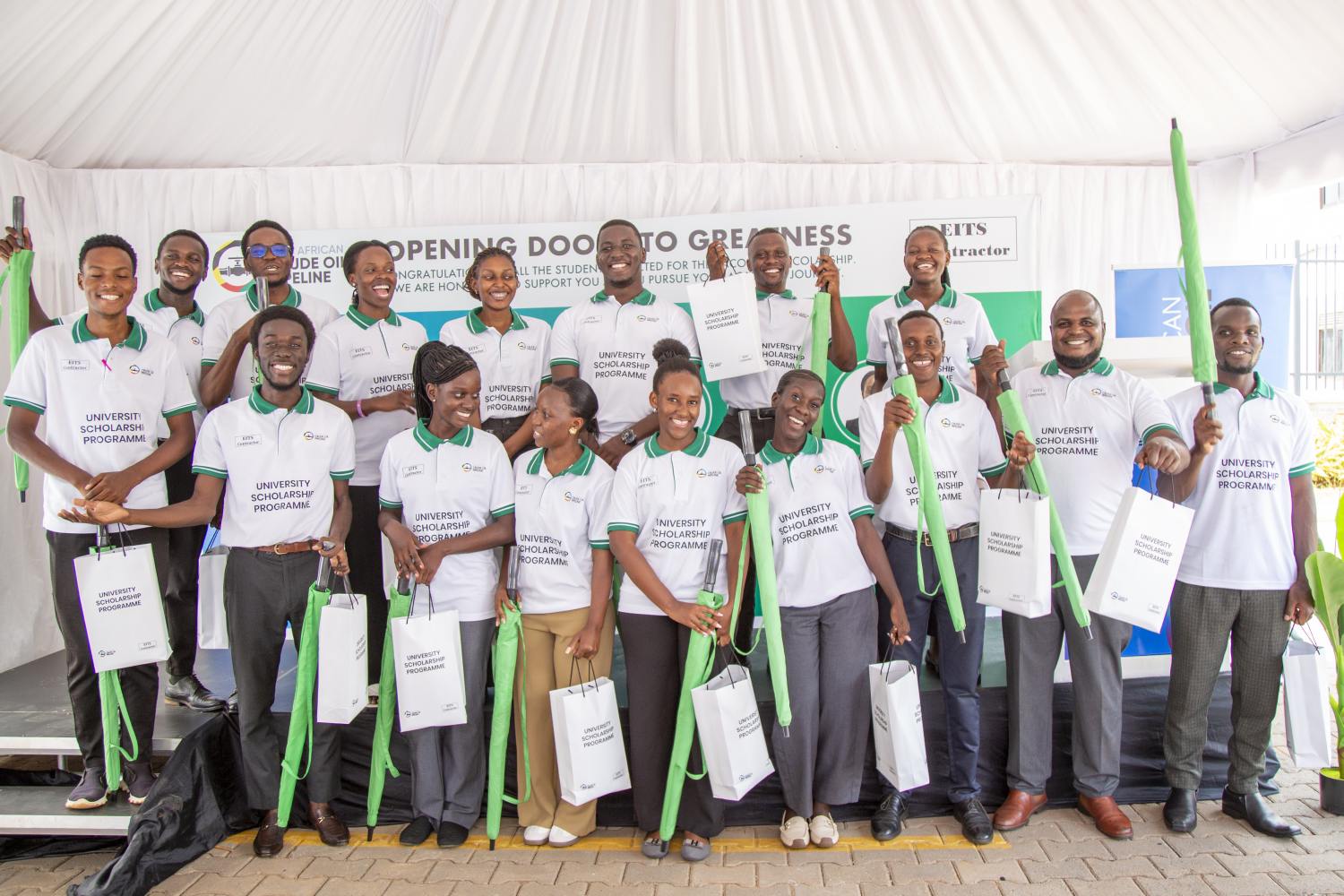
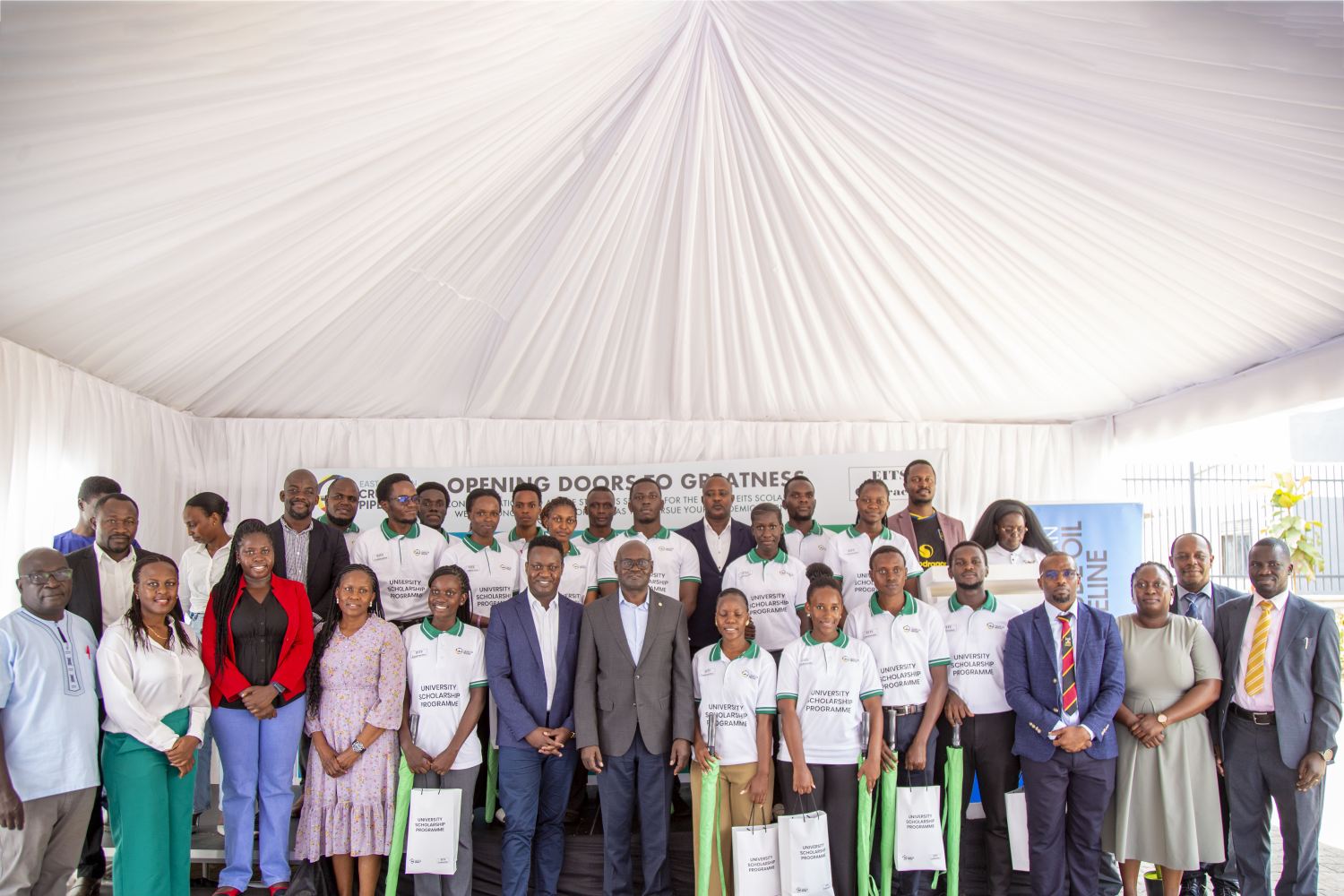
Unveiled during a ceremony in Kampala, the fully funded scholarship package targets final-year undergraduate students pursuing specialized technology and engineering degrees at Kyambogo University and Makerere University.
The initiative represents the second major university scholarship deployment funded under the EACOP project framework, highlighting the company’s broader strategy to build sustainable national technical capacity alongside major oil export infrastructure development.
How many Ugandan students received the EACOP university scholarship in 2026?
A total of 16 final-year undergraduate students were selected to receive complete tuition and academic coverage for the 2026/2027 academic year.
The scholarship distribution targets two primary public higher education institutions that supply Uganda’s engineering and technology talent pool:
- Kyambogo University: 10 beneficiaries enrolled in the Bachelor of Engineering in Telecommunication Engineering.
- Makerere University: 6 beneficiaries enrolled in the Bachelor of Computer Science.
The selection process was executed through a competitive screening framework that evaluated academic performance, verified household financial need, personal character, and long-term commitment to technological innovation in Uganda.
Candidates were required to hold a minimum Second-Class Upper Cumulative Grade Point Average (CGPA) at the end of their third year of study. Following initial shortlist screening, final awardees were selected through panel interviews conducted by university academic boards and EACOP technical representatives.
Who is Josiah Habwe and what is Schneider Electric role in EACOP?
Josiah Habwe serves as the General Manager for Tanzania and Uganda at Schneider Electric, the global energy management and industrial automation giant acting as the Tier-One EITS contractor for the EACOP project. Schneider Electric maintains regional headquarters in Kololo, Kampala, directly across from the airstrip, alongside operational offices in Tanzania.
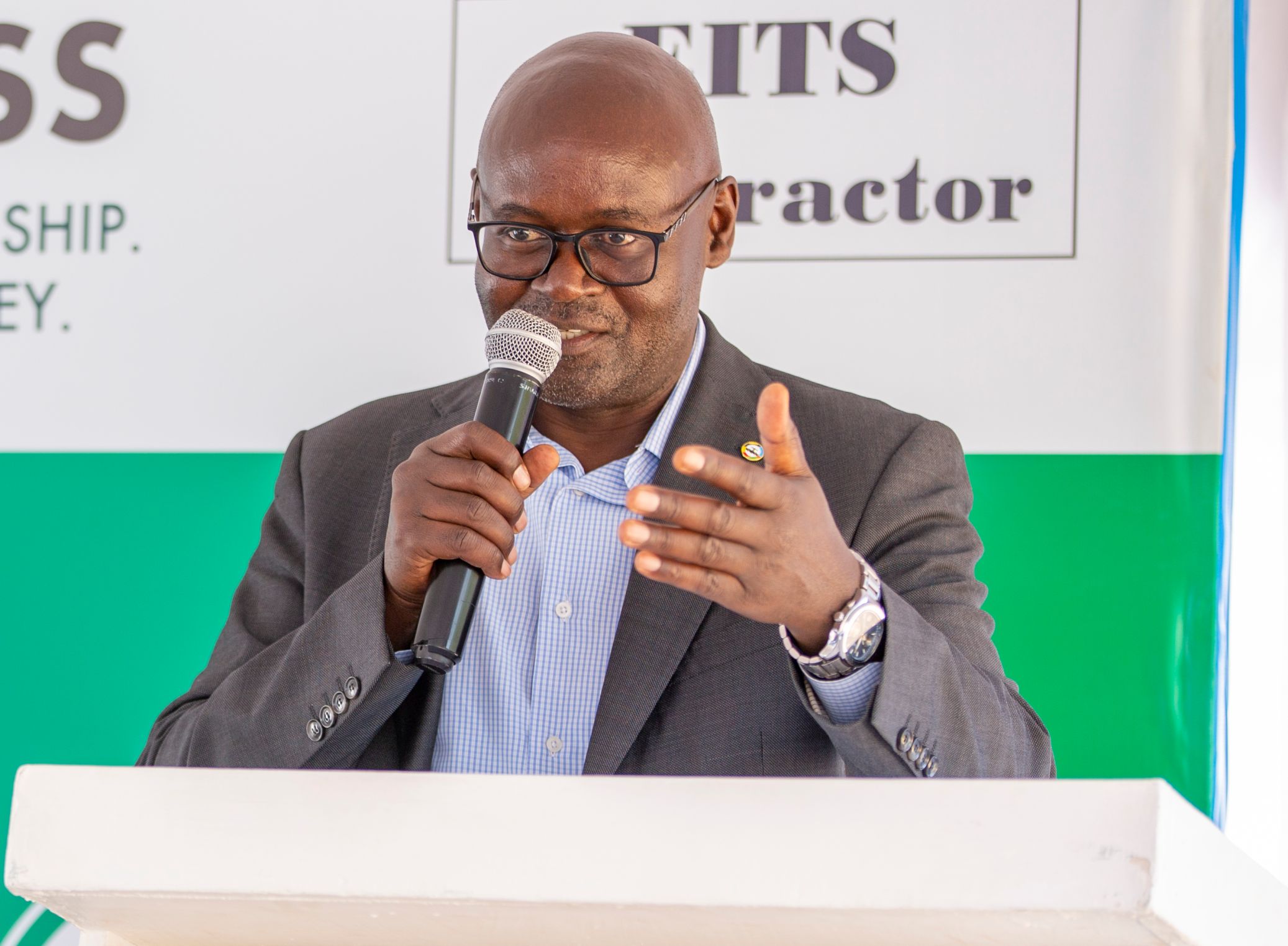
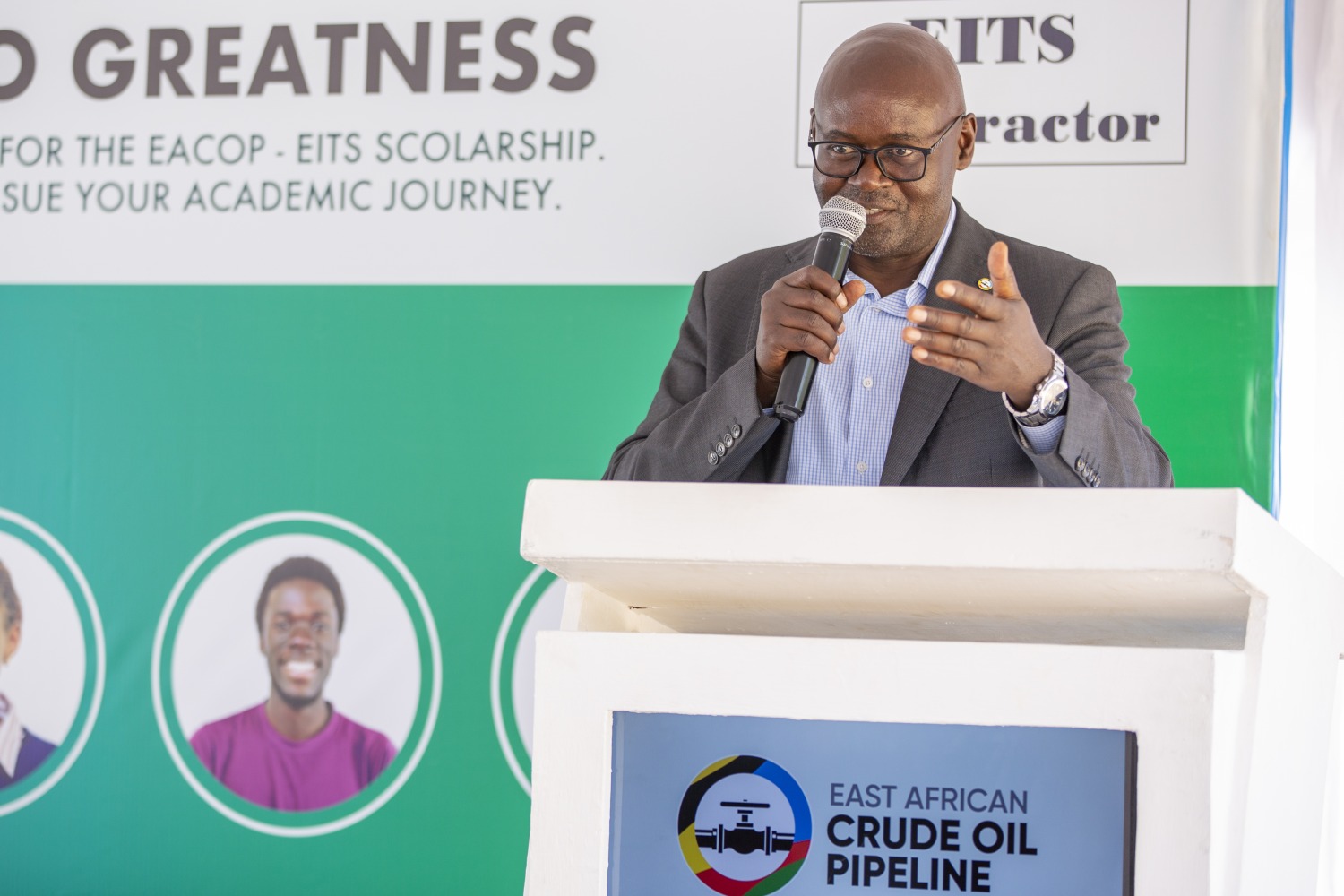
Addressing the scholarship beneficiaries in Kampala, Habwe emphasized that while EACOP is widely known as a civil pipeline project, it functions equally as one of the most complex digital and electrical projects on the African continent.
“When you look at the pipeline itself, electrical, instrumentation, telecoms, and security systems are an essential part of the project. In fact, some might say that this is a pipeline project as well as an electrical project, just because of the level of infrastructure being deployed,” Josiah Habwe explained. “Along the entire length, it is a heated pipeline, and that is electricity doing that. Our consortium partner, SNE, is installing all the fiber, telecom masts, and networks along the entire length. We have control rooms at both ends and remote substations where communication must happen seamlessly. This is where our young people in telecoms come in—interfacing these different systems, ensuring they communicate, and controlling them from one central location.”
Habwe challenged the 16 student beneficiaries to approach their final academic year and future engineering careers with a relentless focus on excellence and social impact.
“From me to you as young people and students benefiting from this program, it is really to inculcate those elements around what you do: are you doing it with a mindset to deliver impact for yourself, your community, and your families? And are you doing it with excellence?” Habwe asked. “This is the most technologically advanced project of its kind being implemented. To benefit from this program is an honor that will build you into the future and leave a lasting legacy.”
Why does John Bosco Habumugisha say Uganda crude oil is sweet and pearl?
John Bosco Habumugisha is the Deputy Managing Director of EACOP Ltd and the General Manager of the EACOP Uganda Branch, overseeing non-project operations, national content, land acquisition, and government stakeholder relations.
Speaking to the scholars, Habumugisha demystified the chemical composition of Uganda’s petroleum reserves discovered in the Albertine Graben (Tilenga and Kingfisher fields), explaining why Ugandan crude is classified globally as “Sweet and Pearl”.
“Did you know that our oil is sweet?” Habumugisha engaged the audience. “It is called ‘Sweet and Pearl.’ Pearl because Uganda is the Pearl of Africa. It is called ‘sweet’ because it is very low in sulfur, making it non-corrosive. In petroleum chemistry, crude oil high in sulfur is referred to as ‘sour,’ which requires highly complex, expensive metallurgical system designs to handle corrosive materials. Because our oil is low-sulfur, it is premium, sweet crude.”
Habumugisha urged the young engineers to view their technical training through a human-centric, community-first lens:
“Engineering is done in an economic and social environment. As you advance in engineering, always remember that engineering is meant to serve communities,” Habumugisha stated. “Never forget to commit your time to understanding the communities you are meant to serve. At the end of the day, engineering is a service to the people.”
How does the 1443km EACOP pipeline maintain heat as a very long flask?
The physical properties of Uganda’s crude oil require specialized midstream infrastructure engineering.
Although Uganda’s crude is low in sulfur (“sweet”), it contains high paraffin wax content and high viscosity. At room temperature underground or under ambient atmospheric conditions, the crude solidifies into a waxy gel.
To transport the crude as a free-flowing liquid over 1,443 kilometers from Hoima to Tanga, the entire pipeline system must be continuously heated and thermally insulated.
“Our crude oil has a significant amount of wax and high viscosity,” Habumugisha explained. “At room temperature underground, our crude oil solidifies, and you want to move it as a fluid, not as a solid. To keep it fluid, you have to keep it hot. But when you heat a metal pipeline, you lose heat energy unless you insulate it. EACOP is essentially a very long flask—a 1,443-kilometer thermal flask designed to maintain heat inside across its entire journey.”
How does EACOP promote National Content and STEM education for women in Uganda?
A core outcome of the 2026 scholarship cohort is its contribution to gender diversity within Science, Technology, Engineering, and Mathematics (STEM) disciplines across East Africa.
Out of the 16 selected scholars, 7 are female students (representing 43.75 percent of the total cohort), directly supporting national and corporate targets aimed at increasing female participation in energy, telecommunications, and digital infrastructure engineering.
Beyond direct undergraduate scholarships, EACOP Ltd. and its Tier-One contractors have deployed multiple human capital development initiatives to ensure Ugandans participate meaningfully during both the construction and operational phases of the pipeline:
- 127 Graduate Trainees and Interns: Integrated across active EACOP operational bases, engineering offices, and field logistics sites to gain hands-on industrial experience.
- 808 Hours of Train-the-Trainer Modules: Delivered directly to technical university lecturers, instructors, and professors to align academic curricula with modern midstream oil and gas technology.
- Institutional MOUs Signed: Strategic capacity-building agreements established with the Uganda Petroleum Institute Kigumba (UPIK), Makerere University, Kyambogo University, Nakawa Vocational Training College, and the Institute of Surveyors of Uganda (ISU).
What are the technical specs and shareholding of EACOP Ltd?
The East African Crude Oil Pipeline is a 1,443-kilometer heated, insulated, and buried 24-inch crude oil export pipeline designed to transport crude oil produced from Uganda’s Lake Albert oilfields (Kingfisher and Tilenga) to international markets.
Originating at Kabaale in Hoima District, Uganda, the pipeline traverses 296 kilometers within Uganda before crossing the border into Tanzania, running 1,147 kilometers to the Marine Export Terminal at the Chongoleani Peninsula near Tanga Port.
| Technical & Corporate Metric | Official EACOP Project Specification |
| Total Pipeline Length | 1,443 km (296 km in Uganda | 1,147 km in Tanzania) |
| Pipeline Diameter & Type | 24-inch insulated, electrically heat-traced, buried pipeline |
| Starting Point & Destination | Kabaale (Hoima District, Uganda) to Chongoleani (Tanga, Tanzania) |
| Pumping & Pressure Stations | 6 Pumping Stations and 2 Pressure Reduction Stations |
| Final Investment Decision (FID) | Formally announced on February 1, 2022 |
| Company Incorporation Date | Formally established on February 15, 2022 |
EACOP Ltd. operates as a special purpose project company established under a Joint Venture Shareholders Agreement between international energy corporations and state oil companies from both host nations:
- TotalEnergies: 62 percent equity stake
- Uganda National Oil Company (UNOC): 15 percent equity stake
- Tanzania Petroleum Development Corporation (TPDC): 15 percent equity stake
- China National Offshore Oil Corporation (CNOOC): 8 percent equity stake
By embedding structured university scholarships, graduate internships, and university curriculum enhancements directly into its procurement contracts, EACOP Ltd. and its Tier-One EITS partners are establishing a lasting legacy of skilled national workforce development across East Africa.