
Table of Contents
KAMPALA, Uganda — A painful family dispute within one of Uganda’s most respected political and academic dynasties has spilled into the public arena, sparking widespread shock, sorrow, and intense moral debate across the country.
The controversy erupted after Prof. Germina Namatovu Ssemwogerere, the 80-year-old widow of legendary Democratic Party (DP) leader and statesman Dr. Paul Kawanga Ssemogerere, made a trembling public appearance alleging that her son has evicted her from her matrimonial home.
The son at the center of the dispute is Justice Karoli Lwanga Ssemogerere, a senior legal professional who was officially sworn in as a High Court Judge in March 2025.
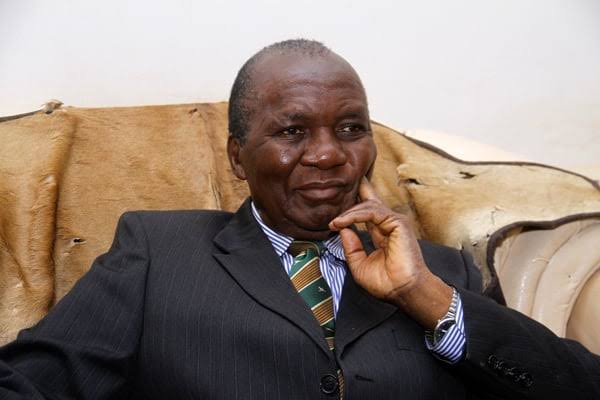
In a biting public appeal published on Tuesday, August 18, 2026, titled “LET HER GO HOME: AN APPEAL TO CONSCIENCE, LET OUR MOTHERS DIE WITH DIGNITY,” sports leader, investor, and public commentator Joseph Mbazzi Muguluma (Immanuel Ben Misagga) called on Justice Karoli Ssemogerere to immediately restore his mother to her home, warning that chasing an elderly widow from her late husband’s estate violates both Ganda traditional values (Obuntubulamu) and Christian morality.
What did Prof. Germina Ssemwogerere reveal about her eviction?
The public outcry began when Mrs. Germina Ssemwogerere—a distinguished academic and retired professor of economics—addressed the nation with a trembling voice, recounting how she was forced out of the marital home left behind by her late husband.
Dr. Paul Kawanga Ssemogerere, who passed away in November 2022, was a towering figure in Ugandan politics, serving as DP President General for 25 years, a former minister, presidential candidate, and a devout pillar of the Catholic Church in Uganda. Throughout his decades in public service, his matrimonial home served as a sanctuary of peace and hospitality.
To watch his 80-year-old widow standing in public to plead for shelter in her twilight years has sent shockwaves through Buganda Kingdom and the wider Catholic community.
Reflecting on the painful spectacle, Ben Misagga expressed deep sorrow at the breakdown of filial duty:
“I watched it, and my soul shook,” Misagga wrote. “To see Mrs. Germina Ssemwogerere, 80+ years old, a widow, standing before the whole nation with a trembling voice… Telling Uganda that the son she nursed, the son she prayed over, has chased her from the home her husband left for her to die in peace. Ayi Katonda waffe! Ki ekya gwa mu Buganda? Is this how we pay back a womb? Is this how we pay back 9 months of pain and a lifetime of love?”
What does Buganda customary law say about an heir (‘Omusika’) and a widow’s home?
Addressing Justice Karoli Ssemogerere directly, Misagga dismantled the legal and cultural justifications often used by custom heirs (Abasika) to claim immediate possession of family property while a surviving mother is still alive.
In Ganda tradition, being the eldest son or being named the custom heir (Omusika) does not grant an individual the right to strip a surviving widow of her home or dignity.
- The Sacred Role of Omusika: Under Buganda customary law, the heir inherits the Nkoni (the ceremonial walking stick or Omuggo), the father’s coat, and specific sacred duties to protect and unite the family. He becomes the caretaker of the family’s spiritual and social unity—not the sole economic liquidator of his mother’s shelter.
- The Absolute Rights of the Widow: A matrimonial home built during a marriage remains the sanctuary of the surviving wife until her death. Traditional elders emphasize that an heir only assumes full residential control after his mother has been laid to rest with honor.
- The Sanctity of Motherhood: In Ganda culture, a mother holds divine authority over her offspring (“Mmaama ye Katonda wano ku nsi” — Mother is god on earth). Inflicting emotional suffering or homelessness on one’s mother is traditionally believed to invite severe spiritual repercussions (Ekirumo).
Misagga emphasized that Dr. Paul Ssemogerere built his home as a peaceful haven for his wife, not as a disputed asset to be fought over in legal battles:
“Being first born does not make you an automatic Musika,” Misagga stated. “Our ancestors saw this day coming… That is why Omusika inherits the Nkoni (Omuggo), the Coat of his father, and 2 sacred items of duty. He does not inherit a widow’s tears. He does not inherit a widow’s roof. A home is not cement. A home is a covenant.”
The irony of a High Court Judge facing public moral scrutiny
A particularly troubling dimension of the dispute is the professional standing of Justice Karoli Lwanga Ssemogerere. Having been sworn in as a High Court Judge in March 2025, Justice Karoli is entrusted by the Judicial Service Commission and the State to dispense justice, protect vulnerable citizens, and interpret the law with fairness.
Misagga pointed out the stark contradiction of a judicial officer—trained to defend human rights and property laws—engaging in a public conflict that leaves his own elderly mother homeless.
“So how can a learned man, a man who has eaten from the table of the state, drag his own mother into the cold?” Misagga questioned. “To watch her cry and call it ‘rights’ is to commit a crime and then sit on the crime scene to admire it. Today, the Catholic Church bowed its head in shame. Today, Buganda Kingdom clapped in sorrow. Today, the ancestors turned their backs.”
Misagga warned that technical legal maneuvers in court cannot erase moral transgressions against a parent:
“What man chases his mother and still asks God for heaven? Not even the gates of purgatory will allow a sin to sit at its verandah. What man sells his mother’s last days for a piece of paper? You are not claiming property. You are booking a place, and the hangman has your name.”
Ben Misagga’s personal reflection: “God forbid I ever chase my mother”
To emphasize that filial respect transcends financial arguments, Misagga shared a personal reflection regarding his own mother, Mummy Agatha Nanungi, who resides in the family home in Seguku, Naziba.
Misagga noted that regardless of personal disagreements, family misunderstandings, or estate valuations, a mother’s place in her husband’s home remains untouchable:
“Let me look in the mirror: God forbid I ever chase Mummy Agatha Nanungi from my father’s house in Seguku, Naziba. Even if we disagree, even if we are hurt, she is Mmaama.”
He urged the current generation of Ugandans not to allow material greed to destroy Obuntubulamu—the traditional African philosophy of empathy, human dignity, and mutual respect.
The Kifuuta Oracle’s call: Restoring Mrs. Ssemwogerere’s dignity
Closing his emotional appeal, Misagga called upon Justice Karoli Ssemogerere, the broader Ssemwogerere family, the Catholic Church leadership, and Buganda Kingdom elders to intervene immediately and resolve the dispute out of court.
Invoking the wisdom of the Oracles of Kifuuta in Kyotera, Buddu, Misagga reminded the judge that the actions a person takes against their parents set a precedent for how their own children will treat them in the future (“Leero ye. Enkya gweffe” — Today it is her, tomorrow it is us).
“Justice Karoli Lwanga Ssemogerere, son of the late Paul Ssemogerere and Prof. Germina Namatovu Ssemogerere… I am on my knees: Please. Let Mrs. Ssemwogerere go home and enjoy her late evening,” Misagga pleaded. “Let her sit in the house where her husband called her Mukyala wange. Let her light a candle for Dr. Ssemwogerere without looking over her shoulder. Let us not be the generation that buried Obuntubulamu with our parents.”
As the nation awaits a resolution to the painful family standoff, the public appeal serves as a stark reminder to all Ugandan families that providing dignity, comfort, and peace to aging parents is a non-negotiable duty that no property title can ever override.