
Table of Contents
KAMPALA / KYOTERA, UGANDA — No formal university course or classroom textbook fully unpacks the true mystery, chemistry, and spiritual burden of the word love. At the shrine of the Mutima Omuyanja clan in Bbale, Kafuluma, Kyotera, in the historical region of Buddu, elders and cultural thinkers explore how a single four-letter word in English—translated as Nkwagala in Luganda, Ninkukunda in Runyankole, or Nkwendha in Lusoga—is far too small to carry the complex rooms of the human heart.
Centuries ago, ancient Greek philosophers such as Aristotle, Plato, and Socrates recognized that the human heart is not a single chamber, but a vast palace containing multiple rooms, each warmed by its own unique flame.
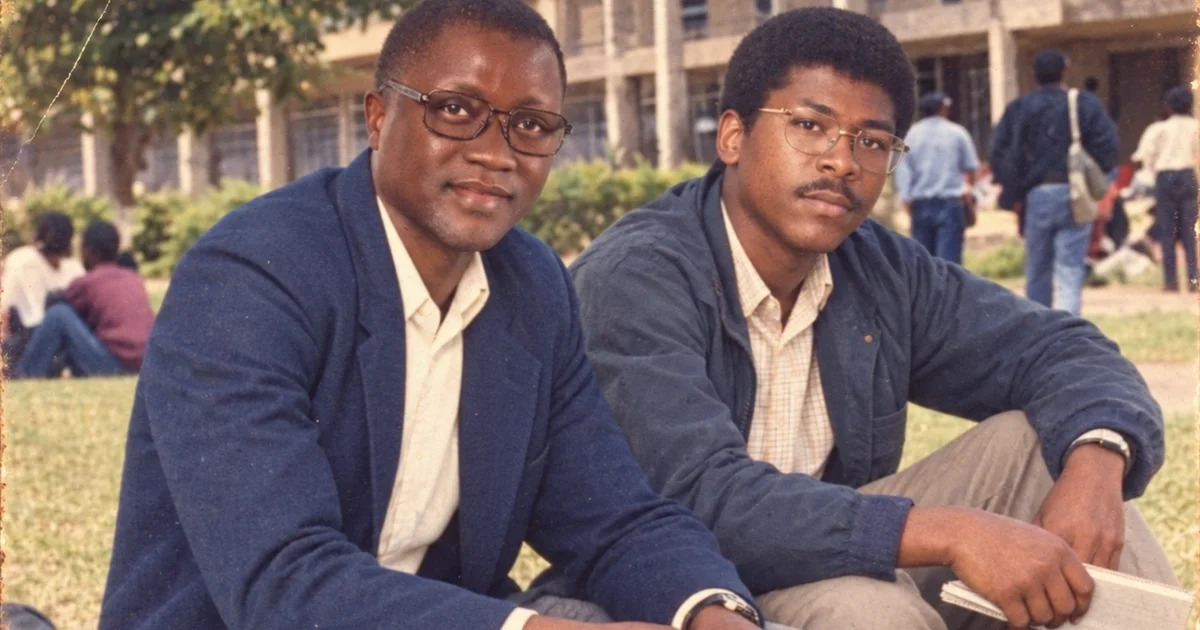
By categorizing love into eight distinct lamps, ancient thinkers provided a framework for individuals to understand which fire is burning inside their souls—a lesson that came too late to save a deep brotherhood forged on the streets of Nairobi in 1987.
What are the 8 types of love according to Greek philosophy and Kifuuta tradition?
The tradition of the Oracles of Kifuuta breaks down the eight lamps of love to help individuals navigate human relationships and prevent emotional destruction:
- Eros (The Fire of the Skin): The consuming, passionate, and romantic passion that burns brightly and rapidly, often driving individuals to extreme devotion or impulsive actions.
- Philia (The Fire of the Shield): Deep, non-romantic brotherhood and friendship. This is the bond that compels a person to stand side by side with a comrade in battle and declare a willingness to lay down life for a brother.
- Storge (The Fire of the Womb): Natural, unchosen affection rooted in bloodline, family ties, and common ancestry—the innate bond between parents, children, and siblings.
- Pragma (The Fire of the Stone): Long-standing, enduring love built brick by brick over decades. It is seen in elderly couples who may no longer express romantic passion, but cannot endure existence without each other.
- Ludus (The Fire of the Children): Playful, flirtatious love characterized by lighthearted affection, sweet banter, and casual romantic attraction.
- Agape (The Fire of the Gods): Unconditional, selfless love that gives without expecting returns, offering forgiveness even when the offending party offers no formal apology.
- Philautia (The Fire of the Mirror): Self-love. When healthy, it protects personal dignity and self-worth; when wounded or inflated, it corrodes all other forms of affection.
- Mania (The Fire of the Poison): Obsessive, jealous, and possessive attachment characterized by control, rigid expectations, and emotional ultimatums.
What happened between the author and Eng. Nzaro at Odeon Cinema in Nairobi in 1987?
In 1987, while studying engineering in Nairobi, Kenya, a young Ugandan student formed an unbreakable bond of Philia with a coursemate named Eng. Nzaro, a Giriama from the coastal city of Malindi.
The relationship transcended ordinary school friendship. Eng. Nzaro introduced his Ugandan comrade to the Indian Ocean for the first time, hosted him in Mombasa and Malindi, and welcomed him to the family table of the prominent Mudavadi Musafiri household.
Their academic supervisor, Mr. Tunde Othieno, often mistook the young Ugandan for a native Kenyan from the coast because the two young men were inseparable.
Over time, their bond matured into Pragma through years of shared study, and into Storge as they adopted each other as brothers of the same stomach (Mukwano gwa ddala).
However, on a fateful afternoon in 1987, that brotherhood fractured at Odeon Cinema in Nairobi:
- The Appointment: The two friends agreed to meet at 2:45 PM (14:45) inside Odeon Cinema to watch a featured film starring Indian cinema legend Amitabh Bachchan.
- The Delay: The movie began at 3:00 PM. By 3:30 PM, Eng. Nzaro had not arrived. At 3:45 PM—an hour late—Eng. Nzaro rushed into the dark cinema hall, out of breath, took a seat next to his friend, and whispered an apology.
- The Silent Departure: Hurt by the delay, the author refused to turn his head or acknowledge his friend. When the movie ended, he stood up, walked out into the daylight, boarded a matatu to Lavington, and left Eng. Nzaro standing alone in the dark hall.
That afternoon, Philia died, replaced by two destructive emotional forces: Mania and Wounded Philautia.
Mania whispered that true love requires absolute punctuality, while Wounded Philautia demanded punishment through total silence.
How does wounded self love and possessive love destroy lifelong brotherhood?
The tragic lesson passed down by the Oracles of Kifuuta is that the deeper the love between two people, the smaller the knife required to sever the connection.
A person can forgive a complete stranger for a three-hour delay with a smile, yet harbor immense bitterness when a brother arrives one hour late. Because expectations between brothers are mountain-high, even a minor lapse feels like complete betrayal.
For nearly four decades, the act of keeping silent served not as justice, but as self-inflicted punishment:
- The Illusion of Punishment: The author remained mentally trapped inside Odeon Cinema in 1987, nursing anger while the empty seat next to him remained a constant reminder of loss.
- The Reality of Loyalty: Eng. Nzaro was late, but he still ran to the cinema. A person who does not value a brotherhood does not show up at all after an hour. He arrived because the bond mattered to him.
- The Fragility of Pure Friendship: Unforgiving Philia acts like fine glass—beautiful to behold, yet easily shattered by a single small stone of pride.
Why is Agape love necessary to heal decades of silent regret?
As decades pass and youth fades, wisdom reveals that holding onto anger over minor human flaws leads to an burdened heart before the ancestors.
While Eros drives passion and Philia creates family, only Agape—the unconditional love that forgives without demanding a prior apology—possesses the power to resurrect broken relationships.
Looking back as an elder after a long career in engineering, the author expresses a desire to restore the lost bond, calling upon mutual contacts such as Dr. Solomela Nyambura to assist in reconnecting the long-separated brothers:
“That Mania love, that depressing, punishing love that refuses to forgive — it will take me to the grave with a heavy heart,” the reflection concludes. “Eros makes you crazy. Philia makes you family. But only Agape makes you God. I must now choose Agape — the love that forgives even when the apology was late — so that I can resurrect Philia. Bring my brother back. The seat next to me at Odeon has been empty for 37 years.”
Plaintext