

The debate around Next of Kin vs Heir continues to confuse many families, with legal experts warning that the two terms are not the same. While many people assume that naming a next of kin secures inheritance rights, the law makes a clear distinction—one that can determine whether loved ones gain access to assets or face lengthy legal battles.
What Does Next of Kin Mean in the Next of Kin vs Heir Debate?
Many people believe that naming a loved one as “next of kin” automatically secures their inheritance. However, legal experts emphasize that in the Next of Kin vs Heir discussion, this assumption is incorrect and potentially harmful.
In legal terms, “next of kin” simply refers to the person to be contacted in case of an emergency or death. It does not grant ownership of property, land, or money—regardless of whether the individual is a spouse, child, or close relative.
In essence, next of kin answers one question: Who should be notified? Not who should inherit?
Why the Next of Kin vs Heir Confusion Can Cost Families
This misunderstanding has led to serious consequences for many families. In several cases, relatives approach banks expecting access to a deceased person’s funds, only to be denied.
Even within the Next of Kin vs Heir framework, financial institutions strictly follow legal procedures. Being listed as next of kin is not enough. Families must provide proper legal authority such as:
- Probate — where there is a valid will
- Letters of Administration — where there is no will
- Payable on Death (POD) directives
Without these, access to assets is not granted—no matter the relationship.
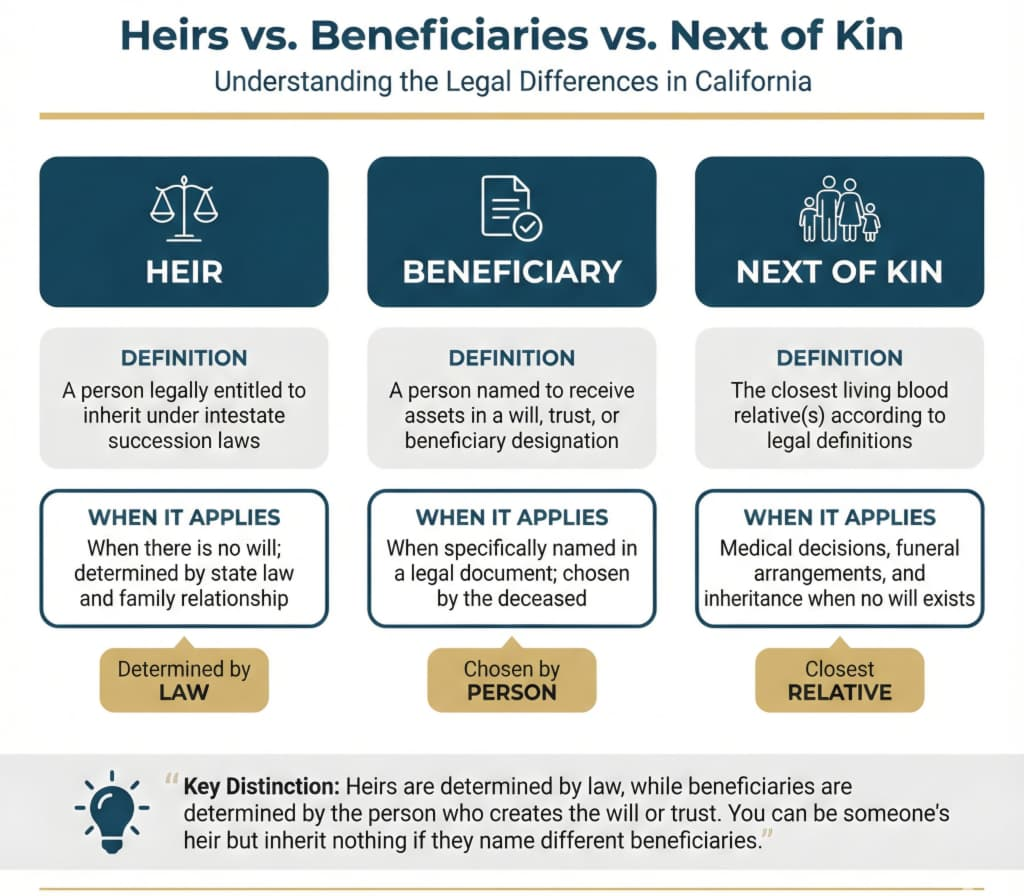
Who Is a Beneficiary in the Next of Kin vs Heir Discussion?
A beneficiary is the individual officially designated to receive assets after someone’s death. Unlike a next of kin, a beneficiary is recognized in law through clear documentation such as a will, insurance policy, or bank instruction.
In the Next of Kin vs Heir context, a beneficiary holds legal rights to assets, meaning financial institutions and courts will prioritize documented beneficiaries over informal designations.

Also Read: Over 90% of People Fail to Achieve Their New Year Resolutions
Next of Kin vs Heir: Understanding the Legal Difference
Legal experts stress that understanding Next of Kin vs Heir is essential to avoid confusion and disputes:
- Next of kin: Contact person
- Heir: Legal inheritor under succession law
- Beneficiary: Person specifically named to receive assets
These roles are completely different. Being named as next of kin does not give someone legal rights to inherit property or control financial resources.
How to Avoid Mistakes in the Next of Kin vs Heir Process
To prevent unnecessary stress and legal battles, experts advise individuals to take clear and documented steps:
- Write a valid will
- Support your intentions with a Deed of Gift
- Complete Payable on Death (POD) forms with your bank
Addressing the Next of Kin vs Heir issue properly ensures your loved ones are protected and your wishes are respected.
Finally on Next of Kin vs Heir
The law does not rely on assumptions—it relies on documentation. Misunderstanding Next of Kin vs Heir can leave families locked out of assets and stuck in lengthy court processes.
Understanding the difference between Next of Kin vs Heir—and where a beneficiary fits in—can save families from costly legal disputes and ensure assets go to the rightful recipients.