
Table of Contents
When did Ssemujju join X?
On June 1st 2026, veteran politician, journalist, and frontline opposition intellectual Ibrahim Ssemujju Nganda officially activated his presence on X (formerly Twitter). Operating under the verified handle @SsemujjuIN, his arrival shattered local social media metrics, with the account crossing over 16,000 followers within mere hours of its creation.
This explosive growth stunned professional digital strategists and online influencers, many of whom spend years deploying engagement tactics to achieve the numbers Ssemujju commanded in a fraction of a day. The mass migration of ordinary citizens and prominent public figures to his profile highlights a deeper truth: Ssemujju remains one of the most trusted, listened-to, and sought-after political voices in modern Ugandan history.
Also read about the new Ugandans on X President
Taking to the platform to signal his formal entry into online civic discourse, Ssemujju’s inaugural post laid out a clear, direct mission statement that instantly resonated with a public looking for strategic direction:
“Today I officially join X to take part in the conversation of the Uganda we want. This is the official handle for Ssemujju Ibrahim Nganda, the Secretary General of the People’s Front for Freedom-PFF and Former MP Kira Municipality.”
For a population still processing the dramatic fallout of the recent general elections, Ssemujju’s entry onto X is not viewed as a casual casual lifestyle update. Instead, it is being analyzed as a strategic repositioning of a major political asset who understands that the battleground for public accountability, civic awareness, and state oversight has fundamentally shifted from legacy physical structures onto the digital frontline.
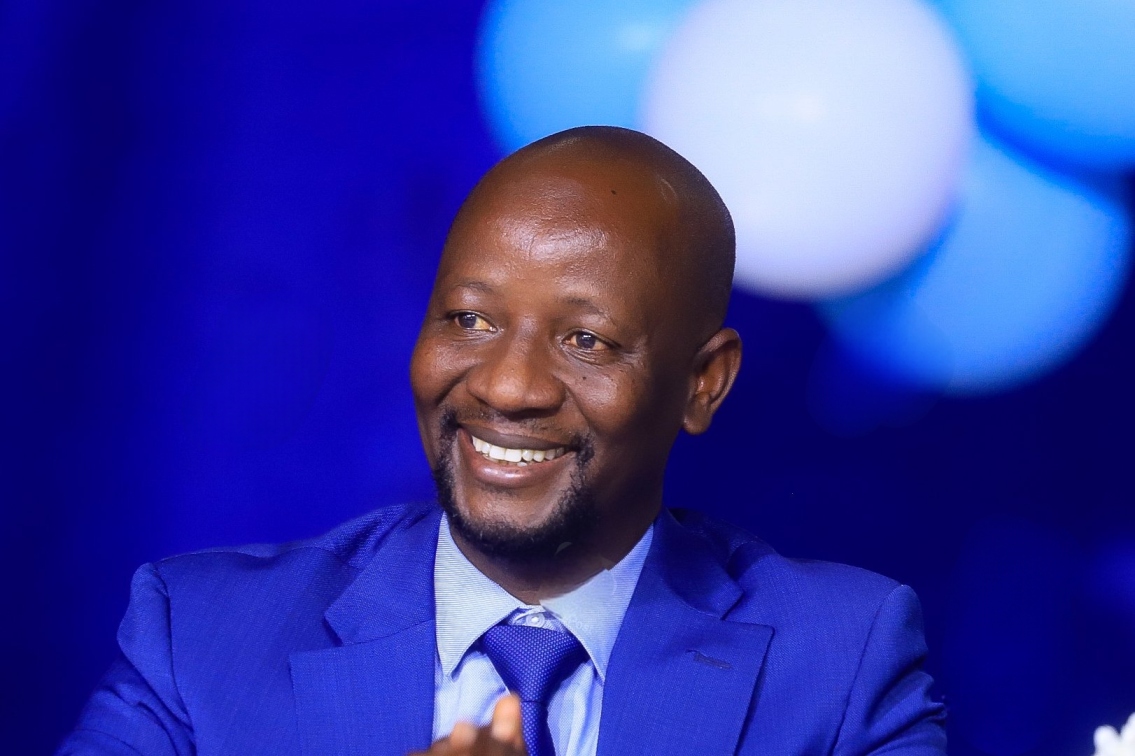
Who is Ibrahim Ssemujju Nganda and what is his background?
To understand why Ssemujju Nganda commands such immense public respect, one must look closely at his foundational journey before he ever stepped into the halls of Parliament. Born in 1973 in Bwera, completely rooted in a modest family background, Ssemujju’s intellectual development was defined by structural academic discipline. He attended local primary schools before advancing to the prestigious Makerere University, where he pursued and completed a Bachelor of Arts in Mass Communication.
[Mass Comm Degree at Makerere] ➔ [Investigative Reporter at The Monitor] ➔ [Founder of The Observer] ➔ [MP Kira Municipality]
Long before entering elective politics, Ssemujju built a formidable national reputation as one of Uganda’s most fearless, uncompromising investigative journalists. Operating during a highly volatile era of media repression, he served as a senior political reporter for The Monitor (now Daily Monitor) before co-founding The Weekly Observer (now The Observer).
His sharp penship, deep analytical exposes on military expenditures, and consistent documentation of executive excesses routinely drew the ire of state security apparatuses, resulting in multiple arrests, state interrogations, and sedition charges. This extensive background in investigative journalism granted him an intricate, deep understanding of state structures, public finance systems, and political maneuvers—knowledge that later made him a lethal debater when he transitioned from the newsroom into the legislature in 2011.
Which MP seat did Ibrahim Ssemujju Nganda lose in the 2026 elections?
In one of the most stunning developments of the recent general elections, Ibrahim Ssemujju Nganda lost his parliamentary seat as the Member of Parliament for Kira Municipality. Having represented the constituency since its creation, transforming it into an absolute stronghold of opposition oversight and structural civil consciousness, his electoral defeat sent shockwaves across the country. The loss left voters, political analysts, and even ideological rivals completely processing the absence of an indispensable institutional voice.
The post-election consensus among political observers suggests that Ssemujju’s defeat was less about local performance and entirely about the highly volatile, fractured nature of opposition politics during the election cycle. Following his institutional fallout with the internal management at Najjanankumbi, Ssemujju spent a massive amount of his political capital defending ideological transparency rather than executing standard localized campaigns.
Despite losing the formal parliamentary seat to a heavily financed challenger, the immediate national outcry following his exit proved that the public did not view his defeat as an exit from national relevance. If anything, the immediate public demand for his voice created the exact momentum that forced him to look for alternative channels of direct communication with the population.
Why is Ssemujju Nganda considered the toughest debater in the Uganda Parliament?
The primary reason millions of Ugandans are mourning Ssemujju’s absence from the upcoming legislative session is his unmatched reputation as a fierce, deeply researched parliamentary debater. For fifteen years, Ssemujju functioned as a permanent thorn in the side of the ruling National Resistance Movement (NRM) caucus. Unlike standard opposition politicians who rely on raw emotional rhetoric or loud disruptions, Ssemujju’s strategy was rooted in hard data, structural legal citations, and absolute constitutional mastery.
He possessed a rare, lethal ability to directly confront NRM ministers, cross-examine government financial statements on the floor, and expose hidden multi-billion shilling budgetary diversions in real-time. Whether serving as the Opposition Chief Whip or members of key accountability committees, his floor presentations were treated as masterclasses in legislative oversight.
He was globally popular for directly questioning government decisions, famously calling out state agencies for excessive spending on administrative luxuries while public hospitals lacked essential medicines. His sharp humor and ability to reduce complex state operations into clear, understandable language meant that whenever Ssemujju stood up to speak, the entire press gallery and parliamentary pool stopped to listen.
What is the People’s Front for Freedom PFF and what is Ssemujju’s role?
The formal political identity under which Ssemujju Nganda is now operating is the People’s Front for Freedom (PFF), where he serves as the official Secretary General. The emergence of the PFF represents the definitive culmination of the historic, bitter split that tore through the Forum for Democratic Change (FDC) party between 2023 and 2025.
When serious allegations emerged regarding the influx of unaccounted-for “dirty state money” into the FDC headquarters at Najjanankumbi, Ssemujju alongside legendary opposition icon Dr. Kizza Besigye led a principled breakaway faction. Operating out of the Katonga Road offices, this group launched a nationwide consultation campaign aimed at rescuing the core values of the liberation struggle from corporate co-optation.
Realizing that the legal and administrative structures of the old FDC had been fundamentally compromised, the Katonga faction officially transitioned into a brand-new, registered political movement—the PFF. As the Secretary General, Ssemujju holds the massive responsibility of structuring this new political vehicle, coordinating grassroots mobilization, and defining the movement’s strategic path as they look to challenge the status quo outside traditional parliamentary boundaries.
Why has X become the most powerful platform for political influence in Uganda?
Ssemujju Nganda’s immediate migration to X and his explosive follower acquisition highlights a profound structural shift in how public opinion is manufactured and deployed in Uganda. Over the last few years, X has transitioned from a basic social media app used for youth banter into the most influential civic, political, and accountability platform in the country. The platform has successfully broken the state’s traditional monopoly over information distribution, providing an un-censored arena where citizens, journalists, and policy makers interact directly without editorial gatekeeping.
For years, Ssemujju dominated traditional media spaces, appearing as a permanent panelist on premium political talk shows like NBS Frontline and driving record viewership through his impromptu press pool interviews at the parliament corridors. However, as traditional television and radio stations face increasing regulatory pressure, bureaucratic censorship, and threats of license suspension, alternative digital spaces have become the new sanctuary for free expression.
The fact that tens of thousands of Ugandans followed Ssemujju within hours of his profile activation shows that X directly mirrors real-life public sentiment and civil alignment. The platform acts as a digital town hall where the omuntu wawansi (ordinary citizen) can directly engage with leadership. Ssemujju’s arrival proves that he, alongside the strategic brains behind the PFF, has discovered that X is the ultimate modern source of public support, civil mobilization, and future electoral capital. By bypassing traditional media restrictions, Ssemujju is building a direct, unmediated communication pipeline to the most active, intellectually awake segment of the Ugandan population.