

Table of Contents
KAMPALA — The Uganda Communications Commission (UCC) has officially suspended its nationwide enforcement campaign against unlicensed public Wi-Fi hotspot operators.
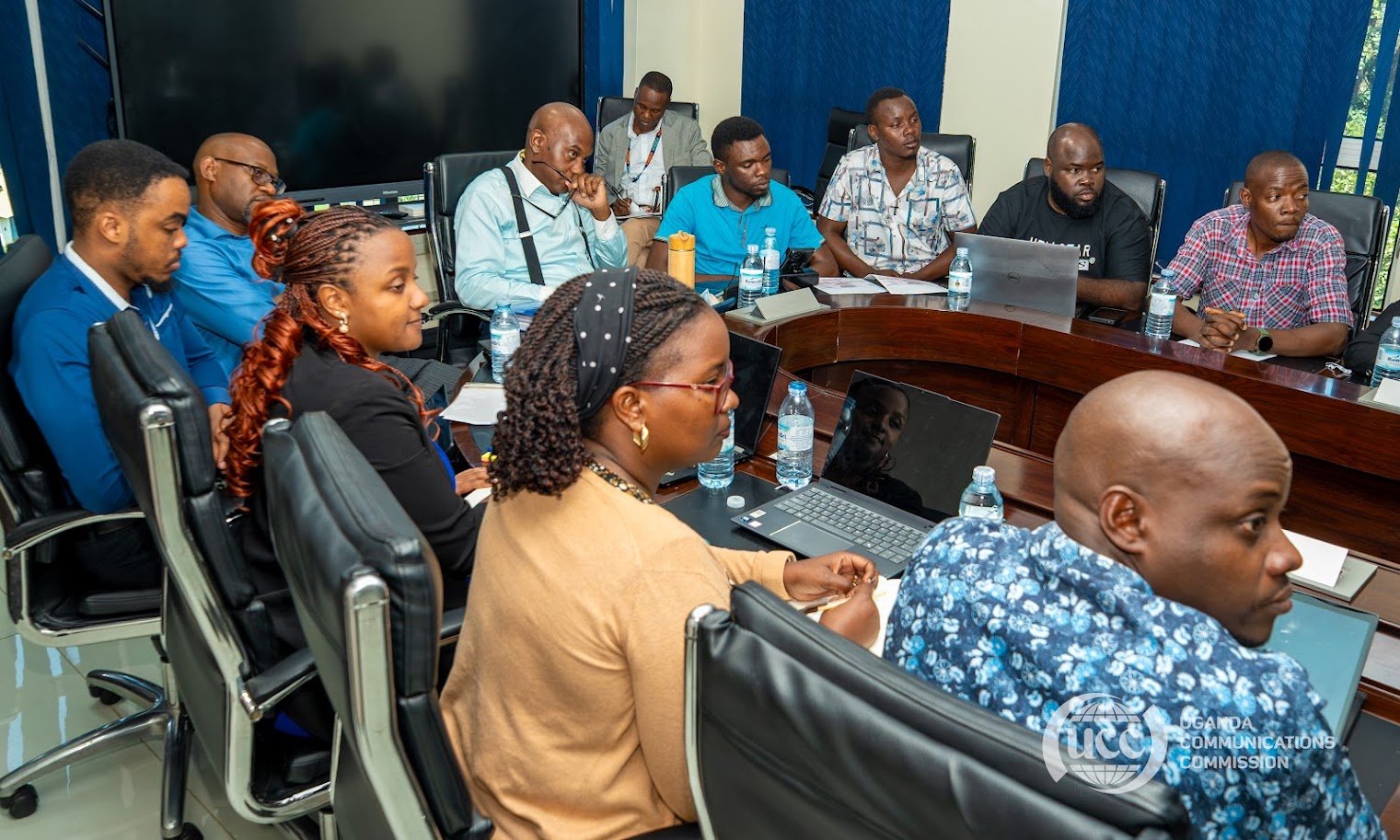
The sudden freeze on enforcement actions follows a high-stakes consultative meeting held on Thursday, 16th July 2026, at the UCC headquarters. UCC Executive Director, Hon. George William Nyombi Thembo, met with the leadership of the newly formed Alliance of Hotspot Operators Uganda (AHOU).
The operators expressed deep concerns that a blunt shutdown would instantly wipe out the livelihoods of thousands of young tech entrepreneurs and cut off access for millions of vulnerable students, hostel dwellers, and arcade traders who rely on these informal micro-networks for affordable daily connectivity.



Why did UCC suspend the neighborhood Wi-Fi hotspot crackdown?
The suspension was ordered by Executive Director Nyombi Thembo to give the regulator and operators a grace period to co-create a realistic, balanced, and inclusive regulatory framework. While the UCC’s baseline legal position on unauthorized public broadcasting remains intact, the commission recognized that aggressive field crackdowns would cause severe economic disruption.
During the meeting, Nyombi Thembo openly commended the grassroots innovation of the hotspot operators. He noted that these local vendors have successfully disrupted traditional telecommunication approaches by mapping out entirely new, previously unexplored retail methods to deliver internet access to the last mile. Rather than treating the informal vendors strictly as criminals, the UCC has opted for a multi-stakeholder dialogue to build a “win-win” solution that balances regulatory compliance with digital innovation.
When did the Uganda Communications Commission issue the Wi-Fi directive?
The controversy officially began on July 7, 2026, when the UCC issued a stern public regulatory notice announcing an immediate, nationwide enforcement exercise targeting unauthorized public Wi-Fi services.
In the initial directive, the regulator stated that its technical investigations had uncovered a massive, unregulated network of informal operators installing unauthorized telecommunications equipment to commercially resell public internet. The commission warned that operating completely outside the statutory framework exposed everyday consumers to severe cybersecurity vulnerabilities, unmonitored data privacy breaches, and poor service delivery with zero channels for formal legal redress. The UCC gave informal vendors an ultimatum to either regularize their businesses immediately or pull down their equipment.
How much do neighborhood Wi-Fi hotspots cost in Kampala?
The meteoric rise of the informal Wi-Fi economy across Uganda’s urban centers has been completely driven by price and flexibility. While licensed Internet Service Providers (ISPs) charge an average of Shs 85,000 per month for entry-level home fiber or fixed wireless packages, informal neighborhood vendors have broken the market down into highly digestible micro-packages.
Using hardware like MikroTik routers, UniFi systems, and TP-Link outdoor access points, these tech-savvy youths purchase high-volume data bundles from mainstream providers and redistribute them within a localized radius. The typical price structure in Kampala’s busy trading hubs, hostels, and residential zones breaks down as follows:
| Hotspot Access Duration | Average Informal Price (UGX) |
| 1-Hour Express Access | Shs 200 – Shs 500 |
| 24-Hour Unlimited Voucher | Shs 800 – Shs 1,500 |
| 7-Day Weekly Pass | Shs 5,000 – Shs 7,000 |
For a university student or an informal arcade vendor who only needs occasional access to look up research materials or process mobile money logs, paying Shs 1,000 only on the specific days they need it is drastically cheaper than committing to an expensive, upfront monthly utility bill.
Why are MTN and Airtel opposing informal internet resellers?
Uganda’s major telecommunications giants, spearheaded by MTN Uganda and Airtel Uganda, have been the driving force lobbying for a regulatory crackdown on these neighborhood networks. The telecom monopolies argue that the practice represents a direct breach of contract and constitutes unfair market competition.
Corporate spokespersons from the telecoms have pointed out that retail internet packages sold to consumers are strictly meant for domestic, personal use and not for commercial redistribution or sub-leasing. The telecoms view the informal vendors as illegal middlemen who are making massive untaxed profits off their infrastructure while eating into the telcos’ highly lucrative mobile data bundle revenue streams.
This hardline corporate stance actually marked a sharp contradiction to statements made in June 2026 by Julianne Mweheire, the UCC Director for Economic Regulation, Content, and Consumer Affairs, who had initially suggested the commission would not stop neighborhood sharing as it clearly solved a massive demand for flexible, affordable internet access.
What is the next step for the Alliance of Hotspot Operators Uganda?
With the aggressive enforcement actions now officially on ice, the UCC has launched an immediate technical study to find a sustainable middle ground. Engineers from the Uganda Communications Commission are currently working directly with technical representatives from the Alliance of Hotspot Operators Uganda (AHOU). The operators are demonstrating their network layouts, bandwidth allocation methods, and localized voucher billing architectures to prove they can operate safely without causing technical network interference to licensed carriers.
Moving forward, the UCC has pledged to convene a comprehensive national roundtable discussion. This dialogue will bring together the informal hotspot operators, major telecom providers, mainstream ISPs, the Uganda Revenue Authority (URA), and local urban authorities. The ultimate goal is to formulate a simplified, low-cost licensing tier, establish fair wholesale internet pricing models, and design a micro-tax structure that legitimizes these youth-led businesses rather than killing them off.
Complete WordPress Tags for Search Engine Optimization