
Table of Contents
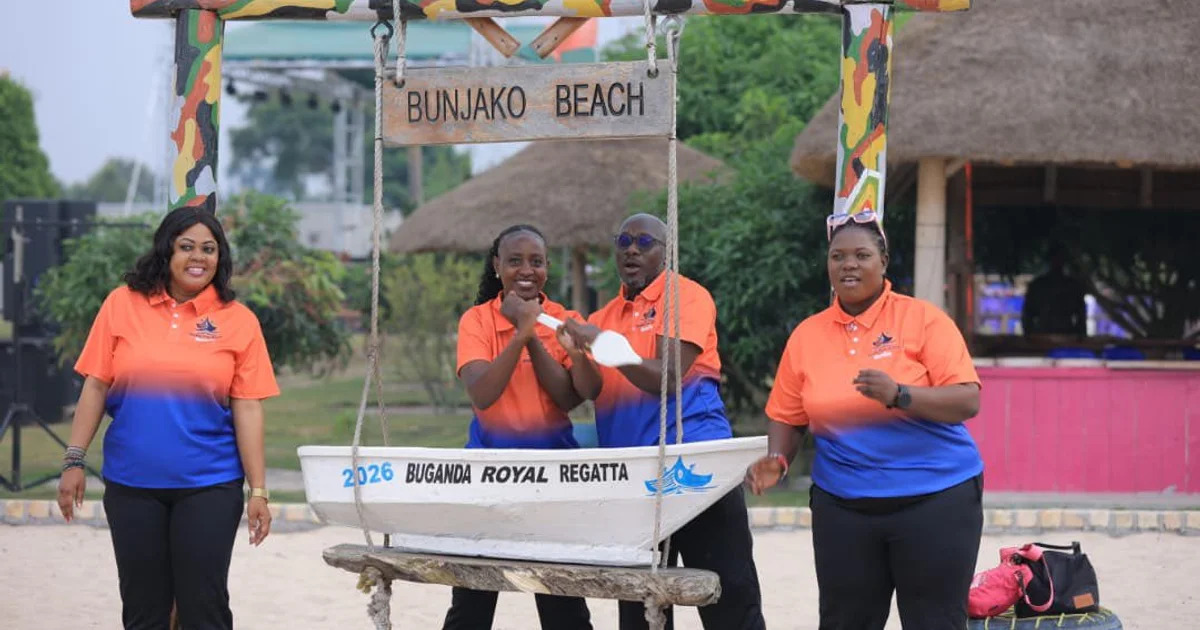
BUNJAKO, UGANDA — Days after the historic 2026 Buganda Royal Regatta (Amaato Ga Kabaka) brought Bunjako Beach to a standstill on August 22, the Chairman of the organizing committee, Joseph Mbazzi Muguluma (Eng. Ben Misagga), has released an emotional, high-energy reflection celebrating the revival of the kingdom’s ancient aquatic sport.
Describing the electric atmosphere along the shores of Lake Victoria (Enyanja Nalubale), Misagga noted that the event proved the doubters wrong, breaking a seven-year drought of skepticism to prove that traditional canoe racing is alive, powerful, and ready for commercial investment.
“The lake did not just host a race. The lake ROARED! Enyanja Nalubale woke up!” Misagga declared. “Amaato Ga Kabaka is back—not as a memory, not as a story from Jjajja, but as a storm!”
How did the 2026 Buganda Royal Regatta overcome seven years of doubt at Bunjako Beach?
Rebuilding Amaato Ga Kabaka into a premier national sports spectacle required seven years of continuous financial sacrifice, administrative pushback, and public skepticism.
For years, critics dismissed the vision of restoring traditional canoe racing to the forefront of Buganda’s sporting calendar, arguing that the sport lacked commercial appeal or public audience.
Reflecting on the grueling journey to August 22, Misagga drew on an old proverb from the Oracles of Kifuuta:
“For seven years, we have carried this thing on our backs like a stubborn mule,” Misagga recalled. “They said, ‘It will die.’ We paddled. They said, ‘No money there.’ We pushed. They said, ‘Who watches boats?’ On August 22, 18 county boats, thousands of fans, and the whole Kingdom answered them!”
Addressing the administrative hurdles faced along the way, Misagga added a sharp reminder about human effort and perseverance:
“The Oracle told me: ‘If you want a man who never makes a mistake, go to the graveyard!’ We are not dead! We are alive! We will make mistakes, we will correct, and we will become dangerous. We have been digging for seven years and our nails are broken. But listen—YOU DON’T PICK A DIAMOND FROM A TREE. YOU DIG DEEP INTO THE ROCK TO FIND IT! Family, we have hit the rock. The diamond is shining!”
Who made the 2026 Amaato Ga Kabaka canoe races a historic success?
The grand finale at Bunjako Beach brought together thousands of spectators on site alongside international streaming audiences across the Ugandan diaspora in Dubai, Toronto, London, and North America.
Extending gratitude to key leadership pillars and administrative teams, Misagga poured out appreciation to everyone who contributed to the event’s success:
- The Katikkiro of Buganda (Owek. Charles Peter Mayiga): “You gave us the shield. We used it.”
- Ministry of Youth, Sports, and Arts (Oweek. Salongo Robert Sserwanga): “You gave us the legs. We ran.”
- County Chiefs (Abamasaza): “You brought the colors, the drums, the pride! Without you, there is no Buganda!”
- The 18 County Boats: “You did not row! You flew on water! The lake was on fire!”
- Media & Press Corps: “You took our sweat and made it shine on every phone!”
- The Dedicated Fans: “You who stood in the sun, you who screamed till your voice broke, you who watched on phone in Dubai and Toronto—you are the 19th boat! You pushed us!”
Why are women and Gen Z crews changing the face of traditional canoeing?
One of the defining highlights of the 2026 edition was the inclusion and dominance of female and mixed-gender rowing teams, breaking age-old gender barriers in traditional water sports.
The three all-women crews (She Rowers, BusiroWinner, and Bunjako Sailors) delivered fierce, high-speed performances that drew standing ovations from the crowd and kingdom dignitaries alike.
“To my QUEENS—the three Women Crews—you killed it! You showed them that Nnalongo can row better than Ssalongo! You are the new face of Amaato!” Misagga emphasized.
He also praised the emergence of the youth mixed crews, describing them as the ideal bridge for corporate sponsors looking to connect with modern audiences:
“To the Mixed Crew—that is Gen Z Amaato! Sweet, sexy, powerful! That is what sponsors want!”
How does Buganda Kingdom plan to turn cultural canoeing into a multi-million business?
With the sporting and cultural proof now established, Misagga made a direct pitch to corporate investors, business leaders, and county administrations to shift from viewing the regatta as a mere cultural performance to treating it as a lucrative commercial enterprise.
Moving forward, the goal is to transform Amaato Ga Kabaka into an economic engine that generates real wealth for youth, rowers, local tourism operators, and Buganda’s 18 counties (Masaza).
“My appeal is not for sympathy. My appeal is for BUSINESS!” Misagga urged. “Let’s stop rowing for claps. Let’s start rowing for CASH! Let this sport buy land. Let it pay school fees. Let it build hotels on the lake. Let every Masaza own a fleet that earns. Let every youth wear an Amaato jersey worth. Let every race be a concert, a market, a TV show!”
Misagga closed with a powerful call to action on the relationship between culture and economic survival:
“Culture that doesn’t put money in the pocket will be forgotten. Culture that puts meat on the table will be worshipped! We have revived the history. Now let’s monetize the history! The water is waiting. The money is waiting. TUMWEBAZE! WANGAALA KABAKA!”