
Table of Contents
When was he elected?
The legislative architecture of Uganda has officially transitioned into a new era. In a high-stakes, historically symbolic vote on the floor of the house, West Budama Central County Member of Parliament Jacob Oboth-Oboth has been formally elected as the Speaker of the 12th Parliament of Uganda. This happened on the 25 May of 2026. President Museveni watched as the voting process happened.
He was first endorsed by Gen Muhoozi
The decisive voting exercise, executed by newly sworn-in Members of Parliament, marks the definitive commencement of the 12th legislative term. ’s ascension to the apex of the legislature lands at a profoundly transformative moment in Uganda’s political history, as the country demands rigorous legislative oversight, constitutional fidelity, and structural alignment between the frontbenches and the backbenches.
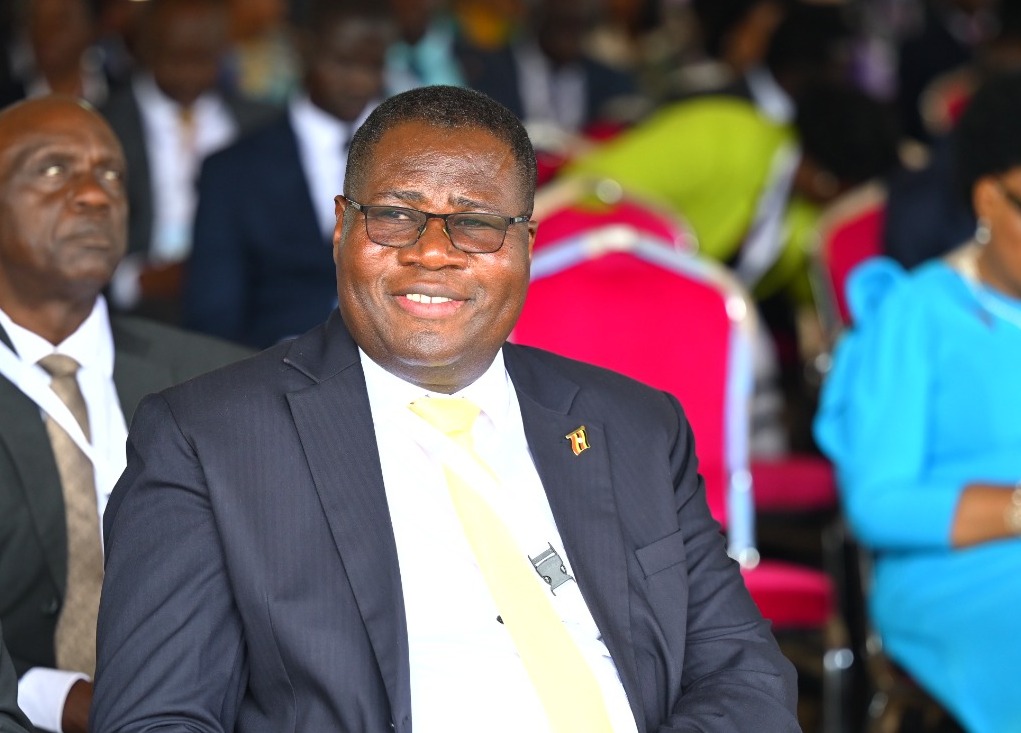
A seasoned legal mind and an experienced administrator, the newly elected Speaker assumes total control of the house, inheriting a complex legislative docket tasked with steering the nation’s budget, passing critical bills, and defending parliamentary independence.
What does this election mean for the trajectory of the 12th Parliament?
The election of Jacob is being viewed by political analysts and veteran legislators as a calculated institutional move to restore total legal proceduralism and absolute order to the floor of the house. Over the last few legislative terms, Parliament has frequently been caught in intense public debates regarding procedural rules, oversight implementation, and accountability mechanisms. ‘s reputation as a strict adherent to parliamentary rules of procedure suggests that the 12th Parliament will experience a systematic return to orthodox legislative discipline.
His victory signals a deliberate pivot toward consensus-driven leadership. In his preliminary communications following the vote, the newly minted Speaker emphasized his commitment to presiding over an inclusive, intellectually serious parliament where debates are driven by national utility rather than partisan friction.
For backbenchers who have historically complained of exclusion from elite decision-making loops, Oboth-Oboth’s speakership promises a decentralized approach to parliamentary committee management, ensuring that every legislative constituency effectively registers its voice on national priorities.
Who is Jacob and how did his political journey pave the way to the Speaker’s chair?
Jacob Oboth-Oboth’s journey to the third most powerful office in the land is defined by long-term legal practice, institutional loyalty, and comprehensive legislative service. Representing West Budama Central County in Tororo District, his political and professional profile commands deep respect across the floor of the house, cutting cleanly through party divides.
An alumnus of Makerere University where he obtained his Bachelor of Laws (LL.B), Oboth-Oboth enriched his legal credentials internationally, securing a Master of Laws (LL.M) from the University of Minnesota Law School. His career includes serving as a state attorney in the Ministry of Justice and Constitutional Affairs, alongside a successful tenure as the head of the legal department at the Uganda Wildlife Authority (UWA).
[State Attorney / UWA Legal Head] ➔ [MP West Budama Central] ➔ [Chair, Legal & Parliamentary Affairs] ➔ [Speaker of the 12th Parliament]
Within the corridors of Parliament, Oboth-Oboth solidified his status as an indispensable institutional asset during his tenure as the Chairperson of the highly sensitive Legal and Parliamentary Affairs Committee. It was within this specific committee assignment that his analytical handling of complex constitutional amendments and statutory bills won him praise for maintaining structural composure under intense political pressure.
His subsequently expanded executive profile—serving as the Minister of State for Defence and Veteran Affairs—further sharpened his strategic management capacity, providing him with the executive insight required to seamlessly balance relations between the Cabinet and the wider legislature.
What immediate structural challenges await the new Speaker at Parliament House?
As the congratulations dissolve and the realities of legislative administration take over, Speaker Jacob Oboth-Oboth faces an array of urgent structural battles that will test his administrative grip:
- Restoring Public Institutional Trust: The image of Parliament has faced persistent challenges in the court of public opinion regarding expenditure frameworks and perceived administrative opacity. Oboth-Oboth must immediately deploy transparent auditing systems to rebuild institutional credibility.
- Balancing Executive Cooperation and Legislative Autonomy: One of the most delicate acts for any Speaker in Uganda’s constitutional matrix is defending the independent oversight mandate of Parliament without creating gridlocks with the executive arm of government.
- Managing the Inflation of Bills and Dockets: The 12th Parliament inherits a heavy backlog of pending socio-economic, environmental, and technological bills. The Speaker’s desk must immediately streamline the legislative calendar to prioritize high-impact legislation.
- Navigating the Multi-Party Chamber Dynamics: With a vibrant opposition and an expansive independent block sitting alongside the ruling National Resistance Movement (NRM) majority, Oboth-Oboth will need to employ immense diplomatic skill to maintain order during high-tension national debates.
How does his victory re-align the regional balance of power in Uganda’s top leadership?
Beyond the internal mechanics of Parliament, Oboth-Oboth’s election carries profound geopolitical significance for the national distribution of power. In Uganda’s unwritten but strictly observed doctrine of regional power balancing, the allocation of top state offices—specifically the Presidency, the Vice Presidency, the Prime Minister’s docket, the Chief Justice’s chair, and the Speakership—must mirror the diverse geographic components of the country.
His ascension effectively anchors the voice of Eastern Uganda at the absolute apex of the state apparatus. For the people of Tororo District and the broader Bukedi sub-region, having a son of the soil hold the parliamentary gavel provides a direct psychological boost and signals a commitment to geographic inclusivity at the highest echelons of government.
By bringing an intellectually grounded, internationally exposed legal expert from the east to head the legislature, the 12th Parliament stands fully prepared to execute its constitutional mandate with absolute precision, structural transparency, and unwavering patriotism.