
Table of Contents
When is the WBS TV Jam Agenda celebration?
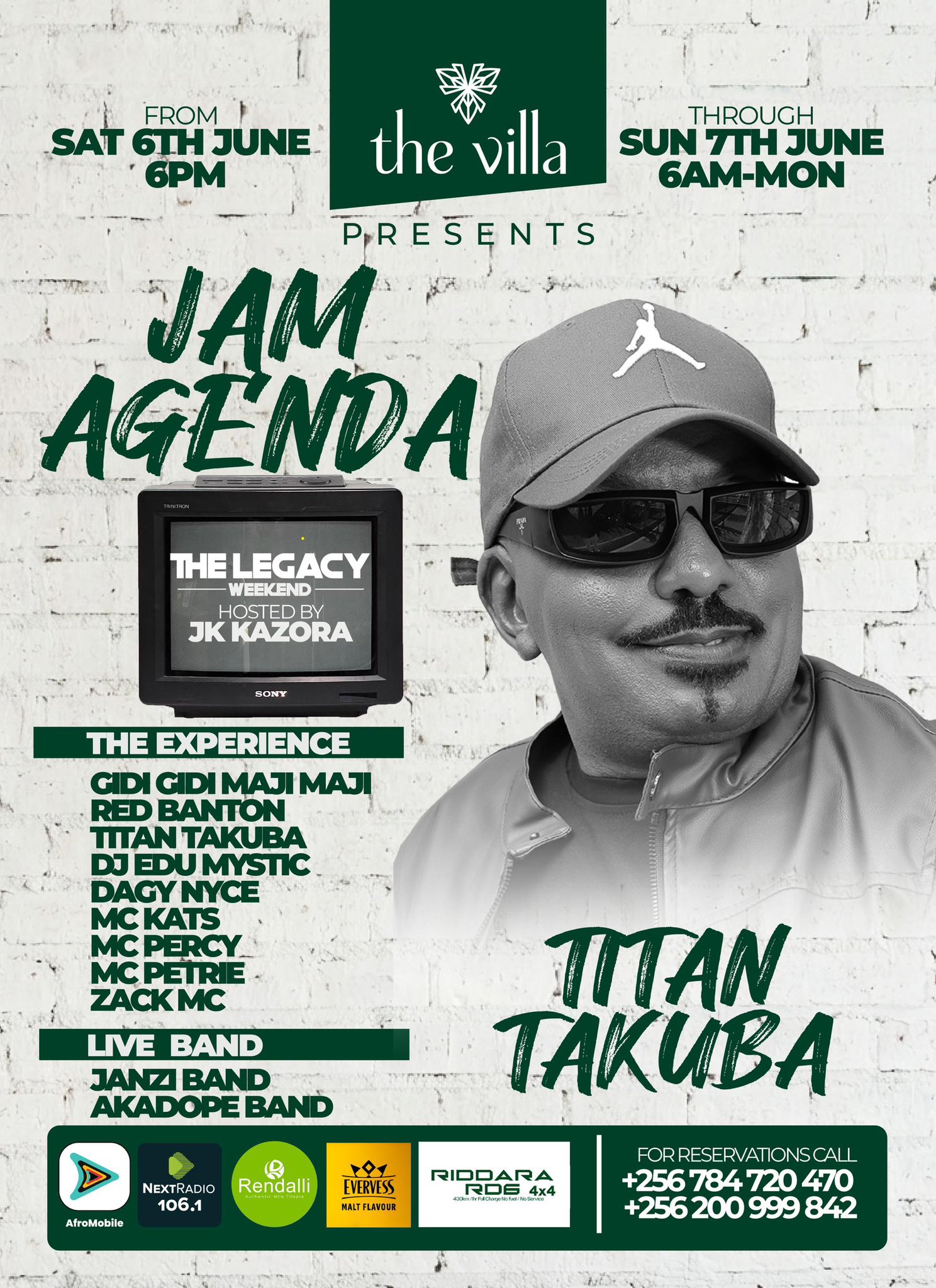
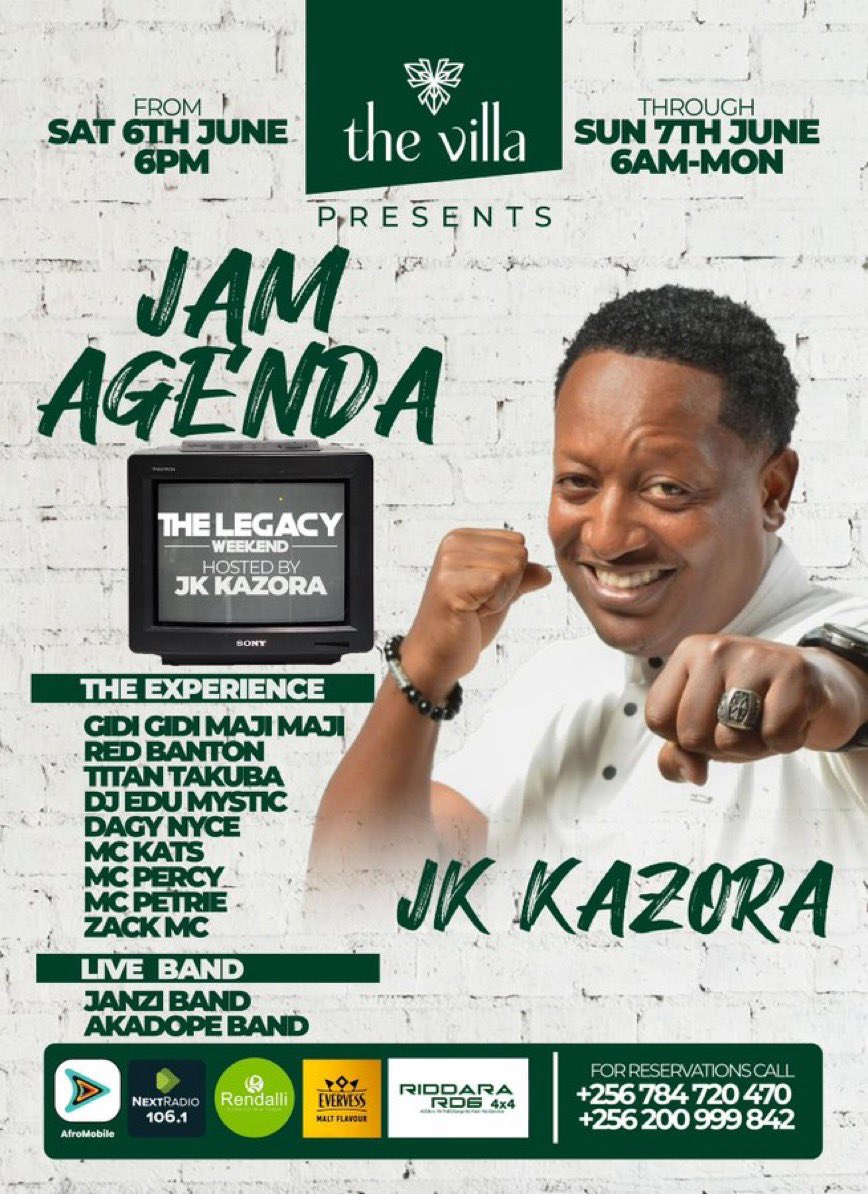
The golden era of Ugandan television is staging a monumental, multi-sensory comeback that is set to completely take over Kampala’s weekend nightlife. On Saturday, June 6, 2026, the legendary Jam Agenda brand will officially return for a historic throwback celebration hosted at The Villa, running a grueling, high-energy 48-hour nonstop timeline from Saturday at 6:00 PM all the way through to Monday, June 8, 2026, at 6:00 AM. Watch the full details here.
Designed as a premier celebration of the urban subcultures, fashion trends, and breakout music videos that defined a generation between 1997 and 2008 long before the arrival of modern applications like TikTok or YouTube, this event marks a massive convergence of legacy media icons. The celebratory production features an elite lineup including the legendary WBS crew, regional Afro-fusion pioneers Gidi Gidi Maji Maji, dancehall general Red Banton, iconic TV host JK Kazoora, and Titan Takuba, alongside live performances by the mighty Aka Dope Band and the Janzi Band.
Also read about how Flavia left Capital FM for a top job at NTV
With tables priced at 1 million shillings, the highly anticipated event has attracted an expansive corporate sponsorship matrix including Evervess Tonic, Victoria University, Riddara RD6 4×4, Rendalli Fish, Uganda Airlines, Ranchers Finest, Smari, WBS Legends, Inspire Africa Coffee, Ugachick, and NBS Television.
Why is NBS Television sponsoring the WBS TV legacy throwback event?
The inclusion of NBS Television at the apex of the corporate sponsorship list has sparked an intense, highly ironic wave of conversation across Kampala’s media corridors. Industry analysts have pointed out the profound historical contradiction: NBS Television is aggressively financing a celebration of the WBS TV legacy, yet it is Next Media Services—the parent conglomerate of NBS—that currently occupies, owns, and operates from the exact physical real estate on Plot 13, Summit View Road on Naguru Hill where WBS TV once reigned supreme.
Following the tragic economic collapse and subsequent receivership of Wavah Broadcasting Services in late 2016, Next Media executed a strategic lease agreement to take over the historic Naguru facilities, transforming the former creative sanctuary of Gordon Wavamunno into what is now known as the “Next Media Park.” For many legacy media practitioners, watching NBS stamp its corporate logo on the Jam Agenda resurrection feels like a brilliant but slightly cheeky corporate nod—a dominant media empire financing a tribute to the pioneer whose literal physical ashes it built its modern empire upon.
What made WBS TV the most reliable television station in Uganda’s history?
To truly understand the national excitement surrounding the upcoming 48-hour throwback party at The Villa, one must revisit the absolute dominance WBS TV maintained over the national psyche before the liberalization of digital broadcasting. Looking back at that golden age of television provides a stark contrast to today’s fragmented digital media landscape.
I really enjoyed WBS TV shows from soaps like woman of my life, Teletubbies, Kids Corner, Emiti Emitto by Esezza Omuto, jam agenda, vumbula, cook n dine, wedding vows, and very many other wonderful show. As much as we used analogue outdoor antennas, WBS TV was very reliable long before NTV Uganda came up and at the same time when other channels had weak signals except national UBC TV.
The station possessed an unparalleled capacity to broadcast uninterrupted, crystal-clear signals to families relying entirely on manual, high-perched metallic outdoor poles that had to be continuously adjusted. While other emerging terrestrial channels suffered from extreme snow-screen static and frequent transmission blackouts, WBS TV maintained absolute signal integrity across urban centers, offering premium, highly engaging programming that effectively transformed the living room into a communal sanctuary long before competitive multi-choice digital networks disrupted local broadcasting.
What is WBS TV and when did it start broadcasting in Uganda?
Wavah Broadcasting Service (WBS TV) was a pioneering, free-to-air commercial television station that effectively birthed private, independent broadcasting in Uganda. Formally incorporated in October 1997 by the iconic Ugandan industrialist and tycoon Professor Gordon Wavamunno under his sprawling Spear Group of Companies, the station officially launched its live broadcast operations on January 31, 1999.
The inaugural, historic newscast was anchored by Brenda Nabiryo, instantly setting a premium, highly professional journalistic standard that challenged the decades-long state media monopoly previously enforced by the state-run Uganda Television (UTV). Operating from its high-tech, custom-built studio facilities overlooking the capital city from Naguru Hill, WBS TV established critical global programming partnerships—most notably with international news networks like CNN—while keeping its primary emphasis on localized, high-quality urban entertainment, comprehensive political news coverage, and youth-centered cultural programming.
What were the most popular shows on WBS TV that people still search for?
WBS TV’s historical legacy is anchored primarily on its revolutionary programming grid, which masterfully balanced international acquisitions with highly innovative, localized studio productions. Among the most popular shows that continue to command deep nostalgic status include:
- Jam Agenda: The definitive, absolute pinnacle of youth entertainment and music video curation in East Africa. Initially launched and anchored by the ultra-smooth Colin Sserubiri from 1997 until his relocation to Canada in 2002, the show was subsequently taken over and supercharged by JK Kazoora. It served as the primary launching pad for the contemporary Ugandan music industry, dictating hits, launching music videos, and profiling celebrity lifestyles long before social media existed.
- Woman of My Life (La Mujer de My Vida): The legendary Spanish-language telenovela that paralyzed public transit across Kampala every evening. Airing between 2001 and 2007, this acquired drama series introduced millions of Ugandans to international soap opera culture, cementing prime-time television viewing as an unmissable family ritual.
- Emiti Emitto by Esezza Omuto: A legendary, highly educational children’s showcase hosted by the iconic Esezza Omuto. The show provided a vital platform for early childhood development, traditional storytelling, and talent identification for young kids across the nation.
- Teletubbies and Kids Corner: The definitive morning and late-afternoon programming blocks dedicated exclusively to children’s entertainment, capturing the imaginations of urban youth using highly engaging international educational animations.
- Vumbula, Cook n Dine, and Wedding Vows: A highly successful trio of lifestyle and magazine shows that captured the unique realities of Ugandan society. While Vumbula explored underground cultural and social investigative realities, Cook n Dine pioneered localized culinary entertainment, and Wedding Vows served as the absolute standard for premium matrimonial and high-society wedding documentation in the country.
Why did WBS TV close down and what caused its ultimate collapse?
The sudden, shocking dissolution of WBS TV stands as one of the most tragic lessons in the macroeconomics of media management within East Africa. On December 14, 2016, WBS TV officially ceased operating as a public broadcaster after being forced into terminal receivership by the Uganda Revenue Authority (URA) over un-serviced, historical tax arrears totaling over 7.2 billion Ugandan Shillings (approximately $2 million USD).
Despite intensive, desperate turnaround strategies initiated by Professor Gordon Wavamunno—including high-level restructuring and structural management negotiations—the station failed to inject the required liquid capital to offset the mounting debt. In April 2016, the URA appointed prominent lawyer Kabiito Karamagi as the official receiver-manager to oversee day-to-day operations and execute a corporate rescue plan.
However, the financial liabilities proved entirely untenable. The receiver ultimately ordered the absolute closure of the station and directed the systematic liquidation and sale of its broadcasting equipment and its prime Naguru headquarters. While initial rumors suggested the infrastructure would be sold to Zimbabwean tycoon Strive Masiyiwa to anchor his Kwesé Sports network, the physical facilities were ultimately leased to Kin Kariisa’s Next Media Services in 2020, permanently sealing the fate of Uganda’s first private television powerhouse.
Who is JK Kazoora and how did he rise to fame on Ugandan television?
Junior Dave Kazoora, known across the African continent as JK Kazoora, is a legendary Ugandan media personality, television producer, master of ceremonies, and serial entrepreneur whose name is permanently synonymous with the birth of modern urban youth culture in East Africa. Stepping into the spotlight as the charismatic, high-energy host of Jam Agenda on WBS TV following the departure of Colin Sserubiri, Kazoora redefined the parameters of television presentation. His fast-talking, highly engaging, and candid presentation style transformed him into an instant household name, bridging the gap between emerging local musical talent and corporate brand endorsements.
Beyond his visible on-screen fame, Kazoora quickly transitioned into a powerful behind-the-scenes media executive and entrepreneur. He founded Buddies Productions, a top-tier media production house and promotional agency that went on to design and execute massive television formats, multi-national brand campaigns, and high-end audio-visual content for major corporate entities across the region.
Driven by an intense passion for youth empowerment and continental self-reliance, he launched the highly acclaimed Inspire Africa project—a multi-national entrepreneurial reality television showcase and venture fund designed to identify, mentor, and heavily capitalize the next generation of African business giants. His long-standing career represents a masterclass in converting raw media visibility into sustainable corporate influence, rendering him the ultimate host to guide Kampala back into the golden archive of Jam Agenda at The Villa.
What are the most common questions people ask about the history of WBS TV?
Is WBS TV coming back on air? Despite recurrent, highly viral rumors circulating within the local media space suggesting a multi-billion shilling re-launch by anonymous tycoons, WBS TV remains completely defunct as a broadcasting entity. The upcoming June 2026 event at The Villa is an independent lifestyle throwback celebration designed to honor the historical Jam Agenda brand and the WBS Legends crew rather than a formal return to television broadcasting.
Who owned Wavah Broadcasting Services? The television station was entirely owned by prominent billionaire entrepreneur Professor Gordon Wavamunno through his parent conglomerate, the Spear Group of Companies, which also holds massive diversified investments in automotive distribution (Spear Motors), logistics, manufacturing, and hospitality.
Where can I watch old episodes of Jam Agenda or WBS TV shows? Because the station operated primarily during the analog broadcasting era before the institutionalization of digital cloud archiving, a vast majority of its primary tapes and historical broadcasts remain locked within physical storage archives. However, dedicated historical segments, archival music video countdowns, and specialized tribute clips are increasingly being curated and uploaded by independent media historians across digital video sharing platforms.