
Table of Contents
When did she congratulate the new speaker?
Today, 26 May 2026, the outgoing Speaker of Parliament, Anita Annet Among, has officially extended her congratulations to her successor, Rt. Hon. Jacob Oboth-Oboth, and the Deputy Speaker, Rt. Hon. Thomas Tayebwa, following their election to lead the 12th Parliament of Uganda.
The public endorsement by the outgoing head of the legislature lands as a stabilizing force, calming the intense political waves that typically characterize high-stakes transitions within the apex of Uganda’s legislative arm. By immediately signaling her alignment with the new leadership guard, Among has set a tone of structural solidarity, reinforcing the democratic premise that while leadership placeholders change, the sanctity and legislative mandate of the august house remain absolute.
Here’s how she recently exited the speakership race
The Graceful Handover: Anita Among Signals Institutional Continuity
Taking to her digital communication channels immediately after the floor of the house finalized the tallying process, the former Speaker expressed absolute confidence in the administrative competence of the newly minted leadership duo. Rather than retreating into political isolation, Among chose to frame the transition as a victory for national development and institutional advancement.
“I join my colleagues in congratulating Rt Hon @ObothOboth and Rt Hon @Thomas_Tayebwa on their election as Speaker and Deputy Speaker of the 12th Parliament,” Among stated in her official dispatch.
“I have no doubt that your leadership will bolster the legislative agenda and promote outcomes that serve our nation’s best interests. I sincerely wish you success in your service to our country.”
This public display of goodwill is being parsed by political strategists as a highly calculated, statesmanlike move. By explicitly highlighting her belief that the new leaders will “bolster the legislative agenda,” Among is actively protecting her own administrative legacy while ensuring that the 12th Parliament does not suffer from factional paralysis or internal legislative wars between camp loyalists.
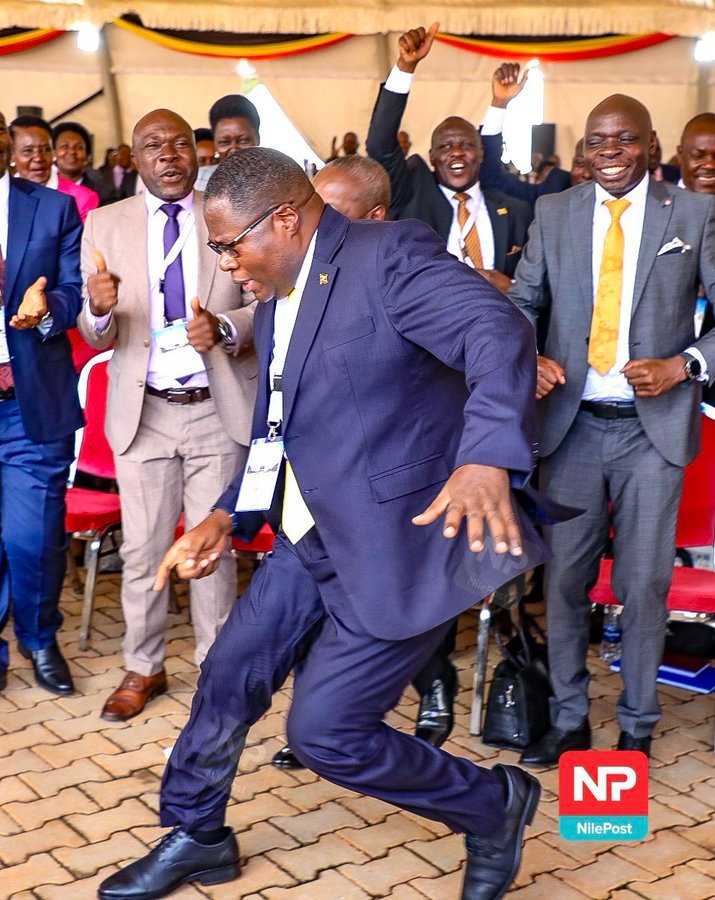
Assessing the New Guard: The Oboth-Oboth and Tayebwa Dynamic
The administrative pairing of Jacob Oboth-Oboth as Speaker and Thomas Tayebwa as Deputy Speaker creates a highly potent, texturized leadership matrix at Parliament House. Both individuals are seasoned legislative technicians who understand the complex machinery of statecraft, committee mobilization, and multi-party floor management.
- The Procedural Precision of Oboth-Oboth: As the former Chairperson of the Legal and Parliamentary Affairs Committee and Minister of State for Defence, Speaker Jacob Oboth-Oboth brings a cold, highly analytical legal framework to the ledger. His speakership is expected to heavily prioritize strict adherence to parliamentary rules of procedure, legislative transparency, and rigorous oversight of the executive.
- The Strategic Continuity of Tayebwa: By retaining his seat as Deputy Speaker, Thomas Tayebwa provides the 12th Parliament with a vital institutional memory bridge. Known for his tactical diplomacy, cross-bench accessibility, and capability to de-escalate high-tension national debates, Tayebwa’s presence ensures that the administrative machinery of the Speaker’s chambers experiences zero operational lag during the transition.
Political Implications of a Smooth Transition at Parliament House
For the ruling National Resistance Movement (NRM) caucus and the wider state apparatus, a chaotic transition at Parliament House would have severely dented public confidence and disrupted the alignment of the national budget cycle. Among’s immediate endorsement prevents the emergence of administrative gridlocks and guarantees that the transition of the gavel remains purely dignified.
The immediate task ahead for the Oboth-Oboth and Tayebwa collective will be to absorb the diverse legislative targets of the 12th Parliament—most notably import substitution legislations, economic capitalization bills, and decentralized funds monitoring like the Parish Development Model (PDM).
Backed by the formal validation of their predecessor, the new presiding officers command the full political and moral authority required to steer the house toward outcomes that strictly protect Uganda’s domestic security, sovereign economic growth, and democratic integrity.