
Table of Contents
Thompson Ricky, the founder of SafeBoda, has released a scathing yet deeply human critique of how the government treats the nation’s largest informal workforce.
Writing to his audience on LinkedIn, Ricky didn’t just provide data; he provided a face to the struggle. He argued that the boda-boda industry is not a “nuisance” to be cleared off the streets of the “Smart City,” but rather the actual heartbeat of the Ugandan economy. His message was clear: while the authorities look at the two wheels passing their car windows as a traffic problem, they are actually witnessing the movement of trillions of Shillings that keep the nation afloat.
Who is Ivan the Boda Boda rider and why does his story matter?
To understand the macro-economics of Kampala, Thompson Ricky suggests we start in a small Kafunda in Nakawa. It was there, amidst the smell of roasting meat and the hum of the city, that he encountered Ivan.
Ivan is 24 years old. Like many young Ugandans, his dreams were deferred by the harsh reality of tuition fees. He dropped out of university in his second year when the money ran dry. Today, Ivan is a “rider,” but as Ricky points out, he is also an asset manager in a high-stakes environment.
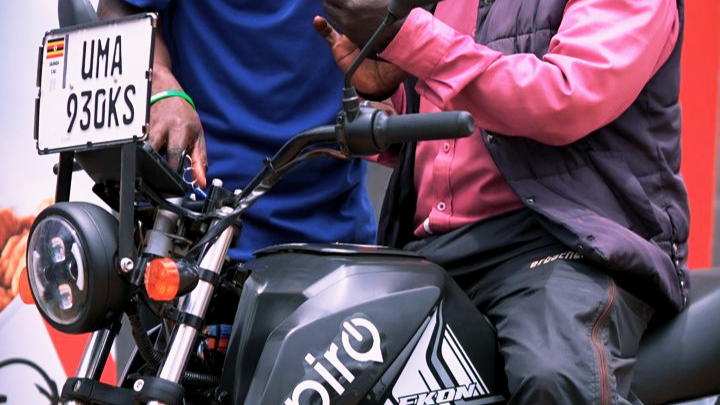
The math of Ivan’s life is brutal. Every day begins with a 15,000 UGX “daily target” that must be paid to the motorcycle owner. Before he even earns a coin for his own food, he must spend roughly 20,000 UGX on fuel. On an average day, amidst the suffocating Kampala gridlock, Ivan might gross 50,000 UGX. After the owner and the fuel station take their cut, Ivan is left with a mere 15,000 UGX.
From that 15,000 UGX, he must pay rent in Kireka, buy food, and try to save for a return to university. Ricky notes that this delicate balance is shattered the moment a KCCA or police “operation” begins. If Ivan’s bike is impounded for just four hours, he doesn’t just lose time; he loses his ability to pay the owner. One bad afternoon with the authorities can trigger a debt spiral that takes a month to escape. Ivan isn’t just a rider; he is the shock absorber of Uganda’s unemployment crisis.
How many boda bodas are in Uganda in 2026?
If you think the boda-boda sector is a marginal part of the economy, the statistics suggest you are living in a fiction. According to the data highlighted by Thompson Ricky and corroborated by national import reports, the sector is the second-largest employer in Uganda, surpassed only by agriculture.
Between 2021 and 2024, motorcycle imports into Uganda jumped by a staggering 200%. As of 2026, motorcycles represent more than 60% of all vehicles entering the country. There are currently over 1.2 million Ugandans—mostly youth—working in this sector.
This isn’t just a transport phenomenon; it’s an economic migration. As formal jobs fail to materialize for the thousands of graduates leaving universities every year, the “two-wheel” economy has become the primary safety net. When we speak of 1.2 million riders, we are speaking of 1.2 million households that rely on daily remittances to survive. To ignore this volume of people is to ignore the very demographic that will decide the future of the country.
What is the “Multiplier Effect” of the boda boda industry in Uganda?
Thompson Ricky challenges the “poverty trap” myth by pointing out the “Multiplier Effect.” The industry isn’t just about the person on the seat; it’s about a massive ecosystem of commerce.
For every Ivan on the road, there is a mechanic in Katwe whose children go to school because of that bike. There is a spare-parts importer in Ndeeba navigating global supply chains to bring in tires and chains. There is a fuel station attendant at Shell whose job depends on the constant refueling of these 150cc engines. There is the mobile money agent who processes the daily “target” payments.
We are talking about an “Invisible Economy” that moves trillions of Shillings annually. When authorities harass a rider or launch uncoordinated operations, they aren’t just bothering one man; they are shaking the table of an entire value chain. They are disrupting the cash flow of the very people who kept the country’s commerce moving when the formal sector stalled during previous economic downturns.
Why is the “Hire-Purchase” system called a “poverty tax” for riders?
One of the most profound points in Ricky’s advocacy is the critique of how riders acquire their tools of trade. Because the sector remains largely informal, riders like Ivan are “unbankable” in the eyes of traditional financial institutions.
Without a formal credit score or a payslip, a rider cannot walk into a bank and get a fair loan at a reasonable interest rate. This forces them into the hands of “hire-purchase” companies. Under these schemes, a rider often ends up paying double the market price of the motorcycle over a two-year period.
Ricky calls this a “poverty tax.” It is the high cost of being poor and informal. The government’s failure to create a regulatory framework that recognizes riders as legitimate Small-to-Medium Enterprises (SMEs) is directly responsible for this exploitation. If the 1.2 million riders were formalized, they would represent the largest organized consumer block in the nation, capable of negotiating better terms for everything from fuel to finance.
What is a National Boda-Boda Credit Bureau and how would it work?
To solve the debt trap, Thompson Ricky has proposed a radical but practical solution: the creation of a National Boda-Boda Credit Bureau.
The logic is simple. If a rider like Ivan has successfully paid a 15,000 UGX daily remittance every single day for a year, that is a perfect track record of financial discipline. In any other part of the world, that would constitute a high credit score.
Ricky recommends that the Ministry of Finance create a system where this daily remittance history is digitized and recognized by banks. This would allow a rider to qualify for a low-interest bank loan to buy their next bike outright or even start a different side business. By turning “daily targets” into “credit history,” we can transform 1.2 million riders from laborers into owners and shareholders in the economy.
Can electric boda bodas solve Uganda’s transport and economic problems?
The transition to Electric Vehicles (EV) is not just an environmental goal; it is a direct path to poverty alleviation. As Ricky points out, fuel is the single biggest “tax” on a rider’s daily income.
Currently, a rider might spend 20,000 UGX on petrol to earn 50,000 UGX. If the government provided massive tax breaks for companies like SafeBoda to bring in electric bikes and set up battery-swap stations, the math changes overnight.
If a battery swap costs 5,000 UGX instead of the 20,000 UGX spent on petrol, Ivan’s take-home pay would triple. That extra 15,000 UGX daily would mean the difference between a life of survival and a life of investment. Ricky’s call to the Ministry of Energy and Ministry of Finance is clear: incentivize the “oil” of the future—electricity—and watch the youth economy explode with growth.
What is the benefit of Mandatory Micro-Insurance for boda stages?
Road safety is often the stick used to beat the boda industry, but Ricky suggests a “carrot” approach through Mandatory Micro-Insurance.
Currently, one accident on Masaka Road or the Northern Bypass can turn a self-sufficient family into a destitute one. The medical bills at Mulago Hospital can swallow a life’s savings in hours.
The proposal is to turn every registered Boda Stage into a “Micro-Insurance Hub.”
A small portion of the daily stage fees already collected by chairmen could be channeled into a collective health and accident insurance fund. This would provide a safety net that currently doesn’t exist. It would move the industry away from being a “high-risk” gamble to being a professional, insured trade.
Is the Boda-Boda industry the second largest employer in Uganda?
Yes. National labor reports and economic surveys consistently place the boda-boda sector at the top of the list for youth employment. In a country where over 75% of the population is under the age of 30, the “boda-boda” isn’t just a bike; it is the national response to the lack of formal jobs.
Thompson Ricky’s intervention on LinkedIn is a reminder that we cannot have a “Smart City” if we have a “Broken Economy.” You cannot pave over the livelihoods of 1.2 million people and call it progress.
His recommendations to the Ministry of Finance and the Ministry of Gender, Labour and Social Development are a blueprint for stabilization. He isn’t asking for a handout for riders; he is asking for the “sand to be removed from the gears.”
He is asking for the government to provide the “oil”—the policy, the credit recognition, and the infrastructure—that allows the engine of the Ugandan youth to run smoothly.
As Thompson Ricky rightly concluded: “If you want to grow the GDP, look at the two wheels passing your car window today. That is where the money and the future is moving.”
At Kampala Edge Times, we will be watching closely to see if the Ministry of Works and KCCA are ready to stop “chasing” the boda and start leading the industry. The ball is now in the government’s court.
Key Statistics at a Glance:
- Total Riders (Est. 2026): 1.2 Million+
- Motorcycle Import Growth (2021-2024): 200%
- Daily Gross Revenue (Avg per Rider): 50,000 UGX
- Daily Fuel Expense (Avg per Rider): 20,000 UGX
-
Employment Rank: 2nd in Uganda (After Agriculture)
For more investigative stories on Uganda’s economy, follow Kampala Edge Times.