
Table of Contents
KAMPALA — The streets of Kampala are witnessing a silent but devastating economic shift as a biting fuel crisis forces the city’s transport backbone to its knees. In a powerful intervention published today, Thompson Ricky, the co-founder of SafeBoda and a prominent voice in Uganda’s transport sector, has declared that the era of petrol-dependent boda-bodas is officially ending.
Reporting from the frontlines of the crisis, Ricky—who also serves as a Brand Ambassador for Spiro—detailed a grim landscape of dry pumps and skyrocketing costs that are eating directly into the survival of over a million Ugandan households. His message is a clarion call: the 2026 fuel crisis isn’t just a temporary glitch; it is the final wake-up call to transition to Electric Vehicles (EV).
Why are Shell, Total, and other stations running out of fuel in Kampala?
If you have moved through the neighborhoods of Nakawa, Kawempe, or Makindye this week, the signs are impossible to miss. At major fueling points like Total Komamboga and several Shell outlets, the familiar “No Fuel” signs have moved from being occasional annoyances to permanent fixtures.
According to Thompson Ricky, this crisis has been brewing for the last 14 days. The shortage has created an “inconsistency” that is paralyzing the transport sector. While some stations are completely empty, others are rationing supply, leading to long queues that waste the precious time of boda-boda riders and delivery entrepreneurs.
For the “Biggest Brands” in the market to be struggling to keep their pumps running is a clear indicator that the supply chain is under unprecedented pressure. For the average rider, this means circling the city, burning the little fuel they have left, just to find a station that is open—a “nightmare” scenario that is quickly becoming the new normal in Kampala.
How much does a liter of petrol cost in Uganda in April 2026?
The most alarming aspect of this crisis is the “staggering” price hike. Just two weeks ago, fuel prices were hovering comfortably below the 5,000 UGX mark. Today, that stability is a memory.
In his report, Ricky noted that prices first crept up to 5,200 UGX, then jumped to 5,350 UGX. In some high-demand areas of the city, the price per liter has hit a record-breaking 7,000 UGX.
“As a transporter, this is a nightmare,” Ricky noted. A slight increase in fuel cost isn’t just an inconvenience; it is a direct deduction from a rider’s profit. When fuel hits 7,000 UGX, a rider is forced into an impossible corner: hike the fare and lose the customer, or keep the fare low and go home with nothing to feed their family. This “Petrol Tax” is currently the single greatest threat to youth employment in the urban transport sector.
Is an electric motorcycle cheaper than a petrol bike for business in Uganda?
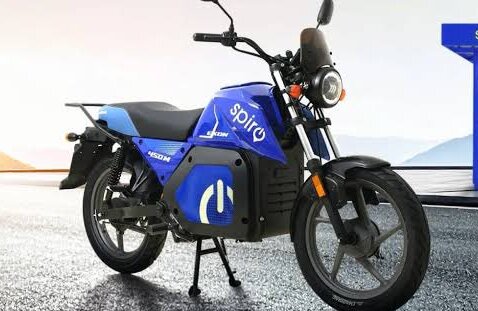
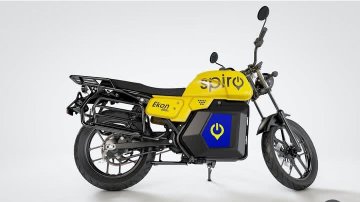
While petrol riders are “crying” over the pump prices, a different story is unfolding for the 20,000+ Spiro EV riders in Uganda. Ricky, who rides a Spiro bike himself, broke down the “Math of the Crisis” to show why EV is now the only logical choice for smart business owners.
- The Petrol Math: One liter of petrol at 7,000 UGX gives a rider roughly 45km of range. To cover 100km, a rider needs over two liters, costing roughly 14,000 UGX.
-
The Spiro EV Math: A full charge on a Spiro bike costs only 8,400 UGX and provides a guaranteed range of 100km.
The comparison is jarring. An EV rider can travel the same distance for almost half the price of a petrol rider. In a business where margins are thin, that 5,600 UGX saving per 100km is what determines whether a rider can pay their children’s school fees or keep their business afloat. As Ricky puts it, this isn’t just about being “green”; it’s about being profitable in a volatile economy.
What were the common complaints about Spiro electric bikes and are they resolved?
The transition to EV hasn’t been without its hurdles. Thompson Ricky addressed the “Elephant in the Room”—the past complaints regarding the swap network, spare parts, and infrastructure that circulated months ago.
“I am a big believer in transparency,” Ricky stated. He acknowledged that the community previously raised concerns about the frequency of swap stations and the availability of components. However, his report confirms that Spiro has acted on this feedback. The company has expanded its infrastructure significantly to ensure no rider is ever “stranded.” The swap network is now described as more robust, and the spare parts supply chain has been streamlined. Ricky emphasizes that Spiro is no longer just a startup experiment but a “battle-tested” ecosystem that has evolved specifically to handle the rugged, high-traffic demands of Kampala’s streets.
How can Ugandan boda boda riders transition to Spiro electric vehicles?
For delivery entrepreneurs and restaurant owners, the message is clear: stop letting the fuel pump decide your profit. Ricky argues that moving into the EV space is no longer a future luxury—it is a “today necessity” for anyone who wants price stability.
Transitioning to EV offers a shield against the global oil market’s fluctuations. Whether fuel hits 10,000 UGX or stations run dry, an EV rider knows exactly what their costs are.
Ricky attributed the success of this transition to bold leadership, specifically thanking the visionary founder of Spiro, Mr. Gagan Gupta, and the CEO, Mr. Kaushik Burman, for bringing over 20,000 units to a market that was initially skeptical. He also lauded the local Ugandan team, including PCH Mr. Brenden Kachenje and Deputy PCH Mr. Bruce Mucunguzi, for their work in supporting the ecosystem and ensuring riders feel heard.
Why should entrepreneurs and delivery businesses switch to electric bikes now?
The fuel crisis of the last two weeks is, in Ricky’s view, a “window into the future.” Fuel will continue to be a point of stress, but the electric grid provides a path of independence.
By switching to a Spiro EV bike, business owners are “opting out of the crisis.” The call to action is for the rest of the country to follow the lead of the 20,000 pioneers already enjoying the benefits of electricity.
“The era of the petrol-dependent boda-boda is ending,” Ricky concluded. “The era of the SPIRO EV is just beginning.”
As the pumps remain dry across Kampala, the question for every rider and entrepreneur remains: Are you going to stay in the fuel queue, or are you ready to glide into the future?
For more news on the Kampala Boda-Boda economy, follow Kampala Edge Times.