

Table of Contents
The proposed Uganda’s 2026/27 budget has surged to UGX 84.3 trillion, marking a 16 percent increase and underscoring an ambitious government push to elevate the country’s global standing while accelerating industrial transformation.
At the heart of the spending plan are two flagship priorities: preparations for the 2027 Africa Cup of Nations (AFCON), which Uganda will co-host with Kenya and Tanzania, and a significant capitalization of the Uganda Development Corporation (UDC) to drive state-led industrial growth.
Is AFCON 2027 More Than Just a Tournament for Uganda?
The government has earmarked UGX 905 billion for AFCON 2027—branded “Pamoja”—treating the continental showpiece as a catalyst for long-term infrastructure development rather than a one-off sporting event.
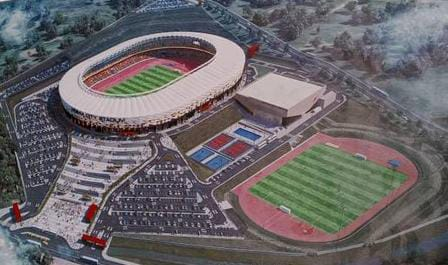
A portion of the funds will go toward upgrading key sports facilities. The Mandela National Stadium is set for a major facelift with UGX 56.2 billion allocated to increase its capacity to 45,000 seats. Meanwhile, Kadiba Stadium will receive UGX 5.2 billion to transform it into a modern training complex.
Beyond stadiums, the government is investing heavily in surrounding infrastructure. Approximately UGX 213.7 billion will fund the upgrade of 47.5 kilometers of roads around Hoima and Namboole, including pedestrian walkways and street lighting to improve accessibility.

Also Read: St. Peter’s College Tororo Knock Out Rock High School to Reach Bukedi Zonal USSSA Final
How Is Hoima Being Positioned as a Regional Gateway?
Hoima, one of the tournament’s host cities, is poised for a major transformation. The government has allocated UGX 184.9 billion to construct a new passenger terminal at Kabalega Airport, aimed at handling international traffic during the tournament and beyond.
Healthcare infrastructure is also receiving attention. A combined UGX 91 billion will be spent upgrading Hoima Regional Referral Hospital and Masindi General Hospital to meet Confederation of African Football (CAF) standards for intensive care and emergency response.
Can Tourism Capitalize on AFCON 2027?
In anticipation of a surge in visitors, the government is channeling UGX 101.1 billion through the Uganda Development Bank (UDB) to support private sector players in the hospitality industry. Hotel owners in Hoima and Masindi are expected to access credit to upgrade their facilities to international standards.
Officials project that AFCON 2027 could attract more than 650,000 visitors and inject an estimated $500 million (approximately UGX 1.8 trillion) into the economy, potentially offsetting the heavy upfront investment.
Why Is UDC Receiving the Lion’s Share of Trade Funding?
Away from sports, the budget signals a decisive shift toward state-driven industrialization. The Uganda Development Corporation is set to receive UGX 422.35 billion—equivalent to 82 percent of the entire Ministry of Trade, Industry and Cooperatives budget.
The funding is intended to strengthen UDC’s capacity to invest directly in strategic sectors, including manufacturing, agro-processing, and value-addition industries. Government officials argue that this approach will accelerate “socio-economic transformation” by enabling Uganda to move up the industrial value chain.
What Are Lawmakers Saying About the Budget Priorities?
Despite the optimism, Members of Parliament have raised concerns over the concentration of resources within UDC. Critics warn that allocating such a significant share of funds to a single entity could leave other key institutions underfunded.
Agencies like the Uganda National Bureau of Standards (UNBS) and the Uganda Industrial Research Institute (UIRI), which play crucial roles in quality assurance and innovation, risk being sidelined—potentially undermining broader industrial development goals.
What Does This Budget Mean for Uganda’s Future?
The 2026/27 budget reflects a dual strategy: leveraging AFCON 2027 as a springboard for infrastructure, tourism, and international visibility, while simultaneously strengthening the government’s role in industrial investment.
Whether these bold allocations deliver the anticipated economic returns will depend on execution, oversight, and the ability to balance large-scale investments with support for critical institutions across the economy.
For now, Uganda is placing a high-stakes bet—one that could redefine its economic trajectory if it pays off.