
Table of Contents
As Parliament debates the Finance Bill 2026, millions of Kenyans are closely watching the proposed tax changes that could affect everything from mobile phones and rent to digital transactions and small businesses.
The bill, tabled by the National Treasury, is part of the government’s plan to raise revenue for the 2026/27 financial year while addressing Kenya’s growing debt obligations and funding key sectors such as healthcare, education, infrastructure, and security.
Although government officials insist the proposals are designed to streamline taxation rather than increase the burden on citizens, many Kenyans remain cautious following the widespread protests that accompanied previous finance bills.
What Is the Finance Bill 2026?
The Finance Bill 2026 proposes amendments to several tax laws, including the Income Tax Act, Value Added Tax (VAT) Act, Excise Duty Act, Tax Procedures Act, and other revenue-related legislation.
If approved by Parliament and signed into law, most of the changes are expected to take effect from July 1, 2026. The government says the bill aims to widen the tax base, improve compliance, simplify tax administration, and increase revenue collection without introducing excessive new taxes.
Why Is the Bill Generating So Much Attention?
The Finance Bill has become one of the most discussed topics in Kenya because many of the proposals directly affect everyday expenses.
From smartphone users and landlords to small business owners and digital entrepreneurs, the bill touches sectors that millions of Kenyans interact with daily.
The memories of the 2024 anti-finance bill protests have also made citizens more alert to any proposed tax changes that could increase the cost of living.
The Proposed Mobile Phone Tax
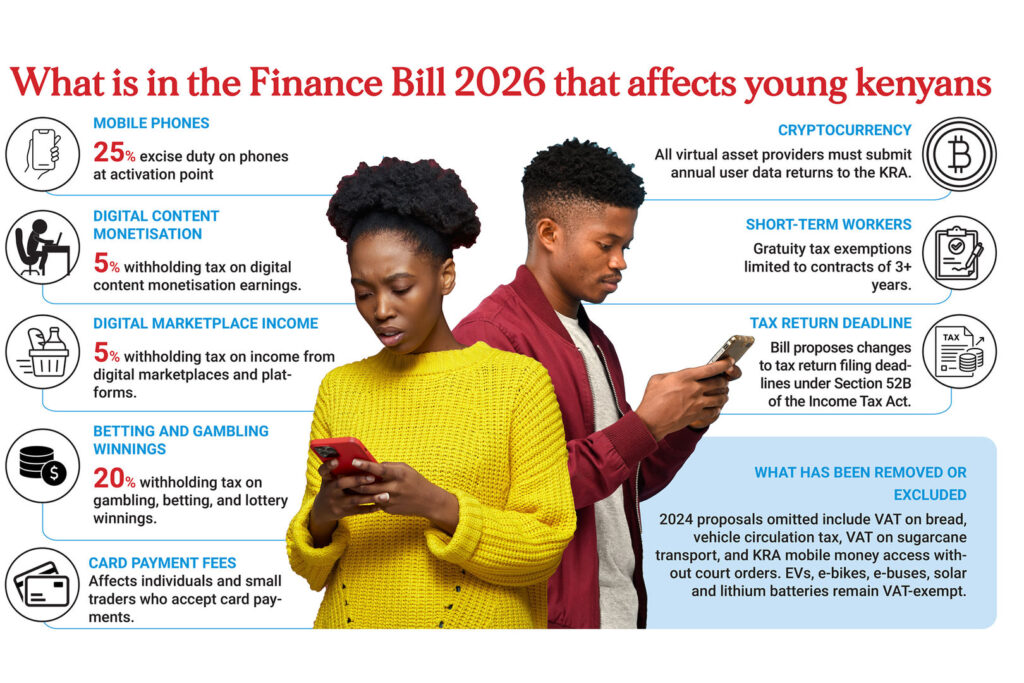
One of the most debated proposals is the introduction of a 25 percent excise duty on mobile phones activated in Kenya. Critics argue that the measure could make smartphones more expensive and slow digital inclusion, especially among low-income households and young people who depend on mobile devices for education, work, and online business.
However, Treasury Cabinet Secretary John Mbadi has defended the proposal, saying it is intended to replace multiple existing taxes currently charged on imported phones. According to the Treasury, smartphones already attract various levies that collectively exceed 50 percent, and the proposed system seeks to simplify the process by replacing them with a single tax charged upon activation.

Also Read: Kenya Digital Exams: KNEC Unveils Plan for Paperless National Assessments Set for 2027
Changes Affecting Digital Transactions
The Finance Bill also includes proposals that could affect digital payment systems and financial technology services. Industry players warn that some changes may increase transaction costs for businesses and consumers who rely heavily on mobile money, online payments, and card-based transactions.
As Kenya continues to position itself as a regional technology hub, concerns have emerged over whether additional costs could slow digital growth and financial inclusion.
Impact on Landlords and Tenants
Another major proposal is the increase in the residential rental income tax rate from 7.5 percent to 10 percent.
While the government argues that the adjustment will improve tax collection, property owners fear the additional burden could eventually be transferred to tenants through higher rent charges. With housing already becoming increasingly expensive in major urban areas such as Nairobi, Mombasa, and Kisumu, the proposal has attracted significant public attention.
New Measures Targeting Imports and Mitumba Trade
The bill also contains proposals affecting second-hand clothing imports, commonly known as mitumba. Supporters of the measures argue they could help protect local manufacturing industries and improve tax compliance. Critics, however, warn that they could raise the cost of affordable clothing relied upon by millions of low-income Kenyans.
Small traders within the informal sector have expressed concern that additional taxes could reduce business profitability and increase consumer prices.
Expanded KRA Powers
The Finance Bill 2026 seeks to strengthen the Kenya Revenue Authority’s ability to monitor compliance and improve tax collection. Some proposals would allow tax authorities to access more financial data and use digital systems to identify potential tax gaps.
Supporters believe these measures could reduce tax evasion and improve fairness in the tax system. However, critics have raised concerns about privacy, transparency, and the possibility of overreach.
What the Government Is Saying
Government officials maintain that the Finance Bill 2026 is designed to improve efficiency rather than introduce punitive taxes.The Treasury argues that the country must increase revenue collection to reduce dependence on borrowing and meet its growing development needs.
Officials have also emphasized that several proposed changes include tax incentives, exemptions, and reforms intended to encourage investment and stimulate economic growth.
What It Means for Ordinary Kenyans
For many households, the biggest concern remains the potential impact on daily expenses.Depending on the final version passed by Parliament, Kenyans could experience changes in the prices of mobile phones, digital services, rent, imported goods, and other products affected by tax adjustments.
Businesses may also face higher operational costs, some of which could eventually be passed on to consumers.
The Finance Bill 2026 highlights the difficult balance facing the government: increasing revenue while protecting citizens from rising living costs.
As public participation and parliamentary debates continue, the final version of the bill may still undergo significant changes before becoming law.
For now, one thing is clear — the Finance Bill 2026 is more than a tax proposal. It is a document that could shape how Kenyans spend, save, invest, and do business in the years ahead.