
Table of Contents
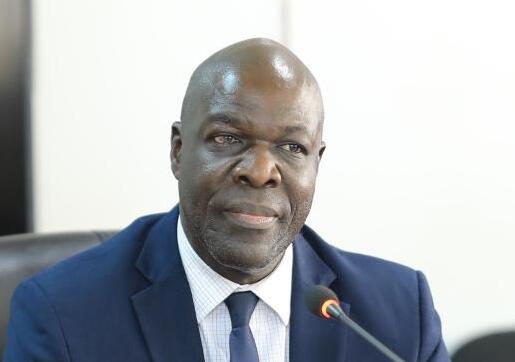
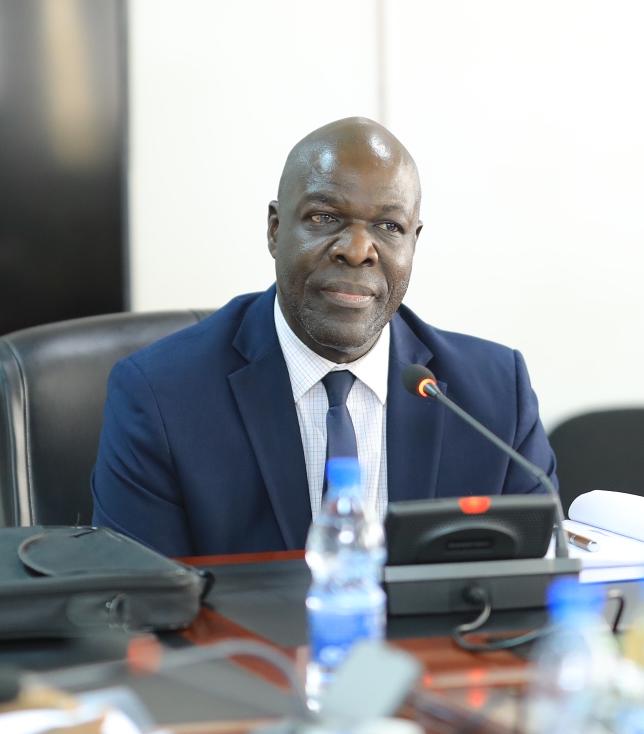
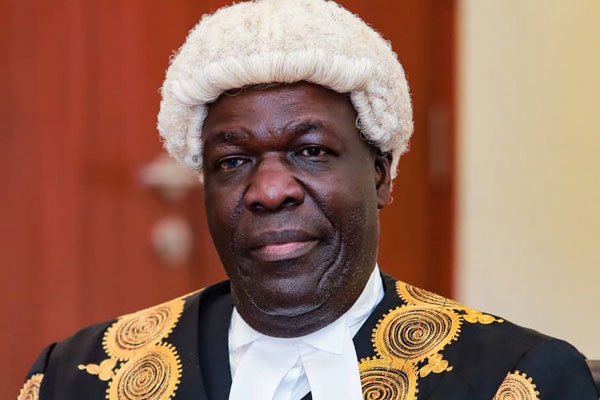
On May 14, 2026, President Yoweri Kaguta Museveni announced a strategic shake-up that has placed Justice Moses Kazibwe Kawumi in the spotlight. While the legal fraternity knows him as a “silent giant”—a man whose work in the upcountry circuits of Mubende and Kabale spoke louder than any public speech—the general public is now rushing to understand the man who will essentially be the “engine” of the Court of Appeal.
His appointment comes at a time when the Judiciary is desperate for efficiency, and if his past track record is anything to go by, Justice Kazibwe is exactly the “clinical operator” the system needs to navigate the complexities of 21st-century justice in Uganda.
Who is Moses Kazibwe Kawumi and what is his new role in the Ugandan Judiciary?
To set the record straight amidst the breaking news: Justice Moses Kazibwe Kawumi is the newly appointed Deputy Chief Justice of Uganda. He has been tapped to deputize Chief Justice Flavian Zeija, who assumed the top office earlier in January 2026 following the retirement of Alfonse Owiny-Dollo.
The role of the Deputy Chief Justice is arguably one of the most taxing in the land. As the administrative head of the Court of Appeal, which also sits as the Constitutional Court, Justice Kazibwe is now responsible for overseeing all appellate matters and ensuring that constitutional petitions do not languish in the system for years.
His appointment, which was officially communicated by the Presidential Press Unit (PPU) and now awaits parliamentary vetting, is seen as a move to bring “Mubende-style” efficiency to the national level. He replaces Justice Flavian Zeija, who held the role before his recent elevation to the Chief Justice position.
Moses Kazibwe Kawumi biography
Justice Moses Kazibwe Kawumi (born August 22, 1963) is a distinguished legal professional and judicial administrator serving as the Deputy Chief Justice of the Republic of Uganda. Holding a Bachelor of Laws from Makerere University and a Master’s Degree in Management Studies from the Uganda Management Institute, his career path spans over 30 years of legal practice, high-court execution loops in Kabale and Mubende, and landmark structural resolutions within the Court of Appeal.
Moses Kazibwe Kawumi Wikipedia
While his public career dossier is heavily detailed across state media announcements, his official career track highlights a profound focus on backlog clearance systems. Appointed to the High Court bench in May 2016 alongside Chief Justice Flavian Zeija, his administrative reforms in country circuits have established him as the central institutional engine driving modern electronic court systems across the Ugandan appellate infrastructure.
What were the early life and academic milestones that shaped Justice Kazibwe’s legal mind?
Born on August 22, 1963, Justice Moses Kazibwe Kawumi is a veteran of the Ugandan legal system who carries over three decades of experience. Now 62 years old, his journey to the second-highest office in the judiciary is a classic “Makerere to the Bench” story, but with a unique twist that sets him apart from many “pure” legal theorists.
Justice Kazibwe obtained his Bachelor of Laws (LLB) from Makerere University in the mid-1980s before heading to the Law Development Centre (LDC) for his Postgraduate Diploma in Legal Practice, which he completed in 1988.
Also read about Okello Onyum
However, it is his subsequent academic pursuit that reveals his professional strategy: he earned a Master’s Degree in Management Studies (MMS) and a Postgraduate Diploma in Management from the Uganda Management Institute (UMI). This rare background in management is the secret sauce behind his reputation for clearing administrative backlogs that usually paralyze other judges. He doesn’t just see the law; he sees the system that delivers it.
How did his tenure in Kabale and Mubende prepare him for the leadership of the Court of Appeal?
Justice Kazibwe did not start at the top; he earned his “stripes” in the trenches of Uganda’s upcountry high court circuits. In May 2016, he was appointed as a High Court Judge, joining the bench in the same batch as the current Chief Justice, Flavian Zeija.
His first major impact was felt in the Kabale High Court Circuit, where he was known as a “listening judge” who actively promoted Court Open Days. These sessions allowed local communities to interact directly with judicial officers, humanizing a system that often feels distant and cold.
However, his most defining career moment came when he was the Resident Judge in the Mubende High Court Circuit. Upon his arrival, he was faced with a staggering 820 land cases assigned to him as a single judge. Rather than drowning in the paperwork, Kazibwe used his management training to spearhead radical procedural reforms. He famously raised the alarm about the workload not to complain, but to demand a smarter way of working, eventually clearing significant portions of the backlog through targeted “clean-up” sessions and public engagement.
What impact did Justice Kazibwe have on the Court of Appeal and Constitutional Court before his elevation?
Following his elevation to the Court of Appeal in 2024, Justice Kazibwe quickly became a key member of panels tackling the judiciary’s most persistent headache: criminal case backlogs. In early 2026, he was part of a special three-justice panel (alongside Justices Geoffrey Kiryabwire and Stella Alibateese) that moved to strike out dozens of stalled criminal appeals.
Kazibwe’s logic was characteristically pragmatic: he argued that keeping “ghost cases”—appeals that had stalled for years due to missing parties or lack of interest—on the active list was a disservice to the living who were actually waiting for justice. By clearing the “dead weight,” he helped free up the court’s calendar for active litigation.
In his role as a Justice of the Constitutional Court, Kazibwe has been involved in several landmark consolidated petitions. His judicial philosophy often leans toward Constitutional Consistency, emphasizing that the 1995 Constitution must be read as a whole. In high-profile cases involving reproductive health and social norms, his judgments have often prioritized the literal interpretation of the law alongside Uganda’s cultural and family values, reflecting a conservative but strictly legalistic approach.
Why is Justice Kazibwe Kawumi considered the ‘administrative engine’ for Chief Justice Flavian Zeija?
The pairing of Flavian Zeija and Moses Kazibwe at the summit of the Judiciary is no coincidence. Both judges joined the High Court bench in the same month of 2016 and have risen through the ranks in parallel. Most importantly, they both share a reputation for being “strict administrators” who loathe inefficiency.
President Museveni is currently prioritizing the “Backlog Clearance Strategy” as a pillar of his new five-year term. By appointing a man who holds a Master’s in Management and who has successfully navigated the “land case crisis” of Mubende, the State is signaling a shift toward Service Delivery Justice. While the Chief Justice handles the overall vision and national policy, Justice Kazibwe will be the “clinical operator” responsible for making the Court of Appeal—the bottleneck of the Ugandan legal system—run like a high-performance machine.
What does the future of the Ugandan Judiciary look like under Justice Kazibwe’s leadership?
With Justice Kazibwe’s name now forwarded to the Parliamentary Appointments Committee, the legal fraternity is already speculating on the “Kazibwe Era” at the Court of Appeal. Alongside the newly appointed Chief Registrar Agnes Alum, Kazibwe is expected to drive three major changes:
- Full-Scale Digitalization: Given his UMI background, he is a known advocate for the Electronic Court Case Management Information System (ECCMIS). He is expected to push for the full automation of all appellate registries to stop the “disappearance” of case files.
- Increased Accountability: Justice Kazibwe has historically been firm with court registrars and magistrates who do not hit their targets. His leadership will likely mean less “desk time” and more “bench time” for judicial officers.
- Regional Appellate Sessions: To reduce the cost of justice, he is expected to expand “Mobile Court Sessions,” bringing the Court of Appeal to regions like Gulu, Mbarara, and Mbale so that appellants do not have to travel to Kampala for every hearing.
The Man Behind the Robe
Justice Moses Kazibwe Kawumi is a man of few words but massive output. He is known for a judicial style that is “patient but firm.” Unlike the fiery orators of the past, Kazibwe speaks in a measured, calm tone—a trait that often disarms aggressive lawyers and brings a sense of order to the courtroom.
He is a man who understands that “justice delayed is justice denied.” As he prepares to assume the second-highest office in the land, the Ugandan public is looking at a leader who doesn’t just know the law, but knows how to make the law work for the people. The “silent giant” of Mubende is now the vocal guardian of the Court of Appeal, and the judiciary is about to get the administrative “glow-up” it has long deserved.