
Table of Contents
The government has moved to overhaul the leadership of the Uganda Electricity Distribution Company Limited (UEDCL), terminating the Board Chairperson and sending the Managing Director on forced leave effective May 2, 2026.
This upheaval comes just over a year after UEDCL took the reins from Umeme Ltd, marking a critical and turbulent first chapter in the return of the national grid to state-led management.
Why was the UEDCL Board Chairperson terminated?
The Minister of Energy and Mineral Development, Ms. Ruth Nankabirwa, officially announced the termination of Ms. Lydia Ochieng-Obbo as the Chairperson of the Board of Directors. According to a Ugandan source, this was not a simple resignation but a direct sacking following a rigorous “governance review” intended to address systemic failures within the company’s oversight body.
While the official statement describes the move as part of “routine governance,” the reality is a performance-based dismissal. Insiders suggest that the Board failed to provide the necessary strategic direction during the high-stakes transition following the exit of Umeme. The termination is a “hard reset” by the Ministry, signaling that the previous leadership was unable to align the company with the government’s aggressive goals for rural electrification and industrial power stability.
Who is the new UEDCL Interim Board Chairperson, Stella-Marie Biwaga Cingtho?
To quench this governance storm, the government has placed Ms. Stella-Marie Biwaga Cingtho at the top of UEDCL, a heavyweight in the legal and energy sectors. Ms. Biwaga is an Advocate of the High Court of Uganda with over 16 years of experience, bringing a mix of legal precision and strategic oversight to a company currently under fire for 19% energy losses.
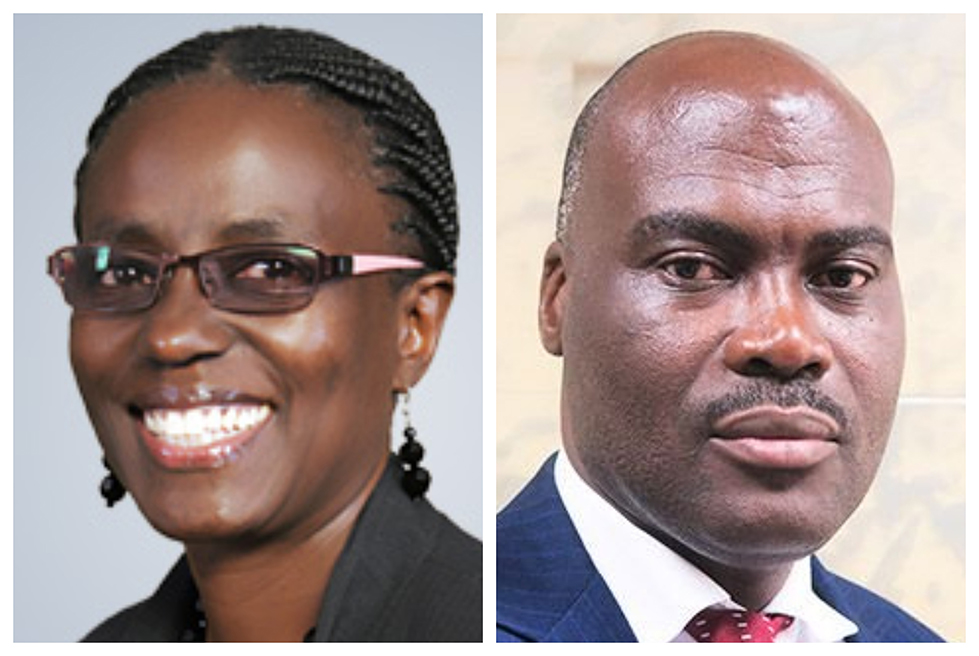
Her academic and professional background suggests she was chosen specifically to handle the complex legal and “balance scorecard” strategy requirements of the energy sector:
- Academic Credentials: She holds a Master of Laws (LLM) in Oil and Gas, a Bachelor of Laws from Makerere University, and several post-graduate diplomas in Natural Resources Management and Legal Practice.
- Energy Sector Experience: She is no stranger to high-stakes state enterprises, currently serving on the boards of the Uganda National Oil Company (UNOC) and the National Pipeline Company (U) Ltd (NPC).
- Diverse Leadership: Beyond energy, she has held leadership and advisory roles at Action Africa Help International, FIDA-Uganda, and the Uganda Law Society.
By appointing a legal expert with a background in oil, gas, and natural resource governance, Minister Ruth Nankabirwa is signaling that the “comprehensive review” of UEDCL will be rooted in strict compliance and institutional accountability. Biwaga’s task is clear: stabilize the board and ensure that the transition from Umeme finally starts yielding the results the public expects.
Note for your final edit: Since the new source clarifies that the acting MD was not named by press time, make sure to delete the previous mention of Ms. Biwaga being the Acting MD. She is strictly the Interim Board Chairperson.
Why was UEDCL MD Paul Mwesigwa sent on forced leave?
The Managing Director, Mr. Paul Mwesigwa, has been placed on forced leave—a move that effectively removes him from active duty to allow for a comprehensive investigation into his one-year tenure. The primary driver behind this removal is a documented failure to manage the transition from Umeme back to a state-run entity.
Reports indicate that under Mwesigwa’s leadership, the company struggled to maintain technical efficiency, leading to growing dissatisfaction among industrial consumers. Specifically, Mwesigwa is accused of failing to curb skyrocketing energy losses and failing to stabilize the network after the departure of Umeme Ltd. By placing him on forced leave, the government is initiating a forensic audit of his performance since the license handover on April 1, 2025.
Who is the new Acting Managing Director of UEDCL?
To maintain stability and prevent service interruptions during this purge, the Board has appointed Ms. Stella-Marie Biwaga Cingtho as the Acting Managing Director. Cingtho steps into the role during a period of extreme volatility, tasked with overseeing a workforce of over 2,700 employees and managing a grid that is currently under immense pressure.
In tandem with her appointment, an interim Board Chairperson has been installed to ensure that the “governance measures” do not result in a power vacuum. The Ministry has assured stakeholders—including international lenders—that electricity supply will continue uninterrupted during this leadership transition.
Why are electricity energy losses increasing in Uganda?
The most damning reason for the sacking of the top brass is the sharp, unchecked rise in electricity energy losses. When UEDCL took over from Umeme Ltd in April 2025, energy losses were recorded at 15%. However, data from a Ugandan source indicates that these losses have climbed to 19% as of May 2026.
This 4% increase is a massive blow to the sector’s financial health. The government’s annual energy loss target was set at a strict 13.65%, but UEDCL closed the first quarter of 2026 with losses sitting at 18.11%. These losses are categorized into two types:
- Technical Losses: Resulting from aged infrastructure, overloaded substations, and poorly maintained lines.
-
Commercial Losses: Resulting from illegal connections and metering inaccuracies.
Experts argue that the leadership failed to address the “poor state” of the network they inherited, leading to constant tripping and breakdowns that the management was unable to solve.
What is the current state of electricity distribution in Uganda after Umeme?
The transition from Umeme to UEDCL was meant to be a landmark achievement for energy sovereignty. However, the first year has been marked by operational struggle. Since April 1, 2025, UEDCL has operated with a generation capacity of 2,052.6 MW—a massive leap from the 300 MW available when the Umeme concession began.
Despite this abundance of power, the distribution sector is struggling with:
- Demand Growth: Electricity demand grew by 28.5% between April 2025 and March 2026, rising from 986.4 MW to 1,217.7 MW.
- Infrastructure Damage: UEDCL has reported a loss of Shs3b in infrastructure damages due to vandalism and equipment failure since the takeover.
-
Grid Overload: Daily average power purchases have increased to 20.1 GWh per day, pushing existing substations to their absolute limit.
The dismissal of the Board Chair and the removal of the MD are an admission that the management was not prepared for the sheer scale of the 2.76 million active customers now on the grid.
Is there a power crisis in Uganda following the UEDCL leadership changes?
While the government avoids the word “crisis,” the internal friction at the Ministry of Energy suggests deep-seated issues. It has been revealed that the Minister of Energy had previously attempted to remove senior managers but was allegedly blocked by the Prime Minister’s office, leading to a period of administrative paralysis.
The current “forced leave” and “termination” orders represent the Minister finally asserting control to stop the bleeding. A source at the Ministry claims that while the leadership was sacked for poor performance, the Electricity Regulatory Authority (ERA) and the Ministry itself also share blame for failing to fund necessary upgrades.
If the new leadership under Stella-Marie Biwaga Cingtho cannot secure capital to fix the infrastructure, the sector risks falling further into a financial hole, regardless of who is in charge.
Summary of Performance: April 2025 – March 2026
| Metric | April 2025 | March 2026 | Trend |
|---|---|---|---|
| National Demand | 986.4 MW | 1,217.7 MW | +28.5% |
| Customer Base | 2.45 Million | 2.76 Million | +9% |
| Energy Losses | 15% | 19% | Increase |
| Target Loss % | 13.65% | 13.65% | Failed Target |
| Monthly Purchases | 534.6 GWh | 622.7 GWh | +16.4% |
| The Ministry continues to urge the public to remain calm, stating that these changes are vital for “accountability and service delivery.” However, the reality remains: the top leadership has been axed because the numbers simply did not add up. |