

When did the earthquake happen in Kampala in 2026?
A sudden seismic event caught many residents of Kampala and surrounding districts off guard on the evening of Sunday, May 31, 2026. The ground shaking occurred just after 9:00 PM local time, triggering instant reactions as people across the capital tried to figure out what was happening. The experience varied significantly depending on the neighborhood, with some residents reporting strong physical vibrations, others hearing loud underground noises, and some feeling absolutely nothing at all.
Early automated tracking data from global seismic monitoring services, including VolcanoDiscovery, initially flagged an unconfirmed earth tremor roughly 9.1 kilometers northeast of Kampala at 9:20 PM local time (18:20 GMT).
The initial reading placed the temporary coordinates at latitude 0.38°N and longitude 32.63°E. However, as more raw scientific data streamed in from regional seismograph arrays, the readings were updated to reflect a much larger, deeper earthquake originating further north.
The corrected data showed a magnitude 4.49 (rounded to 4.5) earthquake hitting near Katangira in the Northern Region, approximately 16 miles (25 kilometers) from Nakasongola. The shockwave occurred at 9:19 PM local time and radiated directly southward into the central region, making its impact felt across a massive portion of the Kampala metropolitan area and nearby towns.
Also read about the loan checker in Airtel and MTN
What time did the earthquake happen in Uganda on May 31, 2026?
The seismic event occurred in the late evening of Sunday, May 31, 2026. According to updated reports from primary data monitoring stations, the actual earthquake struck at exactly 9:19 PM local time (21:19).
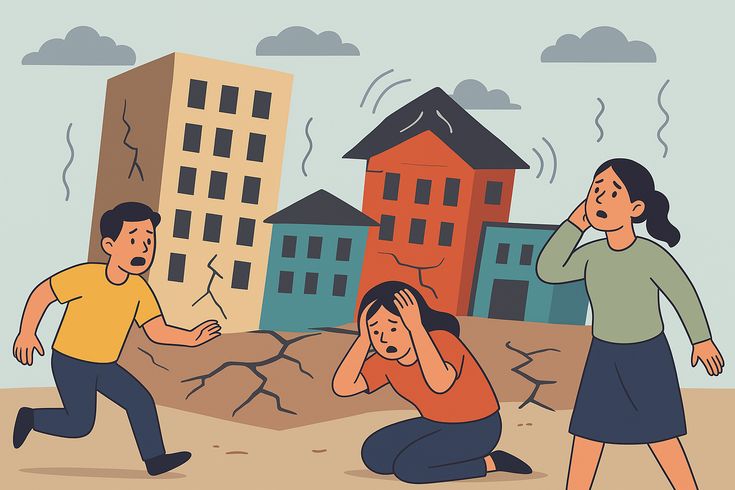
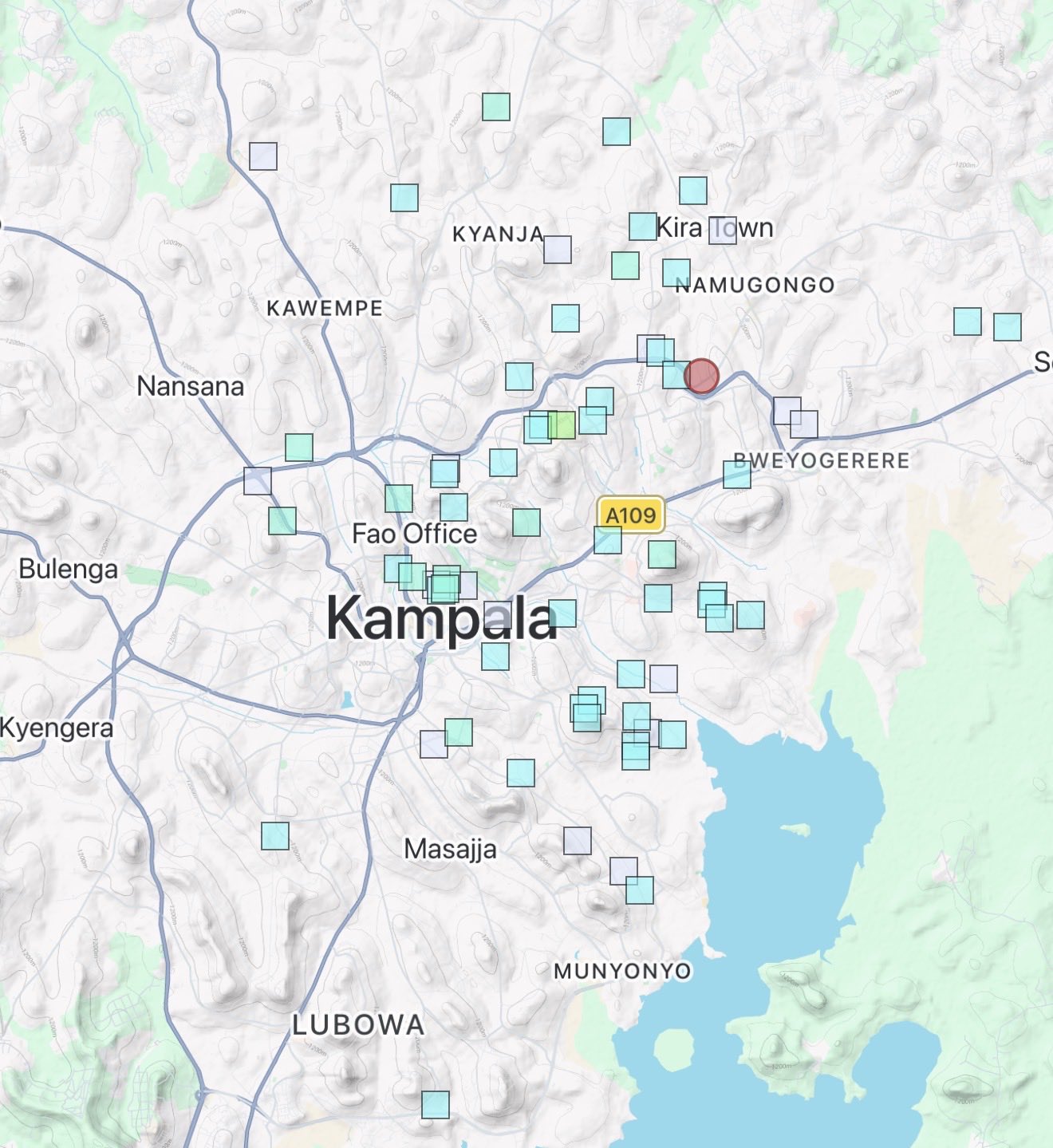
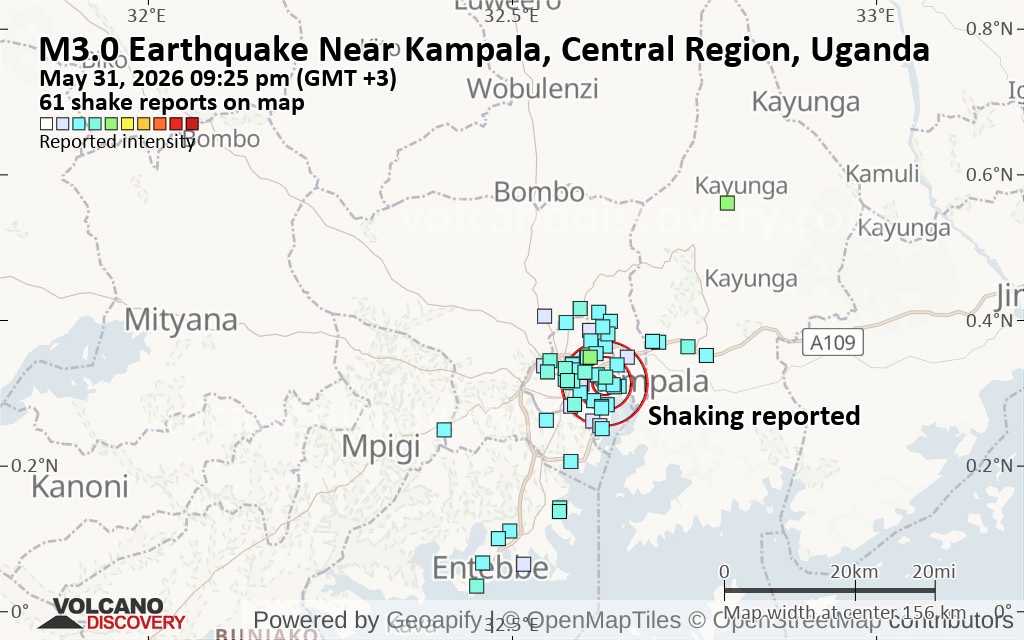
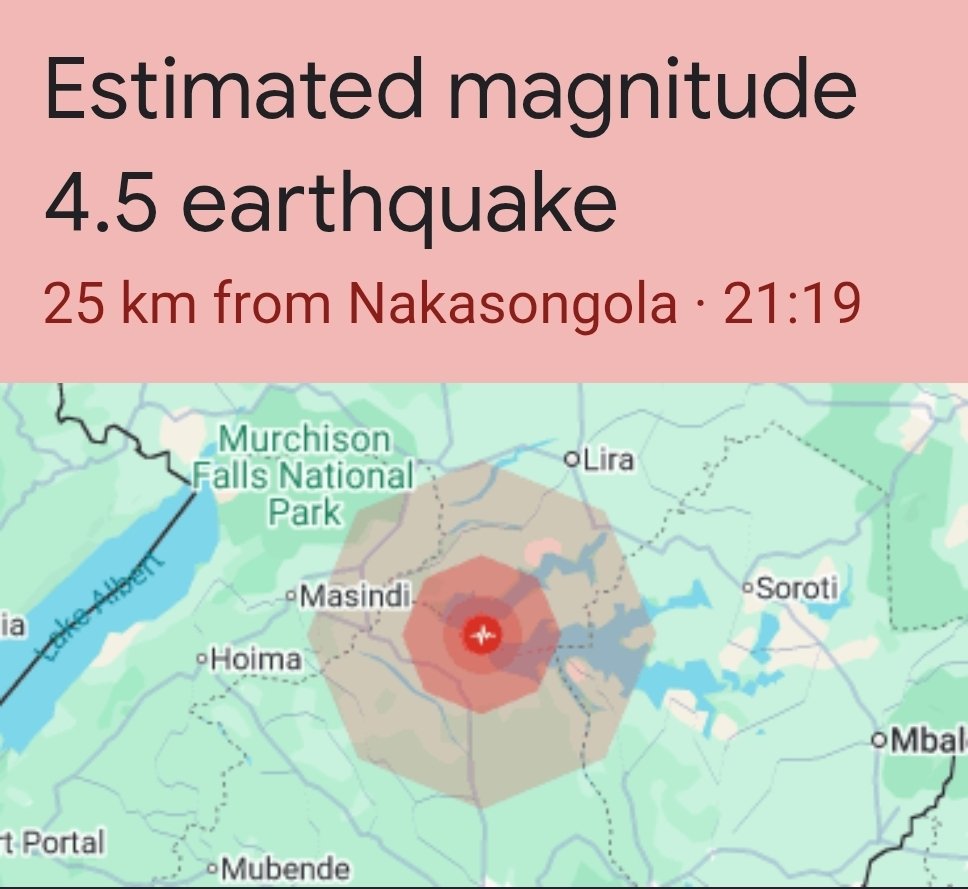
Because seismic waves travel through the earth’s crust at different speeds depending on the composition of the rock, residents in Kampala felt the physical vibrations a few seconds to a minute later, with automated community alerts registering the local impact by 9:20 PM and 9:25 PM. The timing meant that most families were indoors, relaxing or preparing for the upcoming work week, which amplified the awareness of the sudden movement.
Where was the epicenter of the Kampala earthquake?
The true epicenter of the earthquake was located near Katangira and Nakasongola, situated north of the capital city. Initial automated estimates based on early, unverified citizen reports temporarily placed the epicenter just 9.1 kilometers northeast of Kampala’s central business district. These early, temporary models are common when a local cluster of people reports shaking simultaneously through mobile applications.
Once international and regional monitoring stations synchronized their data, the primary source confirmed that the deeper, more powerful shift happened 16 miles away from Nakasongola. The energy from this fault movement traveled down through the earth, which is why it was felt across a wide geographic footprint spanning several districts in central and northern Uganda.
Comprehensive List of Affected Areas in Uganda
The tremor was widespread, with verified shaking reports coming from the following specific towns and municipal divisions:
- Kampala Central (including downtown areas and the FAO Office zone)
- Makindye Division (including Buziga and Salaama Road)
- Kawempe Division
- Nansana and Bulenga
- Kyanja, Kira Town, and Namugongo
- Bweyogerere and Kyengera
- Masajja, Munyonyo, and Lubowa
- Outlying Districts: Mpigi, Mityana, Bombo, Wobulenzi, Kayunga, Kamuli, and parts of Jinja
Why did some parts of Kampala feel the tremor while others did not?
One of the most notable aspects of this earthquake was how unevenly it was felt across the country. For example, people in Entebbe widely claim they did not feel any movement whatsoever. Even within Kampala itself, the differences between neighborhoods were stark.
I am here in Buziga near Salaama road in Makindye and I felt it. Here it had no sound but I felt it. The physical swaying of chairs and the rattling of household fixtures were completely clear, yet it happened in total silence.
Meanwhile, some people living in the outskirts of Kampala reported a completely different experience, stating that they felt a serious rumbling noise that sounded as if heavy cars or massive construction trucks were moving rapidly past their houses.
Seismologists explain that this inconsistency comes down to local geology, soil types, and topography:
- Solid Bedrock vs. Loose Sediment: Neighborhoods built on solid rock or high, firm hills (like parts of Makindye and Buziga) tend to experience pure, low-frequency structural swaying. The rock transmits the physical energy waves cleanly without breaking them up, which is why you can feel the movement clearly without hearing any audible noise.
- Alluvial Soils and Outskirts: The outskirts of the city, especially areas near wetlands, valleys, or loose sandy soil, experience a phenomenon called soil amplification. When seismic waves hit loose ground, they slow down and compress, creating a violent, noisy friction. This friction generates a low-frequency acoustic sound that manifests as a deep, mechanical rumbling, often mistaken for heavy traffic or machinery.
- The Entebbe Buffer: Entebbe sits directly on the peninsula of Lake Victoria. The thick layers of water-saturated sediments and the specific underlying fault geometry along the lakeshore frequently act as a natural dampening buffer. This buffer absorbs specific types of seismic energy, explaining why residents there remained completely unaware of the event while the rest of the capital was shaking.
Are there any injuries or structural damages reported after the Kampala tremor?
According to the official logs updated shortly after the event, there are no injuries reported across Kampala or the surrounding districts. Because a magnitude 3.0 to 4.5 earthquake is classified as minor to moderate, it rarely causes the total collapse of modern engineering structures.
| Metric | Recorded Data |
| Primary Magnitude Estimate | 3.0 (Local Model) / 4.5 (Regional Model) |
| Local Time Registered | 9:19 PM / 9:20 PM |
| Reported Injuries | Zero |
| Fatalities | Zero |
| Structural Damage Status | Minor superficial wall cracking in older masonry |
While high-rise commercial structures in the city center swayed slightly, their structural integrity remained intact. The primary concern among local authorities remains focused on informal settlements and older brick-and-mortar residential properties in areas like Kawempe and Nansana. These structures often lack reinforced concrete beams, making them highly vulnerable to superficial wall cracking when regional tremors occur.
Why is Uganda prone to earthquakes and tremors?
Uganda’s susceptibility to earthquakes is completely tied to its location within the East African Rift System (EARS). The continent of Africa is slowly splitting apart along two massive fault lines: the Eastern Rift (which runs through Kenya and Tanzania) and the Western Rift (which runs directly along Uganda’s western border through Lake Albert, Lake Edward, and the Rwenzori Mountains).
Because the Western Rift Valley is an active tectonic boundary, the earth’s crust across Uganda is under continuous geological stress. This stress builds up over months and years until the rock deep underground suddenly slips to relieve the pressure. While the majority of these adjustments happen silently deep in the rift graben, major fault lines extending into central and northern regions—such as those near Nakasongola and Katangira—occasionally experience sharper movements that send shockwaves directly through the center of the country.
What should you do during an earthquake in Kampala?
As Kampala continues to experience rapid vertical growth with more multi-story apartments and commercial malls, knowing how to react during a tremor is essential for personal safety. Local disaster management guidelines recommend the following immediate actions:
- Drop, Cover, and Hold On: If you feel the ground shake, immediately drop to your hands and knees. Cover your head and neck under a sturdy piece of furniture, like a heavy wooden table or desk, and hold on tight until the shaking stops.
- Stay Inside High-Rises: If you are inside a multi-story building or apartment block in Kampala, do not rush for the stairs or try to use the elevators during the tremor. Most injuries during earthquakes occur when people panic and try to exit buildings while structures are still moving, exposing themselves to falling debris, broken glass, and collapsing perimeter walls.
- Move Away from Perimeter Walls: If you are outdoors when a tremor hits, move immediately into an open space. Stay far away from power lines, large trees, glass windows, and the brick perimeter walls that surround many properties in Kampala, as these walls are highly prone to toppling over during sudden ground movements.